
Nation
THE STATES

FCT
An optometrist, Dr Kingsley Ekemiri, says carrots, water melon, stockfish and fresh fish are important nutrients for improved sight.
“Nutrient is a very important component of our vision in the sense that when we eat properly, we tend to improve our visions said in Abuja.
“Basically carrot has what is called the carotene, a very important component of the retina; when you eat a lot of carrots, it tends to improve the immunity and the healthiness of your retina that makes you see much better.
“Stockfish and also fresh fish are very important nutrients for your vision, so also is red oil which is palm oil because it contains what is called retinol,’’ he said.
He advised people to desist from frying red palm oil, as such destroys the nutrients that aid vision.
Gombe
In a bid to promote aforestation in Deba Local Government Area of Gombe State, an NGO, Prof. Abdullah Mahadi Foundation, has presented 500 tree seedlings to the local government council.
Presenting the seedlings in Deba in Gombe State last Monday, Prof. Abdullahi Mahadi, who is also the Vice-Chancellor of the Gombe State University, said the gesture was also aimed at curtailing soil erosion.
Mahadi urged the people to imbibe the culture of planting trees to protect the environment, and said that the foundation was formed to inculcate the love of nature, particularly trees in children.
The vice-chancellor said that some of the trees being presented would soon be extinct, hence the need to preserve them.
Kaduna
The Federal Government has in the last three years spent N120 billion on the implementation of MDG programmes, according to the Director of MDGs, Mr Oluwole Edun.
He announced in Kaduna at the 13th meeting of Conditional Grant Scheme (CGS) Focal Persons that more than 30 million people had benefited from the 30,000 projects executed under the MDGs in the country.
“The CGS is one of a number of initiatives, which have in the past years improved planning, projects management, governance and accountability.
“There has also been a major boost in capital investments in key MDG sectors, in particular health, education, water and sanitation,” he said.
Edun noted that a recent evaluation of the programme had shown tremendous success in many projects, but that there were still challenges in implementation, investment branding, monitoring and reporting, maintenance and sustainability of completed projects.
He said that some states did not adhere to the provisions guiding the CGS procurement process and financial management, which had affected the effectiveness of the investments.
Edun said the MDGs had received proposals from states totaling more than N87 billion in addition to other areas of attention, such as education, health delivery, water and sanitation.
He said the states would soon be invited to commence pre-disbursement requirements, while the CGS to local government areas would soon commence in 113 councils.
Kano
Two persons suspected to be hired assassins have killed a prominent Lebanese motor spare parts dealer, Mr. Gaffar Shamsuddeen in Kano.
An eye witness said, that the incident happened on Thursday around 2.30pm at the deceased’s shop located on the popular Ahmadu Bello Way in the city.
According to the eye witness, the hoodlums stormed the deceased’s shop at No. 139 Ahmadu Bello Way on a motorcycle.
The suspects were said have arrived at the shop, but the deceased, who was said to have returned to Kano from Lebanon on Wednesday, was not in the shop.
But just as the men were about to leave the shop, Shamsuddeen returned and as he tried to enter the shop, one of the hoodlum shot him on the chest.
Kebbi
An Islamic scholar, Alhaji Isma’il Diri, has called on Muslims to seek divine blessing through goodwill to mankind on “the Night of Majesty” during the last 10 days of Ramadan.
Diri, who addressed a public gathering in Birnin Kebbi urged Muslims to sustain the lessons learnt during the Ramadan for blessing on the special night in the last ten days.
“Any Muslim who seeks God’s blessing on that night needed to do the right things as contained in the Holy Qur’an during and indeed after the Ramadan period.
He enjoined Muslims to pray for peace unity, a God-fearing leadership and peaceful co-existence.
Kwara
Senator Abubakar Bukola Saraki has described the death of former military Vice President Augustus Aikhomu as a great loss to Nigeria.
The former governor of Kwara and senator representing Kwara Central Senatorial District said in a statement in Ilorin that Nigerians would remember Aikhomu, a retired Navy Admiral, for his contributions to the socio-economic development of the country.
The statement, issued by Saraki’s Media Assistant, Mr. Akintoba Fatiregunm, said Nigerians would miss Aikhomu’s advice in the efforts of the present administration to transform Nigeria.
Saraki described Aikhomuas a detribalised Nigerian, who used his position to improve the lives of the people.
Niger
The Niger State government is to undertake a census of primary health care facilities in the state to determining the physical state of the structures, facilities and staff manning them.
Dr Aliyu Shehu, the Executive Director of Niger State Primary Healthcare Development Agency (NSPHCDA), made this known in Minna.
He said 1,530 primary healthcare facilities had been transferred to the agency by the local governments in the state, adding that the agency would undertake their baseline study.
“The baseline study will determine the exact number of PHC facilities, state of the physical structures, equipments and facilities and the staff manning them.
Plateau
The Plateau State Government realised N353.6 million as revenue from vehicle number plates and drivers’ licences in the last three and a half years, Dr Rauta Jat, the Chairman, Plateau Board of Internal Revenue, announced in Jos.
A breakdown of the figures shows that the board generated N116.23 million in 2008; N101.70 million in 2009 and about N99.29 million in 2010.
The board collected N36.34 million between January and June this year, adding that N118.10 million was realised from the sale of number plates, N77.16 million from drivers’ licences, while N58.93 million was raked in as motor vehicle registration fees.
Sokoto
The Usman Dan Fodio University, Sokoto has embarked on the building of a 50-room hotel in Abuja, its Vice Chancellor, Prof. Riskuwa Shehu has said.
Shehu told newsmen in Sokoto that the project, consisting of 42 double rooms and eight suites, would cost N321 million, while the project had reached 80 per cent completion.
“The major challenge for any university in Nigeria is the desire to achieve high quality with limited resources.
“That is why we have to always explore more ways to boost our internal revenue-generation capacities,” he said.
He explained that although education was expensive, “if you want quality, you have to invest and there are no two ways about this.”
Taraba
Former President Olusegun Obasanjo has led a Kenya-based American investor to inspect about 30,000 hectares of marshy land in Gassol Local Government Area of Taraba State for possible commercial rice cultivation.
Obasanjo, was accompanied by the Minister of Agriculture, Dr. Akinwumi Adesina and Governor Dambaba Suntai of Taraba State.
The former president described the investor, Mr. Calvin Burgess, as a friend to Nigeria.
Yobe
Mrs. Maryam Abdullahi, Secretary, Mamudo Women Vegetable Farmers Association in Yobe, said the group recorded more than 200 per cent profit in the last six months.
Abdullahi, told newsmen in Mamudo village in Yobe last Monday that the support rendered by Fadama III coordinators assisted the women to increase their profit.
She said that the Fadama III office assisted the group with N280,000 after an initial contribution of N120,000 to expand and improve facilities in their vegetables farms.
“We expanded our farms from 0.8 hectares to 2.1 hectares. We also used the extra funds to construct and rehabilitate concrete wells and procured water pumps for use on our farms,” she said.

Nation
Zabbey Emerges Social Impact Man Of The Year 2025 …Reaffirms Commitment To Ogoni Transformation


The Project Coordinator of the Hydrocarbon Pollution Remediation Project (HYPREP), Prof. Nenibarini Zabbey, has been named Social Impact Man of the Year 2025 by Daily Independent Newspapers.
The award was presented at the Independent Awards 2025 Silver Jubilee Edition held at Eko Hotels and Suites, Lagos, as part of activities marking the organisation’s 25th anniversary of editorial excellence.
Managing Director and Editor-in-Chief of Independent Newspapers, Steve Omanufeme, said the award recognises individuals who have demonstrated exceptional leadership and transformative impact in their respective fields. He explained that recipients emerged through a rigorous process involving public voting, editorial board scrutiny, and assessment by a panel of judges.
Omanufeme noted that Zabbey’s selection reflects his outstanding contributions to environmental restoration and community development in Ogoniland through the Ogoni cleanup project.
With over two decades of experience spanning research, advocacy, capacity development, and administration, Zabbey has, within three years of leading HYPREP, implemented people-focused initiatives aimed at improving livelihoods and restoring degraded ecosystems.
Under his leadership, the project has reportedly created more than 7,000 direct jobs and facilitated the training of thousands of youths and women in high-demand skills, including mechatronics, cybersecurity, commercial diving, underwater welding, and data analytics.
HYPREP has also trained over 5,000 beneficiaries across 21 vocational skill areas, providing start-up kits to support entrepreneurship and economic empowerment.
In the area of environmental sustainability, the agency has established 31 environmental clubs in secondary schools and trained 2,500 youths with International Maritime Organization (IMO) certification to support shoreline cleanup and mangrove restoration efforts.
The project has recorded significant ecological milestones, including the cleanup of over 1,000 hectares of shoreline and restoration of 560 hectares of mangroves. This progress contributed to the designation of Ogoni mangrove wetlands as a Ramsar Site of international importance.
Beyond environmental remediation, HYPREP has expanded its social intervention programmes to include educational grants and scholarships for over 1,000 students, support for small and medium-scale enterprises, and skills training for persons living with special needs.
Infrastructure and healthcare development have also featured prominently, with ongoing projects such as the Ogoni Specialist Hospital, a Cottage Hospital, the Ogoni Power Project, and the Centre of Excellence for Environmental Restoration. The agency has further strengthened emergency healthcare delivery by donating five ambulances to medical facilities in the region.
Additionally, potable water has been provided to more than 40 communities, alongside the construction of wind-powered water systems in underserved areas.
Speaking on the award, Zabbey described it as a validation of HYPREP’s integrated approach to environmental restoration, healthcare improvement, and economic empowerment.
“We remain committed to delivering a cleanup that not only restores the environment but also improves livelihoods in line with the Renewed Hope Agenda of President Bola Ahmed Tinubu,” he said.
HYPREP, in a statement, expressed appreciation to the management of Independent Newspapers for the recognition, the Federal Ministry of Environment for its oversight role, and the Ogoni communities for their continued support and collaboration.
The agency was established by the Federal Government of Nigeria to implement the recommendations of the United Nations Environment Programme (UNEP) report on Ogoniland and restore areas impacted by oil pollution.
Nation
Rivers State Judiciary Counters NBA National Position over Contempt Ruling, Says Judge Acted Within the Law
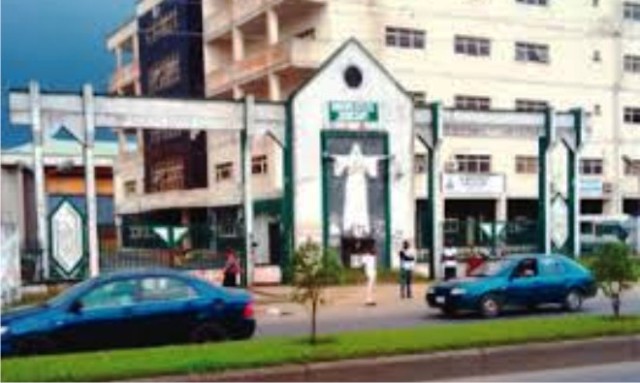
The Rivers State Judiciary has faulted the Nigerian Bar Association National over its March 26, 2026 press release condemning the jailing of a lawyer for contempt, insisting the trial judge acted lawfully to protect the court’s integrity.
In a rejoinder issued by Chief Registrar High Court,David D. Ihua-Maduenyi, Esq., the judiciary said it was necessary to “set the records straight” following reactions to the NBA’s statement on the contempt conviction of Mrs. Lovinah Ugbana Benjamin.
Titled: “JUDGES MUST NOT BULLY LAWYERS OR
ABUSE POWER TO PUNISH FOR CONTEMPT AS A TOOL
FOR INTIMIDATION OF LAWYERS”
RE: IN THE MATTER OF CONTEMPT OF COURT BY MRS.
LOVINAH UGBANA BENJAMIN
IN SUIT NO.
PHC/301/2016 CORAM C. NWOGU J., OF THE HIGH
COURT OF RIVERS STATE.
The state judiciary explained that case in question is Suit No. PHC/301/2016 before Justice Chinwendu Nwogu of the Rivers State High Court, where Mrs. Benjamin served as defence counsel.
The statement read thus
“We are compelled to make this rejoinder regarding the
incident of the conviction for contempt and subsequent
unconditional discharge of Mrs. Lovinah Ugbana Benjamin,
Learned Counsel for the Defendants in the above suit by Hon.
Justice Chinwendu Nwogu of the High Court of Rivers State in
order to set the records straight, and not allow the
misinformation, misconception and reactions arising from the
NBA National Press Release in the matter to fester as reality or
truth.”
In the suit under reference wherein the said Learned
Counsel appeared for the Defendants, the Learned Counsel
attempted to mislead the Court by her signed and filed final
written address, by knowingly and falsely presenting non-
existent facts and evidence of a witness. When confronted by the
Court, she admitted that what she stated in her final written
the address was not true and she was unapologetic.”
“The to uphold the dignity and integrity of the Court, which the
said Learned Counsel treated with clear and brazen contempt, the
Court after following due process, convicted her for contempt and
sentenced her to prison for 3 days only, instead of the 3 months
statutory term due to passionate plea from the Bar.”
“According to the statement the suggestion of the NBA National in paragraph 10 of the
Press Release under reference that “where a court considers
counsel’s conduct improper, the proper course is to invoke
recognised disciplinary mechanisms, including referring
counsel to the Legal Practitioners Disciplinary Committee
(LPDC), rather than resorting to summary punitive measures”,
is not an invariable rule because the act of the Defence Counsel
constitutes contempt in facie curiae which the Court can punish
instantly, hence the action of the Judge is not an abuse of power
or an act of intimidation.”
“Nevertheless, due to the numerous calls from respected
members of the Bar to the offices of the Chief Registrar and the
Honourable Chief Judge for the release of the said Learned
Counsel, and the intervention of the NBA Port Harcourt Branch
delegation led by its Chairman, Mrs. Cordelia U. Eke to the Judge.
in his Chambers in the morning of 26/03/2026 where the
delegation upon learning the true facts of the incident, apologised
and pleaded for the release of the said Learned Counsel.
“The Judge
having accepted the apology signed a production warrant and
upon her production in court and oral application by Mrs. Cordelia
U. Eke, discharged her unconditionally that same morning.”
The statement further stated that It is therefore shocking to read later that day the NBA
National Press Release signed by its President and Secretary, Mazi
Afam Joseph Osigwe (SAN) and Dr. Mobolaji Ojibara respectively,
fiercely threatening and hastily advocated the following ultimata and
the immediate release of the affected
Counsel.
:That the Hon. Chief Judge of Rivers State
immediately investigate the circumstances
surrounding this incident and take
appropriate administrative action.
That appropriate disciplinary steps be taken
by the National Judicial Council, where
necessary.
That the remand of Mrs. Lovinah Ugbana
Benjamin under the circumstances be
condemned and set aside”
“That all NBA branches in Port Harcourt and
its environs and all legal practitioners
boycott the proceedings before the Court of
Hon. Justice Nwogu for a period of 7 days if
Mrs. Lovinah Ugbana Benjamin is not
released within 24 hours.
“It seems to us that it is either the NBA Port Harcourt Branch
leadership did not relate the true position to the NBA National or
if they did, the NBA National decided to speak daggers, not peace
to impugn the Judge as a villain.
“We find the position of the NBA National on this subject very
offensive and embarrassingly raising a feeling of acrimony against
the Judge in particular, and the High Court bench of Rivers State
in general. We categorically state that the Hon. Justice Chinwendu
Nwogu is one of our respected and respectful Judges with
unblemished integrity.
We view this Press Release as an isolated departure from the
enterprising and amiable leadership of the NBA National,
especially its President, whom we hold in high esteem and
admiration.”
“Whilst we appreciate the concern of the NBA National in
bringing attention to the event of 25th March 2026, we assure that
the Bench and the Bar in Rivers State remain veritable partners
in the administration of justice.
“We firmly restate that the Bench in Rivers State holds the Bar
in high esteem and this event would not disrupt the cordial
relationship between the Bench and the Bar.”
-

 Sports1 day ago
Financial Issues Stall Chelle’s Eagles Contract Talks
-

 Sports1 day ago
NFF mourns ex-Eagles striker Eneramo
-
Sports1 day ago
Four Private Clubs Gain Promotion To NPFL
-

 Maritime1 day ago
CILT Nigeria Seeks Anti- graft Agency Collaboration
-

 Sports1 day ago
W/Cup Qualifier: Flamingos In Impressive Opener
-

 Sports1 day ago
European Giants Circle For Osimhen
-

 Sports1 day ago
Tennis Event Boosts Grassroots Development Push
-

 Sports1 day ago
Chelle Confirms Financial Issues in Eagles Contract Discussion