
Nation
THE STATES

Adamawa
Brig.-Gen. John Nwaoga, the Commander of the 23 Brigade of the Nigerian Army, Yola, has confirmed that 15 people including seven security men were killed when suspected bandits attacked Gombi town in Adamawa.
Nwaoga said at a news conference last Friday at the Command’s headquarters, that the incident occurred on Thursday at about 2.30 p.m.
“Eight civilians were killed in Uba, while seven police men were killed in the Gombi Local Government Area Divisional Police headquarters.
“Right now we cannot conclude that the attack was carried out by members of Boko Haram sect; they could be bandits.
“We will reveal in subsequent investigation if they are actually members of the Boko Haram sect, judging by the way and manner the operation was carried out.
Kebbi
The Kebbi chapter of the Nigeria Union of Journalists (NUJ) will conduct a verification exercise aimed at identifying unqualified members and quacks in the profession.
The state chairman of the Union, Alhaji Muhammad Tukur, told newsmen in Birnin Kebbi last Sunday that in addition to the verification an enlightenment campaign would be conducted for members to be conversant with the NUJ constitution.
He said the verification would also enable the smooth conduct of fresh election for new officials of the union, adding, “members were expected to pay their professional fees to enable them participate in the election”.
Kwara
Gov. Abdulfatah Ahmed of Kwara has condemned in strong terms the bomb attack that rocked the United Nations building in Abuja, where several people were killed and many others injured.
Reacting to the unfortunate incident last Saturday, Ahmed said the attack was a national disgrace and an assault on the United Nations.
According to a statement signed by the Chief Press Secretary to the Governor, Alhaji Abdulwahab Oba and made available to the newsmen in Ilorin, Ahmed described the attack as barbaric and dastardly act.
He also called on the Federal Government and security agencies to fish out the perpetrators of the attack and bring them to book to forestall future occurrence.
Nasarawa
INEC in Nasarawa State has commenced a recount of the ballots cast in some polling units during the April governorship election in the state.
The Governorship Election Petition Tribunal had granted the request of the PDP for a recount of ballot papers used in the election in some units from which INEC declared Umaru Al-Makura of CPC as winner of the poll.
Former Gov. Aliyu Akwe Doma of PDP, who lost his re-election bid, is contesting Al-Makura’s victory.
But PDP said it was not impressed with “the snail speed” of the ballot recount.
The PDP had taken Al-Makura and CPC to the tribunal to challenge the election result.
Niger
The Acting Governor of Niger, Ahmed Ibeto, has called for a National Security Summit to find a lasting solution to incessant bombings in the country.
Ibeto was reacting to the latest bomb attack at the UN House, Abuja, which killed and maimed several persons last Friday.
A statement signed by the Chief Press Secretary to the Governor, Malam Danladi Ndayebo, quoted Ibeto as saying that the spate of bombings in the country had become a national emergency and should be treated as such.
“The issue of security should not be left to government alone. Government alone cannot stop the activities of terrorists which have left hundreds of innocent Nigerians either dead or wounded,” he said.
Ogun
An NGO, the Initiative for Environmental Education, has advised the three tiers of government to increase awareness on climate change in the rural and urban areas.
Mrs Justina Adebayo- Sopoiki, the executive secretary of the body, made the call in an interview in Ijebu-Ode, Ogun, last Sunday.
Adebayo-Sopoiki said the awareness on climate change, especially tree planting, was very low in Nigeria.
“We have been hearing about what is happening in other countries in terms of flooding and other natural disasters due to climate change.
Ondo
The Ondo State Government has condemned the bomb blast, which damaged part of the UN building in Abuja last Friday.
In a statement issued by Mr Kolawole Olabisi, the Chief Press Secretary to Gov. Olusegun Mimiko, in Akure last Saturday, the government described the action as reprehensible and antithetical to sane reasoning.
It expressed dismay at the spate of bombings in the country and sympathised with the families of the victims as well as the UN.
The government appealed to the security agencies to leave no stone unturned in efforts to arrest the perpetrators of the act.
Osun
The Federal Government has spent N1.5 billion on the construction of 25,000 metric tonnes silos in Ilesa, Osun.
Dr Adegbite Ojo, Coordinating Director, Ministry of Agriculture, Osun, made this known while speaking with the newsmen in an interview, recently .
Ojo said that construction work was still ongoing at the project site being the only Federal Government silos in the state.
According to him, the construction of the silos shows that the government is committed to the revival and development of agriculture especially in the area of food production.
Oyo
The police and National Emergency Management Agency (NEMA) have confirmed 12 persons dead from the flood disaster in Ibadan last Friday night.
Mr Iyiola Akande, the South-West Zonal Director of NEMA, told newsmen that seven people died and five others missing in the flood.
Akande explained that three major bridges also collapsed in the flood that affected 11 local government areas around the capital city.
Similarly, the Police Spokesman in the state, Mr Femi Okanlawon, said that five people were found dead at Odo-Ona Elewe in Oluyole Local Government Area.
“One aged woman died when a wall fell on her while another old man was found dead at Apata area of Ibadan,” Okanlawon said.
Sokoto
An outbreak of Gastroenteritis in Gandi, Rabahl local government of Sokoto State
has claimed the lives of two children.
About 70 cases were said to have been recorded in the area.
The Commissioner for Health, Alhaji Abdullahi Maigwandu, confirmed the outbreak of gastroenteritis.
“We have since dispatched our medical team to the area and they are working with the local government and Medicines Sans Frontiers (MSF) (Doctors without borders).
“The ugly situation has been brought under control. The medical teams are still working in the area to ensure that the epidemic is tamed,’’ the commissioner explained.
Yobe
The Yobe State Sharia Court of Appeal has said that more
than 1,000 pending appeal cases will be tried in September.
A statement issued by Muhammad Degubi for the Chief Registrar of the Court and made available to newsmen Saturday in Damaturu, said the appeal session would sit for 25 days.
“The 2011 Sharia Court Appeal session shall sit between September 5 and September 30 in Potiskum, Gashua, Geidam and Damaturu, to cover the three Judicial Divisions and the Headquarters.



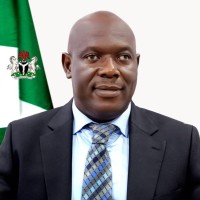
The Hydrocarbon Pollution Remediation Project (HYPREP) has commemorated the 15th anniversary of the release of the United Nations Environment Programme (UNEP) Environmental Assessment Report on Ogoniland, reaffirming its commitment to restoring the environment and improving the livelihoods of affected communities.
In a statement signed by the Project Coordinator, Prof Nenibarini Zabbey, to commemorate the anniversary, HYPREP described the anniversary as a significant milestone in Nigeria’s environmental restoration efforts, noting that the project has made remarkable progress in implementing the recommendations of the landmark UNEP report released on August 4, 2011.
The UNEP report had revealed extensive oil pollution across Ogoniland, severe environmental degradation, and serious public health risks resulting from decades of petroleum operations. It also recommended an initial $1 billion fund to commence the cleanup of the affected communities.
According to HYPREP, the Federal Government formally launched the Ogoni clean-up in 2016, while the Project Coordination Office was established in 2017 to drive the implementation of UNEP’s recommendations.
Zabbey said the current administration has continued to prioritise the project under the Renewed Hope Agenda.
Providing an update on the cleanup, the Project Coordinator disclosed that 30 of the 65 contaminated sites identified by UNEP have been fully remediated, while work is ongoing at several medium- and high-risk locations. It also stated that more than 1.5 million mangrove seedlings have been planted as part of what it described as the world’s largest restoration of oil-degraded mangroves, with over 1,000 hectares of shoreline already rehabilitated.
Zabbey further revealed that 49 Ogoni communities have been connected to potable water schemes through multiple water projects and booster stations aimed at providing safe drinking water across the region.
In the health sector, he said the 100-bed Ogoni Specialist Hospital in Kpite and the 43-bed Cottage Hospital in Buan are nearing completion, adding that several existing health facilities have been upgraded with modern medical equipment, while five ambulances have been donated to improve emergency healthcare services. The Project Coordinator also disclosed that a three-year human health biomonitoring study is being conducted in collaboration with the World Health Organization’s International Agency for Research on Cancer (IARC).
On economic empowerment, Zabbey stated that the Project has created more than 8,000 direct jobs and trained thousands of Ogoni youths and women in various vocational and technical skills, including software development, cybersecurity, aviation, commercial diving, seafaring, mechatronics, and creative arts. The project also reported awarding scholarships to more than 1,000 students, providing grants to small businesses, and supporting persons living with special needs through skills acquisition programmes.
The statement further highlighted ongoing legacy projects, including the Ogoni Power Project and the Centre of Excellence for Environmental Restoration, which it said is about 96 per cent complete. HYPREP also welcomed the recent designation of the Ogoni Wetland as a Ramsar Site of International Importance and pledged to continue promoting biodiversity conservation and sustainable management of the ecosystem.
Marking the anniversary, Zabbey said the progress achieved over the past 15 years demonstrates the collective commitment of government, development partners, stakeholders, and local communities to restoring Ogoniland. He called for renewed collaboration to sustain the cleanup effort, promote environmental sustainability, and support the long-term development of the region. 3
-

 News2 days ago
RSG Targets Nine Million Residents in Mosquito Net Distribution Campaign
-

 Oil & Energy2 days ago
Aiyedatiwa Signs New Electricity Bill
-

 Maritime2 days ago
Marine Minister Commends President Tinubu On NPERA Bill Assent
-

 Oil & Energy2 days ago
NLNG Commissions Research And Innovation Centre In RSU
-

 News2 days ago
KenPoly Holds Eight Convocations, August 29
-

 News2 days ago
RMAFC Completes Revenue Sharing Review, Proposes New Pay
-

 News2 days ago
RSG Begins Another Phase of Projects Commissioning Today
-

 Maritime2 days ago
NAGAFF Petitions IGP Over Alleged Maritime Police Harassment