
Business
Foodstuffs Prices Escalate As Ramadan Approaches – Survey

As the Ramadan fast starts today, the prices of foodstuffs and other essential commodities have escalated in most markets across the country, according to a national survey conducted by our correspondent.
The Tide correspondents, who monitored market prices in some state capitals, report that the prices of foodstuffs and other essential commodities, such as fruits, vegetables, eggs and beverages that are in high demand during the Ramadan fast had soared.
Traders attributed some of the reasons for the hike in price to the Ramadan fast, the increase in the minimum wage of workers, high cost of transportation and increase in the cost of diesel, amongst others.
The Tide’s source in Birnin Kebbi the Kebbi capital, who visited some markets in the town, reports that the prices of rice, beans, fruits, beverages, cooking oil had gone up.
Some traders in the market visited, attributed the rising cost of fruits to “high demand during the Ramadan fast, increase in the minimum wage of workers, in addition to personal costs incurred by retailers from suppliers”.
The survey in some markets in Kebbi showed that the prices of a bag of the various brands of imported rice had gone up to between N9,500 and N10,000 as against the former price of between N7,500 and N8,000 some days ago.
Similarly, a bag of beans, which formerly sold for between N6,500 and N7,000 had also increased to N8,000.
The price of fruits like oranges, pineapples and banana had also witnessed increases with a bag of oranges being sold for between N7,000 and N7,500 from N4,000 and N5,000 some few days ago.
A big bunch of banana is sold for between N700 and N1,000, while the price of water melon remained fairly stable at between N150 and N200.
Malam Muhammadu Bala, who deals on fruits in Kara market in Birnin Kebbi metropolis, attributed the rising cost of fruits to “the Ramadan fast, increase in the minimum wage of workers, in addition to personal costs incurred by retailers”.
The survey also showed that the price of perishable goods like tomatoes had gone up with a big basket of the commodity selling for between N9,500 and N12,000 as against the former price of between N8,500 and N9,000.
An Islamic scholar in Birnin Kebbi, Sheikh Abubakar Giro, who decried the high cost of foodstuff at the start of the Ramadan period, appealed to traders to shun the craze to make quick money during the period.
The Tide correspondent in Onitsha, Anambra, reports that prices of imported food items like rice, frozen fish, and vegetable oil moved up by 10 per cent during the last few days.
The cost of frozen fish had increased with a medium sized fish selling for between N250 and N350 as against the former price of between N130 and N180.
Ten litres of foreign vegetable oil, which formerly sold for between N2,800 and N3,000 is now selling for between N3,500 and N4,000 depending on the brand, while a bag of big brown beans is now being sold for N17, 200 as against the former price of N15,000.
The prices of fruits such as oranges, water melon and cucumber had also witnessed increases.
Like in the other states visited, the prices of foodstuffs like rice and essential commodities like eggs, milk, sugar, onions and fruits had increased in Gombe State.
Malam Muhammad Sanusi, who deals on provision in the state capital, told our source that 50 kg bag of foreign rice now cost N10,000 as against the former price of N8,500 while the price of a crate of eggs has increased from N700 to N800.
A tomato seller, Malam Buba Muhammadu, said the price of a basket of tomatoes had gone up to N7,000 as against the old price of between N6,000 and N6,500.
Sanusi attributed the hike in the cost of these items to the Ramadan fast and the N18,000 new minimum wage for workers.
Malam Abdulkarim Ahmed, Chairman, Fruit Sellers Association in Gombe, told our correspondent that the price of a bag of oranges had gone up from N5,000 to N7,000.
He said that the same apply for the other fruits such as mangoes, pineapples, water melon, banana, apple and cucumber.
Our source in Kano State reports that while the prices of fruits such as oranges, banana and water melon had slightly appreciated, the price of grains was either stable or had slightly reduced.
He said that one orange sell for between N20 and N30 as against the fornmer price of N10 to N15, while a bunch of banana sell for between N400 and N450, depending on the type and size.
However, unlike fruits, the price of grains had either remained stable or gone down in Kano. At Dawanau grains market and Kwanar Singer market in the ancient city, a measure of beans still sell for between N270 and N300, depending on the type.
The price of millet, sorghum and maize had stabilised at N150 per measure, while the price of sugar, a commodity in high demand during the fasting period, had reduced from N720 to N600 per measure and N8,000 per bag, as against N10,000.
From Uyo Akwa Ibom capital, the survey showed that the price of foodstuff had generally witnessed slight increases.
However, traders in Uyo, who spoke on the issue, said the price hike was not as a result of the Ramadan fast, but due to the introduction of the new minimum wage and increases in the cost of transportation
At Akpan Andem Entrepreneurial market in Uyo, the survey showed that the price of rice had gone up by six per cent.
Mr Udoh Obot, who deals on rice in the market, told our reporterthat the price of 50 kg bag of Stallion rice is now selling for N8,000 as against the old price of N7,500.
He said that the 100 kg bag of brown beans sell for N17,000 as against N15,500 two months ago.
Similarly, the price of beverages had escalated in Uyo with a 450g of dry peak milk selling for N700 as against the old price of between N600 and N650.
Emem Udofia, a sales girl in the market, said a tin of 450g of Bournvita sell for N550 while Ovaltine of the same quantity sell for N650 while a packet of St Louis sugar goes for N220 instead of N200 a month ago.
Udofia attributed the reasons for the price hike to the N18,000 new minimum wage for workers announced by the Federal Government.
“Since the government has increased the income of workers, we traders have no choice, but to increase the cost of our goods to meet with other expenses,” she said.
From Auchi in Edo, the survey showed that the while the price of rice and fish had gone up, those of other staple had remain relatively stable.
For instance, the price of a 50 kg bag of the various brands of rice had jumped from N6,500 to N7,500, while the price of fish also increased.
Mrs Mariamu Alasa, who sells fish in Auchi, told our source that the price of 20 kg carton of Sabina fish had increased from N4,500 last week to N5,000.
She attributed the hike to increase in the price of diesel and transportation.
“We only sell as we buy and like they told us in the cold room where we buy, the high cost of diesel is responsible for the price increase,” she said, adding that the price may increase further as the Ramadan fast approaches.
The survey also showed that the prices of tomatoes and onions had increased astronomically in Auchi and is expected to further increase as the fasting period approaches.
For instance, a basket of Hausa tomatoes had gone up by N2,000 within the last two weeks with tomatoes selling for N6,000, as against the former price of N4,000, while the price of a bag of onions had gone up to N8,000 from N7,000.
Mrs Akpete Osakwe, who sells tomatoes at Auchi market, attributed the increase to scarcity since tomatoes and onions were not harvested during the rainy season.
Meanwhile, some residents of Port Harcourt, the River capital, had expressed concern over the daily hike in the cost of foodstuffs and other essential commodities in the Garden City.
“If things continue this way, it will be extremely difficult for the unemployed to survive in Port Harcourt in the nearest future,” Mr Owus Ibinabo, one of the concerned residents, told The Tide’s source.
Mrs Ann Johnson another resident of the city, lamented that the since the introduction of the new minimum wage, the cost of food items and other commodities had sky rocketed in the city.
“The cost of commodities like sardine, maggi, onions, spices and other foodstuff have sky rocketed since traders heard of the minimum wage,” she said.
Worried by this daily increases, Mrs Ngozi Telema, who resides in the city, urged the government to intervene by setting up price control mechanism to avert “this indiscriminate hike in the prices of commodities”.
From Abakaliki in Ebonyi, the survey showed that the price of rams and other items had also increased with an average sized ram, which cost N13,000 some few weeks ago, now selling for N15,000, while the cost of a big ram jumped from N18,000 to N20,000.
Eight gallons of rice, which sold for N2, 500 had attracted additional N300, while a bag of beans had increased from N10,000 to N12, 000.
The price of a gallon of red oil has jumped from N4,400 to N5,000, while a gallon of groundnut oil increased to N4,700 from N4,400.
Mr Chukwudi Ibeh, a trader at Abakpa Main Market in Abakaliki, attributed the increase in prices of the commodities to the “harsh economic condition in the country”.
“Ebonyi like other Southern states of the country is dominated by Christians, so the Ramadan fast will not have much effect on the prices of goods in these states.
“The increases are due to the harsh economic condition in the country, which has led to inflation,” he said.
Ilorin the Kwara capital is not left out in escalating cost of food items and other essential commodities as the Ramadan fast draws nearer.
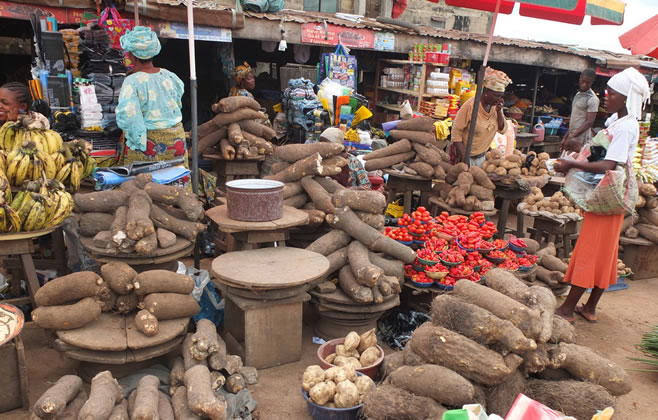
The survey showed that the cost of foodstuffs like rice, beans, semovita, yam and other ingredients had gone up in the town with a bag of Semovita selling for N1,700 instead of N1,450.
A food stuff seller, at Ipata market, Mrs Florence Adeoti, attributed the hike to the forthcoming Ramadan fast.
Mrs Memunat Yahaya-Mohammed, a house wife, who bemoaned the increases in the cost of food foodstuffs, said she could no longer maintain the food needs of her family of three.
She pleaded with the government to revive the Price Control Board to check the activities of shylock food sellers in order to make food affordable.
Unlike in most states in the country which recorded increases in the cost of foodstuffs and other commodities, the survey showed that the price of foodstuffs and other essential commodities had remained stable Damaturu, the Yobe capital.
For instance, the price of 50 kg bag of foreign rice had not changed from N8,000, millet still stands at N5,000 per a 100 kilogramme, while a bag of sugar still sell for N9,500.
Meanwhile, scarcity of tomatoes, pepper and fruits in Damaturu had led to the increase in their prices beyond the reach of the common man.
Malam Muhammadu Danfulani, a vegetable dealer on Gashua road told NAN that cost of the tomatoes and pepper sold in the state were from Plateau and Benue states.
“They (vegetables) are only scarce, but the money expended on transporting them to Yobe is very expensive,’’ he said, adding, “the multiple tax paid on these commodities have also increased their prices.”
Muhammadu expressed fears that the situation may get worse during the Ramadan fast period when the demand for the vegetables would become high.





-

 Education2 days ago
FCE Yola Graduates 3,555 Teachers , Seeks Upgrade to University
-

 Sports2 days ago
Nigerian Trio Target Titles At PFL Africa Finals
-

 Niger Delta2 days ago
Diri Restates Stance On Lagos-Calabar Coastal Highway
-

 Niger Delta2 days ago
C’River, NUJ Pay Tribute To Late Guardian Editor
-

 News2 days ago
NDLEA Recovers Tons Of Illicit Drug Consignments In Nine States
-

 Opinion2 days ago
Checking Voter Apathy In Nigeria’s Electoral Process
-

 Politics2 days ago
2027: DICKSON’S EX-ALLY VOWS TO WORK AGAINST NDC INTEREST IN BAYELSA
-

 Politics2 days ago
2027: GROUP PLEDGES 40,000 SUPPORTERS FOR COALITION CANDIDATES IN RIVERS