
Opinion
Niger Delta: Challenge For Jonathan

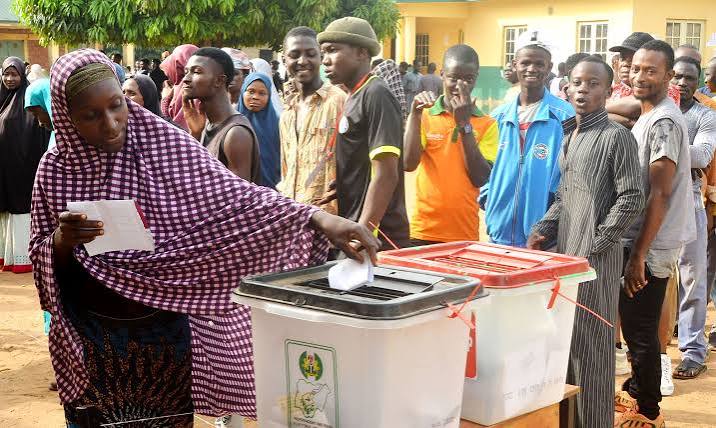
With the general elections over, attention should now shift to the critical issues of governance and development which in any event, are the essence of the political contest. Dr. Goodluck Jonathan, who has now been elected president in his own rights, has a firm mandate to pilot the affairs of this nation to greater heights for the next four years.
In many ways, it is a new dawn for Nigeria. It is a new beginning not only for the president but for all Nigerians who have participated in elections adjudged nationally and internationally as the freest and most credible since the 1993 polls won by Chief MKO Abiola. For the people of the Niger Delta, where Mr. President comes from, and indeed, for all minorities, it is a dream come true that one of them has for the first time been democratically elected as the president of this country. Will this mark the end of marginalization and underdevelopment of the oil-producing communities? The answer will surely come as the Jonathan Presidency unfolds.
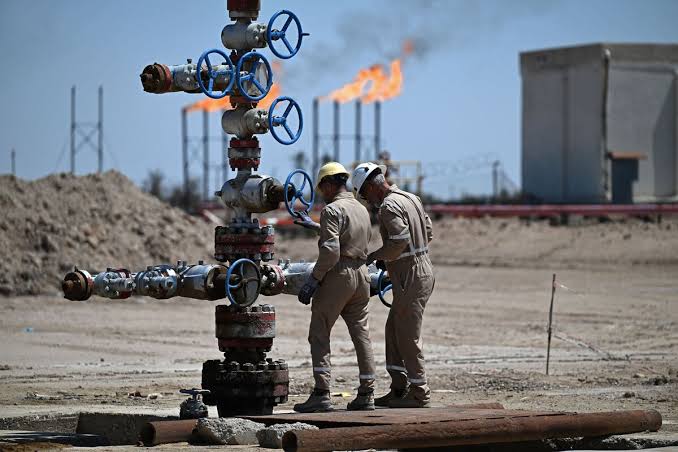
The people of the Niger Delta region are looking up to President Jonathan to vigorously tackle the problem of inadequate infrastructure in the region. They expect him to attract accelerated development to the region which had over the years suffered environmental degradation because of the operations of the oil and gas companies. The situation is further worsened by the neglect of various tries of government.
The new government would need to build on the gains of the amnesty programme for the former militants and resolve the problem of youth restiveness in the region once and for all. In doing this, it must also ensure accelerated development of the region and create employment opportunities for the youths as a way of effectively tackling militancy.
Surely, President Jonathan knows where the shoe pinches in the region. He made it clear during the presidential campaigns that his administration would refocus the energies of federal ministries and agencies towards sustainable development, employment generation and youth empowerment. He declared his “irrevocable commitment to restore hope and confidence” in the hitherto volatile Niger Delta region, while reassuring that the Development Master Plan of the region would be implemented with renewed vigour.
The Regional Development Master Plan, facilitated by the Niger Delta Development Commission (NDDC), provides the platform for the harmonious development and massive injection of funds to quickly transform the long-neglected region that produces the oil wealth that sustains the entire nation.
The blueprint, which all stakeholders agree is a worthy compass for the development of the region, needs to be adequately funded in order to translate the lofty plans into tangible projects and programmes. The projects articulated in the plan require enormous resources to execute. Take the 700km coastal road for instance, the project which traverses many states in the region, is expected to gulp over N1.3 trillion.
Those who are familiar with the difficult deltaic region would not be surprised at the enormous price tags for the big ticket projects. Nevertheless, it is a price worth paying given the contributions of oil to our economy. There is no doubt that the Niger Delta deserves massive structures like the Third Mainland Bridge in Lagos to link up the communities and towns in the creeks.
The new Jonathan administration must go beyond platitudes and begin to put massive projects on the ground to make a clean break from the previous style of adopting plans that were never implemented. It should be noted that non-implementation of lofty plans dating back to the Willinks Commission’s recommendations of 1958 has sowed the seeds of mistrust, which is now a hindrance in getting all stakeholders in the region to act in one accord. The people have seen the failure of one promise after the other. Hence, there is a loss of confidence. The concrete achievements of Jonathan, since he became the substantive president, have revved up the confidence of Nigerians generally.
The challenge for the new administration, therefore, should be to sustain and further enhance the confidence of the people. This can be done through actions and visible projects that touch the lives of the people substantially. The era of neglect and reneging on promises must be consigned to history.
For strong and respected voices like Ledum Mitee, the president of the Movement for the Survival of the Ogoni People (MOSOP), the Jonathan administration needs to work extra hard to win back the people’s confidence, “ because there has been a long history of mistrust of government actions”. The MOSOP leader is confident that President Jonathan will succeed where others failed since the road to success is already charted for him.
The Mitee Technical Committee stressed the need to approach the problem holistically and bring all stakeholders on board for maximum impart. Although the Federal government did not issue a white paper on the report, it is obvious that it had initiated actions on several fronts in response to the recommendations of the committee. For instance, the post-amnesty programme has been pursued with vigour and the main federal interventionist agencies in the region; the NDDC has increased the tempo of executing its projects. Not too long ago it got approval from the Federal Government to execute 18 new projects worth over N48.5 billion across the region. This is in addition to the 44 mega projects worth over N156 billion that is already being executed.
The Managing Director and Chief Executive Officer of the NDDC, Mr. Chibuzor Ugwoha, said the newly approved projects would provide a fresh impetus in the task to quicken the pace of the ongoing restoration efforts in the Niger Delta. He said: “The NDDC has received anticipatory approval of the Presidency to award contracts for 18 critical infrastructural development to expedite the massive and sustainable development of the region in a way that will create a conducive environment for investment.”
According to the NDDC boss, the projects were for erosion control, According to the NDDC Managing Director, the 18 projects which are expected to cost a total sum of N48,536,650,191.99 include erosion control, construction of roads, shoreline protection, drainages, health centres and tourism.
So far, the efforts to sustain the gains of the post-amnesty programme are commendable. However, there are fears that the government might lose the momentum if the budget process continues to delay the release of funds for the execution of projects in the Niger Delta. This much came to the fore when the Minister of Niger Delta Affairs, Elder Godsday Orubebe, defended the budget proposals of his ministry in the National assembly. He said that key projects that have helped to sustain months of improved security in the volatile area, are now left uncompleted. “To sustain and consolidate on the progress achieved in the Niger Delta that has brought the relative peace, especially in the area of amnesty programme, the Niger Delta region should be adequately funded,” he said.
It is obvious that no meaningful economic progress can be made unless the developmental challenges of the Niger-Delta are comprehensively addressed. The current federal administration is well placed to make history by fast-tracking the development of the region. This is even more so because of the in-depth understanding of the developmental needs of the area by Mr. President.
No matter how well meaning the Federal Government may he, it cannot achieve the much needed socio-economic transformation of the Niger Delta alone. The states and local governments of Nigeria which receive huge sums of money from the Federation Account should also be more active in executing people-oriented projects.
For instance, between May 1999 and December 2006, the nine states making up the Niger Delta region received a total of N2.16 trillion, while local governments got a total of N671 billion. Over the same period, the NDDC received only N241.5 billion, representing eight percent of the total amount of N3.07 trillion from the federation Account.
Everything considered, funding remains the most critical factor in the urgent task to develop the Niger Delta. As Orubebe told the federal lawmakers, the region can only be developed by long-term fund provisions and “not from annual budget processes.”
Agbu, a seasoned journalist, writes from Port Harcourt.
Ifeatu Agbu



Quote: “No oil vessel, commercial contract or operational deadline is worth the loss of innocent lives; where environmental grievances are ignored and dialogue gives way to confrontation, the entire society pays a price that no compensation can adequately erase.”

Quote:”The value of wealth is
Will and gifts are subjects
A Will is an important legal
Where documentation is
This does not mean every
Properly completed lifetime
Property owners must also
My appeal is simple: let us
-
 Education1 day ago
FCE Yola Graduates 3,555 Teachers , Seeks Upgrade to University
-

 Sports1 day ago
Nigerian Trio Target Titles At PFL Africa Finals
-
 Niger Delta1 day ago
Diri Restates Stance On Lagos-Calabar Coastal Highway
-
 Niger Delta1 day ago
C’River, NUJ Pay Tribute To Late Guardian Editor
-

 News1 day ago
NDLEA Recovers Tons Of Illicit Drug Consignments In Nine States
-
 Opinion1 day ago
Checking Voter Apathy In Nigeria’s Electoral Process
-
 Politics1 day ago
2027: DICKSON’S EX-ALLY VOWS TO WORK AGAINST NDC INTEREST IN BAYELSA
-
 Politics1 day ago
2027: GROUP PLEDGES 40,000 SUPPORTERS FOR COALITION CANDIDATES IN RIVERS