
Politics
Amaechi Town Hall Meeting: The Opobo/Nkoro Response

When the legendary Abraham Lincoln defined democracy as “Government of the people, by the people; for the people; uninformed skeptics of his contemporaries mocked has aphorism as balderdash without conventional syntax. Little did they know that the reality of this definition that emphasised on “the people” will survive generations unborn. The fact is that the splendour of democracy is the determination of supreme will of the majority people as embellished by its mass participatory attribute that distinguishes it from all other systems of government.
As the most universally acceptable system of government, it’s stance presupposes good governance based on the doctrines of the rule of law which in prutanity projects equity, transparency, sovereignty and freedom of expression of the citizens as distinct from military dictatorship, where might is right, as survival is only for the fittest through the obnoxious jingle rule of “do or die”. An act which left the vast civil population oppressed and their voices suppressed with the most vitriolic inhumanity hence the clamour for democracy to bring about peace to enhance rapid infrastructural and human capacity development.
Thus the introduction of meet the people tour simply referred to as the “Town Hall Meeting” by the Chibuike Rotimi Amaechi-led administration in Rivers State is indeed a welcome development.
The Town Hall Meeting is significant in many respects in that it brings governance nearer to the people by creating an enabling environment whereby the people, especially those in the rural areas could meet with the Governor face-to-face and express their feelings about government.
With this development the people are given the seldom opportunity to massively and freely partake in the governance of the State. This free-for-all interactive session among other things gives the governor first hand information about the people and places to enable him know their immediate and pressing needs and how best they could be addressed.
On the other hand it demystifies the assumed invisibility of politicians once elected into office. It is incontrovertible that many politicians have made themselves unreachable to their people whose mandate they hold as a trust. The wrong signals emitted from such politicians without good intension and vision made some people to often call politics “A Dirty Game” and remain cynical about it.
However, Governor Rotimi Amaechi in his exemplary leadership has disproved the wrong impression by making himself reachable to the people through the town hall meeting. He made it possible to discuss, share ideas and opinion with the rural people in a common forum like members of one family. The town hall meeting in a nutshell is an enlarged political family meeting in which the governor makes every community he visits his home and the people, his own people. .
Since the inception of the Town Hall Meeting, non performing Chairmen and contractors handling community development projects have started working to justify the huge monthly allocation and mobilisation fees they received. The visit· in many places have exposed chairman and contractors that are performing below expectation through response of the people as it was used to assess the performance of the various councils in developing their communities.
It is another way the Governor uses to make Chairmen and Councilors give account of their stewardship in their presence for confirmation and otherwise of their people, while in turn he unfolds State projects in the local government areas and same time unveils his administration plans for the benefit of the people.
More importantly, because of the visits, work has resumed in many abandoned projects as contractors that had gone into hiding after receiving mobilisation fee have resurfaced and commenced work; this has risen hope that the once denied dividends of democracy have started reaching the people. In some places the visit has helped to reunite opposing groups within the traditional and political institutions. The groups bury their grievances against one another and unit to give the governor the ovation he deserves and in one voice make request for assistance from the governor who is liberal to assist.
Many local government areas have in so doing attracted extra development projects directly from the Sate Government while some local government councils have been relieved of huge overhead and security costs among other things. The recent town hall meeting with governor Amaechi at Opobo Town, headquarters of Opobo/Nkoro Local Government Area (ONOLGA) was unique as it brought to the fore democracy in action through exhibition of visible dividends of democracy in form of social amenities and long term infrastructural development that would benefit even generations unborn.
The people’s response in testifying to have never had it better than now gives credence that the Maclean Uranta’s administration of the local government council has lived above board in rendering meaningful service to people. His administration has in spite of the not so huge allocation it receives against difficult and expensive geographical terrain has embarked on many projects which include the building of Opubo Hotel to boost tourism and revenue to the council, construction of concrete bridges to link the kala-ama communities of Opobo kingdom, installation of solar powered water projects at Opobo town_ and Nkoro, installation of solar powered water projects at Queen’s town .Others are construction of new office complex, building of staff quarters and internal roads, modern toilets at Opobo and Nkoro, renovation of the council secretariat, and legislative building, purchase of buses and boats to ease land and water transport, renovating native court at Opobo town as well as offices and staff quarters at Nkoro.
He also provides regular electricity supply and adequate security services for protection of lives and properties. The Council is also assisting the various health centers to function effectively as well as helping members of National Youth Service Corps posted to the area.
On the State Government part, the Governor announced the award of contract for the construction of eight primary schools at Ekere-borokiri, kalaibiama, Nkoro town, Queen’s town, kalama, Iwoama Nkoro and two others at Opobo town. On health, he disclosed that work is in progress at health centers at Opobo, Queen’s town and Nkoro) while he had delivered (2000KVA) generator sets at Opobo town in addition to the existing ones.
He promised that the Unity Road projects will soon reach kalaibiama town in Opobo kingdom. He used the occasion to announce to the delight of the people about the competition of landing jetty at Epelema, land reclamation at Opobo town and shore protection projects at Queens town. His visit to Opobo/Nkoro gave him first hand information of how the council spends millions of Naira monthly on security services which he promised to relieve the council of such burden. With this development, money that would have been spent on security by the council could be channeled to other aspects of development.
Condemning violence and militancy he stressed on the need for giving children the opportunity to have good education as to produce the much needed manpower to project the state high in overall developn1ent. One of the major achievements of the Town Hall Meeting was the Governor’s promise that the state government will partner to make the Opobo International Boat Carnival (OIB) a great success. And that it will form part of the state cultural and tourism agenda. So from all indications the Amaechi administration is a blessing in verification.
One good turn, they say, deserves another, and to whom much is given, much is expected. Maclean Uranta has at the council level given much to the people of Opobo/Nkoro; Rt Hon Chibuike Rotimi Amaechi has also given much to Opobo/Nkoro people and Rivers State in general. This bears eloquent testimony that the ruling People Democratic Party (PDP) manifestoes is a true statement of assurance for peace and progress of the people and development of the entire State. The peoples-oriented leadership Rivers people have been yeaning for has come through the party; let the people not be deceived to derail but to continue following the path of peace to enhance rapid ‘infrastructural and human capacity development in the entire State through continuity with PDP and support to the hardworking Governor. .
Let them reciprocate the good gesture by supporting PDP government at all level with true spirit of patriotism and honesty now and beyond this tenure. But then, non performing Chairmen, and representatives of the people at various level of parliament should improve their relationships with their people by making themselves available and answerable to their people. They should justify the purpose of the peoples mandate they are holding with execution of constituency projects and empowerment of their people.
Let it be known to them that those they met on their way going up, will be the same people they will meet on their way coming down. The Amaechi humility in service which necessitated the ongoing Town Hall Meeting is the right step in the right direction, which should continue and emulated by other leaders who mean well for their people.
Austin Brown



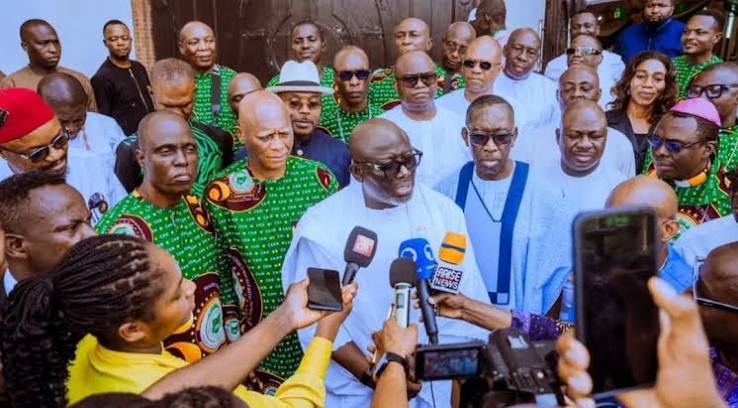
Delta State Governor, Rt. Hon. Sheriff Oborevwori, has urged public office holders to maintain a clear distinction between political responsibilities and service to God, saying the pursuit of political interests should never weaken their commitment to faith and humanity.
Gov. Oborevwori made the call in Abuja, at the weekend, after receiving the Christian Icon Award from the Christian Association of Nigeria (CAN) during the association’s 50th anniversary celebration at the National Christian Centre.
The award was presented by CAN President, Dr Daniel Okoh, in recognition of the governor’s public service, ethical leadership and commitment to Christian values.
Speaking after the presentation, Gov. Oborevwori expressed gratitude to God for the honour, describing it as a reminder of the responsibility to serve humanity with greater dedication.
“We may be involved in politics, but we must be able to distinguish between serving God and playing politics. These are two different responsibilities, and we must never allow politics to undermine our commitment to God,” he said.
The governor explained that his commitment to serving in the church predated his emergence as Speaker of the Delta State House of Assembly. He said he had continued with his ushering duties despite advice at the time that his political position might make the practice inappropriate.
According to him, his conviction that service to God and humanity should remain a sustained responsibility has continued to guide his public life.
Gov. Oborevwori described the recognition by CAN as particularly meaningful because, in his view, the association’s awards reflect not only public service but also character, integrity and the impact of a recipient’s contributions to society.
“When an organisation such as CAN gives you an award, it means a lot because the recognition is based not merely on public service but also on integrity, character and the impact you have made,” he said.
The governor also commended efforts to bring the five blocs within the Christian community together, expressing the belief that greater unity among them would strengthen their contribution to national development.
He said a united Christian community, speaking with one voice on issues of common concern, could contribute to a more cohesive Nigeria.
Gov. Oborevwori added that service to God should be undertaken with sincerity, dedication and a sense of responsibility, rather than for personal gratification or public recognition.
CAN’s 50th anniversary celebration brought together religious leaders, political office holders and other prominent Nigerians to mark the association’s five decades of service.
Those who accompanied the governor included immediate past Delta State Governor, Senator Ifeanyi Okowa; Speaker of the Delta State House of Assembly, Rt. Hon. Emomotimi Guwor; and members of the National Assembly, Hon. Victor Nwokolo, Hon. Nicholas Mutu and Hon. Jonathan Ukodhiko.
Others were the Chief of Staff, Government House, Hon. Johnson Erijo, and the Senior Political Adviser to the Governor, Senator Emmanuel Aguariavwodo, alongside other government functionaries and political leaders.
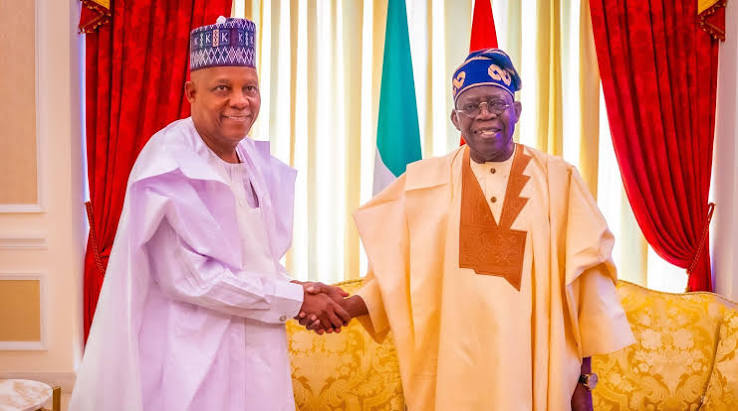
Vice President Kashim Shettima has expressed concern over internal divisions within the ruling All Progressives Congress (APC), warning that disagreements among party members pose a greater threat to its electoral success in 2027 than opposition leaders Atiku Abubakar and Peter Obi.
Vice President Shettima stated this at the weekend, in Abuja, during the unveiling of the campaign headquarters of Arewa for Asiwaju (A4A), a northern political coalition supporting the re-election of President Bola Tinubu.
The Vice President stressed that unity within the APC would be crucial to securing victory in the forthcoming general elections.
Vice President Shettima cautioned party stakeholders against concentrating solely on the presidential election while neglecting governorship and National Assembly contests.
According to him, undermining APC governors or other candidates could weaken the party’s chances of achieving a comprehensive victory.
“There is no point in championing the cause of the presidential election and then undermining the governor in the gubernatorial election. Honestly, it will not go down well with the system,” he warned.
He urged party leaders and supporters to rally behind President Tinubu, APC governors and National Assembly members to strengthen the party ahead of the elections.
Speaking on the political situation in the North, Vice President Shettima declared that the region had already demonstrated its support for President Tinubu’s second-term ambition.
“By now, I believe the North has spoken. We have spoken with a resounding voice and unmistakable conviction. From Adamawa to Zamfara, from Borno to Niger, we have spoken,” he stated.
The Vice President also challenged APC members to confront former Vice President Atiku Abubakar politically but respectfully.
“Go and perform. Go and defeat Baba Atiku. Defeat him respectfully,” he said.
Vice President Shettima maintained that the APC possessed the political structure and grassroots strength required to compete effectively across Nigeria’s polling units.
He disclosed that the party had 361,045 officials across ward and local government structures, compared with the country’s 176,845 polling units.
According to him, the figures demonstrate the party’s organisational capacity to mobilise voters nationwide.
The Vice President further charged political appointees to demonstrate their electoral relevance in their respective wards and local government areas, stressing that political success begins at the grassroots.
“Politics is still local,” he declared.
On the APC’s strength in northern Nigeria, Vice President Shettima claimed that 18 of the region’s 19 states were under the party’s political influence.
He also highlighted defections from the New Nigeria Peoples Party (NNPP) in Kano State as evidence of the APC’s growing political strength.
Addressing Nigeria’s economic challenges, Vice President Shettima acknowledged the hardship facing many households but defended the economic reforms introduced by the Tinubu administration.
According to him, the administration’s reforms have helped stabilise the economy and improve the country’s financial position.
He claimed that Nigeria’s foreign reserves had risen to approximately $58.9 billion, describing the development as evidence of economic recovery.
Vice President Shettima assured northern Nigerians that the region would benefit from President Tinubu’s second term, insisting that the President remained committed to its development.
“For the North, we have absolutely nothing to fear in a Tinubu second term. He has the North at heart,” he said.
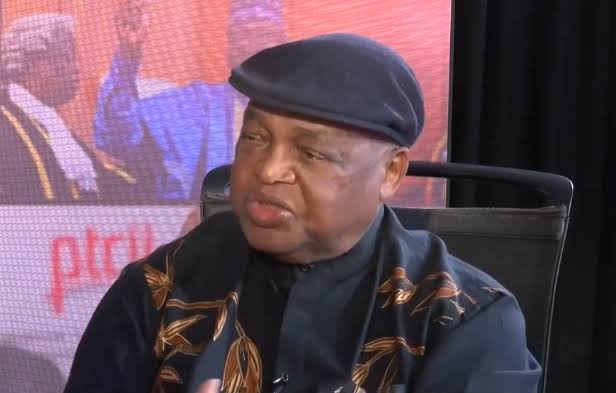
A family source confirmed his death to The Tide source on Saturday, October 17, 2026, disclosing that the former Nigerian ambassador died earlier in the morning following a prolonged period of deteriorating health.
According to the source, Dr Cole had recently been discharged from the intensive care unit (ICU), but his condition continued to worsen.
“He left ICU a few days ago. He had been doing poorly in recent weeks leading to this end,” the source reportedly said.
Born on August 4, 1940, Dr Cole celebrated his 86th birthday in August, barely two months before his death.
He was a prominent figure in Nigeria’s public life, with a distinguished career spanning journalism, diplomacy, public administration and historical scholarship.
Before joining the diplomatic service, Dr Cole established himself in the Nigerian media industry, serving on the editorial board of The Guardian newspaper before becoming Managing Director of Daily Times, one of Nigeria’s most influential media organisations.
His leadership role at Daily Times placed him among the notable figures who shaped the country’s media landscape during a significant period in its development.
Dr Cole subsequently served Nigeria as ambassador to Argentina and Brazil, representing the country in international diplomatic engagements and further broadening his public service experience.
Beyond journalism and diplomacy, he was known for his contributions to discussions on governance, politics and Nigeria’s historical development. His professional engagements reflected a longstanding interest in the country’s political and institutional evolution.
His death marks the end of a career that traversed several important areas of national life, leaving a record of service in journalism, international relations and public affairs.
As of the time of filing this report, the family had yet to announce details of his funeral arrangements.