
Nation
THE STATES

Adamawa
The Adamawa State House of Assembly recently criticised officials of some local councils over alleged abuse of due process in their financial dealings.
The Tide’s source reports that the House in February set up six sub-committees to investigate the financial dealings of the councils, following cases of unpaid staff salaries, bank overdrafts and loans reported against some officials.
The situation led to the impeachment of four chairmen by their councillors, forcing incessant strikes by workers due to irregular payment of salaries.
The House Committee on Local Government led by Mr. Kwamoti Laori made the accusation in Yola after scrutinising the finances of Hong, Gombi, Song and Girei councils.
The Committee accused the councils of flagrant abuse of due process and poor financial record keeping, especially the incomes and expenditures.
It observed that the development was capable of breeding corruption and extravagance in the management of public funds at the third tier of government.
The Committee, while in Hong, discovered to its dismay that records of income and expenditure were not up to date, while documents needed to be ascertained was not accessible.
Borno
The Borno/Yobe Command of the Nigeria Custom Service (NCS) has given an assurance that it will meet its N180 million revenue target in 2010..
Mr Ikpepe Lawrence, the Comptroller of the command told newsmen in Maiduguri, that the target was achievable going by the monthly generation.
“It may interest you to know that we are generating N15 million monthly in terms of revenue from import duties and other areas.
“This means that we should be able to generate N180 million at the end of the year,” Lawrence said.
He said that the officers and men of the command were committed to the task.
“We are not relenting because we have a duty to ensure that we collect all collectable revenue into government’s coffers.
“My officers are working 24 hours, while I give them good supervision to ensure that we attain our goal,” he said.
Lawrence, who assumed duty in 2009 as the Comptroller of the command, said that his posting to the command was a home coming.
FCT
Dr Seidu Mohammed, Director General, National Space Research and Development Agency (NASRDA), said space science was the only technology that could fast-track Nigeria’s Vision 2020 and Millennium Development Goals (MDGs).
Mohammed made the assertion in Abuja on Monday in an interview with the The Tide’s source. He stressed that the country could only achieve its dream of being among the largest 20th economies by 2020 through space science and technology.
“In effect, Space Science and Technology remains a major tool for achieving Vision 20:2020 and the MDGs.
Mohammed added that the earth observation satellite remained the vital way to access and exploit resources that would enable the country to have adequate information to plan its urban cities.
The satellite, he added, could also give the opportunity to experts on information technology to gather information on every house in the city capitals and enable state governments to improve on their revenue profiles.
Kaduna
Kaduna State Government on Monday , blamed its local governments for delaying the installation of transformers recently distributed by the government to the areas.
The Commissioner for Rural and Community Development, Alhaji Abubarkar Musa, told newsmen, that more than 150 transformers were distributed to the councils for installation.
He said the state government had directed the councils to fund the installation of the transformers but nothing was done.
“We thought the installation was delayed because of their late arrival, but we realised that it was the councils that delayed their installation,”he said.
Alhaji Shehu Giant, the Chairman of the state branch of the Association of Local Goverrnments of Nigeria (ALGON), however, said the councils were making efforts to ensure their installation.
“The cost of installing the transformers are often higher than the purchase cost,” he said, adding that “as soon as the councils are financially buoyant, the transformers would be installed”.
Katsina
Irrigation farmers in Katsina State have urged the federal and state governments to facilitate the establishment of markets and processing companies for agricultural produce in the area.
The state Chairman of irrigation farmers, Alhaji Salisu Lema, made the call on Friday in an interview with newsmen during a tour of irrigation sites in Funtua, Musawa, Malumfashi, Danja, Dandume and Kafur Local Government Areas.
He said the establishment of markets and processing plants at strategic locations would enhance increased production and assist in reducing poverty.
Lema explained that various crops and vegetables were produced in large quantities during dry season farming, and that such produce were being transported to different parts of the country.
He commended the state and local governments over the sale of subsidised fertilisers and other inputs, and urged them to increase the quantity of the commodity in view of the large number of farmers.
An irrigation farmer in Kafur Local Government Area, Malam Yahuza Masari, said the inputs supplied by the government were inadequate, as a result of which many farmers could not benefit from the allocations.
He noted that the absence of viable markets and processing companies had hindered growth in the sector.
Masari said most of their produce were perishables, adding that farmers had recorded huge losses due to the lack of storage facilities.
He said the situation could be reversed if appropriate markets and processing plants were provided by government in collaboration with the private sector.
Kogi
The National Inland Waterways Authority (NIWA), has disbursed N3.6 million to 19 communities affected by the ongoing dredging of the lower part of River Niger.
Speaking in Lokoja on Friday, the Managing Director of NIWA, Alhaji Ahmed Aminu Yar’Adua, said that the money was to mitigate the adverse effects of the dredging project on farming and fishing activities in the communities.
He said that the affected farmlands and fish ponds were actually situated within the NIWA right of way but stated that the dredging was not meant to cripple the economic activities of the communities, hence the gesture.
Our correspondent reports that the benefiting communities which were grouped into two categories depending on the impact of the dredging, received between N150,000 and N200,000.
NIWA said that it has in addition, made provision for the establishment of community projects in Ohono, Adankolo, Ajaokuta and Idah.
Yar’Adua said that the money was channelled through the communities to the individual farmers because of their land tenure system, which vested land ownership in communities.
Lagos
Dr Olajide Ayinla, the Director- General, Institute of Oceanography and Marine Research (NIOMR), Lagos on Friday called for a review of proprietary rights to encourage research works.
Ayinla told newsmen in Lagos that such review should adequately protect the interest of originators to enable the sector to thrive.
He said fear by the private sector to invest in research and development could be as a result of poor protection under the existing laws.
“ No one would like to invest in a venture that will be an all comers’ affair without reaping the benefits,’’ he said.
The NIOMR chief said research work could thrive properly in the country if the patent rights were well protected.
He said there were indications that most of the research and development were being left in the hands of government unlike the practice in other developed countries.
Ayinla said investment of most Nigeria companies in research and development works was very low.
“ Abroad, companies contact tertiary institutions and private scientists for research work. I think investors should be sensitised on the importance of research to the companies and the economy,’’ he said.
Ayinla said research and development are more or less left in the hands of the government agencies.
According to him, NIOMR makes most of its research findings public to stimulate investment.
Niger
The Etsu Nupe, Alhaji Yahaya Abubakar, has given Alhaji Mahmud Dalhatu the turban as the new Makama Nupe.
Abubakar, who performed the ceremony in Bida, Niger, recently, charged the new Makama Nupe to strive to contribute meaningfully to the socio-economic development of the country.
The Tide’s source reports that the new Makama Nupe succeeded his elder brother, Alhaji Shehu Ahmadu-Musa, who died on November 19, 2008.
Dalhatu is the Company Secretary and Legal Adviser, Brass LNG Ltd.
Abubakar gave assurance that the Nupe Kingdom would honour only those who had contributed tremendously to its development in particular and the country in general.
According to him, ‘’those who are given traditional titles are people of proven integrity and as well those who show concern for the development and socio-economic well-being of the emirate.’’
The Etsu Nupe said the honour done to some illustrious sons and daughters of the area was aimed at encouraging other people to live an exemplary life.
The ruler said the emirate would continue to celebrate its sons and daughters who offered selfless services to humanity, and appealed to highly placed individuals to continue to bring development to the area.
Osun/Ogun
The Nawair-Udeen Society of Nigeria says it is opposed to the return of public schools by governments to their original owners.
Alhaji AbdulGaniyu Adegboyega, the National President of the association, said at a news conference on Friday in Osogbo that the campaign for the return of such schools was against public interest.
He explained that the take-over of such schools by government was motivated by genuine reasons, and with the consent of the owners.
“The owners were not forced to hand over their schools to government. As a matter of fact, they were compensated.
“Besides the obvious reasons of financial incapability of the private owners, government took them over to make the schools become public property and remove all forms of sectionalism.
“They are open to everyone, regardless of religious beliefs or status,’’ he added.
Adegboyega said the public would suffer so many disadvantages if the schools were eventually returned to the owners.
He declared: “Today, private schools are being run with extravagance and capitalist intincts, where their owners have turned education to money making venture by charging exorbitant fees.
“Where will the poor parents get the money to keep their children in school? The Muslim community says no to exploitation, especially in schools.”
Adegboyega explained that the Islamic tenets compelled Muslims to always explore the possibilities of making life bearable and meaningful for the poor.
He asserted that “the inordinate urge to get rich quick at the expense of others,” was also not in line with Islamic tenets.
The religious leader also urged the Federal Government to take necessary measures to check against the reccurrence of the Jos crisis, through conscious efforts to eradicate illiteracy in the society.
He said this could be done, not only through regular schools, but conferences, seminars and workshops.
Sokoto
Alhaji Garba Umar, the Chairman of Augie Local Government in Kebbi State, says the government has awarded N669 million contracts for the construction of two roads in the area.
He told newsmen in Sokoto that the roads were the 15-kilometre Argungu-Bubuce and the 10-kilometre Augie–Dundaye.
Umar also said that the government had embarked on the construction of a Primary Health Care Centre at Tiggi at a cost of N135 million.
“All these projects are nearing 95 per cent completion and they are aimed at improving the living standard of the people as well as access to quality healthcare,’’ he said.
Umar further stated that the government was constructing befitting residences for the district heads of Augie and Buyawa at N54 million .
“ This is to provide a conducive atmosphere for the traditional rulers to operate, as they play vital roles in the sustenance of peace and security,’’ the chairman further said .
Umar also announced that his administration had embarked on the construction of the first phase of the council’s secretariat at N32 million.



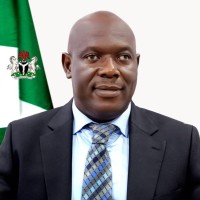
The Hydrocarbon Pollution Remediation Project (HYPREP) has commemorated the 15th anniversary of the release of the United Nations Environment Programme (UNEP) Environmental Assessment Report on Ogoniland, reaffirming its commitment to restoring the environment and improving the livelihoods of affected communities.
In a statement signed by the Project Coordinator, Prof Nenibarini Zabbey, to commemorate the anniversary, HYPREP described the anniversary as a significant milestone in Nigeria’s environmental restoration efforts, noting that the project has made remarkable progress in implementing the recommendations of the landmark UNEP report released on August 4, 2011.
The UNEP report had revealed extensive oil pollution across Ogoniland, severe environmental degradation, and serious public health risks resulting from decades of petroleum operations. It also recommended an initial $1 billion fund to commence the cleanup of the affected communities.
According to HYPREP, the Federal Government formally launched the Ogoni clean-up in 2016, while the Project Coordination Office was established in 2017 to drive the implementation of UNEP’s recommendations.
Zabbey said the current administration has continued to prioritise the project under the Renewed Hope Agenda.
Providing an update on the cleanup, the Project Coordinator disclosed that 30 of the 65 contaminated sites identified by UNEP have been fully remediated, while work is ongoing at several medium- and high-risk locations. It also stated that more than 1.5 million mangrove seedlings have been planted as part of what it described as the world’s largest restoration of oil-degraded mangroves, with over 1,000 hectares of shoreline already rehabilitated.
Zabbey further revealed that 49 Ogoni communities have been connected to potable water schemes through multiple water projects and booster stations aimed at providing safe drinking water across the region.
In the health sector, he said the 100-bed Ogoni Specialist Hospital in Kpite and the 43-bed Cottage Hospital in Buan are nearing completion, adding that several existing health facilities have been upgraded with modern medical equipment, while five ambulances have been donated to improve emergency healthcare services. The Project Coordinator also disclosed that a three-year human health biomonitoring study is being conducted in collaboration with the World Health Organization’s International Agency for Research on Cancer (IARC).
On economic empowerment, Zabbey stated that the Project has created more than 8,000 direct jobs and trained thousands of Ogoni youths and women in various vocational and technical skills, including software development, cybersecurity, aviation, commercial diving, seafaring, mechatronics, and creative arts. The project also reported awarding scholarships to more than 1,000 students, providing grants to small businesses, and supporting persons living with special needs through skills acquisition programmes.
The statement further highlighted ongoing legacy projects, including the Ogoni Power Project and the Centre of Excellence for Environmental Restoration, which it said is about 96 per cent complete. HYPREP also welcomed the recent designation of the Ogoni Wetland as a Ramsar Site of International Importance and pledged to continue promoting biodiversity conservation and sustainable management of the ecosystem.
Marking the anniversary, Zabbey said the progress achieved over the past 15 years demonstrates the collective commitment of government, development partners, stakeholders, and local communities to restoring Ogoniland. He called for renewed collaboration to sustain the cleanup effort, promote environmental sustainability, and support the long-term development of the region. 3
-

 News2 days ago
RSG Targets Nine Million Residents in Mosquito Net Distribution Campaign
-

 Oil & Energy2 days ago
Aiyedatiwa Signs New Electricity Bill
-

 Oil & Energy2 days ago
NLNG Commissions Research And Innovation Centre In RSU
-

 Maritime2 days ago
Marine Minister Commends President Tinubu On NPERA Bill Assent
-

 News2 days ago
KenPoly Holds Eight Convocations, August 29
-

 News2 days ago
RSG Begins Another Phase of Projects Commissioning Today
-

 News2 days ago
RMAFC Completes Revenue Sharing Review, Proposes New Pay
-

 Maritime2 days ago
NAGAFF Petitions IGP Over Alleged Maritime Police Harassment