
Business
OPEC Hikes Production By 80,000bpd

The Organisation of Petroleum Exporting Countries (OPEC) increased crude oil production by 80,000 barrels per day (bpd) to 28.47 million bpd in June.
Reports from Platt’s’ survey of OPEC members, oil industry officials and analysts, said June’s output recorded an increase over 28.39 million bpd in May.
According to the reports, production from the 11 OPEC members bound by quotas, not including Iraq, dimmed by 50,000 bpd to 26.04 million bpd in June from 25.99 million bpd in May.
“These members are fairly unspectacular but with volumes edging improved from the third consecutive month, they do suggest that OPEC’s big output cutting effort may have reached its limit”, said John Kingston, Platts global director of oil. “With prices now trending downward while OPEC output is heading the other direction, it may mean September’s meeting of group could find itself facing some tough decisions in its production level.
OPEC production had already risen, in April and May after falling steadily since August 2008, when total output including that of Indonesia which left the group at the end of last year, average 32.81 million bpd. Exchanging Indonesia production, the survey estimates showed total OPEC production falling by 3.2 million bpd since last August.
Output increases totally 160,000 bpd from Angola, Ecuador, Iran, Qatar, Saudi Arabia, the UAE, Venezuela and Iraq were offset by an 80,000 bpd drop in Nigerian volumes.
The June estimates for OPEC-11 output reduce the group’s level of compliance with the 4.2 million bpd in crude output cuts agreed late last year to 71.5 percent in March.
Before April, OPEC production had fallen steadily as the group responded to the plunge in oil demand caused by the global economic recession, although the OPEC-11 failed to bring their volumes down to the 24.845 million bpd target which came into effect on January 1 this year.
The latest estimates leave the OPEC-11 some 1.19 million bpd in excess of their target.
OPEC has not published individual country quotas under the 24-845 million bpd targets. These quotas have been on the broadly-upward trend since mid-February, and this may have encouraged leakage. For example, OPEC’s own basket of crude’s stood at $38.14 per barrel on February 19. On June 11, the basket reached $70.87 per barrel. Its highest level for this year so far.
Prices have since fallen back by several dollars with the OPEC basket standing at $61.11/6 on July 8. OPEC ministers have twice rubber stamped the December agreement, most recently at a May 28 meeting in Vienna. They are next scheduled to meet in September.

Some residents of Port Harcourt queuing to buy petroleum products at a filling station in the city. Photo: King Osila



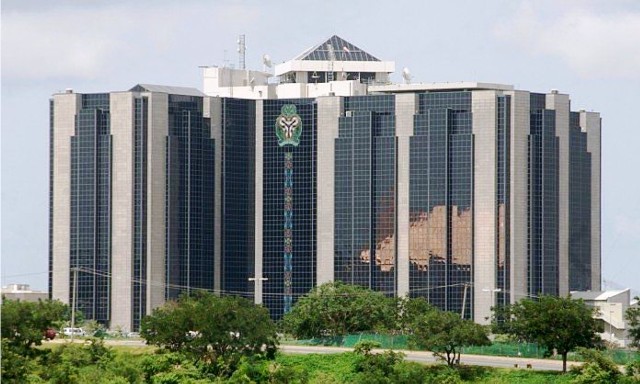
The Central Bank of Nigeria (CBN) has revised its cash withdrawal rules, discontinuing the special authorisation previously permitting individuals to withdraw N5 million and corporates N10 million once monthly, with effect from January 2026.
In a circular released Tuesday, December 2, 2025, and signed by the Director, Financial Policy & Regulation Department, FIRS, Dr. Rita I. Sike, the apex bank explained that previous cash policies had been introduced over the years in response to evolving circumstances.
However, with time, the need has arisen to streamline these provisions to reflect present-day realities.
“These policies, issued over the years in response to evolving circumstances in cash management, sought to reduce cash usage and encourage accelerated adoption of other payment options, particularly electronic payment channels.
“Effective January 1, 2026, individuals will be allowed to withdraw up to N500,000 weekly across all channels, while corporate entities will be limited to N5 million”, it said.
According to the statement, withdrawals above these thresholds would attract excess withdrawal fees of three percent for individuals and five percent for corporates, with the charges shared between the CBN and the financial institutions.
Deposit Money Banks are required to submit monthly reports on cash withdrawals above the specified limits, as well as on cash deposits, to the relevant supervisory departments.
They must also create separate accounts to warehouse processing charges collected on excess withdrawals.
Exemptions and superseding provisions
Revenue-generating accounts of federal, state, and local governments, along with accounts of microfinance banks and primary mortgage banks with commercial and non-interest banks, are exempted from the new withdrawal limits and excess withdrawal fees.
However, exemptions previously granted to embassies, diplomatic missions, and aid-donor agencies have been withdrawn.
The CBN clarified that the circular is without prejudice to the provisions of certain earlier directives but supersedes others, as detailed in its appendices.
-
Business2 days ago
Shippers Council Vows Commitment To Security At Nigerian Ports
-
Business2 days ago
CBN Revises Cash Withdrawal Rules January 2026, Ends Special Authorisation
-

 Business2 days ago
Nigeria Risks Talents Exodus In Oil And Gas Sector – PENGASSAN
-
Business2 days ago
NCDMB, Others Task Youths On Skills Acquisition, Peace
-

 Business2 days ago
FIRS Clarifies New Tax Laws, Debunks Levy Misconceptions
-

 Politics2 days ago
Tinubu Increases Ambassador-nominees to 65, Seeks Senate’s Confirmation
-
Sports2 days ago
Obagi Emerges OML 58 Football Cup Champions
-

 News2 days ago
Tinubu Swears In Christopher Musa As Defence Minister