
Editorial
Ugochinyere’s Allegation, Time For PDP To Act

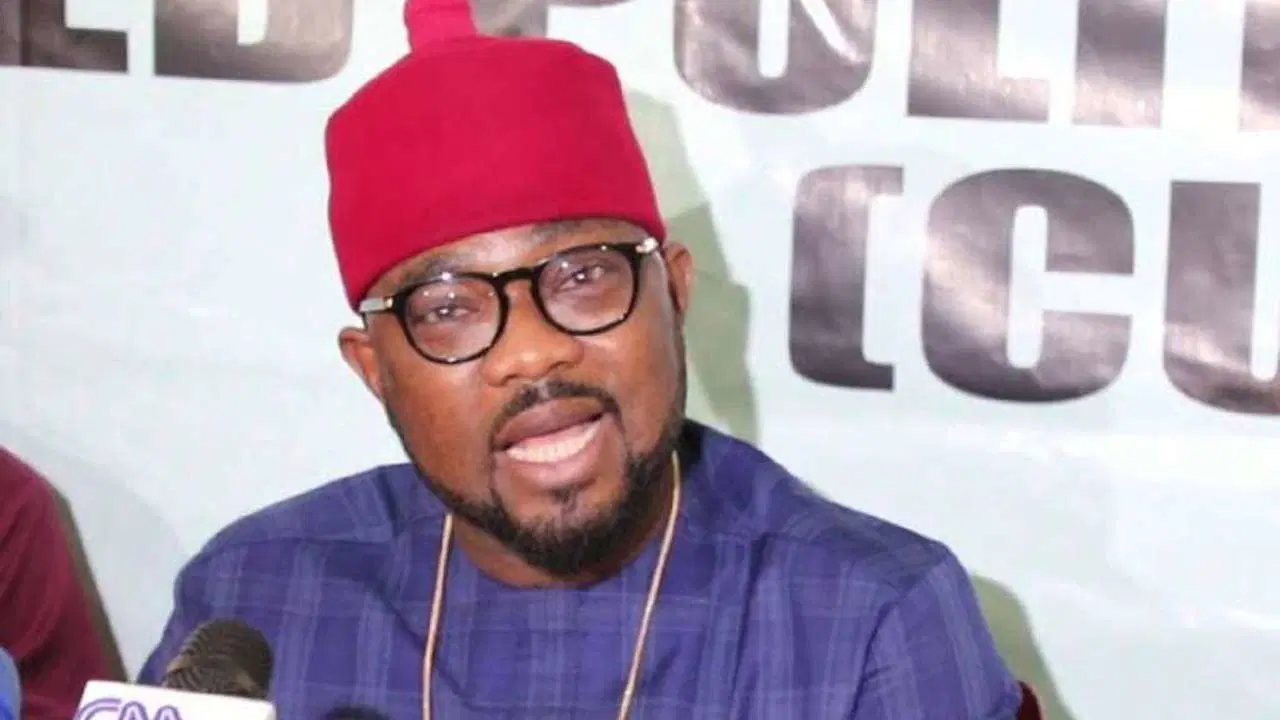
Some opposition lawmakers, under the aegis of the Coalition for United Political Parties (CUPP), recently raised an alarm over a renewed plot by the 27 lawmakers of the Rivers State House of Assembly to impeach Governor Siminalayi Fubara. The legislators had defected to the All Progressives Congress (APC) from the Peoples Democratic Party (PDP) last December.
The spokesman of the coalition, Hon. Ikenga Ugochinyere, made this claim during a press briefing held in the National Assembly, Abuja. He revealed some leaked court documents signed by the PDP Acting Chairman, Illiya Umar Damagun, and the PDP Secretary, Senator Samuel Anyanwu, to aid the pro-Wike APC interest against a party in Rivers State and to assist in their attempt to remove Governor Fubara from office.
Speaking during the media chat, Hon. Ugochinyere said: “The opposition lawmakers coalition under the main opposition coalition umbrella, the CUPP, today raised serious allegations against the party’s Acting National Chairman, Mr Umar Damagum, and National Secretary, Senator Samuel Anyanwu.
“The lawmakers accused the two party leaders of a covert plot to sabotage the PDP’s interests in an ongoing legal battle involving defected former members of the Rivers State House of Assembly which is part of a desperate and shameful effort to betray their party, destroy all legal efforts and aid the pro-Wike APC elements have the legal backing to attempt their impossible plot of removing the PDP government led by Gov. Fubara out of office.”
He further claimed that the national chairman of the PDP, along with the secretary, shamefully opposed the national legal adviser’s effort to neutralise and prevent the pro-Wike dismissed APC lawmakers from jeopardising the interests of the PDP. The chairman and secretary sought to support the pro-Wike APC lawmakers who were dismissed, hoping to help them regain their lost legitimacy and make another attempt to remove their party’s governor.
No doubt, Ugochinyere’s accusation carries significant weight and raises serious concerns that warrant a thorough investigation to determine its truthfulness. It is particularly disheartening and unfortunate that such assertions are directed at the individuals holding the two highest offices in the party, as this tarnishes the integrity of the institutions they represent. The gravity of the troubling situation cannot be overstated.
We unequivocally denounce the actions of the Chairman and Secretary of the main opposition party in their purported involvement in a plot to impeach the Rivers State governor. It is shocking to witness such a betrayal of trust and blatant disregard for a dedicated party member. The governor has been tirelessly working to uplift the lives of his people and promote development in the state, only to face opposition from within his political party.
It is deeply disappointing to witness the leadership of a major political party prioritise the interests of a single individual over the well-being of the people they were elected to serve. Governor Fubara has been a beacon of hope for the PDP and residents of Rivers State, and his dedication to good governance should be celebrated and supported, not undermined by those within his party. The move to impeach him reeks of political opportunism and a lack of regard for party commitment and loyalty.
Though the PDP Governors Forum and the Board of Trustees (BOT) have condemned the move to unseat Fubara, however, to truly safeguard democracy and party dignity, they must do more than offer solidarity. They must proactively mobilise their party machinery and thwart the nefarious plans of those seeking to subvert the party’s interests. They should move against the defected 27 lawmakers and the machinations of the APC. By denying these individuals a platform within the PDP, both organs can effectively neutralise their ability to disrupt the affairs of the once formidable PDP.
Other organs of the party should collaborate and resist the chairman and the secretary. These two officers have caused enough problems for the opposition party and do not deserve to continue in their offices. The current crisis in the PDP is attributable to them and their cohort, former Governor Nyesom Wike. The constant power struggles, lack of respect for party laws, and questionable decision-making have led to a loss of trust and support from party members and the general public. The PDP must take swift action to remove these individuals from their positions to restore unity and credibility within the party.
Stakeholders must take immediate action to prevent the potential demise of the PDP. Allowing the current crisis, fueled by the self-serving actions of the implicated officials, to continue unchecked could lead to irreparable damage. These leaders must prioritise the party’s unity over personal interests. Every member must work to safeguard the PDP’s future and reinforce its role as a vital opposition force. The time for decisive intervention is now; complacency could ultimately seal the party’s fate.
Ugochinyere’s allegations demand a prompt and transparent response from those implicated; silence may be interpreted as tacit admission of guilt. The party organs must act decisively to reclaim their party. It is disheartening to witness a once awe-inspiring political party struggle to present a cohesive front, particularly with the 2027 elections looming. This fragmentation signals a troubling departure from the PDP that Nigerians once revered, raising concerns about its future viability and relevance in a rapidly evolving political landscape. Unity, discipline, and internal democracy are essential for the party’s revival.



Nigeria stands at a critical juncture as the world marked World Press Freedom Day (WPFD) on May 3. This annual observance is a reminder that a free press is central to democratic life, good governance, and public accountability. For Nigeria, it is also a moment for sober reflection on how far the country has come and how far it still has to go in safeguarding the independence of its media.
World Press Freedom Day exists to highlight the fundamental importance of freedom of expression and to honour journalists who risk their lives in pursuit of truth. It underscores the idea that without a free press, societies cannot function transparently, nor can citizens make informed decisions. In countries like Nigeria, where democracy continues to evolve, the observance carries particular urgency.
This year’s theme, “Shaping a Future at Peace: Promoting Press Freedom for Human Rights, Development and Security”, places journalism at the heart of global stability. It emphasises that a peaceful society cannot be built on silence, fear, or manipulated information. Rather, it depends on the free flow of accurate, timely, and independent reporting.
At its core, the theme highlights the role of journalism in fostering accountability, dialogue, and trust. These are not abstract ideals. In Nigeria, where public confidence in institutions is often fragile, the media remains one of the few platforms through which citizens can question authority and demand transparency. When press freedom declines, so too does public trust.
Journalism serves as a foundation for peace, security, and economic recovery. Countries with robust media systems tend to attract greater investment, maintain stronger institutions, and resolve conflicts more effectively. Nigeria’s economic challenges, ranging from inflation to unemployment, require open scrutiny and informed debate, both of which depend on a free press.
However, the issue of information integrity has become increasingly complex in the digital age. Artificial Intelligence (AI) and online platforms have amplified the spread of misinformation and disinformation. In Nigeria, where internet penetration has grown rapidly, false narratives can travel faster than verified facts. This makes the role of credible journalism more vital than ever.
The challenge is not only technological but also ethical. AI-driven manipulation of information threatens to distort public discourse, influence elections, and deepen social divisions. In such an environment, professional journalism must act as a stabilising force, ensuring that truth prevails over sensationalism and propaganda.
Equally troubling is the safety of journalists. Across Nigeria, reporters face growing levels of online harassment, judicial intimidation, and physical threats. Self-censorship is becoming more common, as media practitioners weigh the risks of reporting sensitive issues. This trend undermines the very essence of journalism.
A particularly alarming incident involved a serving minister in the present administration, who openly threatened to shoot a journalist during a televised exchange. Such conduct, broadcast to the public, sends a dangerous signal that hostility towards the press is acceptable. It erodes the norms of democratic engagement and places journalists in harm’s way.
This year’s theme aligns closely with the United Nations Sustainable Development Goal (SDG)16, which promotes peace, justice, and strong institutions. Freedom of expression is a cornerstone of this goal. Without it, institutions weaken, corruption thrives, and justice becomes elusive. Nigeria’s commitment to SDG 16 must therefore include genuine protection for the media.
Historically, the Nigerian press has been a formidable force. From resisting colonial rule to challenging military dictatorships, our journalists have played a central role in shaping the nation’s political landscape. Today, however, that legacy appears to be under strain, as the media operates under what can best be described as a veneer of freedom.
Beneath this facade lies a troubling reality. Journalists are routinely harassed, detained, and prosecuted for performing their constitutional duties. Reports from media watchdogs indicate that dozens of Nigerian journalists face legal threats or arrest each year, often for exposing corruption or criticising those in power.
The Cybercrimes (Prohibition, Prevention, etc.) Act of 2015 has become a focal point of concern. Originally intended to combat cyber threats, it has increasingly been used to silence dissent. Sections 24 and 27(1)(b), in particular, have been invoked to target journalists, bloggers, and social commentators.
Although amendments introduced in February 2024 were meant to safeguard journalists, concerns persist. The law continues to be wielded in ways that stifle investigative reporting and restrict freedom of expression. Legal reforms must go beyond cosmetic changes to address the root causes of misuse.
To safeguard the future of journalism in Nigeria, decisive action is required. The Cybercrimes Act must be revisited to ensure it cannot be weaponised against the press. Law enforcement agencies must operate free from political influence, upholding the rule of law and protecting journalists’ rights. Civil society and international partners must also strengthen independent media through funding, training, and platforms for wider reach.
In this rapidly evolving world shaped by artificial intelligence and digital innovation, Nigeria faces a clear choice. It can either allow press freedom to erode under pressure, or it can champion a truly independent media landscape. The path it chooses will determine not only the future of journalism, but also the strength of its democracy and the peace it seeks to build.

-

 Featured4 days ago
WASSCE: RSG Distributes Science Materials To Secondary Schools
-
News4 days ago
Xenophobic Attacks: Nigerian Lives More Important Than Foreign Investment – Oshiomhole
-
Rivers4 days ago
MBA Forex Trial Adjourn To June 3, Amid Bereavement … As Court Declines Cost Application
-
News4 days ago
ActionAid Demands Probe Of Govs Using Public Funds For Campaign
-
Aviation4 days ago
Passengers Stranded As Delta Airline From Atlanta Route Back Eight Hours After
-
Business4 days ago
Customs Impound N2.35bn Cocaine, 15 Trailers of Rice
-
Politics4 days ago
2027: Bayelsa Senator Gets Critical Endorsement For Second Term
-
 Politics4 days ago
INEC Sets Rivers South-East Senatorial By-Election For June 20