
News
UNILAG, Three Other Varsities Win £1.9m Research Grant

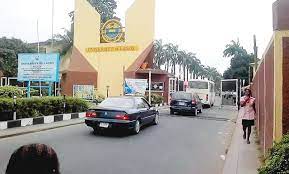
The University of Lagos (UNILAG), alongside two other universities in Africa and one in United Kingdom, have been awarded a research grant worth 1.9 million pounds by the United Kingdom Research Institute (UKRI).
The grant, which is for a three-year research project (2021-2023) and funded by the UKRI, under the UKRI-GCRF ARUA Research Excellence Programme, is also for Addis Ababa University in Ethiopia.
Others are Makerere University Uganda and University of Sheffield, UK, as collaborating institutions.
The universities are expected to support in building research capacities at some other young participating African universities such as Hawassa in Ethiopia, Gulu in Uganda, as well as the University of Jos.
The Vice Chancellor of UNILAG, Prof. Oluwatoyin Ogundipe, disclosed this in his address at a virtual/physical National Inception Workshop of the Migration, Urbanisation and Conflict in Africa (MUCA) Research Project on Thursday in Lagos.
The News Agency of Nigeria (NAN) reports that the workshop, with the theme: Migration, Urbanisation and Conflict in Africa; Toward Peaceful Urban Futures (MUCA), was hosted by UNILAG’s Centre for Housing and Sustainable Development.
Ogundipe who was represented by the institution’s Deputy Vice Chancellor, Research and Academics, Prof. Oluwole Familoni, said that the ARUA Centre of Excellence for Urbanisation and Habitable Cities had a mandate to scale up applied urban research and practice in Africa.
He said that it was also to work toward achieving the Sustainable Development Goals (SDGs).
According to him, the research grant is one of six awarded under the UKRI-GCRF African Universities Research Alliance (ARUA) Research Excellence programme.
He said that it was also one of the several research projects targeted at UNILAG, in fostering stronger research and development partnerships for the actualisation of the SDGs.
The don noted that the research project would focus on unraveling the complexities surrounding migration and urbanisation in Africa, the attendant conflicts and finally chart the pathway to peaceful urban futures.
“This workshop, in kicking off the research, seeks to co-create the sustainable pathway to peace in our cities with stakeholders such as ourselves, private practitioners, policy makers, international development agencies and others.
“The future of African cities cannot be determined outside science policy engagement.
“Effective development strategies cannot be developed without the contributions of knowledge institutions.
“Providing the evidence base for targeted policies and actions in peace keeping, peace making and peace building in Nigerian cities is a game changer.
“The University of Lagos and all other partner universities in this MUCA project bring that expertise as subject specialists and bridge builders for a more sustainable future.
“Let me reiterate here that this project fits neatly within the internationalisation mandate of this university.
“Our faculty members are once again showing our strength and expertise in research and our capacity to collaborate effectively with other universities internationally, to jointly undertake ground-breaking multidisciplinary research aimed at improving our societies,” he stated.
The keynote speaker, Prof. Isaac Albert, pioneer Dean, Faculty of Multidisciplinary Studies, University of Ibadan, said there was an urgent need for universities across the continent to collaborate and step up efforts, in finding lasting solutions to all societal challenges.
According to him, city managers are already overwhelmed by these challenges that come with migration and conflicts especially.
“City managers are trained to manage problems but researchers have a better understanding on how to tackle most of these problems.
“When city managers, scholars, policy makers and industry collaborate, they end up establishing structures that would produce more sustainable management of the urban challenges,” he stated.
The professor of African History, Peace and Conflict Studies added that universities must remain production relevant as well as link up with industries in their quest to research and proffer solutions.
Prof. Timothy Nubi, Director, Centre for Housing and Sustainable Development in UNILAG, expressed joy over the research grant, noting that the development was a challenge to do more.
He noted that the centre would continue to engage in active collaboration, research and practice with the Federal and State Government agencies, NGOs and other critical stakeholders.
“We are indeed very happy to be part of this.
“The grant is essentially to look into issues of migration, urbanisation and conflict in Africa.
“It is huge, most of our institutions in Africa have not up till now, recognised the importance of research and the connection into development.
“When we look around, you will discover that one of the challenges facing us today is that of urban migration.
“This is especially, for economic reason, as well as migration as a result of conflict (displacement) and this is in the highest volume.
“The joy in the grant is that we are working not only as a university, but in collaboration with practitioners, communities, state government and we believe that if we co-produce solution, we are not going to market it to them, because it is a joint effort,” he said.
Prof. Taibat Lawanson, co-director of the centre, said the project would cover Nigerian cities such as Lagos, Lokoja and Jos.
According to Lawanson who is also a co-investigator and Project Lead, Nigeria, it also covers some cities in Ethiopia and Uganda, essentially to look at drivers of conflicts, particularly those caused by migration, driven by mega urbanisation, as in the case of Lagos.
“We shall also look at the ones driven by industrialisation, as in the case of Hawassa in Ethiopia, and Lokoja, Obajana, in Nigeria, and that driven by perennial conflict as it is in the case of Jos, also in Nigeria,” he said.


The Rivers State Universal Basic Education Board (RSUBE) has trained 1,000 newly recruited teachers with a view to raising standards in public primary and junior secondary schools in the state.
The two-day orientation and capacity building programme held in Port Harcourt introduced the teachers to civil service rules, classroom management practices, and professional conduct expected of educators in the state.
The State Commissioner for Education, Dr. Peters Nwagor, told the newly recruited teachers that teaching demands more than academic qualifications, and called for discipline, diligence, and a strong commitment to service.
He described teaching as a noble profession that is central to the development of the state.
The recruitment, he said, reflects the government’s investment in children and long-term development.
“Education is the foundation of societal progress, and basic education is where that foundation is laid,” Nwagor stated.
He urged the teachers to shape the values and character of pupils during their most formative years.
He pledged continued support from the Ministry of Education through training, resources, and an environment that allows teachers to perform effectively.
Nwagor directed RSUBEB to reject transfer requests from rural to urban schools, saying the newly employed teachers have an obligation to serve where they are posted and help strengthen education in those communities.
In his opening remarks, the RSUBEB Chairman, Hon. Sam Oge, explained that the recruitment process began in 2023 under the previous board, adding that after assuming office, he consulted widely and secured Governor Siminalayi Fubara’s approval to complete the exercise.
Oge said the selection was competitive, with 1,000 candidates chosen from more than 5,000 applicants, and urged the teachers to treat the opportunity seriously and avoid lobbying for reposting.
He directed the teachers to resume at their assigned schools immediately, saying request for reposting will not be entertained.
The former RSUBEB Chairman, Ven. Dr. Fyneface Akah, who delivered the keynote address, described the orientation as the teachers’ formal entry into the civil service.
He urged them to be creative, purposeful, and open to learning on the job.
Akah stressed that teachers have a role in restoring values lost to moral decline, and urged them to model national values and see their work as a calling with lasting impact on the society.
He thanked the State Government for approving the recruitment, noting that the exercise will improve access to quality basic education across the State.
Akujobi Amadi

The Independent National Electoral Commission (INEC) has disclosed that no fewer than 1.4 million members of the National Youth Service Corps will be deployed for the 2027 general elections.
The Chairman of the commission, Prof Joash Amupitan (SAN), made this known on Monday during a courtesy visit to the Director-General of the NYSC, Brig Gen Olakunle Nafiu, at the Yakubu Gowon House, headquarters of the scheme, in Abuja.
Amupitan, in a statement signed by his Chief Press Secretary and Media Adviser, Adedayo Oketola, described the meeting with the NYSC senior management team as more than a formal courtesy visit, saying it was also a mission of gratitude.
According to him, the NYSC remains a critical pillar in Nigeria’s democratic process.
He noted that corps members had participated in virtually every election cycle since 1999, stressing that, “INEC cannot conduct elections in Nigeria without the NYSC.
“As the Chairman of the Independent National Electoral Commission, I am honoured to discuss our collaborative efforts toward ensuring seamless and credible elections in Nigeria.
“You provide the heartbeat of our field operations. When we speak of election manpower, we are essentially speaking of corps members.
“They are the most dedicated, educated and patriotic election duty staff we have, and their presence at polling units brings a level of neutrality and public confidence that is irreplaceable.
“They form the backbone of our election processes, especially as ad hoc staff, whose dedication, discipline and patriotism are critical to the success of our elections,” he added.
Amupitan said institutional data from the 2023 general election showed the importance of the partnership between INEC and the NYSC.
He explained that INEC deployed about 1.2 million ad hoc staff for the 2023 elections, with over 70 per cent, nearly 850,000 personnel drawn from corps members and student volunteers.
Speaking on preparations for the 2027 elections, the INEC chairman said more than 1.4 million ad hoc staff would be engaged, with corps members making up the majority.
“For the 2027 general election, we will require 707,384 ad hoc staff for the Presidential and National Assembly elections scheduled for January 16, 2027.
“The same number will be needed for the governorship and Houses of Assembly elections on February 6, 2027, making a total of 1,414,768,” he said.
He added that INEC would also require 52,446 corps members for the Ekiti and Osun governorship elections, as well as by-elections in Nasarawa, Enugu, Rivers, Ondo, Kebbi and Kano states.
Amupitan said corps members accounted for nearly 90 per cent of Registration Area Officers and Presiding Officers in many states during previous elections.
“These young Nigerians did not just facilitate voting; they protected the sanctity of the ballot in 176,846 polling units across some of the most difficult terrains in the country,” he said.
He further praised the corps members for their role in off-cycle elections, particularly the Anambra governorship election and the FCT Area Council polls.
According to him, their digital proficiency contributed significantly to the seamless operation of the Bimodal Voter Accreditation System.
“In those exercises, it was the digital proficiency of corps members that ensured the seamless performance of our BVAS, proving they are the tech-savvy backbone of our modern democracy,” he added.
Amupitan acknowledged the sacrifices made by corps members during elections and assured that INEC would continue to work with the NYSC and security agencies to strengthen safety measures and welfare packages for them.
As the 2027 general election approaches, we are committed to ensuring adequate mobilisation and preparedness of NYSC members for this important national assignment,” he said.
He also noted that the Ekiti and Osun governorship elections, scheduled for June 20 and August 15, respectively, alongside several by-elections, would serve as tests for innovations ahead of the 2027 elections.
Responding, Brig. Gen. Nafiu thanked INEC for its continued collaboration with the scheme.
He recalled that the Memorandum of Understanding between both organisations was signed in 2011 and had been periodically renewed.
Nafiu described corps members as credible, reliable and easily trainable manpower.
“The last batch of millennials will soon exit the scheme, leaving behind Gen Z corps members known for their digital savviness, which will benefit INEC,” he said.
He assured the commission of the NYSC’s continued support in both the 2027 general elections and upcoming off-cycle elections.
-

 Featured2 days ago
WASSCE: RSG Distributes Science Materials To Secondary Schools
-
News2 days ago
Xenophobic Attacks: Nigerian Lives More Important Than Foreign Investment – Oshiomhole
-
Rivers2 days ago
MBA Forex Trial Adjourn To June 3, Amid Bereavement … As Court Declines Cost Application
-
News2 days ago
ActionAid Demands Probe Of Govs Using Public Funds For Campaign
-
Aviation2 days ago
Passengers Stranded As Delta Airline From Atlanta Route Back Eight Hours After
-
Business2 days ago
Customs Impound N2.35bn Cocaine, 15 Trailers of Rice
-
Politics2 days ago
2027: Bayelsa Senator Gets Critical Endorsement For Second Term
-

 Politics2 days ago
INEC Sets Rivers South-East Senatorial By-Election For June 20