
Editorial
#EndSARS And UK Parliament’s Reactions

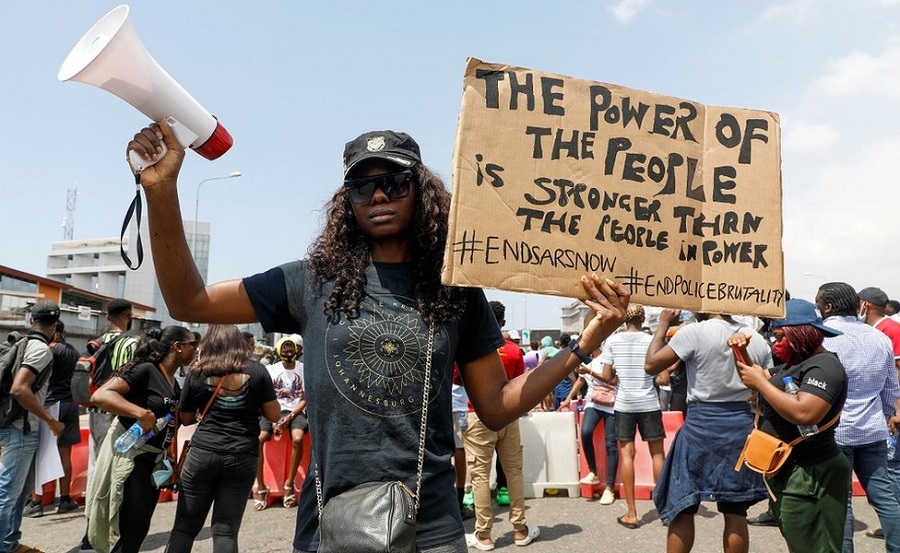
The nationwide #EndSARS protests may seem to have mellowed out, but the probable consequences for the killings, maimings and massacres of defenceless demonstrators may linger as the dastardly act receives considerable attention by the United Kingdom (UK) government.
On November 23, 2020, the British Parliament debated a petition seeking to sanction the Nigerian government and the nation’s security agents over alleged gross human rights abuses during the #EndSARS protests across the country.
The UK’s new Global Human Rights sanctions regime under the Sanctions and Anti-Money Laundering Act 2018, gives Britain the powers to question those involved in serious human rights violations or abuses. The sanctions regime does not target countries but individuals involved in serious rights violations or abuses around the world.
In an outright condemnation of police brutality and killing of unarmed protesters, members of the United Kingdom Parliament unanimously called for selected sanctions against Nigerian government officials and military officers who participated in human rights violations during the #EndSARS protests.
The debate which was based on an e-petition calling for sanctions against the Nigerian government signed by over 220,000 signatories, crossing the 100,000 mark needed for a petition to be debated by the lawmakers, was backed by all parliamentarians when it was deliberated at the Westminster Hall. Members condemned the UK government for standing neutral while the Nigerian government violated young protesters.
Citing the shootings at Lekki in Lagos, Oyigbo in Rivers and Delta States respectively as well as the unjust victimisation of protesters after the protest and the freezing of protesters’ accounts, the parliamentarians described President Muhammadu Buhari’s administration as nothing short of a dictatorship.
Members of Parliament (MPs) spent time, particularly condemning the violence that erupted at the Lekki toll gate in Lagos and insisted that Nigerian officials and their family members should not enjoy in the UK the liberties and privileges they deny their citizens at home.
Recall that in October this year, thousands of Nigerians took to the streets, calling for an end to police brutality and extra-judicial killings by the Special Anti-Robbery Squad (SARS). Protests in Lagos turned bloody when soldiers confronted peaceful protesters at the Lekki toll gate and Alausa, killing at least 12 people.
The question is, was the Nigerian government given prior notice of the case and allowed to state its side in line with due process and fair hearing? We may only assume so. This accords with natural justice which requires that no one should be penalised by decisions affecting one unless one has been notified of the matter and allowed to present one’s case.
Nevertheless, we hail the decision of the British Parliament for the members’ bold stand. It only shows that no country is an island on its own. Since Nigeria is part of the global community, whatever happens in this country could affect the world. We only hope that the action of the British parliamentarians would serve as a warning to the Federal Government that its undemocratic actions are closely watched and monitored by the global community.
Just as the members of Parliament, Nigerians are equally concerned about the human rights abuses perpetrated by the Nigerian security operatives and attempts by the government to cover up these abuses and to clampdown on peaceful protesters who were only on the streets to demand a better government.
We strongly urge the UK government to keep pressuring its Nigerian counterpart and its security services to uphold human rights and the rule of law as well as investigate all incidents of brutality, illegal detentions and the use of excessive force to hold those responsible to account.
October 20, 2020, will always be remembered for the Lekki toll gate massacre, the day a deliberate and coldly calculated attack on peaceful Nigerians was executed by the Nigerian Army. The Nigerian government has since taken part in an attempted cover-up of the massacre while security agents make muted responses to the murder of protesters.
Unfortunately, despite the declaration by the Federal Government that SARS had been disbanded, the corruption and brutality of the security forces continue unabated while the government’s violence against its citizens appears only to be intensifying. Also, the authorities need to stop freezing the bank accounts of key protesters and illegally detaining them.
The UK authorities should take this opportunity to look beyond sanctions into how development fundings are spent in Nigeria. Britain has expended more than £10 million in aid to Nigeria and on programmes from which various police units benefited from. We equally ask the UK authorities to redirect aid to poverty relief and anti-corruption programmes in Nigeria.
Since it is the government that can sanction, not Parliament, which can only make resolutions, we prod the British government to immediately act on the recommendations of the lawmakers. Furthermore, it is expedient for Great Britain to collaborate with local and international civil society groups to support justice, accountability and a more responsive policing model in Nigeria.



Nigeria stands at a critical juncture as the world marked World Press Freedom Day (WPFD) on May 3. This annual observance is a reminder that a free press is central to democratic life, good governance, and public accountability. For Nigeria, it is also a moment for sober reflection on how far the country has come and how far it still has to go in safeguarding the independence of its media.
World Press Freedom Day exists to highlight the fundamental importance of freedom of expression and to honour journalists who risk their lives in pursuit of truth. It underscores the idea that without a free press, societies cannot function transparently, nor can citizens make informed decisions. In countries like Nigeria, where democracy continues to evolve, the observance carries particular urgency.
This year’s theme, “Shaping a Future at Peace: Promoting Press Freedom for Human Rights, Development and Security”, places journalism at the heart of global stability. It emphasises that a peaceful society cannot be built on silence, fear, or manipulated information. Rather, it depends on the free flow of accurate, timely, and independent reporting.
At its core, the theme highlights the role of journalism in fostering accountability, dialogue, and trust. These are not abstract ideals. In Nigeria, where public confidence in institutions is often fragile, the media remains one of the few platforms through which citizens can question authority and demand transparency. When press freedom declines, so too does public trust.
Journalism serves as a foundation for peace, security, and economic recovery. Countries with robust media systems tend to attract greater investment, maintain stronger institutions, and resolve conflicts more effectively. Nigeria’s economic challenges, ranging from inflation to unemployment, require open scrutiny and informed debate, both of which depend on a free press.
However, the issue of information integrity has become increasingly complex in the digital age. Artificial Intelligence (AI) and online platforms have amplified the spread of misinformation and disinformation. In Nigeria, where internet penetration has grown rapidly, false narratives can travel faster than verified facts. This makes the role of credible journalism more vital than ever.
The challenge is not only technological but also ethical. AI-driven manipulation of information threatens to distort public discourse, influence elections, and deepen social divisions. In such an environment, professional journalism must act as a stabilising force, ensuring that truth prevails over sensationalism and propaganda.
Equally troubling is the safety of journalists. Across Nigeria, reporters face growing levels of online harassment, judicial intimidation, and physical threats. Self-censorship is becoming more common, as media practitioners weigh the risks of reporting sensitive issues. This trend undermines the very essence of journalism.
A particularly alarming incident involved a serving minister in the present administration, who openly threatened to shoot a journalist during a televised exchange. Such conduct, broadcast to the public, sends a dangerous signal that hostility towards the press is acceptable. It erodes the norms of democratic engagement and places journalists in harm’s way.
This year’s theme aligns closely with the United Nations Sustainable Development Goal (SDG)16, which promotes peace, justice, and strong institutions. Freedom of expression is a cornerstone of this goal. Without it, institutions weaken, corruption thrives, and justice becomes elusive. Nigeria’s commitment to SDG 16 must therefore include genuine protection for the media.
Historically, the Nigerian press has been a formidable force. From resisting colonial rule to challenging military dictatorships, our journalists have played a central role in shaping the nation’s political landscape. Today, however, that legacy appears to be under strain, as the media operates under what can best be described as a veneer of freedom.
Beneath this facade lies a troubling reality. Journalists are routinely harassed, detained, and prosecuted for performing their constitutional duties. Reports from media watchdogs indicate that dozens of Nigerian journalists face legal threats or arrest each year, often for exposing corruption or criticising those in power.
The Cybercrimes (Prohibition, Prevention, etc.) Act of 2015 has become a focal point of concern. Originally intended to combat cyber threats, it has increasingly been used to silence dissent. Sections 24 and 27(1)(b), in particular, have been invoked to target journalists, bloggers, and social commentators.
Although amendments introduced in February 2024 were meant to safeguard journalists, concerns persist. The law continues to be wielded in ways that stifle investigative reporting and restrict freedom of expression. Legal reforms must go beyond cosmetic changes to address the root causes of misuse.
To safeguard the future of journalism in Nigeria, decisive action is required. The Cybercrimes Act must be revisited to ensure it cannot be weaponised against the press. Law enforcement agencies must operate free from political influence, upholding the rule of law and protecting journalists’ rights. Civil society and international partners must also strengthen independent media through funding, training, and platforms for wider reach.
In this rapidly evolving world shaped by artificial intelligence and digital innovation, Nigeria faces a clear choice. It can either allow press freedom to erode under pressure, or it can champion a truly independent media landscape. The path it chooses will determine not only the future of journalism, but also the strength of its democracy and the peace it seeks to build.

-

 Featured3 days ago
WASSCE: RSG Distributes Science Materials To Secondary Schools
-
News4 days ago
Xenophobic Attacks: Nigerian Lives More Important Than Foreign Investment – Oshiomhole
-
Rivers4 days ago
MBA Forex Trial Adjourn To June 3, Amid Bereavement … As Court Declines Cost Application
-
News4 days ago
ActionAid Demands Probe Of Govs Using Public Funds For Campaign
-
Aviation4 days ago
Passengers Stranded As Delta Airline From Atlanta Route Back Eight Hours After
-
Business4 days ago
Customs Impound N2.35bn Cocaine, 15 Trailers of Rice
-
Politics4 days ago
2027: Bayelsa Senator Gets Critical Endorsement For Second Term
-

 Politics4 days ago
INEC Sets Rivers South-East Senatorial By-Election For June 20