Connect with us

Rivers

Amnesty Boss Pledges Prompt Payment Of Stipends

Published

on

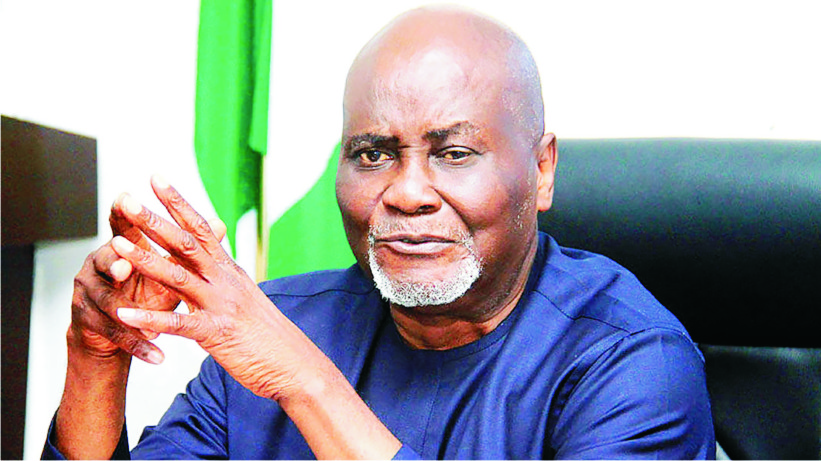
The Interim Administrator of the Presidential Amnesty Programme (PAP), Col. Milland Dikio (rtd), has vowed to resolve all bureaucratic bottlenecks hampering prompt payment of stipends to the beneficiaries of the programme.
Dikio, who spoke in Port Harcourt, Rivers State, at the weekend when he met with leaders of phases one, two and three of the scheme, said some persons tried to discourage him from touring the region citing security challenges.
The Amnesty boss said the reforms he had introduced into the scheme would stop series of protests by ex-militants that used to precede payments of their stipends.
Dikio, who has been on a tour of the region, insisted that his reforms had made prompt payment of the beneficiaries’ stipends possible.
“There were too many bureaucracy in the system which often resulted in the incessant delays in the payment of the N65,000 monthly stipend”, he said.
Dikio said his tour was aimed at returning the programme back to its owners insisting that PAP was designed for ex-militants only.
Addressing the ex-militant leaders, he said: “The PAP is a programme that was designed especially for ex-agitators. If you are not an ex-agitator you’re a stranger. I don’t see why it will be the other way.
“I was told by some people not to come that the region is not safe. Why should I be in this office and not visit my main area of operation? So I said I must come, so that we can see eyeball to eyeball, let me hear from you the issues so that together we can begin to discuss how to move on.
“I was in Okochiri in Okrika on Friday where I met with the Big 5 in the palace of King Ateke Tom and it was a fruitful meeting. Today, I am also meeting with you all to reinforce my vision for the PAP.
“Over time people have confused the programme for the package. They are different and it is good that you understand that so that we can all be on the same page.
“Since I came, I have been undertaking some reforms to ensure that we get it right. So the issue of your monthly stipends will be paid every 25th of the month. It’s not rocket science. All that was needed to do was to put the accounting process in order”.
Dikio appealed to the ex-agitators to work for the peace and development of the region by supporting the new direction and vision of the PAP under his watch.
He said: “If we learn the lessons of the past then we can do better. Our region has been left behind. Everything shouldn’t be about protest. The more we stabilize the region, the more we will attract businesses.
“I want you all to understand that you can be what you want to be. You can choose to be great and you will be great. It all depends on you. So for you to be great you must think great and begin to do great things not things that will be inimical to your growth”.
The ex-agitators expressed confidence in the new administrator and commended him for consulting them, an action they said was lacking in the past.
The leader of the first phase of the PAP, Pastor Reuben Wilson said the new vision of Dikio would make the programme run seamlessly.
He said it was a remarkable idea to host the meeting in the region saying it had further boosted their confidence in him.

Continue Reading

Rivers

2026 Boy Child Day: Association Seeks Intentional Mentoring 

Published

on

As the world marked the 2026 International Day of the Boy Child last Saturday, the Rivers Secondary Schools Old Boys and Girls 1983 Set Association has called for deliberate investment in raising boys who will become responsible heads of homes.
In a press release signed and issued by the Secretary-General of the Association, Dr. Ibinabo Ogolo, to commemorate the day, the Association said the future stability of Nigerian families depends on how intentionally boys are raised and guided.
Speaking on behalf of the Set, President of the Association, Barrister Tubokomba Mcdonald Harry, she said the theme of this year’s global celebration, “Boys to Men: Adopting Good Habits and Attitudes”, must move beyond slogans to daily practice in homes, schools, and communities.
“For years, advocacy has rightly centered on the girl child. That work must continue. But we cannot ignore the other side”, Barrister Harry stated.
“A boy who grows up without guidance, emotional literacy, and responsibility often becomes a man who struggles to lead, provide, and protect. If we want stable homes in 2040, we must invest in boys now”, he said.
He emphasized that being “head of the home”  is about stewardship, not power: “The man who leads a home well is emotionally responsible, financially disciplined, morally upright, and a true partner to his spouse. These qualities are learned from childhood, through what boys see, hear, and practice.”
The Association noted that many boys currently learn manhood by default from peers, social media, and entertainment that equate masculinity with aggression and silence about pain.
To change this, the 1983 Set urged fathers and mentors to be present and active, schools to integrate life skills such as conflict resolution and financial literacy, and communities and faith groups to establish mentorship programmes where older men guide younger ones.
The press release also linked the issue to Africa’s wider goals, noting that the 2026 Day of the African Child focuses on water, sanitation, and hygiene.
“A boy trained to solve real problems becomes a man who ensures dignity for his family and community”, Harry said.
The Association concluded with a call to mothers, fathers, and boys themselves to take ownership of the task of raising responsible future leaders.
International Day of the Boy Child is observed globally on May 16. It is a day that focuses on the well-being, mental health and positive development of boys.
Continue Reading

Rivers

Ogoni Landlords Seek Inclusion In Planned Oil Resumption Process 

Published

on

Flemotongha Miebi/Fortune Wokeh/Akpos David/Esuuk Oyet/Edughom Suotor
Landlords in Ogoni, under the aegis of Gokana,Tai, Eleme, and Khana United Landlords Association  (GOTEKA) have called for inclusion in the ongoing negotiation over the planned resumption of oil production in Ogoniland.
The landlords,who made the call during its formal inauguration recently in Port Harcourt, also called for proper compensation, clear legal agreements, and inclusive dialogues in the entire process
Chairman of the Association, Professor George Ema, said any resumption of oil exploration in ogoniland without proper consultation with host communities and land owners will be resisted.
George said, while the association expressed support for the planned return of oil activities in ogoniland under the administration of President Bola Ahmed Tinubu,  key historical issues must be addressed to avoid a repeat of earlier conflicts that led to the suspension of oil operations in the area.
According to GOTEKA, past disagreements between oil companies, political leaders, and host communities caused crises, court cases, and long-term disruption of oil production in Ogoni land, adding that these problems were responsible for the high level of poverty warranted by economic stagnation, social unrest, pipeline vandalism, and many legal battles in the area.
The landlords also referenced the struggles led by late environmental activist, Ken Saro-Wiwa, and the Movement for the Survival of Ogoni People (MOSOP), which opposed Shell’s activities in Ogoni land, resulting in years of unrest and court cases.
They stressed that the renewed plan for oil exploration must be guided by proper Memoranda of Understanding (MOU), fair compensation, and the direct involvement of landlords in negotiations to prevent cheating and conflict.
The group also raised concern over what they described as a repeated “divide and rule” approach in handling oil compensation in Ogoni. They said there is a lack of proper MOUs between oil companies and landlords, while compensation often goes to political leaders and traditional rulers instead of the real landowners.
GOTEKA added that land in Ogoni is owned by individuals and families, not the entire community.
According to the group, “under traditional land rules, owners have full rights over their land and can decide how it is used, including selling or leasing it. So, there must be proper agreement spelt out in the MOU, which must be signed by all the parties involved to avoid legal battles.
The group urged government, oil companies, and political leaders to respect traditional land ownership and adopt honest dialogue and peaceful negotiation in resolving issues.
Continue Reading

Rivers

Police Warn Rivers Students Against Cultism, Drug Abuse

Published

on

The Divisional Crime Officer (DCO) of Rumuodomaya Police Station, CSP Dindara Dadamu, has warned students in Rivers State against involvement in cultism and other criminal activities, stressing that such acts could lead to imprisonment and destruction of their future.
He gave the warning recently during an anti-cultism and drug abuse sensitisation programme organised by the Niger Delta Development Commission (NDDC) at Den-Bec Group of Schools in Port Harcourt.
Dadamu stated that the law does not exempt minors from punishment, noting that children from the age of 12 could still be prosecuted for criminal offences.
According to him, many young people are lured into cultism through peer pressure and bad company. He urged the students to be mindful of the friends they associate with.
The DCO stressed that ignorance of the law would not protect anyone from facing the consequences of unlawful conduct.
Also speaking, a representative of the National Drug Law Enforcement Agency (NDLEA), Mr. Ejiofor Ifeanyi, described cultism and drug abuse as destructive habits capable of ruining academic ambitions and promising careers.
He advised the students to avoid negative influences and remain focused on their education and personal development.
A mental health expert, Mr. Victor Akeni, noted that cultism and illicit drug use contribute significantly to emotional instability, fear and poor academic performance among youths.
He explained that cult members often live under constant fear of attacks and reprisals, making it difficult for them to concentrate on their studies or live peacefully.
The sensitisation programme brought together security agencies, mental health professionals, teachers and students as part of efforts to discourage social vices among young people.
The Managing Director of NDDC, Dr. Samuel Ogbuku, who spoke through a representative, Mrs. Anna West, encouraged the students to take advantage of opportunities provided through education and technology rather than engaging in unlawful activities.
Ogbuku also warned that cultism and drug abuse could result in imprisonment, violence and untimely death, and urged the students to embrace discipline, hard work and positive values.
By: King Onunwor

Continue Reading

Trending