
Nation
THE STATES

FCT
The independent National Electoral Commission (INEC)
had debunked allegation that some electoral materials meant for the February 6, governorship election in Anambra State was hijacked, by mischief makers.
But INEC on Saturday said a truck belonging to INEC which was conveying collapsible polling cubicles from its headquarters to Port Harcourt zonal store collided with a payloader at Okija in Anambra Stte.
The INEC position followed report that some INEC electoral materials were sized in a bid to rig February 6 election in Anambra State.
According to a statement signed by the INEC Director of Public Affairs, Mr. Emmanuel Umengar “the truck, like others deployed across the country, was on routine delivery of non-sensitive electoral materials to its Port Harcourt Store.”
Bauchi
Armed Mobile Policemen at the weekend stormed the
resident of Air Commondore Ishaku Komo (retd) and surrounded his house in Tafawa Balewa at about 3.am with the aim for undisclosed reasons.
This coming few weeks after Komo was installed as the first Gung Zaar Of the Sayawa Community in Bauchi State.
Sayawa community has for long been agitating for a chiefdom of its own and it was last year that the National Assembly passed a law granting the request, which sources say doest not go down well with the state government.
The Tide gathered that the new traditional ruler of the Sayawa People of Bauchi State has relocated to Kaduna in order to avoid arrest by the Bauchi State police command shortly after his first public appearance in Tafawa Belewa, the headquarters of the Zaar Chiefdom.
Gombe
Nigerians have been cautioned to moderate their reactions
to the state of health of President Umaru Musa Yar’Adua, even as they have been urged to continue to pray for his speedy recovery.
The leader of the Yoruba Youths Alliance (YYA), Mr. Jackson Lekan-Ojo, also observed that calling for the president’s resignation was a wrong approach to the situation as it Portrayed those behind the call as callous and in human.
Lekan-Ojo, who was recently honoured with an Award of Excellence by the students’ Union Government of the University of Port Harcourt, noted that as human beings, no one prays to be sick and that Nigerians owed the President Prayers at all times, whether healthy or sick.
Jigawa
Attention of the Peoples Democratic Party (PDP) National
headquarters has been drawn to alleged plot to impeach the deputy governor of Jigawa State, Ahmad Muhamma Gumel, if Governor Sule Lamido decides to run for vice president.
PDP stalwart and secretary of Yar’Adua friendship forum, Ishaq Hadejia, told The Tide that members of a group (name yet unknown) would not like to see Gumel become governor in the event of President Umaru Yar’Adua’s incapacitation, when lamido is appointed Vice President.
According to him, the group has been holding series of meetings to actualiSe their plan, a development which he said could throw Jigawa into Chaos.
“While the president is recovering and he has even spoken in the media, this group is spearheading a move to impeach the deputy governor in Jigawa”, he said.
Jos
As the people of Taroh land in Plateau are set to elect
another paramount ruler, following the death, last year, of the late Edward Zhattau, a social cultural group in the land “Gazum Cultural, Economic and social Development Organisation (GACESDO) has alleged a Plot to scheme Gazum People of the area out of the contest for the throne.
Addressing the press in Jos over the development, the national president of the organisation, Mr. Clement Chairman said the GACESDO was surprised that the selection process of Ponchi Taroh which was supposed to go on without rancour had been made unnecessarily difficult, thereby fanning the embers of hatred, distrust and bad faith among the people.
The National President Said the organisation had uncovered the plot to expunge a Gazum man as the legitimate heir to the throne, adding that the people behind the clandestine act had gone to the extent of making a fake draft gazette for Gazum chiefdom.
Kaduna
Former Head of State, General Muhammandu Buhari (rtd)
has said that lack performance on the part of those at the helm of affairs in the country and the refusal of Nigerias to take their destiny in their own hands had put the future of the country in a precarious situation.
According to the presidential candidate of All Nigerian People Party (ANPP) in the last general elections, ordinarily there is nothing wrong with the Nigerian Constitution, the Electoral Act and other laws of the land, saying that the only problem we have in the country is the lack of action on the part of those saddled with the responsibility of steering the country out of the present musky waters.
Lagos
The Minister of Petroleum, Dr. Rilwan Lukeman says
that no date has been set for the implementation of deregulation of the down stream sector.
He recounted a number of factors that have mitigated against the immediate take-off of the implementation like the condition of the nation’s four Refinaries.
Speaking at a function in Lagos State on the state of the industry, Dr. Rilwan said a lots of measures are been taken to repair the damaged oil pipe lines which will aid the resumption of local refinery capacities.
The minister further said the proposed petroleum industry bill help curb the challenges of supply and short falls of petroleum products in the country.
Borno
Campaigns for wide acceptance of the child Right Act
may not yield positive fruits in some Northern States unless certain aspects of the new Act are fine-tuned to get with the Sharia Code and Northern Culture, Borno State government and a federal ministry say.
This hint was dropped when the minister of women Affairs and Social Development, Hajia Salamatu Suleiman, paid a two day advocacy visit to Borno at the weekend.
The new Shehu of Borno Abubakar Kyari Ibri Garbai el-kanem, also shared this view by giving conditions under which the Act could be implemented in the state.
He said the conditions include the protection of Sharia law and traditions of the people of Borno, when the Act comes up for debate at the House of Assembly.
Niger
Former Federal Permanent Secretary, Chief Philip Asiodu,
on Saturday in Minna, Niger State, blamed the non-performance of the civil service in the country on the 1975 purge and the reforms of 1988.
Asiodu, chairman of council of Retired Permanent Secretaries, declared awareness of the great “erosion of standards and values of authority and powers which have afflicted the civil service, the devastating purge of 1975 and reforms of 1988.
The former permanent Secretary made the remarks at the public lecture organised by the Gamji Members Association in honour of the late Makama Nupe, Alhaji Shehu Musa.
Oyo
Oyo State police command has arrested three boys
including an under graduate student of the university of Maiduguri for alleged armed robbery, juust as a 52-year old was arrested for impersonation.
The suspects, Muhammed Shuaib (21), Nazim Emmanuel (20), a 100 level student of the university of Maiduguri in the Department of Public Administration and Abba Michael (21), were said to have on January 15 attacked residents of Tinuoye Estate, Ojoo area of the state capital.
Also arrested was a 52-year old Adebare Balogun for allegedly impersonating the Commissioner of Police.
Speaking while parading the suspects at the command’s headquarters, Eleyele, on Friday, the state Commissioner of Police, Alhaji Baba Adisa Bolanta, said the command received a distress call that some daredevil robbers were operating at Tinuoye Street, Ojoo area of the state capital.
Ogun
The Chairman of Ijebu-East Local Government Council,. Ogun State, Hon. Tunde Oladunjoye, has raised alarm over plans to unleash fresh mayhem in the council area .
The council boss said he wanted to inform the whole world on the plan by some politicians in the state to spill more blood in Ijebu-East local government.
Oladunjoy stated that, “before another blood is spilled in Ijebu East Local Government Area, I must inform the whole world that some unscrupulous men are mobilising hugs for the PDP extended executive meeting in Ogbere, Ijebu.
“Their plan is to create confusion during which someone will be killed and then blame it on my supporters, so that OGD will give me the treatment he meted out to Tele Ogunjobi of Ijebu North, whom he removed as chairman on 31 December, 2008.



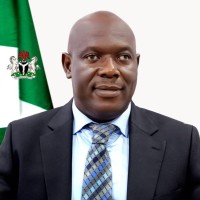
The Hydrocarbon Pollution Remediation Project (HYPREP) has commemorated the 15th anniversary of the release of the United Nations Environment Programme (UNEP) Environmental Assessment Report on Ogoniland, reaffirming its commitment to restoring the environment and improving the livelihoods of affected communities.
In a statement signed by the Project Coordinator, Prof Nenibarini Zabbey, to commemorate the anniversary, HYPREP described the anniversary as a significant milestone in Nigeria’s environmental restoration efforts, noting that the project has made remarkable progress in implementing the recommendations of the landmark UNEP report released on August 4, 2011.
The UNEP report had revealed extensive oil pollution across Ogoniland, severe environmental degradation, and serious public health risks resulting from decades of petroleum operations. It also recommended an initial $1 billion fund to commence the cleanup of the affected communities.
According to HYPREP, the Federal Government formally launched the Ogoni clean-up in 2016, while the Project Coordination Office was established in 2017 to drive the implementation of UNEP’s recommendations.
Zabbey said the current administration has continued to prioritise the project under the Renewed Hope Agenda.
Providing an update on the cleanup, the Project Coordinator disclosed that 30 of the 65 contaminated sites identified by UNEP have been fully remediated, while work is ongoing at several medium- and high-risk locations. It also stated that more than 1.5 million mangrove seedlings have been planted as part of what it described as the world’s largest restoration of oil-degraded mangroves, with over 1,000 hectares of shoreline already rehabilitated.
Zabbey further revealed that 49 Ogoni communities have been connected to potable water schemes through multiple water projects and booster stations aimed at providing safe drinking water across the region.
In the health sector, he said the 100-bed Ogoni Specialist Hospital in Kpite and the 43-bed Cottage Hospital in Buan are nearing completion, adding that several existing health facilities have been upgraded with modern medical equipment, while five ambulances have been donated to improve emergency healthcare services. The Project Coordinator also disclosed that a three-year human health biomonitoring study is being conducted in collaboration with the World Health Organization’s International Agency for Research on Cancer (IARC).
On economic empowerment, Zabbey stated that the Project has created more than 8,000 direct jobs and trained thousands of Ogoni youths and women in various vocational and technical skills, including software development, cybersecurity, aviation, commercial diving, seafaring, mechatronics, and creative arts. The project also reported awarding scholarships to more than 1,000 students, providing grants to small businesses, and supporting persons living with special needs through skills acquisition programmes.
The statement further highlighted ongoing legacy projects, including the Ogoni Power Project and the Centre of Excellence for Environmental Restoration, which it said is about 96 per cent complete. HYPREP also welcomed the recent designation of the Ogoni Wetland as a Ramsar Site of International Importance and pledged to continue promoting biodiversity conservation and sustainable management of the ecosystem.
Marking the anniversary, Zabbey said the progress achieved over the past 15 years demonstrates the collective commitment of government, development partners, stakeholders, and local communities to restoring Ogoniland. He called for renewed collaboration to sustain the cleanup effort, promote environmental sustainability, and support the long-term development of the region. 3
-

 News1 day ago
RSG Targets Nine Million Residents in Mosquito Net Distribution Campaign
-

 Oil & Energy1 day ago
Aiyedatiwa Signs New Electricity Bill
-

 Oil & Energy1 day ago
NLNG Commissions Research And Innovation Centre In RSU
-

 Maritime1 day ago
Marine Minister Commends President Tinubu On NPERA Bill Assent
-

 News1 day ago
KenPoly Holds Eight Convocations, August 29
-

 News1 day ago
RSG Begins Another Phase of Projects Commissioning Today
-

 News1 day ago
RMAFC Completes Revenue Sharing Review, Proposes New Pay
-

 Maritime1 day ago
NAGAFF Petitions IGP Over Alleged Maritime Police Harassment