
Nation
THE STATES

Adamawa
The National Business and Technical Education Board (NABTEB), has decried the low enrolment of students from the North East region into technical schools in the country.
The NABTEB North East Zonal Coordinator, Mr Gabriel Yalamu, said this in an interview with newsmen in Yola last Monday.
Yalamu, who described the situation as “worrisome”, said that the development was among the major factors hindering the economic growth and contributed to the security challenges in the zone.
He attributed the development to the lack of commitment by some state governments, organisations and wealthy individuals from the region.
FCT
The Chairman, Senate Committee on Rules and Business, Senator Ita Enang, last Monday urged Nigerians to speak less on the planned amnesty for Boko Haram to allow the committee to perform its responsibilities.
Enang spoke in Abuja ahead of Tuesday’s resumption of the Senate from a two-week Easter recess and said it was necessary for Nigerians to avoid comments capable of escalating the lingering insecurity in the country.
“This is to allow the committees and persons saddled with these responsibilities to concentrate on their jobs and contact the appropriate persons and extract the appropriate commitments.
“Lets us allow those saddled with these responsibilities to work. We should be positive and optimistic on the expected outcome,’’ he said.
Enang said the conference of four Senate Committees on Petroleum Industry Bill (PIB) had the responsibility to determine the modality for the public hearing on the bill.
Jigawa
The Jigawa State Commissioner for Education, Prof. Haruna Wakili, has approved the immediate removal of Malam Abba Ibrahim as Principal of Government Secondary School, Maigatari.
A statement signed by the Public Relations Officer of the ministry, Malam Ismail Ibrahim, and made available last Tuesday in Dutse, directed the principal to hand over the administration of the school to the Vice-Principal (Administration), Malam Sabiu Tsmaiya, pending the appointment of a new principal.
The former principal was also directed to report to the ministry for further directives.
Meanwhile, the state government has approved the re-appointment of Prof. Garba Goje as Rector of the Jigawa State Polytechnic, Dutse, for a second term.
The statement explained that the appointment was with effect from April 25. According to it, Goje’s re-appointment is based on performance.
Kano
Kano State Refuse Management and Sanitation Board said last Tuesday it would collaborate with the ward development associations in the state to ensure cleanliness of the environment.
Director of Solid Wastes of the board, Alhaji Ismail Bello, said in Kano that the partnership had resulted in appropriate waste disposal and evacuation of refuse within the metropolis.
He said “we have community associations that liaise with us. We have established a rapport that ensures that when they want to embark on sanitation, our staff are notified, so as to apportion a day for the exercise. “
Bello also said that the board was already working toward evacuation of drains to allow for free flow of water during the forthcoming rainy season.
“Our men are already engaged in 24-hour service in clearing of refuse across the city .
Kebbi
The Chairman, Northern Houses of Assembly Speakers’ Forum, Alhaji Habibu Musa, has commended the Federal Government’s proposed amnesty to Boko Haram.
Musa, who is the Speaker of Kebbi House of Assembly, told newsmen in Birnin Kebbi last Monday that amnesty was a major step toward solving the security challenges in the country.
He said dialogue was the potent means adopted the world over to resolve conflicts, stressing that amnesty would provide the required avenue for issues to be resolved peacefully.
Kogi
Kogi State Water Board says it will soon embark on the disconnection of pipes illegally connected to offices, business premises and residential houses in Lokoja and its environs.
The General Manager of the board, Mr Vincent Abakpa, said in Lokoja on Tuesday that this measure had become necessary due to the refusal of water users to heed several warnings from the board.
He said that those found guilty of the illegal connection would be made to face the law as staff of the board had been mandated to go round and identify culprits.
Kwara
An Ilorin Area Court last Tuesday dissolved the five-year-old marriage between one Aminat Tunde and her husband, Jimoh, over lack of a child in the union.
The 43-year-old house wife had approached the court to dissolve the marriage over the lack of a child in the marriage.
The petitioner, a resident of Fate area of Ilorin, also told the court that her husband was too harsh and fond of placing curses on her.
According to her, their marriage was contracted in 2008 and was yet to produce any child. She prayed the court to end the marriage, saying her husband was making life difficult for her.
Her husband did not object to the prayer of his wife, saying, she was free to go. “My wife’s wayward life style has forced me not to have any pity for her situation,” he said.
Ogun
Governor Ibikunle Amosun of Ogun State, has warned residents of Ado-Odo in Ado-Odo/Otta Local Government Area to shun violence or risk imposition of curfew in the area.
He was represented by the Commissioner for Local Government and Chieftaincy Affairs Mr Muyiwa Oladipo.
The youths were protesting the alleged refusal of Akanni to visit one of his rivals to the throne who was in the hospital following an auto crash involving the monarch and the man.
The action resulted in a reprisal attack by supporters of the monarch resulting in violence in various parts of the town.
Amosun, however, cautioned the residents against violence to avoid the wrath of the state government and assured the people that the government would set up a committee to investigate remote and immediate causes of the crisis.
Osun
The Osun State House of Assembly has warned road contractors handling road projects across the state against low quality work.
The Chairman, House Committee on Works, Mr Abiodun Awolola, gave the warning during the committee’s oversight visit to Ede North and Iwo Local Government Areas of the state.
Awolola, who particularly condemned the work done on Iyalode road in Iwo, ordered the contractor in-charge to stop work on the project due to poor quality of work.
Oyo
A former governor of Ekiti State, Mr Ayo Fayose, last Tuesday said his political opponents were behind the rumour making the rounds that he was a murderer.
Speaking against the backdrop of the renewed political violence in Ekiti State, Fayose told newsmen on phone that the rumour was part of a smear campaign ahead of the 2014 governorship election in the state.
He said: “ my popularity in Ekiti ahead of the 2014 governorship election is a dilemma to my opponents and that is why they are looking for any opportunity to blackmail. I am not a murderer as they claimed. Nobody or court has arraigned me for murder in the last seven years. Are we saying that the system is not working?’’
Fayose, a PDP governorship aspirant in the election, said his political opponents had nothing to use in campaigning against him. “It is all political gimmicks and intrigues. They are running a failed propaganda,’’ he said.
Fayose appealed to his supporters to remain resolute and shun acts capable of heating up the polity.
Plateau
The Plateau State Government has threatened to blacklist non-performing contractors, saying that it is no longer prepared to tolerate “unserious people’’.
The state Commissioner for Housing and Urban Development, Mr Solomon Maren, gave the warning while inspecting ongoing projects in Langtang on Monday.
“We are tired of revoking contracts and will soon start collecting a data of non-performing contractors to shut our doors against them,’’ he said.
Maren warned contractors handling government projects to improve in delivering quality jobs and on scheduled time.
He warned that government would not tolerate a situation where some firms frustrate its desire to improve the living standards of the populace.
Maren decried the slow pace of work on the five- kilometer Langtang Road and declared that the job was being delayed.
According to him, this road has taken too much time. I can’t see how a five kilometer road will take you more than two years to finish.
Sokoto
The Chairman, Sokoto North Local Government, Sokoto State, Alhaji Hassan Abdullahi last Monday urged the three-tiers of government to empower youths to check restiveness in the country.
Abdullahi said in Sokoto that proper investment in youths would prevent them from being used as agents of destruction, noting that the lingering insecurity in the country would be resolved if government produced policies and programmes aimed at providing jobs to the teaming unemployed Nigerians.
He also called on the Federal Government to work out modalities that would revamp the nation’s ailing companies.
Abdullahi called on wealthy Nigerians to complement government’s efforts by setting up companies to create jobs, and identified poverty and unemployment as factors responsible for the insecurity situation in the country.



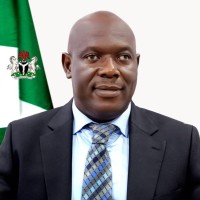
The Hydrocarbon Pollution Remediation Project (HYPREP) has commemorated the 15th anniversary of the release of the United Nations Environment Programme (UNEP) Environmental Assessment Report on Ogoniland, reaffirming its commitment to restoring the environment and improving the livelihoods of affected communities.
In a statement signed by the Project Coordinator, Prof Nenibarini Zabbey, to commemorate the anniversary, HYPREP described the anniversary as a significant milestone in Nigeria’s environmental restoration efforts, noting that the project has made remarkable progress in implementing the recommendations of the landmark UNEP report released on August 4, 2011.
The UNEP report had revealed extensive oil pollution across Ogoniland, severe environmental degradation, and serious public health risks resulting from decades of petroleum operations. It also recommended an initial $1 billion fund to commence the cleanup of the affected communities.
According to HYPREP, the Federal Government formally launched the Ogoni clean-up in 2016, while the Project Coordination Office was established in 2017 to drive the implementation of UNEP’s recommendations.
Zabbey said the current administration has continued to prioritise the project under the Renewed Hope Agenda.
Providing an update on the cleanup, the Project Coordinator disclosed that 30 of the 65 contaminated sites identified by UNEP have been fully remediated, while work is ongoing at several medium- and high-risk locations. It also stated that more than 1.5 million mangrove seedlings have been planted as part of what it described as the world’s largest restoration of oil-degraded mangroves, with over 1,000 hectares of shoreline already rehabilitated.
Zabbey further revealed that 49 Ogoni communities have been connected to potable water schemes through multiple water projects and booster stations aimed at providing safe drinking water across the region.
In the health sector, he said the 100-bed Ogoni Specialist Hospital in Kpite and the 43-bed Cottage Hospital in Buan are nearing completion, adding that several existing health facilities have been upgraded with modern medical equipment, while five ambulances have been donated to improve emergency healthcare services. The Project Coordinator also disclosed that a three-year human health biomonitoring study is being conducted in collaboration with the World Health Organization’s International Agency for Research on Cancer (IARC).
On economic empowerment, Zabbey stated that the Project has created more than 8,000 direct jobs and trained thousands of Ogoni youths and women in various vocational and technical skills, including software development, cybersecurity, aviation, commercial diving, seafaring, mechatronics, and creative arts. The project also reported awarding scholarships to more than 1,000 students, providing grants to small businesses, and supporting persons living with special needs through skills acquisition programmes.
The statement further highlighted ongoing legacy projects, including the Ogoni Power Project and the Centre of Excellence for Environmental Restoration, which it said is about 96 per cent complete. HYPREP also welcomed the recent designation of the Ogoni Wetland as a Ramsar Site of International Importance and pledged to continue promoting biodiversity conservation and sustainable management of the ecosystem.
Marking the anniversary, Zabbey said the progress achieved over the past 15 years demonstrates the collective commitment of government, development partners, stakeholders, and local communities to restoring Ogoniland. He called for renewed collaboration to sustain the cleanup effort, promote environmental sustainability, and support the long-term development of the region. 3
-

 News2 days ago
RSG Targets Nine Million Residents in Mosquito Net Distribution Campaign
-

 Oil & Energy2 days ago
Aiyedatiwa Signs New Electricity Bill
-

 Maritime2 days ago
Marine Minister Commends President Tinubu On NPERA Bill Assent
-

 Oil & Energy2 days ago
NLNG Commissions Research And Innovation Centre In RSU
-

 News2 days ago
KenPoly Holds Eight Convocations, August 29
-

 News2 days ago
RMAFC Completes Revenue Sharing Review, Proposes New Pay
-

 News2 days ago
RSG Begins Another Phase of Projects Commissioning Today
-

 Maritime2 days ago
NAGAFF Petitions IGP Over Alleged Maritime Police Harassment