
Nation
THE STATES

Bauchi
The Chairman, Bauchi State Sports Council, Alhaji Tanimu Sa’idu, has commended Team Bauchi to the 18th National Sports Festival, saying that it performed well, in spite of late preparations.
Sa’idu told newsmen in Bauchi that both the council and the state government were impressed with the athletes’ 18th position on the final medals table.
“The contingent deserves commendation because it has performed well, in spite of late arrangements and preparations for the festival.
Borno
The Borno State Government has announced the award of a N95 million contract for the rehabilitation of the state School for the Blind in Maiduguri.
Alhaji Usman Durkwa, the Commissioner for Religious Affairs, told newsmen that the exercise was in line with the policy of the present administration to provide welfare for persons with disabilities.
He said the contract would include the provision of bedding and furniture, special text books, brail computers and other special teaching aids.
He said that the contract would also cover the supply of equipment for the teaching of the deaf and other disabled persons in the school.
FCT
The Chairman House Committee on INEC, Mr Jerry Mamwe, has called on the Budget Office to understand the workings of INEC with a view to attracting more funds for the organisation.
He made the call in an interview with The Tide in Abuja.
Mamwe said that the call became imperative because INEC had had its budget slashed by 40 per cent in spite of its enormous responsibility to the nation.
“It is so unfortunate that the executive is not seeing election as a process; rather, it sees it as an event and this cannot move INEC forward.
Kano
Commercial motorcycle operators in Kano say that they are recording low patronage because of the prevailing harmattan haze and cold in the area.
Some of the motorcyclists told newsmen that the weather condition had adversely affected their business and income.
Aminu Wada, one of the motorcyclists operating on Hadeja Road, said that the severe weather had forced him to stop operating in the early hours of the day.
“Since the turn of the season, customers no longer patronise us; they now prefer to board taxis and buses, especially in the morning,’’ he said.
Katsina
The Katsina State Government has expended N300 million on community development projects under its Community and Social Development Project (CSDP) scheme in the past three years.
The state’s Commissioner for Lands, Alhaji Nasidi Danladi, made the disclosure in Katsina on Tuesday at a training workshop for 300 Local Government workers, organised by the CSDP.
The CSDP which replaces Local Empowerment and Environmental Management Project (LEEMP), is aimed at assisting local communities in infrastructure development.
Kwara
The National Emergency Management Agency (NEMA) has presented relief materials worth millions of naira to flood victims in Kwara.
The materials were presented by the NEMA Zonal Coordinator, Mr Ishaya Chinoko, to the Special Adviser, Emergency and Relief Services to the Governor, Alhaji Musa Abdullahi.
The items included over 200 bags of rice, 350 mattresses, clothes and food items.
Chinoko said the items were provided to meet the immediate needs of the victims in the five affected council areas.
Nasarawa
The Nasarawa State Commissioner for Education, Mr. Hussaini Abubakar, has said the government will check the increasing cases of quack in the teaching profession.
At a sensitisation workshop organised by the Teachers’ Registration Council (TRC) in Lafia Abubakar, said the infiltration of non-professional teachers into the profession in the state would not be allowed to continue.
The commissioner, who was represented by Hajia Zainab Abdulmumuni, the Permanent Secretary, said: “Teaching is just like any other profession in the country, so anyone who love teaching as a career must have the necessary qualification.’’
He commended TRC for living up to its mandate and expressed the hope that the registration of professional teachers by the council would help in repositioning the profession like others.
Niger
A former Head of State, Gen. Abdulsalami Abubakar, has expressed worry that the insecurity in the country was affecting the nation’s economy, especially its Northern part.
Abubakar made the remark in Minna after his inauguration as the Chairman of the Ibrahim Badamasi Babangida University Lapai Endowment Fund board of trustees by Gov. Babangida Aliyu of Niger.
He said the north was hard hit by the problems of insecurity that its once popular night economy had been sent into comatose, adding: “there is no more night economy’’.
He said carnage, destruction of public property and loss of innocent lives were having negative effects on the national economy and therefore should be stopped.
Ogun
The Ogun State Ministry of Health has announced it would establish four ambulance points at strategic places to reduce deaths on the highways.
The points are Mowe-Ibafo axis, Odeda-Ibadan Road, Olorunda-Imeko Road and Oni in Ogun Waterside.
The Commissioner for Health, Dr. Olaokun Soyinka made the announcement in Abeokuta, while defending his ministry’s budget for 2013, before the state legislators.
Soyinka said that it was part of government’s effort to further safeguard lives and to make the accident victims to get prompt attention.
Ondo
The European Union will no longer allow timber products from Nigeria into the its markets as from March 2013, according to a Nigerian official.
The Deputy Director of Forestry, Federal Ministry of Environment, Mr. Oye Adedoyin revealed this in an interview with newsmen in Akure.
Adedoyin was in the Ondo State capital to attend a Federal Department of Forestry-sponsored workshop tagged “Survey and Study on Timber: Flows to identify the extent of illegal logging in Nigeria.”
Oyo
The Chairman, Oyo State branch of Cocoa Farmers Association of Nigeria (CFAN), Chief Joseph Ojediji said that members of the group planted about 400,000 hybrid cocoa seedlings.
Ojediji told our correspondent in Ibadan that the last time seedlings were provided free to farmers in the state was two years ago.
“ Two years ago, we got about 1.5 million seedlings from the government, this time around, we got about 400,000 while we got nothing during the last planting season,’’ he said.
He said the Abiola Ajimobi administration in the state had improved its relationship with cocoa farmers in the state, adding that his members really appreciated the free seedlings distributed to farmers.
Plateau
Some residents of Jos and Bukuru in Plateau are now rushing for second hand clothing and other materials for the Christmas.
Residents were seen purchasing assorted materials from second hand clothes dealers for the Christmas at the Terminus, Katako and Bukuru markets, our source said.
The survey revealed that the second hands clothes market was patronised in preference to the new clothes and boutiques because of the assorted materials, which could be purchased cheaply.
The survey showed that the residents were motivated to patronise the second hands clothes due to the paucity of funds because of non-payment of majority of the workforce at the grass-roots level of government in the state.
Taraba
The Chief Judge of Taraba, Justice Josephine Tuktur, has appealed to state governors to grant financial autonomy to the judiciary for effective service delivery.
Tuktur told our reporter in Jalingo that the autonomy of the judiciary would improve service delivery and help in prison decongestion.
“I want to appeal to state governors to grant financial independence to the state judiciary.
“If a budget is made for the judiciary and promptly released, most of the challenges in the system that delay service delivery will be tackled and quick dispensation of justice will strive,” she said.



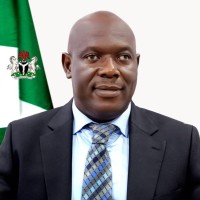
The Hydrocarbon Pollution Remediation Project (HYPREP) has commemorated the 15th anniversary of the release of the United Nations Environment Programme (UNEP) Environmental Assessment Report on Ogoniland, reaffirming its commitment to restoring the environment and improving the livelihoods of affected communities.
In a statement signed by the Project Coordinator, Prof Nenibarini Zabbey, to commemorate the anniversary, HYPREP described the anniversary as a significant milestone in Nigeria’s environmental restoration efforts, noting that the project has made remarkable progress in implementing the recommendations of the landmark UNEP report released on August 4, 2011.
The UNEP report had revealed extensive oil pollution across Ogoniland, severe environmental degradation, and serious public health risks resulting from decades of petroleum operations. It also recommended an initial $1 billion fund to commence the cleanup of the affected communities.
According to HYPREP, the Federal Government formally launched the Ogoni clean-up in 2016, while the Project Coordination Office was established in 2017 to drive the implementation of UNEP’s recommendations.
Zabbey said the current administration has continued to prioritise the project under the Renewed Hope Agenda.
Providing an update on the cleanup, the Project Coordinator disclosed that 30 of the 65 contaminated sites identified by UNEP have been fully remediated, while work is ongoing at several medium- and high-risk locations. It also stated that more than 1.5 million mangrove seedlings have been planted as part of what it described as the world’s largest restoration of oil-degraded mangroves, with over 1,000 hectares of shoreline already rehabilitated.
Zabbey further revealed that 49 Ogoni communities have been connected to potable water schemes through multiple water projects and booster stations aimed at providing safe drinking water across the region.
In the health sector, he said the 100-bed Ogoni Specialist Hospital in Kpite and the 43-bed Cottage Hospital in Buan are nearing completion, adding that several existing health facilities have been upgraded with modern medical equipment, while five ambulances have been donated to improve emergency healthcare services. The Project Coordinator also disclosed that a three-year human health biomonitoring study is being conducted in collaboration with the World Health Organization’s International Agency for Research on Cancer (IARC).
On economic empowerment, Zabbey stated that the Project has created more than 8,000 direct jobs and trained thousands of Ogoni youths and women in various vocational and technical skills, including software development, cybersecurity, aviation, commercial diving, seafaring, mechatronics, and creative arts. The project also reported awarding scholarships to more than 1,000 students, providing grants to small businesses, and supporting persons living with special needs through skills acquisition programmes.
The statement further highlighted ongoing legacy projects, including the Ogoni Power Project and the Centre of Excellence for Environmental Restoration, which it said is about 96 per cent complete. HYPREP also welcomed the recent designation of the Ogoni Wetland as a Ramsar Site of International Importance and pledged to continue promoting biodiversity conservation and sustainable management of the ecosystem.
Marking the anniversary, Zabbey said the progress achieved over the past 15 years demonstrates the collective commitment of government, development partners, stakeholders, and local communities to restoring Ogoniland. He called for renewed collaboration to sustain the cleanup effort, promote environmental sustainability, and support the long-term development of the region. 3
-

 News2 days ago
RSG Targets Nine Million Residents in Mosquito Net Distribution Campaign
-

 Oil & Energy1 day ago
Aiyedatiwa Signs New Electricity Bill
-

 Oil & Energy1 day ago
NLNG Commissions Research And Innovation Centre In RSU
-

 Maritime1 day ago
Marine Minister Commends President Tinubu On NPERA Bill Assent
-

 News2 days ago
KenPoly Holds Eight Convocations, August 29
-

 News2 days ago
RSG Begins Another Phase of Projects Commissioning Today
-

 News2 days ago
RMAFC Completes Revenue Sharing Review, Proposes New Pay
-

 Maritime1 day ago
NAGAFF Petitions IGP Over Alleged Maritime Police Harassment