
Nation
THE STATES

Ekiti
The location in Ikogosi in Ekiti West Local Government Area of EkitiState where the first plane crash was recorded in 1942, is to be converted to tourist centre.
The Special Adviser to the state Governor on Tourism Development, Mr. Segun Ologunleko, who inspected the crash site recently in Ikogosi-Ekiti, said the decision was to turn the state into attractive tourism destination in West Africa.
Ikogosi town is also famous for being the home to warm and cold water co-existing together on the same spot.
He said government’s determination to make the state a place where people could visit and see the relics of the airplane would complement the appeal of the warm spring in the area.
FCT
Helpline Foundation for the Needy (HFN) in collaboration with the Social Development Secretariat (SDS) of the Federal Capital Development Authority (FCDA) last week in Abuja donated food items to widows and orphans in the FCT.
President of the NGO, Mrs Jummai Ahmadu, said that her desire to distribute food items to widows and orphan, particularly during Christmas motivated her to set up the foundation in 2005.
According to her, the objective of the foundation is to enhance the wellbeing, economic and human empowerment of children orphaned by HIV and AIDS and vulnerable widows in the society.
“ The organisation since its inception is currently responsible for the education of more than 150 children both in primary and secondary schools.
Jigawa
The Jigawa Chapter of the Rice Farmers Association of Nigeria (RIFAN) has commended the Federal Government for distributing fertiliser and other inputs to irrigation farmers in the state.
The chairman of the association, Alhaji Adamu Maigoro, told newsmen at Auyo in Jigawa that the gesture would assist farmers and encourage agricultural activity.
It would be recalled the Federal Government had distributed 7,200 tonnes of fertiliser at 50 per cent subsidised rate to rice farmers in the state.
The Federal Government also distributed 2,400 tonnes of improved rice seeds free to the farmers this dry season under its agricultural palliative programme to accelerate rice production in the country.
Kaduna
The National Teachers’ Institute (NTI) last Thursday in Kaduna said it had spent N11.5 billion on the training of 425,000 teachers in the last four years.
The Director General of the institute, Dr Ladan Sharehu said this at a press briefing ahead of the flag-off of the Annual Nationwide Capacity Workshop for Teachers.
Sharehu said the programme, financed by the MDGs, was for the training of primary and Junior Secondary School teachers in four subjects English Language, Mathematics, Integrated Science and Social Studies.
She explained that N3.5 billion was spent in 2009 to train 120,000 teachers, N4 billion in 2010 to train 140,000 teachers and N2 billion used in 2011 on the training of 125, 000.
Kogi
The Kogi State Government says it will soon domesticate the Child Rights Act to enhance its application for proper upbringing of children.
Mrs Patience Mameh, the Commissioner for Women Affairs and Social Development, told newsmen in Lokoja that government had put in place measures that would popularise the Act.
She said that the upbringing of children should be premised on their guaranteed fundamental rights to check abuse and traumatising of children.
Mameh said that it was against this backdrop that the ministry recently held its maiden sitting of the “Children’s Parliament” to develop skills for good governance and responsible citizenship among the children.
Kwara
Abdulfatah Ahmed of Kwara State has reiterated the commitment of his administration to partnering community and religious bodies to eradicate poverty.
Ahmed said this at the Charity Home, Ilorin, during a special prayer to mark the 50th birthday of the former Governor of the State Sen. Bukola Saraki (PDP-Kwara Central).
He said that such partnership was aimed at improving the well being of the people,
He commended the Ilorin Emirate Descendants Progressive Union (IEDPU), for being a dependable ally for growth and development in the state.
Lagos
Governor Babatunde Fashola of Lagos State has urged individuals, clubs and corporate bodies to partner with the government in the provision of social amenities that could aid quality education.
He made the call at the formal commissioning of Dr Lucas Memorial High School’s Information and Communication Technology (ICT) Centre, built by Techno Oil Limited in Lagos.
The governor, who was represented by his Special Adviser on state Universal Basic Education Board (SUBEB), said such partnership was very necessary.
“This will help in turning around the dwindling fortunes of education in the state,’’ saying, restating that provision of quality education was part of his administration’s 10-point agenda.
Ogun
Governor Ibikunle Amosun of Ogun State has congratulated Nobel Laureate, Prof. Wole Soyinka, for emerging the first recipient of the prestigious Obafemi Awolowo Prize for Leadership.
The governor said in a statement issued by his Senior Special Assistant on Media, Mrs Funmi Wakama, in Abeokuta that Soyinka deserved the award.
He described Soyinka as an “embodiment of integrity, credibility, courage, selflessness, accountability, tenacity of purpose, among others.
“Soyinka has spent his entire adult life leading the crusade for a just and united society, founded on the sanctity of the rule of law and press freedom.
Osun
Two persons were killed by armed robbers while no fewer than five others sustained injuries during a bank robbery in Ikirun, Ifelodun Local Government Area of Osun.
The Tide source reports that the robbery attack lasted half an hour at the Ikirun branch of a new generation bank.
It was learnt that security agents attached to the bank and residents took to their heels on sighting the armed robbers.
Ondo
The President of Ikale World Congress (IWC), an NGO, Mr Samuel Ademola, has decried the high death rate among Nigerians due to curable diseases.
Ademola was speaking at a three- day free healthcare programme organised by the NGO at the state Specialist Hospital in Okitipupa, Ondo State.
He said the group organised the programme to reduce the death rate among indigenes of the area.
“ All of us here today belong to the same ethnic group and we have come up with this programme as a way of helping our fellow Ikale men.
Oyo
A researcher with Nigerian Institute of Social and Economic Research (NISER), Abubakar Oladeji, has advised his colleagues to disseminate research findings in simple language to make government policy implementation easier.
Oladeji, who spoke in Ibadan recently at a training for journalists on reporting research findings, said dissemination of findings to policy makers and the public was vital to any researcher.
He said, it was unfortunate that a lot of policy makers had little time for reading through technical research reports findings which they saw as academic prose.
He said because of this, it would be a fruitless exercise for researchers to be sending lot of pages of research outcome and recommendations to them.
Plateau
The Plateau Government has approved three months salary for its striking local government workers as part of efforts to placate them to end their eight months industrial action.
The state government said in a statement signed by its Director of Press Affairs, Mr James Mannok, in Jos that Gov. Jonah Jang had decided to tamper with the “no work no pay’’ policy on compassionate grounds.
“The issue is already before the National Industrial Court for interpretation, but government has approved payment of salaries to resuming workers with effect from October to December 2012,’’ the statement said.
Yobe
Yobe Assembly has unanimously passed a vote of confidence on Gov. Ibrahim Gaidam for engaging 10,000 youths under the state Special Empowerment Programme aimed at curbing unemployment.
The assembly passed the vote of confidence at its plenary session presided over by the speaker, Alhaji Dala Dogo.
The legislators said the gesture would help curb unemployment and contribute to checking insecurity.
The assembly also noted with satisfaction the ongoing training of youths, who were recently engaged as teachers in primary and secondary schools across the state.



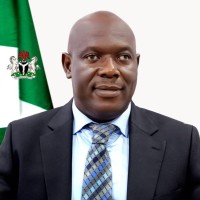
The Hydrocarbon Pollution Remediation Project (HYPREP) has commemorated the 15th anniversary of the release of the United Nations Environment Programme (UNEP) Environmental Assessment Report on Ogoniland, reaffirming its commitment to restoring the environment and improving the livelihoods of affected communities.
In a statement signed by the Project Coordinator, Prof Nenibarini Zabbey, to commemorate the anniversary, HYPREP described the anniversary as a significant milestone in Nigeria’s environmental restoration efforts, noting that the project has made remarkable progress in implementing the recommendations of the landmark UNEP report released on August 4, 2011.
The UNEP report had revealed extensive oil pollution across Ogoniland, severe environmental degradation, and serious public health risks resulting from decades of petroleum operations. It also recommended an initial $1 billion fund to commence the cleanup of the affected communities.
According to HYPREP, the Federal Government formally launched the Ogoni clean-up in 2016, while the Project Coordination Office was established in 2017 to drive the implementation of UNEP’s recommendations.
Zabbey said the current administration has continued to prioritise the project under the Renewed Hope Agenda.
Providing an update on the cleanup, the Project Coordinator disclosed that 30 of the 65 contaminated sites identified by UNEP have been fully remediated, while work is ongoing at several medium- and high-risk locations. It also stated that more than 1.5 million mangrove seedlings have been planted as part of what it described as the world’s largest restoration of oil-degraded mangroves, with over 1,000 hectares of shoreline already rehabilitated.
Zabbey further revealed that 49 Ogoni communities have been connected to potable water schemes through multiple water projects and booster stations aimed at providing safe drinking water across the region.
In the health sector, he said the 100-bed Ogoni Specialist Hospital in Kpite and the 43-bed Cottage Hospital in Buan are nearing completion, adding that several existing health facilities have been upgraded with modern medical equipment, while five ambulances have been donated to improve emergency healthcare services. The Project Coordinator also disclosed that a three-year human health biomonitoring study is being conducted in collaboration with the World Health Organization’s International Agency for Research on Cancer (IARC).
On economic empowerment, Zabbey stated that the Project has created more than 8,000 direct jobs and trained thousands of Ogoni youths and women in various vocational and technical skills, including software development, cybersecurity, aviation, commercial diving, seafaring, mechatronics, and creative arts. The project also reported awarding scholarships to more than 1,000 students, providing grants to small businesses, and supporting persons living with special needs through skills acquisition programmes.
The statement further highlighted ongoing legacy projects, including the Ogoni Power Project and the Centre of Excellence for Environmental Restoration, which it said is about 96 per cent complete. HYPREP also welcomed the recent designation of the Ogoni Wetland as a Ramsar Site of International Importance and pledged to continue promoting biodiversity conservation and sustainable management of the ecosystem.
Marking the anniversary, Zabbey said the progress achieved over the past 15 years demonstrates the collective commitment of government, development partners, stakeholders, and local communities to restoring Ogoniland. He called for renewed collaboration to sustain the cleanup effort, promote environmental sustainability, and support the long-term development of the region. 3
-

 News2 days ago
RSG Targets Nine Million Residents in Mosquito Net Distribution Campaign
-

 Oil & Energy2 days ago
Aiyedatiwa Signs New Electricity Bill
-

 Maritime2 days ago
Marine Minister Commends President Tinubu On NPERA Bill Assent
-

 Oil & Energy2 days ago
NLNG Commissions Research And Innovation Centre In RSU
-

 News2 days ago
KenPoly Holds Eight Convocations, August 29
-

 News2 days ago
RSG Begins Another Phase of Projects Commissioning Today
-

 News2 days ago
RMAFC Completes Revenue Sharing Review, Proposes New Pay
-

 Maritime2 days ago
NAGAFF Petitions IGP Over Alleged Maritime Police Harassment