
Nation
THE STATES

Benue
The Benue House of Assembly, has directed the state government to establish functional fire service stations in its three senatorial zones.
This followed a motion by Mr Baba Odeh of Otukpo/Akpa constituency which urged the government to embark on the project to save lives and property.
Odeh said the stations should be located in Gboko, Katsina-Ala and Otukpo local government areas.
He said the motion was necessary because the main station located in Makurdi with two sub-stations were inadequate to cater for the state.
Ekiti
The Ekiti State Government last Thursday disbursed N18.9 million to 126 law students.
The students received N150,000 each as their 2012 bursary allowance.
At a ceremony in Ado-Ekiti, the state’s Commissioner for Education, Dr Eniola Ajayi, said that the gesture was in line with the eight-point agenda of the present administration in the state.
The commissioner, who presented cheques to the beneficiaries, advised them to be prudent in the use of the allowance.
FCT
An Information Technology expert, Mr Kio Bestman, last Thursday in Abuja advised computer training institutes in the country to run certification programmes.
Bestman in an interview with newsmen said that was the only way the Nigerian IT training centres could remain relevant in the global IT market.
“Our computer schools should run certification programme. Whether you have a B.SC or not, certification mean you are competent enough to use that platform.
“If it is website design, you have a certification programme. If it is Microsoft office, you have Micro-office specialist certification. If it is networking you also have networking certification.
Gombe
The Chairman of the Association of Resident Doctors (ARD), Gombe State chapter, Dr Raymond Dankoli, last Thursday in Gombe called on members of the public to take precautionary measures to curtail the effects of harmattan on their health.
Dankoli, who stated this in an interview with newsmen in Gombe, noted that the harmattan period comes with several health challenges, especially respiratory tract infections because of the dust .
“The risk of respiratory tract infection is higher during the period, hence the need for precaution.
“Children are more vulnerable; therefore parent should make sure that they take precautionary measures.”
Jigawa
The Jigawa Executive Council has approved N186 million for the procurement of laboratory equipment and the execution of other school development projects in the state.
The Commissioner for Information, Alhaji Banbandi Ibrahim, disclosed this last Thursday in Dutse while briefing newsmen on the outcome of Wednesday’s meeting of the State Executive Council.
Ibrahim said of the N186 million, N110 million would go to the procurement of laboratory equipment for distribution to all senior science secondary schools across the state.
He said that N33 million was earmarked for the rehabilitation of hostels at the College of Remedial and Advance Studies, Kafin-Hausa.
Kaduna
A Kaduna Sharia Court has sentenced one Babangida Ibrahim, 33, to six months imprisonment for stealing a motorcycle at a mosque in Kaduna,
Ibrahim had stolen the motorcycle on November 20, removed its number plate but was arrested at a police check- point in the city for riding without number plate.
According to Police Prosecutor, Cpl Bitrus Kwaji, subsequent investigation revealed that Ibrahim had stolen the motorcycle.
Katsina
The Joint Consultative Forum (JCF) of the three tertiary institutions in Katsina State, has given three weeks ultimatum to the government to meet its demands or its members will embark on strike.
The three state-owned tertiary institutions are Hassan Usman Katsina Polytechnic, Katsina, Isah Kaita College of Education, Dutsinma and Yusuf Bala Usman College of Legal and General Studies, Daura.
The forum comprised of both academic and non-academic staff of the institutions.
The Chairman of the forum, Malam Tukur Dahiru, and the Secretary Malam Muttaka Mamman, gave the warning last Thursday in Katsina in a statement they signed and issued to newsmen.
Kwara
The Kwara House of Assembly has passed the Asset Management Bill 2012.
The Clerk of the House, Mr Oyetunde Oyeniyi, announced the passage of the bill after reading it for the third time on the floor of the Assembly.
The bill seeks to protect the state government’s asset and liabilities in ministries and parastatal agencies against theft and vandalism.
It also spells out penalties for anybody or group of persons who damages or steals government property.
Lagos
Assistant Director, Lagos Zonal Inspector, Directorate of Police Education, Mrs Esther Gbadegesin, last Thursday said that affordable and qualitative education would make the nation develop faster.
Gbadegesin made the observation in an interview with newsmen in Lagos.
She explained that making school fees affordable would give the children more opportunities to acquire education.
“When more children are given the opportunity to be educated as a result of affordable school fees, our society would develop faster,” she said.
Ogun
A Mathematician, Prof. Abayomi Arigbabu, has called on all levels of government to declare a ‘State of emergency‘ on the teaching and learning of Mathematics in the country.
Arigbabu, Dean of College of Science and Information Technology, Tai Solarin University of Education (TASUED), ljebu-Ode, Ogun, made the call while delivering the 2nd Inaugural lecture of the University.
The dean, who is also a Professor of Mathematics, spoke on the Topic: “Beyond The Cuboid: lmperatives For An Aids-Free, Mathematically Literate Society”.
Osun
A Climatologist, Prof Temi Ologunorisa, has identified ICT as a useful tool in the management and mitigation of the effects of climate change in communities.
Ologunorisa said at an International Conference on “Climate Change and ICT”, held at the Osun State University, Osogbo, that ICT development would help in reducing hazards associated with climate change.
The conference was jointly organised by the Xavier University, USA, International Centre for IT Development, USA, and Osun State University’s Centre For Climate Change and Environmental Research, to showcase the importance of ICT in disaster management.
“Climate change and its associated problems, such as sea level rise, flooding, erosion, desertification and heat, are gradually becoming issues of concern to us all.
Plateau
The Plateau Government said it would set up family courts in order to protect the right of children in the state
Plateau Commissioner for Justice and Attorney-General, Mr Edward Pwajok, told newsmen in Jos last Thursday that the court would assist in curtailing many injustices against children.
“The protection of rights of children in our society today is very vital, and should not be neglected because they are the leaders of tomorrow.
“This suggests why we in Plateau will not be left behind in struggling to give our children a better future,” he said.
Zamfara
The National Council for Women Societies (NCWS) in Zamfara has urged women in the state to participate actively in political activities and other developmental programmes.
President of the society, Hajiya Larai Ibrahim, made the plea last Thursday in Gusau at a sensitisation programme organised for women activists in the state.
It was jointly organised by the Gender Awareness Trust and the United Nations Development Programme (UNDP).
Ibrahim said that traditional and religious impediments had hindered women’s participation in politics and governance, adding that it was responsible for gross gender inequality in the state.



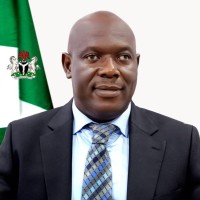
The Hydrocarbon Pollution Remediation Project (HYPREP) has commemorated the 15th anniversary of the release of the United Nations Environment Programme (UNEP) Environmental Assessment Report on Ogoniland, reaffirming its commitment to restoring the environment and improving the livelihoods of affected communities.
In a statement signed by the Project Coordinator, Prof Nenibarini Zabbey, to commemorate the anniversary, HYPREP described the anniversary as a significant milestone in Nigeria’s environmental restoration efforts, noting that the project has made remarkable progress in implementing the recommendations of the landmark UNEP report released on August 4, 2011.
The UNEP report had revealed extensive oil pollution across Ogoniland, severe environmental degradation, and serious public health risks resulting from decades of petroleum operations. It also recommended an initial $1 billion fund to commence the cleanup of the affected communities.
According to HYPREP, the Federal Government formally launched the Ogoni clean-up in 2016, while the Project Coordination Office was established in 2017 to drive the implementation of UNEP’s recommendations.
Zabbey said the current administration has continued to prioritise the project under the Renewed Hope Agenda.
Providing an update on the cleanup, the Project Coordinator disclosed that 30 of the 65 contaminated sites identified by UNEP have been fully remediated, while work is ongoing at several medium- and high-risk locations. It also stated that more than 1.5 million mangrove seedlings have been planted as part of what it described as the world’s largest restoration of oil-degraded mangroves, with over 1,000 hectares of shoreline already rehabilitated.
Zabbey further revealed that 49 Ogoni communities have been connected to potable water schemes through multiple water projects and booster stations aimed at providing safe drinking water across the region.
In the health sector, he said the 100-bed Ogoni Specialist Hospital in Kpite and the 43-bed Cottage Hospital in Buan are nearing completion, adding that several existing health facilities have been upgraded with modern medical equipment, while five ambulances have been donated to improve emergency healthcare services. The Project Coordinator also disclosed that a three-year human health biomonitoring study is being conducted in collaboration with the World Health Organization’s International Agency for Research on Cancer (IARC).
On economic empowerment, Zabbey stated that the Project has created more than 8,000 direct jobs and trained thousands of Ogoni youths and women in various vocational and technical skills, including software development, cybersecurity, aviation, commercial diving, seafaring, mechatronics, and creative arts. The project also reported awarding scholarships to more than 1,000 students, providing grants to small businesses, and supporting persons living with special needs through skills acquisition programmes.
The statement further highlighted ongoing legacy projects, including the Ogoni Power Project and the Centre of Excellence for Environmental Restoration, which it said is about 96 per cent complete. HYPREP also welcomed the recent designation of the Ogoni Wetland as a Ramsar Site of International Importance and pledged to continue promoting biodiversity conservation and sustainable management of the ecosystem.
Marking the anniversary, Zabbey said the progress achieved over the past 15 years demonstrates the collective commitment of government, development partners, stakeholders, and local communities to restoring Ogoniland. He called for renewed collaboration to sustain the cleanup effort, promote environmental sustainability, and support the long-term development of the region. 3
-

 News2 days ago
RSG Targets Nine Million Residents in Mosquito Net Distribution Campaign
-

 Oil & Energy2 days ago
Aiyedatiwa Signs New Electricity Bill
-

 Maritime2 days ago
Marine Minister Commends President Tinubu On NPERA Bill Assent
-

 Oil & Energy2 days ago
NLNG Commissions Research And Innovation Centre In RSU
-

 News2 days ago
KenPoly Holds Eight Convocations, August 29
-

 News2 days ago
RSG Begins Another Phase of Projects Commissioning Today
-

 News2 days ago
RMAFC Completes Revenue Sharing Review, Proposes New Pay
-

 Maritime2 days ago
NAGAFF Petitions IGP Over Alleged Maritime Police Harassment