
Nation
THE STATES

Adamawa
The Adamawa Government, has intervened in the dispute
between the newly appointed 35 development area administrators with their
predecessors over who has the right to official cars.
There was a running battle between the newly appointed
administrators, who insisted on having
the official cars from their predecessors.
Declaring government’s position to newsmen on the
development, the Chief of Staff to Governor
Murtala Nyako, Alhaji Abdulrahman Abba, said the out-going
administrators were the rightful owners of the cars, which he confirmed had
been monetised.
Abba, who is also the acting commissioner for information,
said the state government had directed the new administrators who had
confiscated the cars from their predecessors to return them.
He said that the government had also directed those still
hunting their predecessors to desist forthwith.
The chief of staff said, “with this development, the matter
has been settled for good.’’
Jigawa
The Jigawa House of Assembly, passed a bill for the establishment of a
Farmers/Pastoralists Board, the Speaker, Alhaji Adamu Ahmad, said in Dutse.
Ahmad said in an interview in Delta, that the
executive-sponsored bill was aimed at checking the incessant crisis between
farmers and herdsmen in the state.
He commended the administration of Governor Sule Lamido for coming up with the bill
which, he said, would provide lasting solution to the problem of farmers and
pastoralists.
According to him, conflict between the two groups has
minimised since the inception of the present administration in the state.
Ahmad said that the House had also passed a bill to
establish the state Arts Exhibition and Multimedia Censors’ Board.
Kaduna
The Christian Association of Nigeria (CAN) has urged
Christians not to stay away from church activities, particularly at this time
of persecution.
The Chairman of the Kaduna State chapter of CAN, Rev. Samuel
Kujiyat, made the call in Kaduna recently.
He stressed that the recent developments in the country
notwithstanding, Christians should always strive to propagate the gospel,
adding that if Christians refrained from preaching the gospel, the perpetrators
of the persecution would have an upper hand and be encouraged to commit their
evil plans.
Kujiyat, who spoke at the 19th Synod of the Diocese of
Kaduna, Anglican Communion, however, prayed for God’s intervention and
protection for the Christian faithful.
Kano
The Joint Security Task Force (JTF) and operatives of the
State Security Service (SSS) have in Kano arrested three suspected gunmen at
Gadar Bayero, near Taburawa Kano.
The State SSS Director, Mr Bassey Ettang, announced this
while briefing newsmen. He said the suspects were apprehended during an early
morning raid at a hide out at Tamburawa, a Kano outskirt.
“The operation was carried out based on an intelligent
report of the activities of the terrorists who operate at the outskirts of Kano
now. “We were able to recover some quantities of primed Improvised Explosive
Devices (IEDs) ready for detonation, together with military uniforms used by
the gunmen.’’
Kebbi
The Controller of Prisons in Kebbi, Alhaji Othman Musa, has
com-mended the Emir of Zuru, Alhaji Sani Sami, for assisting in the reformation
of minor offenders to be good members of society.
Musa, who gave the commendation in Birnin Kebbi urged
members of the public to emulate the Emir to ensure that prison inmates came
out as better citizens.
He said the nation’s prisons were facing the challenge of
blending their inmates to fit into the society after their jail terms,
considering that some of them felt abandoned by relatives and the society.
“We would strive to erase the stigma placed on the inmates
by the society to prevent them from transforming into hardened criminals,
deviants and social misfits. “The people need to emulate the Emir of Zuru,
Alhaji Sani Sami, who had facilitated the release of minor offenders as well as
assisted them with tools to learn skills that would enable them blend into
society.”
Kogi
The President, National Council of Women Societies (NCWS),
Kogi chapter, Mrs Mary Olowosegun, has
advised women to show commitment to politics in order to reflect their real
strength.
Olowosegun newsmen in
Lokoja, that she was disappointed at the low turnout of women aspirants for the
forthcoming local government election in the state.
She said it was the zeal that women aspirants displayed in
politics that would generate financial support for them.
The women leader said that she was planning to have a meeting
with the representatives of the association in the rural areas to help
sensitise the women in the state towards the forth coming local government
election.
Kwara
A cleric, Uztaz Abdulfatah Abiona-Ibrahim, has urged wealthy
Mus-lims in the country to always provide assistance to the poor, particularly
during the last 10 days of the Ramadan.
Abiona-Ibrahim, an Ilorin-based Islamic scholar, made the
call while delivering a sermon at the “A” Division Police Station Mosque in
Ilorin, recently.
He said the call became necessary because of the blessings
attached to the last 10 days of the Ramadan known as the “Night of Majesty.”
The cleric also urged Muslims to ensure that their
Zakatul-fitri (gift) was observed in accordance with the provisions of the
Quran and Hadith. He said the gift could be in form of food stuff presented to
the less privileged.
Ondo
Former President Olusegun Obasanjo has predicted that the
People’s Democratic Party (PDP) would win the October 20 Ondo governorship
election.
Obasanjo stated this
in Akure at a rally organised by the PDP ahead of the election. At the
rally tagged “ Unity Rally,’’ the governorship candidate of the party, Chief
Olusola Oke was handed over the party’s flag.
Obasanjo described Oke as very credible, and urged the
people of the state to vote for him.
“I want to start by thanking our brothers and sisters
outside Ondo State who have come to flag off the campaign to bring PDP back to
the state. “We have a creditable candidate for Ondo State, Olusola Oke is a
good leader that can be taken by his words,’’ he said.
Ogun
The General Overseer of the Redeemed Christian Church of God
(RCCG) Pastor Enoch Adeboye, says the church has foreign missions in 160
nations of the world.
He disclosed this at the Special Holy Ghost Service which
commenced on Friday night as part of activities marking the 60th Convention of
the Church.
Adeboye said that the church opened branches in 13 countries
in the last one year in addition to the existing 147 nations where the church
operated.
According to him, God expects RCCG to be present in all
nations of the world. He, however, expressed optimism that the goal would be
achieved soon.
Adeboye, who announced that a total of 11,162 weddings were
conducted by the church in the last one year, added that 68 women were
delivered of babies inside the camp ground, venue of the convention.
Osun
Some residents of Modakeke in Osun have commended the state
government for introducing compulsory environmental sanitation twice in a
month.
A resident, Mr Oluwaseun Ajibade, in Modakeke said that the exercise would ensure the good
health of the citizens. “Health is wealth; the basic concept of the bi-monthly
sanitation in Osun is to make people healthier and by implication, prolong
their lifespan,’’ he said.
Ajibade, who spoke during the initial observance of the
sanitation, reiterated that the exercise would promote healthy living among the
citizens of the state.
A resident of the Oke-ola area of Modakeke, Mrs Omolabake
Goriola, commended the government for
the initiative, condemning the manner in which some residents disposed of their
refuse.
Oyo
The Oyo State Government says it will soon begin the payment
of the retirement entitlements of primary school teachers and local government
workers via e-payment.
A statement by the Chairman, Oyo State Local Government
Staff Pensions Board, Chief Lasisi Ayankojo, in Ibadan said that the policy was
aimed at checking fraud in the payment of pensions and gratuities.
The state government recently uncovered a N2.6 billion pension
fraud in the board. The interim investigation of the board’s account between
September 2010 and March, 2011, which exposed the fraud, allegedly indicted 10
civil servants.
Ayankojo said that the e-payment would also help to
streamline pension payment, while reducing the troubles usually associated with
the payment of pension.
Taraba
The Proprietor, Beautiful People Driving School, Jalingo, Mr
Francis Ejembi, has advocated proper training for both commercial and private
drivers to reduce the high rate of road accidents on Nigerian roads.
Ejembi, who gave the advice in Jalingo, in an interview said
that most of the road crashes occurred as a result of ‘gross disregard’ for
road signs due to little or no training by drivers.
He said that a well-trained driver would not wait for
officials of the FRSC to tell him to put on his seat belt because he should
know the importance of seat belt to his safety.
“Proper training of drivers is one of the development agenda
of the United Nations Vision 20:2020. “A well trained driver knows that he has
to do routine checks on his vehicle, put on his seat belt and respect the
rights of other road users.
Yobe
The Yobe State Commissioner of Police, Mr Patrick Egbuniwe,
has confirmed that gunmen engaged security operatives in a shoot-out at the
Bindigari area of Damaturu.
Egbuniwe said in a telephone interview that the shoot-out
ensued when security operatives went to the area on security patrol.
“Gunmen as usual, have engaged our security operatives in a
shoot-out. “The operation is still on in the area, so we can not confirm
casualties yet. Other parts of the town are, however, calm and security
operatives are on top of the situation,’’ Egbuniwe stated.
Meanwhile, many residents have deserted the streets of the
city for safety.
Six soldiers and one civilian were killed on August 5 in a
suicide bomb attack along Gashua Road in Damaturu.



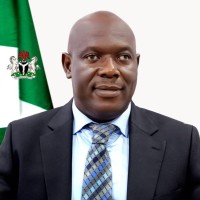
The Hydrocarbon Pollution Remediation Project (HYPREP) has commemorated the 15th anniversary of the release of the United Nations Environment Programme (UNEP) Environmental Assessment Report on Ogoniland, reaffirming its commitment to restoring the environment and improving the livelihoods of affected communities.
In a statement signed by the Project Coordinator, Prof Nenibarini Zabbey, to commemorate the anniversary, HYPREP described the anniversary as a significant milestone in Nigeria’s environmental restoration efforts, noting that the project has made remarkable progress in implementing the recommendations of the landmark UNEP report released on August 4, 2011.
The UNEP report had revealed extensive oil pollution across Ogoniland, severe environmental degradation, and serious public health risks resulting from decades of petroleum operations. It also recommended an initial $1 billion fund to commence the cleanup of the affected communities.
According to HYPREP, the Federal Government formally launched the Ogoni clean-up in 2016, while the Project Coordination Office was established in 2017 to drive the implementation of UNEP’s recommendations.
Zabbey said the current administration has continued to prioritise the project under the Renewed Hope Agenda.
Providing an update on the cleanup, the Project Coordinator disclosed that 30 of the 65 contaminated sites identified by UNEP have been fully remediated, while work is ongoing at several medium- and high-risk locations. It also stated that more than 1.5 million mangrove seedlings have been planted as part of what it described as the world’s largest restoration of oil-degraded mangroves, with over 1,000 hectares of shoreline already rehabilitated.
Zabbey further revealed that 49 Ogoni communities have been connected to potable water schemes through multiple water projects and booster stations aimed at providing safe drinking water across the region.
In the health sector, he said the 100-bed Ogoni Specialist Hospital in Kpite and the 43-bed Cottage Hospital in Buan are nearing completion, adding that several existing health facilities have been upgraded with modern medical equipment, while five ambulances have been donated to improve emergency healthcare services. The Project Coordinator also disclosed that a three-year human health biomonitoring study is being conducted in collaboration with the World Health Organization’s International Agency for Research on Cancer (IARC).
On economic empowerment, Zabbey stated that the Project has created more than 8,000 direct jobs and trained thousands of Ogoni youths and women in various vocational and technical skills, including software development, cybersecurity, aviation, commercial diving, seafaring, mechatronics, and creative arts. The project also reported awarding scholarships to more than 1,000 students, providing grants to small businesses, and supporting persons living with special needs through skills acquisition programmes.
The statement further highlighted ongoing legacy projects, including the Ogoni Power Project and the Centre of Excellence for Environmental Restoration, which it said is about 96 per cent complete. HYPREP also welcomed the recent designation of the Ogoni Wetland as a Ramsar Site of International Importance and pledged to continue promoting biodiversity conservation and sustainable management of the ecosystem.
Marking the anniversary, Zabbey said the progress achieved over the past 15 years demonstrates the collective commitment of government, development partners, stakeholders, and local communities to restoring Ogoniland. He called for renewed collaboration to sustain the cleanup effort, promote environmental sustainability, and support the long-term development of the region. 3
-

 News2 days ago
RSG Targets Nine Million Residents in Mosquito Net Distribution Campaign
-

 Oil & Energy2 days ago
Aiyedatiwa Signs New Electricity Bill
-

 Oil & Energy2 days ago
NLNG Commissions Research And Innovation Centre In RSU
-

 Maritime2 days ago
Marine Minister Commends President Tinubu On NPERA Bill Assent
-

 News2 days ago
KenPoly Holds Eight Convocations, August 29
-

 News2 days ago
RSG Begins Another Phase of Projects Commissioning Today
-

 News2 days ago
RMAFC Completes Revenue Sharing Review, Proposes New Pay
-

 Maritime2 days ago
NAGAFF Petitions IGP Over Alleged Maritime Police Harassment