
Rivers
IAUE Promotes 51 Staff To Professors, Associate Professors

Ignatius Ajuru University of Education (IAUE) has promoted 17 academic staff to the rank of Professor, and another 34 to Associate Professors (Readers).
Acting Vice Chancellor of the university, Professor Okechuku Onuchuku, disclosed this during an Emergency Senate Meeting, held on Wednesday at the Postgraduate Hall.
While congratulating those affected on behalf of the 12th Governing Council, the Acting Vice Chancellor reminded them that higher position means higher responsibilities.
He urged them to continue to stand out by doing their jobs very well and providing the needed leadership in their various fields of discipline.
Professor Onuchuku, who also congratulated non-teaching staff promoted, informed that they would get the monetary value attached to the promotion and expressed gratitude to the Rivers State Governor, Sir Siminalayi Joseph Fubara, for prioritising education and for the financial benefits.
He advised staff to eschew hatred and bitterness and to give their subordinates what is due them irrespective of tribe and religion.
He implored Members not to “bear grudges, but be good to others at all times, even in the face of prosecution, and allow divine justice to reign supreme”.
With this promotion, the University now has 97 Professors.
Those promoted to the rank of Professors in the Faculty of Agriculture are: Joseph E. I. Ansa (Professor of Agronomy).
The Faculty of Education has Okai N. Okai (Professor of Administration of Higher Education); Tamunodienye Mba (Professor of Curriculum Teacher/Education); Marilyn Ochoma (Professor of Curriculum and Instruction); Nwankwoala H. N. L. (Professor of Educational Management); Ibiene T. LongJohn (Professor of Educational Measurement and Evaluation); Dagogo A. F. Daminabo (Professor of Sociology of Education); and Josephine E. Elekwa (Professor of Sociology of Education).
Faculty of Humanities has Anthony Adele Orlu (Professor of Environmental Literature); Israel N. Johnson (Professor of Church History); Ante James Eteka (Professor of African Literature in French); Bernadette C. Ugochukwu (Professor of Music Pedagogy—2021); and Charles G.T. Omuaru (Professor of Sculpture).
In Faculty of Management Sciences there are: Jude Nwoka (Professor of Human Resource Management); Nwakaego Chukwuigwe (Professor of Organisational Behaviour); Israel Umesi (Professor of Accountancy, Tax Management).
Faculty of Vocational and Technical Education has Azunwena Reginah N. (Professor of Home Economics Education).
Those appointed Associate Professors (Readers) are, Faculty of Agriculture: Wilcox G. Ibim (Agricultural Economics and Extension); and Eunice N. Ajie (Agricultural Economics, Agric Marketing).
In the Faculty of Education, there are: Love Nwamadi (Guidance and Counselling); Emmanuel Okwu (Library and Information Science); Iyagba Philemon W. (Educational Psychology); Amadi-Ali Beatrice O. (Early Childhood and Primary Education); and Jerome I. Wosu (History and Policy of Education).
For the Faculty of Humanities, there are: Grace Lawrence-Hart (Religious and Cultural studies); and Emeka Ikechi (African Literature -202)
Faculty of Management Sciences has Dumo Opara (Human Resources Management and Organisational Behaviour); Lawrence Amadi (Strstegic Marketing and Entrepreneurship); Ikechi Prince Obinna (Consumer Behaviour and Sustainable Marketing); Godswill Chinedu Chukwu (Consumer Behaviour and Strategic Marketing); Joy A. Mekuri-Ndimele (Human Resources Management and Office and Information Management); and Victor Chima Anucha (Marketing, Green Marketing).
The Faculty of Natural and Applied Sciences has China Worukwu (Science Education); Comfort Emma Elechi (Community Health Education and Promotion); Glory Godspower- Echie (Science Education); Nwala Longinus (Science Education); Ibim Dagogo Franklin (Geophysics); Nchelem R. George (Mathematics Education); and Constance I. Amannah (Computer Science).
Faculty of Social Sciences has Ukpere Dennis Tobins (Rural Development and Resources Management); David Baride Ngeh (Sociology of Development); Poroma Celestine Lekia (Industrial Relations and Human Resource Management); Nwiekpugi B. Poronakie (Regional Development Planning); Okwakpam I. Omenuihu (Environmental Management); Wabah Goodnews (Medical Sociology); Odike Ebenezer Levi (Sociology of Development); Leelee N. Deekor (Development Economics); and Iwarimie B. Uranta (Political Theory and Methodology).
For the Faculty of Vocational and Technical Education, there are: Joseph O. Amaechi (Industrial Technical Education); Paulinus Emennu (Industrial Technical Education); and Salome Emeya (Agricultural Education).
At the non-teaching staff category, those promoted as Directors are: Rose K. Okah; Priscilla M. Oriji; Obi N. Wichendu; Didia Christopher; Wilson E. Ibokama; Chisa Egu; and Emejuru Chioma.
Also promoted in the Bursary Department are: Ikuru Osekeigak Bertram (Director); Graham-Kingsley Gift(Deputy Bursar); and Nicholas O. Nkwoji (Deputy Bursar).
In the Audit Unit, there is Elechi Innocent Alete (Deputy Director, Audit), while those appointed as Deputy Registrars are: Queen A. Ikhumni; Kate Ukwoma O; Dorathy N. Abinusawa; Barnabas Obi Emordi; Uchenna P. Nwankwo; Wawhua Christiana B.; Eucharia Chigbu O.; Nyebuchi Owabie; Tom-West Igbaniboba J.; Felicia Court; and Daughter O. Wugate; Legborsi Kara John.
For the position of Chief Confidential Secretary 1, there are: Elizabeth O. Wike; and Gooba E. B. Ikiriko.
Health Services Department has only Dr. Destiny Osuchukwu as Deputy Director, Health Services, same thing with Laboratory Technology which also have only Felix Tennyson Chioma as Chief Technologist 1
Also, the Security Department has only Mr. Nwidua Nwibari as Chief Security Officer 1.



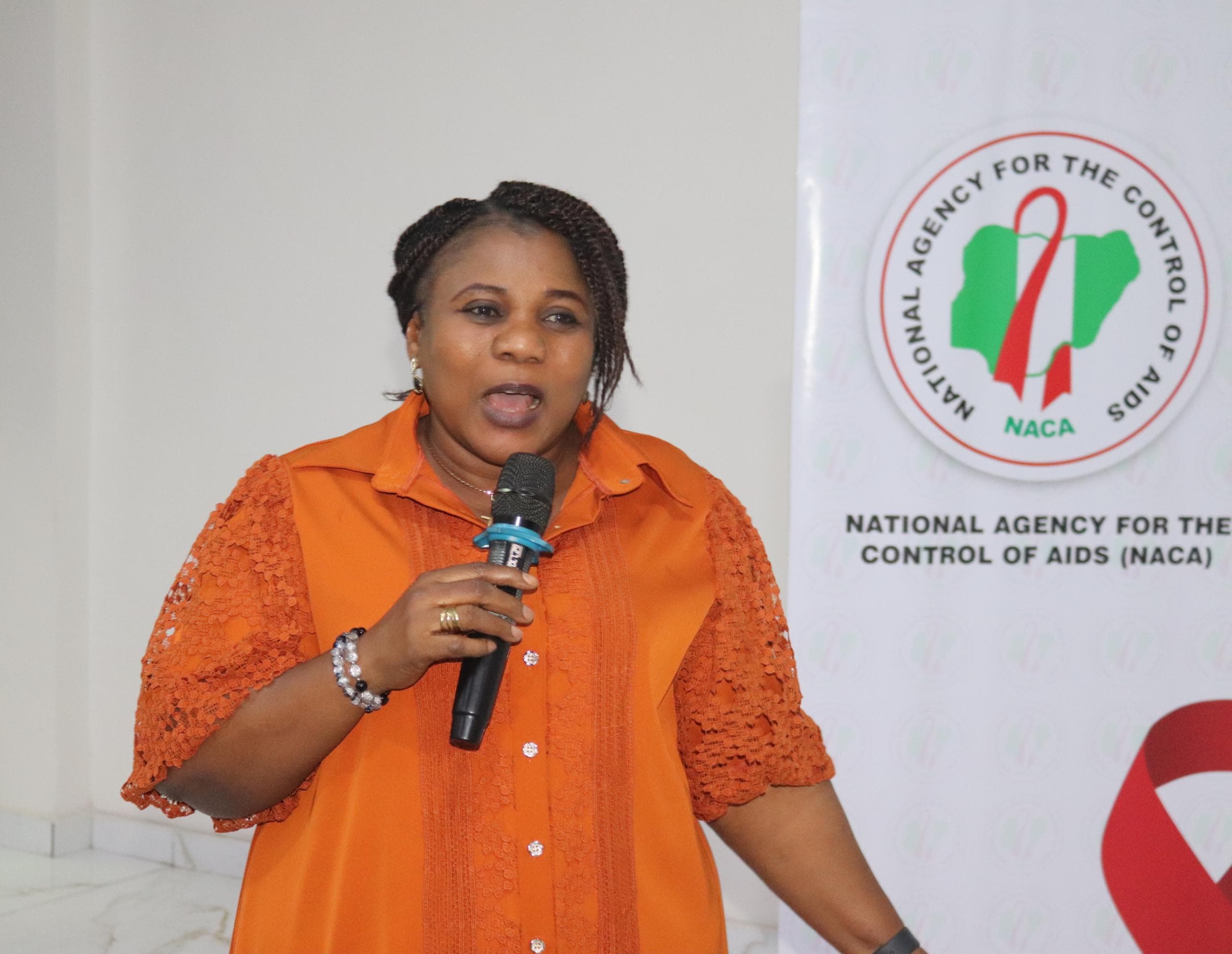
Prevention for HIV has taken yet another more advanced dimension with the introduction of the Lenacapavir (LEN) Pre-Exposure Prophylaxis (PrEP) into the stable of HIV prevention.
This was disclosed to Journalists assembled from across Nigeria in a two-day training programme on Lenacapavir in Lagos State.
In his presentation, the Lead Facilitator, and Principal Partner, Kent Consult Limited, Abuja, Dr. Segun Oyedeji, said unlike the earlier Post-Exposure Prophylaxis (PEP), which is taken to prevent HIV infection after exposure, the Lenacapavir PrEP is taken by non-infected persons.
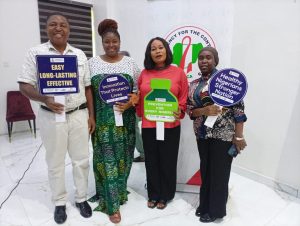
Such targeted persons are usually those exposed to vulnerable behaviours capable of exposing them to HIV infection.
“PrEP is taken before you are exposed to HIV, and comes in three forms: the daily oral PrEP, Truvada pill; the two-months interval injectible, Cabotegravir; and the long-acting bi-annually (six months interval) injectible, Lenacapavir. There’s also the Dapivrine Vaginal Ring, which women wear for one month”, he said.
Dr. Oyedeji explained that PrEP is meant for people who are exposed by their risk profile to HIV infection.
Risk profile, he explained, “is the kind of risk behaviours they exhibit in their lifestyle.”
Such people include people with a partner who has HIV, people who don’t always use condoms, sex workers, etc.
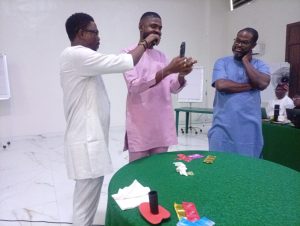
PrEP, according to Dr. Oyedeji, “builds up protection in your body so that if HIV enters your body, the medicine stops it from multiplying.”
Also, within the period the person is taking it, the person must get tested for HIV every three months interval.
So far, among the four options of PrEP, Adedeji, continued, “the Lenacapavir is the game-changer everyone is talking about.”
The reason is that it is a Capsid inhibitor, first of its class, that attacks the protein shell that HIV uses to copy itself, which is different from old drugs, and is just two injections per year, plus small starter tablets at the beginning. Not daily pills.
He, however, noted that before any of the PrEP options can be used, the person has to go through an eligibility test to ascertain which of the options would be suitable for the person, based on the person’s risky behaviour, and that all the person needs to do is to go to any health facility close to them to seek for the service, or the State Agency for the Control of AIDS (SACA) to get the right direction.
On his part, the Senior Prevention Manager, AIDS Healthcare Foundation (AHF), Mr. Adeleye Taofeek, who spoke on condom use as part of preventive measures for both HIV and Sexually Transmitted Infections (STIs), encouraged the use of condoms, especially where abstinence from sex is inevitable.
He said, “We are canvassing that as much as you use PrEP, you can also use condoms to prevent other STIs, beside HIV.
“We want the media to engage in demand creation for use of the various HIV prevention options: whether it is condom, PrEP, or change of behaviour, staying with an uninfected partner, we want the media to support the national response by creating demand for HIV prevention options.”
Earlier in her welcome address to participating Journalists at the two-day training, organised by the NACA and the Institute of Human Virology, Nigeria (IHVN), the Director-General, National Agency for the Control of AIDS (NACA), Dr. Temitope Ilori, emphsised the importance of the media in awareness creation.

She said: “PrEP is an effective HIV prevention for people who are HIV-negative and may be at risk of acquiring HIV. However, the availability of a prevention intervention is only one part of the equation. People must also have access to the right information, understand their prevention options, know where services are available, and feel confident seeking those services. This is where you, our media professionals, become indispensable partners.
“The media has the power to shape public understanding. A well researched story can dispel a misconception, encourage someone to seek a prevention service and potentially change a life. On the contrary, inaccurate or sensational reporting can create fear, reinforce stigma and discourage people from accessing HIV services.
“We, therefore, count on you to report PrEP and HIV prevention accurately, responsibly, and without stigma.”
The NACA D-G, who was represented by the Head, Public Relations and Protocol, NACA, Toyin Aderibigbe, charged the participants at the training, saying, “your reporting should make these issues understandable to ordinary Nigerians.”
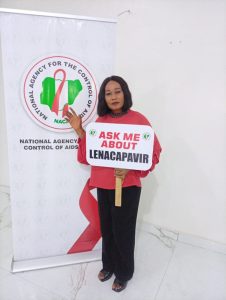
Research shows that so far there have been no infections among all the people who have received the LEN PrEP, showing almost 100% protection.
The World Health Organisation (WHO) adopted it in July 2025 as an additional PrEP option.
In Nigeria, NAFDAC approved it in the late 2025 and received regulatory clearance, with the country receiving its first batch of doses in March 2026, and subsequently distributed it to 8 pilot states.
The states are: Akwa Ibom, Anambra, Benue, Cross River, Ebonyi, FCT, Gombe, and Kwara.
Investigation revealed that since May 2026, all the pilot states are accessing the LEN, and the demand is very high, especially among sex workers who want privacy and no daily pills.
In Rivers State, although the Lenacapavir is expected to arrive soon, the daily oral PrEP (Truvada pill), and the two-months interval injectible (Cabotegravir) are available, and the relevant authorities are encouraging people to access the drug.
Sogbeba Dokubo
-
News4 days ago
Bayelsa Boat Mishap: Tinubu Donates N250m As Death Toll Hits 29
-
News4 days ago
Odu Pays Tribute To Late Chinwah, Describes Him As Courageous, Selfless Academic
-

 Maritime3 days ago
Nigeria, Russia Customs Sign MOU To Trade Facilitations
-

 Sports3 days ago
World marathon champion gets three-year doping ban
-
 Maritime3 days ago
South-South Governors Urges To Shake Off Collective Lethargic To Embrace Blue Economy
-
 Maritime3 days ago
Oyetola Woos Investors With Nigeria’s Seabed Resources, Marine Biotechnology
-

 Business4 days ago
Moniepoint MfB transaction volume hits 1trn daily — CEO
-

 Oil & Energy3 days ago
Global Oil Market May Witness Supply Surplus Before The End Of 2026 …… Report