
Nation
Stakeholders Advocate Local Solutions To Challenges In Africa’s Oil And Gas Industry

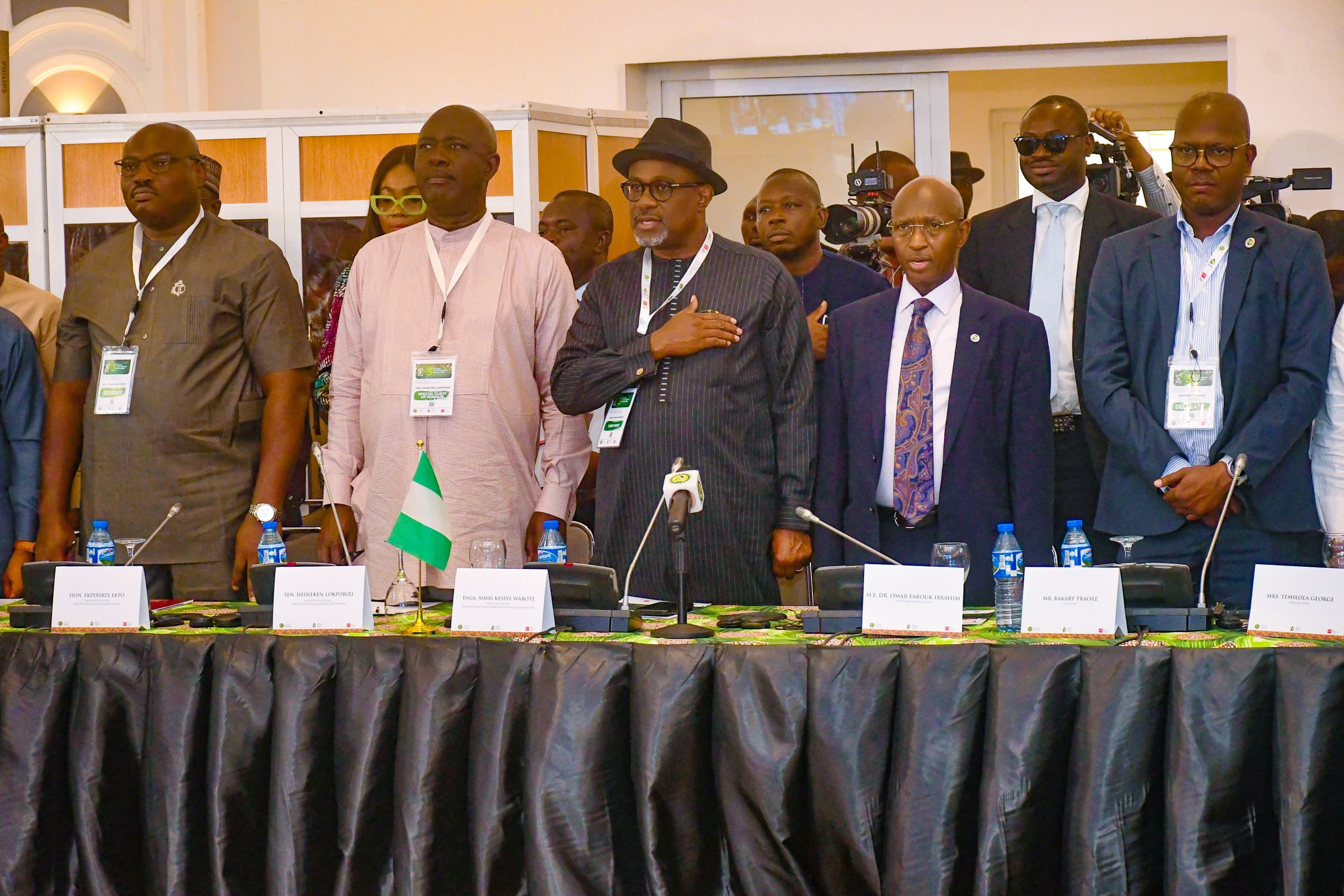
Key stakeholders and policy leaders in Africa’s oil and gas industry, and other related sectors have stressed the need for Africa to look within for solutions to Africa’s problems in the face of global economic challenges.
The stakeholders who gathered at the third edition of the African Local Content Roundtable which took place in Abuja between October 25 and 26, 2023 with the theme “Fostering Local Content In Africa for Africans,” jointly agreed that the concept of local content is not merely a policy, but a catalyst for transformation.
They noted that the roundtable is a conduit through which inspirations can be channelled into concrete achievements.
Setting the context at the Pan-African engagement, the Executive Secretary of the Nigerian Content Development and Monitoring Board (NCDMB) Engr. Simbi Wabote, noted that one of the greatest challenges bedevilling the African Oil and Gas industry is local manufacturing of components.
According to him, “90 percent if not more of the equipment that we use are imported because we’ve not focused on how to manufacture some of the components in-country.”
While noting that “the importance of developing homegrown cost-effective affordable and scalable solutions to address local challenges cannot be overemphasised,” the NCDMB boss identified prioritisation of research and development as well as funding as key to delivering local content goals on the continent.
He, therefore, called for robust engagements on quality service and equipment manufacturing, cross-border partnerships, intensive out-of-the-box thinking and improvement of funding sources or leveraging additional funding sources to overcome the funding challenges of oil and gas producing countries.
“The time for change is now and it is our collective responsibility to usher in a new era of local content development and implementation in Africa’s oil and gas industry,” said Wabote, adding that “the NCDMB stands as a key advocate In local content development not just in Nigeria but Africa as a whole.”
Similarly, the Secretary General of the African Petroleum Producers’ Organisation (APPO), Omar Farouk, lamented that Africa has continued to be dependent on foreign oil and gas technologies despite being in the oil producing business for nearly 100 years and making billions from oil and gas projects.
“We have sadly been conditioned to believe that such dependency is normal. More alarming is the fact that the African continent has the highest proportion of its population living in energy poverty with over 600 million Africans living without access to electricity and millions of others living without any access to modern energy. 70% of the oil we produce is exported. 70% of the gas is also exported”, Farouk said.
“Africa must be allowed to use its affordable and readily available source of energy mainly oil and gas. Today’s developed countries used it to get to where they are today, we must be allowed to also use it to lift the living conditions of our people and get them out of poverty”, he added.
While challenging stakeholders to take advantage of the roundtable in addressing the legitimate concerns, Farouk assured of APPO’s commitment to changing “the pathetic situation.”
On his part, Nigeria’s Minister of State for Petroleum Resources (Oil), Senator Heineken Lokpobiri, said that the theme of this year’s Roundtable is “very appropriate for Africa to evolve from not just supplying raw materials, but developing capacity and capability to explore, produce and process its hydrocarbons resources into petroleum derivatives for its own use.”
He commended the NCDMB, APPO and Heritage Times (HT) for organising the roundtable which he said “aligns with the renewed hope agenda of President Bola Tinubu that is anchored on positioning the Nigerian economy to look inward for goods, services and manpower needs of strategic sectors of the economy.”
Also present at the event was the Group Chief Executive Officer of the Nigerian National Petroleum Company Limited (NNPCL), Mele Kolo Kyari, who stressed the need for Africa to prioritise and promote local content development in all aspects of operations.
According to him, “Africa must ensure a future where it is driving the technological advancement and innovation that is tailored to address our peculiar challenges. The continent must also ensure a just energy transition in line with climate change objectives. This means we must begin to empower local businesses, create jobs and add value to our economies beyond what we have done in the past decade. Therefore, this is a call to a commitment to utilising our own resources, expertise and workforce to maximise the benefits of our energy sector.”
Represented by the Chief Innovation Officer NNPCL, Muniru Mai, the GCEO said the state oil company “understands the importance of local content and have made it the centre of our operations, we are committed to achieving the highest level of local content in all of our projects from upstream exploration to downstream activities.”
As part of activities lined up for the first day of the local content roundtable, stakeholders went on a visiting tour to the Nigerian National Petroleum Company (NNPC) Research, Development and Innovation Centre in Abuja.
The tour saw stakeholders observe the need for the centre to double its effort in forging partnerships, collaboration and cooperation with African peers with a view to delivering on local content goals in the oil and gas industry. They also assured the centre of providing any support it needs to help foster local content in Africa’s oil and gas industry.
A visiting tour was also paid to Amal Technology, a gas leak detector production facility. Notably, the company is a project that was instituted and supported by the NCDMB.
The tour allowed stakeholders to evaluate the impact of the NCDMB in initiating and catalysing the growth of indigenous oil and gas companies.
Activities of the fast-growing company struck chords of excitement in the APPO scribe who not only lauded the efforts of the Board but appreciated how far Amal Technology has come in just 5 years.
“Africa is changing. Time was when success was measured on import capacity. We live in an age where ideas, indigenous capacity and exports define success. We can only transform the continent by looking within,” said Ibrahim.
“We are happy to see NCDMB supporting young men and women to chart a path in Africa’s oil and gas industry which has a future. At APPO we understand the importance of partnership and are ever ready to provide Amal Technology the support it needs.”
Since its maiden edition, the African local content roundtable has continued to play an important role in advancing local content development across Africa by raising awareness of its importance, formulating supportive policies and ultimately strengthening capacities of capabilities of local players across the oil and gas value chain.
The 3rd edition of the African Local Content Roundtable aims to review innovative approaches instituted by the African Petroleum Producers Organisation (APPO) Member Countries to drive Local Content development and sustainability of Africa’s hydrocarbon resources.
The yearly series of the Roundtable which was conceived and first hosted by the Nigerian Content Monitoring and Development Board (NCDMB), was subsequently institutionalized as an APPO Project following the huge success of the inaugural edition held between June 3 & 4, 2021, at the NCDMB Towers in Yenagoa, Bayelsa State, Nigeria.



The Hydrocarbon Pollution Remediation Project (HYPREP) has commemorated the 15th anniversary of the release of the United Nations Environment Programme (UNEP) Environmental Assessment Report on Ogoniland, reaffirming its commitment to restoring the environment and improving the livelihoods of affected communities.
In a statement signed by the Project Coordinator, Prof Nenibarini Zabbey, to commemorate the anniversary, HYPREP described the anniversary as a significant milestone in Nigeria’s environmental restoration efforts, noting that the project has made remarkable progress in implementing the recommendations of the landmark UNEP report released on August 4, 2011.
The UNEP report had revealed extensive oil pollution across Ogoniland, severe environmental degradation, and serious public health risks resulting from decades of petroleum operations. It also recommended an initial $1 billion fund to commence the cleanup of the affected communities.
According to HYPREP, the Federal Government formally launched the Ogoni clean-up in 2016, while the Project Coordination Office was established in 2017 to drive the implementation of UNEP’s recommendations.
Zabbey said the current administration has continued to prioritise the project under the Renewed Hope Agenda.
Providing an update on the cleanup, the Project Coordinator disclosed that 30 of the 65 contaminated sites identified by UNEP have been fully remediated, while work is ongoing at several medium- and high-risk locations. It also stated that more than 1.5 million mangrove seedlings have been planted as part of what it described as the world’s largest restoration of oil-degraded mangroves, with over 1,000 hectares of shoreline already rehabilitated.
Zabbey further revealed that 49 Ogoni communities have been connected to potable water schemes through multiple water projects and booster stations aimed at providing safe drinking water across the region.
In the health sector, he said the 100-bed Ogoni Specialist Hospital in Kpite and the 43-bed Cottage Hospital in Buan are nearing completion, adding that several existing health facilities have been upgraded with modern medical equipment, while five ambulances have been donated to improve emergency healthcare services. The Project Coordinator also disclosed that a three-year human health biomonitoring study is being conducted in collaboration with the World Health Organization’s International Agency for Research on Cancer (IARC).
On economic empowerment, Zabbey stated that the Project has created more than 8,000 direct jobs and trained thousands of Ogoni youths and women in various vocational and technical skills, including software development, cybersecurity, aviation, commercial diving, seafaring, mechatronics, and creative arts. The project also reported awarding scholarships to more than 1,000 students, providing grants to small businesses, and supporting persons living with special needs through skills acquisition programmes.
The statement further highlighted ongoing legacy projects, including the Ogoni Power Project and the Centre of Excellence for Environmental Restoration, which it said is about 96 per cent complete. HYPREP also welcomed the recent designation of the Ogoni Wetland as a Ramsar Site of International Importance and pledged to continue promoting biodiversity conservation and sustainable management of the ecosystem.
Marking the anniversary, Zabbey said the progress achieved over the past 15 years demonstrates the collective commitment of government, development partners, stakeholders, and local communities to restoring Ogoniland. He called for renewed collaboration to sustain the cleanup effort, promote environmental sustainability, and support the long-term development of the region. 3
-

 News1 day ago
RSG Targets Nine Million Residents in Mosquito Net Distribution Campaign
-

 Oil & Energy1 day ago
Aiyedatiwa Signs New Electricity Bill
-

 Oil & Energy1 day ago
NLNG Commissions Research And Innovation Centre In RSU
-

 Maritime1 day ago
Marine Minister Commends President Tinubu On NPERA Bill Assent
-

 News1 day ago
KenPoly Holds Eight Convocations, August 29
-

 News1 day ago
RSG Begins Another Phase of Projects Commissioning Today
-

 News1 day ago
RMAFC Completes Revenue Sharing Review, Proposes New Pay
-

 Maritime1 day ago
NAGAFF Petitions IGP Over Alleged Maritime Police Harassment