
News
Omicron Variant: Ban Travels From S’Africa, Others, Experts Tell FG

Renowned virologists in Nigeria have called on the Federal Government to be swift in its emergency response to the recently-discovered B.1.1.529 strain of COVID-19, first detected in South Africa.
The virologists, including the Chairman, Expert Review Committee on COVID-19, Prof Oyewale Tomori; ex-National Chairman of the Association of Public Health Physicians of Nigeria, Prof Tanimola Akande; and a Professor of Medical Virology at the University of Maiduguri, Prof Marycelin Baba, made this known while speaking with newsmen, yesterday.
They warned that tardiness on the part of the government could make the nation slip into the fourth wave of COVID-19, especially as the Christmas and New Year festivities approach.
This is as the Secretary to the Presidential Steering Committee on COVID-19, Dr Muktar Muhammed, said that the Federal Government would monitor trends before taking necessary decisions, including the possible imposition of flight ban on southern African countries.
The World Health Organisation (WHO) had, last Friday, declared the new COVID-19 strain first discovered in South Africa to be a variant of concern and renamed it Omicron.
The classification puts Omicron into the most-troubling category of COVID-19 variants, along with the globally-dominant Delta, plus its weaker rivals Alpha, Beta and Gamma.
“Based on the evidence presented indicative of a detrimental change in COVID-19 epidemiology… the WHO has designated B.1.1.529 as a variant of concern, named Omicron,” the UN health agency had said in a statement.
Nations including Britain, the United States and the European Union have banned flights from Southern African to slow the spread of Omicron, even as the South African government said it was being punished over what it described as a false alarm.
The WHO said it could take several weeks to complete studies of Omicron to see if there are any changes in transmissibility, severity or implications for COVID vaccines, tests and treatments.
Omicron is about the fifth variant of COVID-19 discovered and named since the outbreak of the pandemic about two years ago.
The variant was first reported to the WHO from South Africa, last Wednesday.
The first known confirmed Omicron infection was from a specimen collected on November 9.
In recent weeks, infections in South Africa have increased steeply, coinciding with the detection.
“This variant has a large number of mutations, some of which are concerning,” the WHO said, pointing to worrying characteristics.
“Preliminary evidence suggests an increased risk of reinfection with this variant, as compared to other VOCs.”
It said the number of Omicron cases appeared to be increasing in almost all provinces of South Africa.
Apart from South Africa, Omicron has been detected in Israel in a person coming from Malawi; Botswana; Belgium and Hong Kong.
Nigeria has recorded about four COVID-19 strains with over 213,000 cases and about 3,000 associated fatalities since the index case of lethal virus in the country last year February.
In June, 2021, the Federal Government added travellers from South Africa to the list of countries banned from flying into Nigeria due to the Delta COVID-19 variant which spread fast in the country.
Nigeria’s first reported case of COVID-19 was in February 2020 when an Italian man who travelled from Milan to Lagos through the Murtala Muhammed International Airport came down with the virus.
Many critics had slammed the Federal Government for being tardy in shutting down the four international airports while other countries were closing theirs to forestall the incursion of the deadly virus.
Asked whether the government would follow the trends by Europe and the UK, amongst others, by banning flights from high-risk areas, including South Africa to prevent the Omicron variant from spreading into the country, the Secretary to the Presidential Steering Committee on COVID-19, Dr Muktar Muhammed, said the Federal Government would monitor trends before taking necessary decisions.
Asked whether Nigeria would place southern African countries on red alert, the official said, “We shall continue to monitor the situation globally and take necessary measures appropriately.”
But Tomori faulted the delay, which according to him, may lead to “disaster.”
Tomori said, “Given our porous border and free for all poorly guarded points of entry, plus uncoordinated genetic sequencing practice, efficient surveillance backed by laboratory support puts South Africa way ahead of us.
“Given our state of performance, it will probably take months after the new variant case has arrived in Nigeria before we detect it. By then, it would have spread all over the country so why should we not put them on alert?
“At this point, we need to keep the PSC on, as long as COVID is on, improve and upgrade genetic sequencing, get our points of entry up and doing and not a point of escape of variants into Nigeria, improve contact tracing, test people on arrival and do an efficient and effective contact tracing and follow up.”
On her part, Baba said, “If it is proven scientifically that the existing vaccines have no effect on the new strain, then the needful should be done, suspend travels to South Africa.
“This is not the time for the delay as delays could be dangerous. We really need to act on time; other countries are already making moves.
“Also, emphasis should be made to ensure that all Nigerians are vaccinated. The vaccines protected against the previous strains. However note that as the virus moves from one host to another within a country or between countries, it will mutate leading to new strains. More strains are bound to emerge but the effect of the vaccines on the strains scientifically determines panic or calm.”
Also, Akande, who urged the government and its emergency management teams, including the Nigeria Centre for Disease Control (NCDC), to buckle down, said they should learn from the lessons of the past.
He said, “Every country will be worried and will like to prevent as much as possible importation of the new Omicron variant. Federal Government already has policies and guidelines on travel restrictions and the issue of health security.
“I am sure NCDC and other relevant stakeholders will soon come up with directives on this after weighing the pros and cons of travel bans. In taking decisions lessons learnt from previous measures particularly travel will give good guidance.
“Measures taken by countries like UK, Italy and other European countries are country-specific. These countries are already battling with a heavy burden of the 4th COVID-19 wave. I, therefore, think these countries are taking positions that are to their own interest.”
He also said the new Southern African variant would “herald and most likely worsen the imminent fourth wave,” adding that “containment measures in schools, religious centres among others were not really stopped but enforcement level is very low.”
Experts including the Commissioner for Health in Lagos State, Prof Akin Abayomi, had warned of a possible spike during the festive period, even as the NCDC continues to advocate hygiene practices and adherence to public health protocols while the National Primary Health Care Development Agency keeps pushing for mass vaccination to achieve herd immunity.
South Africa, whose citizens have suddenly become persona-non-grata around the world after the discovery of a new COVID-19 variant in the country, says it is being “punished” and unfairly treated for sounding the alarm.
The government in the country worst hit by the pandemic on the continent is seething over the stigma it has suffered in the past 48 hours for being the bearer of bad news.
The decision by many countries around the world to ban flights from Southern Africa following the discovery of the variant, named Omicron, “is akin to punishing South Africa for its advanced genomic sequencing and the ability to detect new variants quicker,” the foreign affairs ministry said in a statement.
“Excellent science should be applauded and not punished,” it added.
“New variants have been detected in other countries. Each of those cases has had no recent links with Southern Africa,” yet the global “reaction to those countries is starkly different to cases in southern Africa.”
The World Health Organisation has cautioned against imposing travel restrictions due to Omicron.
South Africa’s Health Ministry slammed the travel restrictions as “draconian”, “panic” and “misdirected” measures that go “against the norms and advice by the WHO.
“We feel some of the leadership of countries are finding scapegoats to deal with what is a worldwide problem,” Health Minister, Joe Phaahla said.
Pretoria fears the border closures will hurt “families, the travel and tourism sector, businesses” and that it may deter other countries from reporting discoveries of future variants for fear of being ostracised and punished.
“Sometimes one gets punished for being transparent, and doing things very quickly,” Tulio de Oliveira, a leading virologist who announced the discovery of the Omicron variant, said.



Rivers State Deputy Governor, Prof. Ngozi Odu, has called for sustained prayers for peace and unity in Rivers State.
Prof. Odu made the call yesterday, during the Annual Mega Praise and Thanksgiving of Women Coverage, held at the Main Bowl of the Alfred Diette-Spiff Civic Centre, Port Harcourt.
The Deputy Governor, who expressed gratitude to God Almighty for His preservation, love and faithfulness in keeping the people together, noted that God inhabits the praises of His people.
“We have given thanks through songs and praises. The Word of God says that God dwells in the praises of His people; therefore, God is certainly present in our midst as we offer these praises,” she said.
Prof. Odu commended the women for their steadfastness and commitment to praying for Rivers State, noting that the positive testimonies of their prayers were evident in the State’s steady progress and its drive towards greater heights.
She also applauded the organisers for their consistency and dedication to sustaining the annual gathering, while praying that God would continue to strengthen and unite them for an even more successful Women Coverage Conference in 2027.
Earlier, the President and Founder of the Ministers’ Prayer Network, Rev. Mosy Madugba, offered prayers for lasting peace and unity in Rivers State and the nation at large.
The House of Representatives has urged the Federal Ministry of Works to direct Rock Result Nigeria Limited to immediately return to site and rehabilitate or reconstruct failed box culverts along the East-West Road, particularly at Iheke in Ahoada East Local Government Area of Rivers State.
The House also called for an independent engineering assessment of the damaged structures and proper technical supervision of the remedial works to ensure compliance with approved construction standards and prevent further failures.
The resolutions followed a motion moved by the member representing Yenagoa/Opokuma Federal Constituency of Bayelsa State, Oboku Oforji, at plenary on Wednesday.
Moving the motion, Oforji recalled that the House had, on October 3, 2023, adopted a resolution drawing attention to the deplorable condition of the East-West Road, particularly the Iheke section, prompting subsequent Federal Government interventions.
He commended the government for its interventions, which included the construction of box culverts, approval of funds for rehabilitation and flood mitigation works, release of funds to Rock Result Nigeria Limited and the re-award of the contract to Setraco Nigeria Limited for the continuation of the road project.
However, he expressed concern that the culverts had deteriorated despite the substantial financial commitments made by the Federal Government.
The lawmaker attributed the structural failures to alleged substandard execution of the construction works, questioning the quality of materials used, compliance with engineering specifications, project supervision and the value derived from public funds invested in the project.
Oforji described the East-West Road as a major economic and social corridor connecting Bayelsa, Rivers and Delta states, as well as other parts of the country.
He noted that the road served several communities and essential institutions, warning that its continued deterioration threatened the safety and livelihoods of residents, motorists, businesses and other road users.
He further warned that the damaged culverts could “endanger lives, disrupt the movement of people and goods, and aggravate flooding and erosion in the region if urgent remedial action was not taken.”
The lawmaker stressed that drainage infrastructure, particularly box culverts in the flood-prone Niger Delta, must meet stringent engineering standards to guarantee durability, safety and resilience.
The motion also highlighted delays in the dualisation of the East-West Road, particularly the Ahoada-to-Bayelsa axis extending to Patani in Delta State.
According to Oforji, the project, “initially scheduled for completion in April 2025, was subsequently extended to November 2025 but remained unfinished as of November 25, 2026.”
Following the adoption of the motion, the House urged the Ministry of Works to direct Rock Result Nigeria Limited to return to site and undertake the rehabilitation or reconstruction of the failed culverts in accordance with approved engineering specifications.
It also called on the ministry to ensure effective technical supervision, quality assurance and an independent engineering assessment of the remedial works.
The lawmakers further urged the ministry to ensure that Setraco Nigeria Limited completes the outstanding dualisation works on the Ahoada-to-Bayelsa and Patani sections of the road.
To ensure compliance, the House mandated its Committee on Works and Legislative Compliance to monitor the implementation of the resolutions and report back within four weeks for further legislative action.
The East-West Road is one of the major federal highways in the Niger Delta, serving as a vital link for the movement of agricultural produce, petroleum-related goods, commercial traffic and passengers across several oil-producing states.
Its poor condition, recurring flooding and prolonged construction delays have repeatedly attracted public complaints and legislative attention, with communities along the corridor bearing the brunt of disrupted transportation and deteriorating infrastructure.
The latest intervention comes amid renewed concerns over the durability of government-funded road projects and the need for stricter monitoring of contractors to ensure that public infrastructure meets approved specifications and delivers value for money.
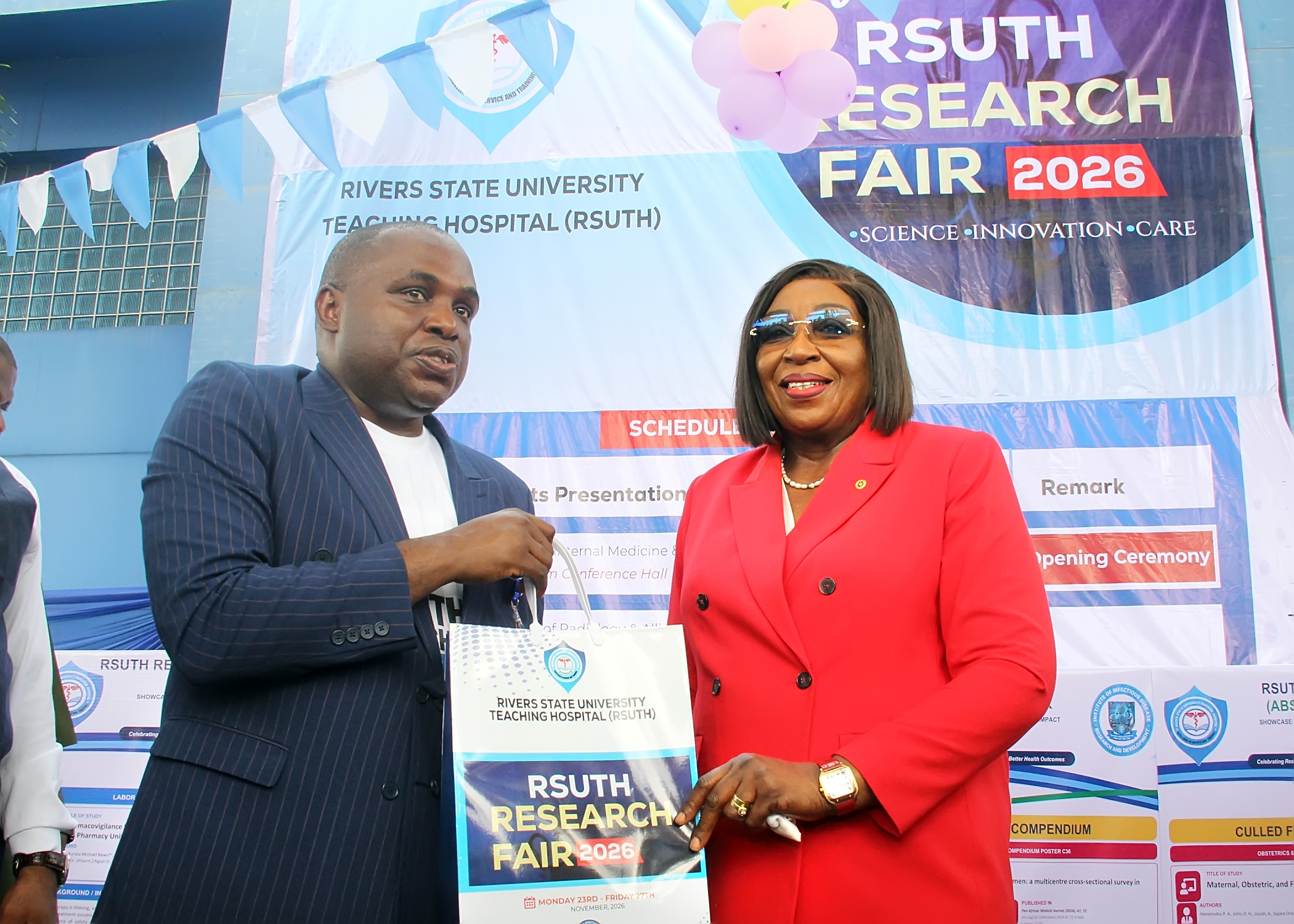
Rivers State Deputy Governor, Prof. Ngozi Odu, says research, teaching and learning are fundamental responsibilities of tertiary institutions.
Odu stated this at the opening ceremony of the maiden edition of the Rivers State University Teaching Hospital (RSUTH) Research Fair 2026, held at the hospital’s Conference Hall and Abstract Garden in Port Harcourt, on Monday.
The deputy governor emphasized that research findings must go beyond academic publications and presentations to deliver measurable improvements in patient outcomes and quality of life.
She encouraged young researchers and healthcare professionals to remain committed to scientific excellence, intellectual curiosity and innovative thinking, while promoting multidisciplinary collaboration in addressing healthcare challenges.
According to her, engaging experts from different departments in research activities would strengthen the quality of research findings and generate more effective solutions to medical challenges.
Odu reaffirmed the commitment of Governor Siminalayi Fubara’s administration to prioritising healthcare delivery, noting that the governor has consistently placed the health sector at the forefront of his development agenda.
She observed that a strong healthcare system required not only modern facilities and qualified personnel but also sustained research, innovation and knowledge development.
She urged participants to engage meaningfully with the research findings, exchange ideas and explore opportunities for collaboration.
The deputy governor commended the RSUTH for its impressive research activities and innovations aimed at improving healthcare delivery in the State.
She expressed delight at the depth and scope of research activities across various departments of the hospital, noting that the exhibition has exposed her to several groundbreaking findings and innovations.
She described the exhibition as impressive, and particularly commended the beautifully designed and well-organised Abstract Garden, which she said provided an inspiring environment for academic and professional engagement.
Odu congratulated the Chief Medical Director and the hospital’s management team for initiating the research fair, urging them to sustain the initiative and continually raise the standard of research and innovation.
She also commended the hospital for translating research findings into practical healthcare solutions, citing the establishment of a specialised hypertension centre as an example of how research could enhance patient care.
In his welcome address, the Chief Medical Director of RSUTH, Prof. Chizindu Alikor, said the hospital was established on three core pillars of service delivery, training and research, noting that the initiative was designed to give greater attention to research as a critical component of medical education and healthcare development.
He explained that the fair would provide an opportunity to showcase research works undertaken by the hospital since it attained teaching hospital status, while also reviewing publications produced before and after its establishment as an academic institution.
According to him, the research compendium contains over 1,100 abstracts, while the book of proceedings features at least 100 abstracts, reflecting the significant growth in research activities at the institution.
Alikor highlighted locally developed solutions in maternal and child healthcare, which he said had contributed to improved health outcomes in the hospital.
He expressed optimism that the innovations could be adapted and extended to zonal general hospitals and primary healthcare centres across the State to improve maternal and newborn health outcomes.
-
Business2 days ago
PHICCIMA President Welcomes N60m BOI Micro, SMEs Initiatives
-
Business2 days ago
FG Commences N1.45trn Port Upgrade, Targets 20,000 Jobs
-
Politics2 days ago
Tinubu Hails Atiku For National Dev Efforts
-
Rivers2 days ago
Maritime Security: Expert Advocates Active Marine Surveillance, Coast Guard Agency Establishment …. Wants Presidential Endorsement for his group
-
News2 days ago
IG Suspends Wanted Declaration Against Obaigbena, Eight Others
-
Politics2 days ago
Political Killings: Consider Emergency Rule In Delta, Reps Tell Tinubu
-
Politics2 days ago
2027: 108 Rivers Groups Jostle To Work With Chinda’s Campaign
-
Business2 days ago
FAAN Reopens Owerri Airport … Limits Flight Operations To Daytime Services