
Nation
THE STATES

Abuja
The NNPC has reiterated its commitment to the development of a functional education that would drive the development of the petroleum sector and the country.
The Group Managing Director (GMD), Mr Austen Oniwon, stated this in Abuja, at the opening ceremony of the 9th NNPC National Quiz Competition for secondary school students.
Oniwon, who was represented by the Group General Manager, Public Affairs Division, NNPC, Dr Levi Ajuonuma said the quiz was part of NNPC’s contribution to the development of students’ intellectual capacity
“We are convinced that allowing students to test their academic ability through a well organised and highly competitive quiz like this would stimulate the needed competition in our education system,’’ he said.
Bauchi
The Muslim community in Bauchi converged at the Muslim graveyard to clean the surroundings in order to derive the benefits of Ramadan.
Top government officials, civil servants, businessmen, uniformed and non-uniformed voluntary organisations and other residents of the metropolis were among those who took part in the exercise.
The Emir of Bauchi, Alhaji Rilwanu Adamu, who lead the exercise expressed satisfaction with the level of turnout of the people and called on Muslims in the state to maintain the tempo.
Adamu pointed out that the cleaning of a grave was part of the practice of the Holy Prophet Muhammad, adding, “ even if not for this reason one may not like his grave to be in a dirty environment,“ he said.
Gombe
The Miyatti Allah Cattle Breeders Association of Nigeria (MACBAN), Gombe chapter, has suggested the recruitment of products of the Nomadic Education Programme as teachers in their former schools.
Malam Aliyu Abare, the Secretary of the association, made the suggestion while speaking with newsmen in Gombe on Tuesday.
Abare said that such a measure would encourage other animal rearers to enrol their wards in the nomadic schools.
“Some of the products of the Nomadic Education programme were able to graduate from their primary schools, attend secondary schools and make it up to National Certificate of Education level.
“Unfortunately, they could not secure teaching job and this development has frustrated them and sent wrong signal to other rearers, who now have the impression that attending the school is a wasted effort.
Ibadan
An Islamic Scholar and University of Ilorin Lecturer, Dr Ibraheem Abikan, has disclosed that Islamic banking was first licenced in the South-West zone in 1963.
Abikan made the disclosure on Monday, in Ibadan, while delivering the 13th Ramadan Lecture entitled, “Viability of Islamic Banking in Nigeria, Issues, Challenges and Prospects”.
The event was organised by the Muslim Lawyers Association of Nigeria (MULAN), Oyo State branch.
He said that the bank was then known as “Muslim Bank of West Africa“ and was licenced under the regulatory body of the financial institution of the era.
The lecturer explained that the licence was later withdrawn by the authorities of the then Western region barely after four years of operation.
Ijebu-Ode
Secondary school mathematics teachers have attributed the failure in the subject among students to the lack of concentration and laziness.
A cross-section of the teachers told newsmen (NAN) in Ijebu-Ode, Ogun, on Tuesday that until the students braced themselves and stopped their lazy attitude, their poor performance in the subject might persist.
The teachers expressed concern over the yearly poor performance of students in the subject in the Senior Secondary School Certificate Examination (SSSCE), saying that teachers had been doing their best to encourage the students.
They appealed to parents to also encourage their children by providing the necessary textbooks needed for the subject and also supervise them to work out the subject after school hours.
Mr Akindele Ademola, a mathematics teacher at the Ijebu-Ode Grammar School, described mathematics as a dynamic subject that needed “absolute concentration”.
Jos
Brig.-Gen Muraina Raji, former Commander, 33 Artillery Brigade, Bauchi, was on Tuesday arraigned before a Special Court Martial over the escape of two detainees from the Brigade’s detention facilities.
The Tide gathered that the detainees were suspected to be members of the Boko Haram who were arrested over an onslaught on Bauchi late 2010.
Inaugurating the six-member panel in Jos, the GOC, 3 Armoured Division, Maj.-Gen Sunday Idoko, said that Raji was indicted for complicity by a military investigation report.
“It is the duty of superiors to observe, correct and instantly deal with negligence or any misconduct on the part of subordinates.
“When there is any breach, it is expected that appropriate disciplinary measures are taken by commanders to forestall future occurrence.”
Katsina
Residents of Gora and Yammama villages in the Malumfashi local government area of Katsina State have called for urgent government action to stop the erosion destroying a bridge on the Funtua-Kano road.
Alhaji Sagir Sani, the Village Head of Gora, made the call on Tuesday, on behalf of both communities while inspecting the bridge along with Alhaji Lawal Dalhatu, the Acting Chairman of Malumfashi local government.
Sani said the bridge linked the two communities and it was being used by travellers from neighbouring states of Sokoto, Zamfara and Kebbi, as well as people from the southern part of Katsina State going to Kano State.
He said the road was vital to the socio-economic activities of the diverse people, noting that, “its total collapse will surely affect people’s lives.”
Kebbi
The Birnin Kebbi Local Government Area in Kebbi has earmarked N15 million for the feeding of the less privileged during the Ramadan “in the spirit of brotherhood”.
The Sole Administrator, Alhaji Musa Dan-Illela, told newsmen in Birnin Kebbi that N1 million would be spent in the programme in each of the 15 electoral wards.
He said a committee had been established in each of the wards to monitor the full implementation of the programme, stressing that whoever diverted the money would be punished.
He said an estimated 3,000 people were expected to benefit from the programme as feeding would be done at designated points in the ward throughout the Ramadan.
Kaduna
The Kaduna State Environment Protection Agency (KEPA) has said that the provision of waste baskets is now compulsory for commercial vehicle operators in the state.
The KEPA General Manager, Alhaji Aminu Sani, told our correspondent in Kaduna on Tuesday that the policy was to discourage commuters from throwing waste from vehicle windows.
Sani said that the baskets would also check the indiscriminate throwing of polythene bags, especially sachets used in packaging water popularly known as pure water.
He said that the agency had discovered that polythene was one of the major materials that block the drains and obstructed the free flow of water from channels.
The general manager said that the state government had already engaged a consultant that would commence the waste baskets installation programme.
Lafia
The Nasarawa State Muslim Pilgrims’ Welfare Board has announced the fares for the 2011 pilgrimage, saying the minimum is N525,000 and the maximum N626,000, for male pilgrims.
The Executive Secretary, Alhaji Abdullahi Shehu, in a statement made available to newsmen in Lafia, said the medium hajj seat for the year would go for N559,000.
He said all female pilgrims would be required to pay an additional N1,250 as the cost for their hijabs (veils) and printing of the state emblem on the veils.
He said all intending pilgrims were expected to complete the payments of their fares before August. 29, adding that the screening of all its intending pilgrims would commence immediately after Ramadan.
Lokoja
The Kogi Government has completed 35 electrification projects and sunk 150 boreholes in some rural areas of the state.
The Director-General, Directorate of Rural Development (DRD), Dr Paul Attah, who made the announcement on Tuesday in Lokoja, said that more than 100 kilometres of roads were also opened up to ease movement to and from rural areas to the cities.
He told news men that the directorate also constructed six culverts and a bridge, adding that the projects, which cut across the 21 local government areas of the state, were executed between 2007 and 2010.
Attah said the directorate had also installed transformers in Lokoja, Kabba and Idah on the directive of the state government.
He added that many rural communities in the state had been clamouring for the attention of the directorate for the provision of facilities, but that the organisation could not meet their demands due to limited resources.
Sokoto
Alhaji Abdullahi Maigwandu, Chairman, Shagari Local Government in Sokoto State, on Tuesday, directed councillors to submit lists of projects demanded by their constituencies for immediate implementation.
Maigwandu told journalists in Sokoto that, only projects with direct bearing on the lives of the people would, however, be implemented.
He said the local administration would transform the socio-economic and political status of the area through the execution of laudable projects.
Maigwandu, who was re-elected chairman of the council, said that education, health care services, water supply, roads construction and agriculture remained one of the cardinal objectives of the administration.



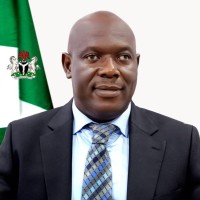
The Hydrocarbon Pollution Remediation Project (HYPREP) has commemorated the 15th anniversary of the release of the United Nations Environment Programme (UNEP) Environmental Assessment Report on Ogoniland, reaffirming its commitment to restoring the environment and improving the livelihoods of affected communities.
In a statement signed by the Project Coordinator, Prof Nenibarini Zabbey, to commemorate the anniversary, HYPREP described the anniversary as a significant milestone in Nigeria’s environmental restoration efforts, noting that the project has made remarkable progress in implementing the recommendations of the landmark UNEP report released on August 4, 2011.
The UNEP report had revealed extensive oil pollution across Ogoniland, severe environmental degradation, and serious public health risks resulting from decades of petroleum operations. It also recommended an initial $1 billion fund to commence the cleanup of the affected communities.
According to HYPREP, the Federal Government formally launched the Ogoni clean-up in 2016, while the Project Coordination Office was established in 2017 to drive the implementation of UNEP’s recommendations.
Zabbey said the current administration has continued to prioritise the project under the Renewed Hope Agenda.
Providing an update on the cleanup, the Project Coordinator disclosed that 30 of the 65 contaminated sites identified by UNEP have been fully remediated, while work is ongoing at several medium- and high-risk locations. It also stated that more than 1.5 million mangrove seedlings have been planted as part of what it described as the world’s largest restoration of oil-degraded mangroves, with over 1,000 hectares of shoreline already rehabilitated.
Zabbey further revealed that 49 Ogoni communities have been connected to potable water schemes through multiple water projects and booster stations aimed at providing safe drinking water across the region.
In the health sector, he said the 100-bed Ogoni Specialist Hospital in Kpite and the 43-bed Cottage Hospital in Buan are nearing completion, adding that several existing health facilities have been upgraded with modern medical equipment, while five ambulances have been donated to improve emergency healthcare services. The Project Coordinator also disclosed that a three-year human health biomonitoring study is being conducted in collaboration with the World Health Organization’s International Agency for Research on Cancer (IARC).
On economic empowerment, Zabbey stated that the Project has created more than 8,000 direct jobs and trained thousands of Ogoni youths and women in various vocational and technical skills, including software development, cybersecurity, aviation, commercial diving, seafaring, mechatronics, and creative arts. The project also reported awarding scholarships to more than 1,000 students, providing grants to small businesses, and supporting persons living with special needs through skills acquisition programmes.
The statement further highlighted ongoing legacy projects, including the Ogoni Power Project and the Centre of Excellence for Environmental Restoration, which it said is about 96 per cent complete. HYPREP also welcomed the recent designation of the Ogoni Wetland as a Ramsar Site of International Importance and pledged to continue promoting biodiversity conservation and sustainable management of the ecosystem.
Marking the anniversary, Zabbey said the progress achieved over the past 15 years demonstrates the collective commitment of government, development partners, stakeholders, and local communities to restoring Ogoniland. He called for renewed collaboration to sustain the cleanup effort, promote environmental sustainability, and support the long-term development of the region. 3
-

 News2 days ago
RSG Targets Nine Million Residents in Mosquito Net Distribution Campaign
-

 Oil & Energy2 days ago
Aiyedatiwa Signs New Electricity Bill
-

 Maritime2 days ago
Marine Minister Commends President Tinubu On NPERA Bill Assent
-

 Oil & Energy2 days ago
NLNG Commissions Research And Innovation Centre In RSU
-

 News2 days ago
KenPoly Holds Eight Convocations, August 29
-

 News2 days ago
RSG Begins Another Phase of Projects Commissioning Today
-

 News2 days ago
RMAFC Completes Revenue Sharing Review, Proposes New Pay
-

 Maritime2 days ago
NAGAFF Petitions IGP Over Alleged Maritime Police Harassment