
Editorial
Whither The Electoral Act?

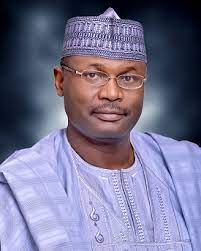
Chairman of the Independent National Electoral Commission (INEC), Prof. Mahmood Yakubu, announced on Wednesday, April 28, 2021 at a one-day Public Hearing on the National Electoral Offences Commission (Establishment) Bill 2021, organised by the Senate Committee on INEC in Abuja, that the 2023 general elections will hold on Saturday, 18th February, 2023, which is exactly one year, nine months, two weeks and six days or 660 days from today.
Promising to release the timetable and schedule of activities for the elections after the forthcoming Anambra State governorship election on November 6 this year, the INEC boss underlined the need for “clarity and certainty about the electoral legal framework to govern the election “going forward but expressed the hope that the “National Assembly will do the needful”.
There are many Nigerians who believe that the country was denied the opportunity of a freer, fairer and more credible electoral process in 2019 when President Muhammadu Buhari, on Friday, December 7, for the fourth and final time declined to assent to the Electoral Act (Amendment) Bill 2018 with the lame excuse that the 2019 electoral process may be disrupted if he signed the bill into law.
Of course, the dominant opinion around the country was that the President’s decision was ill-advised and selfish with many calling the National Assembly to veto the President’s assent. Indeed, many believed that the amendment proposed by the bill was aimed at making the 2019 general elections credible with the use of the smart card reader and electronic transmission of election results from the polling units as some of the innovations that would have been introduced to minimize electoral fraud and sanitise the system.
However, with the 2019 general elections gone, there was high expectation amongst Nigerians that the Electoral Act (Amendment) Bill will be among the first legislative items to be attended to and dispensed with by the 9th National Assembly, especially against the background that the legislative chambers are hugely populated by members of the 8th Assembly that passed the ill-fated bill.
As it has turned out, the bill that seeks to repeal the Electoral Act 2010 and enact the Independent National Electoral Commission Act 2020 (HB 981) only passed for second reading on the floor of the House of Representatives on Tuesday. November 24, 2020.
Leading the debate at plenary, Hon. Aisha Duku (APC Gombe) outlined a number of challenges the bill seeks to address including a the restriction for qualification for elective office to relevant provisions of the 1999 Constitution (As Amended(; (b) the use of Smart Card Readers (SCR) and other technological devices in elections and political party primaries; (c) The time line for the submission of candidates and criteria for substitution of candidates; (d) The limit of campaign expenses; and (e) Addressing the omission of names of candidates or logo of political parties.
Accordingly, some of the sections of the Act to be altered include: 1. Section 3 (2) (a) which deals with Time line for the Release of Funds to the Commission; 2. Section 2b (3) (4) which deals with the Conduct and Postponement of Election in an Emergency 3. Section 28 (1) which deals with the Oath of Neutrality by Election Officers; 4. Section 30 which deals with The Notice of Election; 5. Section 34 which deals with the Publication of Nomination; 6. Section 36 (1) which deals with the Death of candidate; 7. Section 38 which deals with the failure of nomination; 8. Section 42 (1) (2) which deals with the Establishment of Poling Units; 9. Section 49 (1) (2) which deals with the issue of Ballot paper; 10. Section 52 (1) which deals with the Conduct of poll by open secret ballot; 11. Section 85 which deals with Notice of convention, Congress, etc; 12. Section 90 (1) which deals with the power to Limit Contribution to a political party; 13. Section 91 which deals with the Limitation on Election Expenses; and 14. Section 99 which deals with the Limitation on Political Broadcast and campaign by political parties.
Hon. Duku who expressed the hope that the bill will plug loopholes in our electoral system by amending over 300 causes (including new provisions) of the Electoral Act 2010, also noted that “In addition to this are concerns that the legal framework on certain issues should be well settled ahead of the 2023 elections such as the use of technological devices like the Smart Card Reader and electronic voting system”.
The President of the Nigerian Senate, Ahmad Lawan raised the hope of Nigerians for an amended Electoral Act that could advance the cause of the political system when he disclosed that the National Assembly would pass the Independent National Electoral Commission Act 2020 in June, 2021. While answering questions after delivering a lecture at the National Defence College, Course 29 Programme in Abuja on February 2, this year, Senator Lawan said, “we are currently working on the Electoral Act. We want to amend it and we intend to achieve the amendment before June or thereabout”, adding that “our intention in the National Assembly with this is to further sanitise the electoral environment and empower the seamless, transparent and very open sort of election where a winner and a loser will be glad that he lost in a very fair contest. So, we are working on this and we hope that the 2023 general elections will see less of electoral violence because the law itself would have been further improved”.
Mr Lawan who also hinted at the setting up of an Electoral Offences Commission through the amendment bill in the works, expressed the confidence that the 2023 general elections will experience significant reduction in electoral violence after the passage of the legal framework that will govern the conduct of the polls. “Let me give some commendation to the National Assembly for continuously working on the Electoral Act to provide for a better electoral environment in Nigeria”, he said, adding that “ I also believe, and that is the position of the National Assembly, that we should have the Electoral Offences Commission so that people who are involved in electoral violence will be prosecuted. I believe that it will go a long way in reducing and minimizing all these tendencies of people taking laws into their hands”.
The Tide strongly believes in the efficacy of the proposed amendments to largely address the debilitating challenges that have crippled our electoral system and therefore urges the National Assembly to leave nothing to chance in ensuring that it keeps absolute faith with the June, 2021 deadline it has set for itself to pass the Electoral Act (Amendment) Bill.
We believe that this will not only rule out any excuse of closeness to election as canvassed by the President the last time but will also create the opportunity for the law to be test-run in the forthcoming Anambra State governorship election in November this year prior to its full scale application in 2023.



There are moments in the life of a legislature when plain speaking becomes a public service. Senator Adams Oshiomhole provided such a moment on the floor of the Senate when he accused the Minister of Works, Senator David Umahi, of manifestly neglecting critical federal arteries in Edo and Delta States, and implored his colleagues to prevail on the Minister to adopt a more equitable and genuinely national approach to road infrastructure delivery. It was blunt, it was uncomfortable, and it was necessary.
The specifics of his complaint deserve restating. Drawing attention to the recent approval of some 20 new road projects despite the parlous state of existing ones, the former Edo State governor lamented that Nigerians cannot travel from Benin to Warri, Benin to Asaba, Benin to Auchi, or Auchi to Okene without encountering severe distress. He alleged a deliberate omission of these corridors from the national budget in the last three years, save for palliative interventions directed by President Bola Tinubu through tax credit arrangements. His question — “What have we done wrong?” — resonates far beyond the chambers of the National Assembly.
We lend our full and unequivocal support to that call. The Auchi-Benin Road, for instance, has been in a deplorable and near-impassable condition for several years, turning what should be a two-hour journey into an all-day ordeal of broken axles, extortionate fares, and despondent commuters. The media have, on multiple occasions, chronicled the suffering of motorists, traders, and students who ply that route. To describe it as a federal road today is to stretch the meaning of the term beyond recognition.
This pattern of sidelining is not confined to Edo or Delta. Even here in Rivers State, the disposition of the Federal Ministry of Works has left much to be desired, particularly along the Eleme axis of the East-West Road. That road, which ought to be a flagship of federal presence in the Niger Delta, has remained in a wretched state for long. Those who use it daily — workers at the Eleme Petrochemical Complex, the two refineries, Onne Port, and the countless ancillary industries — can attest to its deterioration. Work has proceeded in fits and starts without the sustained urgency such a strategic road demands.
The Eleme stretch is not a mere intra-state byway. It is the gateway to the nation’s economic jugular. According to the Federal Ministry of Works and Housing’s 2023 Highway Condition Survey, only about 35 per cent of the country’s 36,000 kilometres of federal roads are rated as being in good or fair condition, with the remainder classified as poor or very poor. The East-West Road, conceived in the 1970s to bind the entire Niger Delta, remains unfinished in critical sections more than four decades after. If it had been treated as a priority, the perennial gridlock, carnage, and economic loss on the Eleme-Refinery junction would have long been consigned to history.
The irony is as painful as it is glaring. The Niger Delta remains the goose that lays the golden eggs. Data from the Nigeria Extractive Industries Transparency Initiative [NEITI 2023 Oil and Gas Audit] show that the region still accounts for over 78 per cent of Nigeria’s federally collected export earnings and about 65 per cent of total government revenue. The National Bureau of Statistics [NBS Foreign Trade Report Q4 2024] similarly confirms that crude oil continues to dominate export receipts. By every metric of equity and economic logic, a region that sustains the national purse deserves first-rate consideration in the allocation of infrastructure, not afterthoughts and tokenism.
Road infrastructure is not largesse to be dispensed by favour; it is the skeleton upon which commerce, cohesion, and citizenship hang. When contracts are concentrated in one geopolitical zone while other zones are left to contend with craters, it erodes trust in the federation itself. The World Bank’s Nigeria Development Update [June 2023] estimated that poor transport connectivity inflates the cost of moving goods by up to 40 per cent and costs the Nigerian economy an estimated $1.5 billion annually in lost man-hours and vehicle maintenance. If we profess to be one country, then equity must be the compass that guides key institutions before any project is executed. Development must spread round, not pool in one place as though other regions do not matter.
There is also a grave security dimension that can no longer be ignored. The deplorable condition of federal roads has become a veritable enabler of criminality. The NBS Crime Experience and Security Perception Survey reported over 2.5 million incidents of kidnapping-related occurrences nationally, with transport workers identifying bad road spots as prime ambush points. When vehicles are forced to crawl at 10 kilometres per hour through failed sections at Auchi, Sapele Road, or Eleme, they become sitting ducks for armed gangs. Fixing bad roads, therefore, is not merely about convenience; it is about safeguarding lives.
By his intervention, Senator Oshiomhole has hit the nail on the head and reminded Minister Umahi of a fundamental constitutional truth: public office is held in trust. The Ministry of Works is not a personal estate where contracts are awarded according to whim or political convenience. It is a national institution funded by the collective resources of Nigerians, including the oil and gas rents from the very communities whose roads are now neglected. The Minister must demonstrate balance, transparency, and a pan-Nigerian outlook in the distribution of projects that impact the daily existence of citizens. Selective neglect breeds suspicion, and suspicion is corrosive at a time when the nation is preaching unity, oneness, equity, and justice.
Consequently, the National Assembly must go beyond rhetoric and assert its oversight powers with vigour. Sections 88 and 89 of the 1999 Constitution [as amended] empower the legislature to investigate and expose any maladministration in the execution of federal projects. If an office holder is not acting rightly, it is the duty of the Senate and the House of Representatives to call him to order. Oversight must not be reduced to budget approval ceremonies; it must translate to field verification, public hearings, and insistence that the Federal Character principle, as enshrined in Section 14(3) of the Constitution, reflects in road awards.
Let the Auchi-Okene, Benin-Warri, Benin-Asaba, and Eleme East-West gangways be restored to motorable dignity. Let priority be given to completing existing, economically vital roads before embarking on new ones. If those who, through their resources, sustain the federation are sidelined in the distribution of tangible dividends, it tells poorly of our nationhood. Bad roads must be fixed, and they must be fixed now, with fairness as the guiding standard.
-

 News1 day ago
RSG Targets Nine Million Residents in Mosquito Net Distribution Campaign
-

 Oil & Energy1 day ago
Aiyedatiwa Signs New Electricity Bill
-

 Oil & Energy1 day ago
NLNG Commissions Research And Innovation Centre In RSU
-

 Maritime1 day ago
Marine Minister Commends President Tinubu On NPERA Bill Assent
-

 News1 day ago
KenPoly Holds Eight Convocations, August 29
-

 News1 day ago
RSG Begins Another Phase of Projects Commissioning Today
-

 News1 day ago
RMAFC Completes Revenue Sharing Review, Proposes New Pay
-

 Maritime1 day ago
NAGAFF Petitions IGP Over Alleged Maritime Police Harassment