
Nation
THE STATES

Ekiti
The 26 member Ekiti State House of Assembly last week unanimously passed the state’s Freedom of Information (FOI) and three other bills.
The passage of the bill, sponsored by Governor Kayode Fayemi, makes Ekiti the first state to pass an FOI bill.
The lawmakers also passed the “Ekiti State Bonds, Votes and Securiteis bill 2011” and Ekiti State Transport and Special Projects Bill 2011.
Also passed was the Ekiti State Local Government Adminstration Amended Bill 2011.
Debating the merit of the FOI bill, many members of the assembly commended the governor’s courage in personally championing the cause of the bill.
They said the fact that the governor sponsored and pushed for the passage showed that he was ready to run an open government.
FCT
Dr Idris Omede, the National President of the Nigerian Medical Association (NMA), says breast-feeding can reduce the incidence of breast cancer.
Omede told newsmen last Friday, in Abuja, that breast feeding could reduce the incidence of breast cancer because of a hormone inside the blood stream.
“Once you have a break in hormonal interplay, the tendency is that the stimulus that would cause breast cancer is a bit suppressed,’’ he said.
He explained that the longer a mother breast feeds, the more her chances of not having breast cancer.
“One that breast feeds for one or one-and-half year has less chances of having cancer than someone that breast feeds for six months,’’ he added.
Gombe
Dr Abubakar Joshua, the epidemiologist in the Gombe State Ministry of Health, says some communities are still rejecting the polio vaccine in spite of the aggressive awareness campaign by the authorities.
He told newsmen in Gombe, last Friday, that some communities had held to their belief that the vaccine could cause infertility.
He named Kuri, Zambuk, Dadinkowa and Doso towns in Yamaltu-Deba local government area as the places where the rate of rejection was high.
Joshua, however, lauded the efforts of traditional rulers, whom he said had shown a lot of commitment in seeing to the success of the polio immunisation.
Kano
A group, the Joint Association of the Physically Challenged, on Saturday, called on the Kano State Government to renovate the three rehabilitation centres in the state.
The Chairman of the association, Alhaji Aminu Ahmed, made the call in an interview with newsmen in Kano.
Ahmed also urged the government to expand the rehabilitation centres located at Mariri, Bela and Tudun Maliki.
“The facilities at the centres are gradually becoming inadequate for our members largely due to the increasing number of inmates as well as shortage of rooms and facilities”.
Lagos
The Eredo Local Council Development Area (LCDA) in Lagos has spent over N350 million on capital projects in the last three years.
The Chairman of the council, Mr Sabiu Omolaja-Adelaja, told newsmen last Saturday, in Lagos that the sum was spent on the provision of health facilities, education, infrastructure and empowerment of farmers.
He said the council, which generates less than N500,000 as internally generated revenue, would ensure improvement in the socio-economic development of the area.
The council boss, who commended the state government for its financial support, added that investments had been made in youth empowerment, education, health care, infrastructural development, scholarship and rural projects.
Omolaja-Adelaja said that the council has also provided free school uniforms and exercise books to schools in the area in addition to the free primary health care service put in place.
Niger
The Niger Government is to collaborate with the Nigeria Railway Corporation (NRC) to revive the train service between Minna and Kaduna.
The Permanent Secretary, Niger Ministry of Transport, Malam Umar Bawa, said this last Friday in Minna while speaking to newsmen.
Under the arrangement, he said the train would take off from Minna to Kaduna on Mondays, Thursdays and Saturdays at 7 a.m.
“We have commenced the rail service with a view to identifying the problems on the route and correcting them to ease the transportation needs of our people.
“The state government has released over N100 million to the Nigeria Railway Corporation to enable it revive the local train service to exclusively serve communities on the Minna-Kaduna route,’’ he said.
Osun
Oba Adebukola Alli, Alowa of Ilowa in Osun, standing trial for raping a 23-year-old NYSC member, was on Friday remanded in prison custody.
When the case came up at an Osogbo Chief Magistrates’ Court, the lead defence counsel, Mr Victor Opara, sought for the vacation of an earlier order of June 24, which placed his client on house arrest.
Opara argued that the court’s order that a government doctor should attend to the monarch at his palace had not been complied with as no doctor came to treat him.
He expressed fear that the life of the traditional ruler might be in danger in view of his poor health condition.
Oyo
No fewer than 28 officers and 267 men of the 2 Mechanised Division of the Nigerian Army, Ibadan, last Saturday participated in a sanitation exercise to mark the Army Week.
The Division’s General Officer Commanding (GOC) , Maj.- Gen. Muhammed Abubakar, said the exercise was aimed at sensitising residents on the need to maintain a clean environment.
Represented by Col Thomas Eze, the Garrison Commander, Abubakar said the army had over the years enhanced civil-military relations through social interaction and public-oriented projects.
He said the army regarded the civil communities around the barracks as next door neighbours and would continue to maintain cordial relationship with them.
The GOC, who said this year’s celebration was significant because it had various sporting events for youths, added that this was a reassurance that there was a future for the country.
Plateau
Mr Jacob Wongdem, the Permanent Secretary in the Plateau State Ministry of Health, has announced the outbreak of cholera in some parts of the state.
Wongdem, who earlier denied the outbreak of the disease, told newsmen in Jos last Thursday that it had killed 10 people.
He added that 370 people had also been infected by the disease, reported in Jos South, Jos North, Mangu, Shendam, Barkin Ladi and Pankshin local government areas.
“It is a bad situation, but the ministry is already doing everything to control and stem the ailment”, the permanent secretary said.
He attributed the outbreak to poor sanitary conditions and the consumption of contaminated fruits and unwashed vegetables.
“The state government is worried that lives have been lost in the unfortunate cholera outbreak. We have dispatched surveillance teams to every nook and cranny of the state to contain the outbreak”.
Sokoto
The Sokoto State Governemnt said on Friday that it had purchased 14,000 tonnes of fertilizers worth about N1.5 billion for this year’s farming season.
The Commissioner of Agriculture and Natural Resources, Dr. Jabbi Kilgore, told newsmen in Sokoto that already, various committees had been inaugurated to ensure smooth sale of the product to deserving farmers.
He said that 9,000 tonnes of NPK brand would be sold at N1,800 per bag while 5,000 tonnes of UREA would be sold to farmers at N1,700 per bag.
He explained that the secretaries of the 23 local government of the state would serve as chairmen of the distribution committees in their various areas.
Kilgore explained that effective measures had been taken to ensure the commodity got to rural farmers.
Yobe
The Yobe Government has engaged the services of 20 consultants for the Damaturu Specialist Hospital.
The state’s deputy governor, Alhaji Abubakar Ali, told newsmen on Saturday in Damaturu, that the consultants were engaged from the University of Maiduguri Teaching Hospital.
“We engaged consultants in the critical areas of General Surgery, Radiology, Internal Medicine, Gynaecology and Paediatrics, reflecting the clinical needs of our people”.
Abubakar said that there would be five consultants in all the medical fields to meet the medical needs of the people.
“Government is worried about the rigours of our people in moving their sick relations to seek medical attention and services in Maiduguri, Gombe and Abuja,’’ he said.



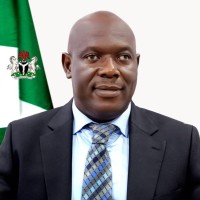
The Hydrocarbon Pollution Remediation Project (HYPREP) has commemorated the 15th anniversary of the release of the United Nations Environment Programme (UNEP) Environmental Assessment Report on Ogoniland, reaffirming its commitment to restoring the environment and improving the livelihoods of affected communities.
In a statement signed by the Project Coordinator, Prof Nenibarini Zabbey, to commemorate the anniversary, HYPREP described the anniversary as a significant milestone in Nigeria’s environmental restoration efforts, noting that the project has made remarkable progress in implementing the recommendations of the landmark UNEP report released on August 4, 2011.
The UNEP report had revealed extensive oil pollution across Ogoniland, severe environmental degradation, and serious public health risks resulting from decades of petroleum operations. It also recommended an initial $1 billion fund to commence the cleanup of the affected communities.
According to HYPREP, the Federal Government formally launched the Ogoni clean-up in 2016, while the Project Coordination Office was established in 2017 to drive the implementation of UNEP’s recommendations.
Zabbey said the current administration has continued to prioritise the project under the Renewed Hope Agenda.
Providing an update on the cleanup, the Project Coordinator disclosed that 30 of the 65 contaminated sites identified by UNEP have been fully remediated, while work is ongoing at several medium- and high-risk locations. It also stated that more than 1.5 million mangrove seedlings have been planted as part of what it described as the world’s largest restoration of oil-degraded mangroves, with over 1,000 hectares of shoreline already rehabilitated.
Zabbey further revealed that 49 Ogoni communities have been connected to potable water schemes through multiple water projects and booster stations aimed at providing safe drinking water across the region.
In the health sector, he said the 100-bed Ogoni Specialist Hospital in Kpite and the 43-bed Cottage Hospital in Buan are nearing completion, adding that several existing health facilities have been upgraded with modern medical equipment, while five ambulances have been donated to improve emergency healthcare services. The Project Coordinator also disclosed that a three-year human health biomonitoring study is being conducted in collaboration with the World Health Organization’s International Agency for Research on Cancer (IARC).
On economic empowerment, Zabbey stated that the Project has created more than 8,000 direct jobs and trained thousands of Ogoni youths and women in various vocational and technical skills, including software development, cybersecurity, aviation, commercial diving, seafaring, mechatronics, and creative arts. The project also reported awarding scholarships to more than 1,000 students, providing grants to small businesses, and supporting persons living with special needs through skills acquisition programmes.
The statement further highlighted ongoing legacy projects, including the Ogoni Power Project and the Centre of Excellence for Environmental Restoration, which it said is about 96 per cent complete. HYPREP also welcomed the recent designation of the Ogoni Wetland as a Ramsar Site of International Importance and pledged to continue promoting biodiversity conservation and sustainable management of the ecosystem.
Marking the anniversary, Zabbey said the progress achieved over the past 15 years demonstrates the collective commitment of government, development partners, stakeholders, and local communities to restoring Ogoniland. He called for renewed collaboration to sustain the cleanup effort, promote environmental sustainability, and support the long-term development of the region. 3
-

 News2 days ago
RSG Targets Nine Million Residents in Mosquito Net Distribution Campaign
-

 Oil & Energy1 day ago
Aiyedatiwa Signs New Electricity Bill
-

 Maritime1 day ago
Marine Minister Commends President Tinubu On NPERA Bill Assent
-

 Oil & Energy1 day ago
NLNG Commissions Research And Innovation Centre In RSU
-

 News2 days ago
KenPoly Holds Eight Convocations, August 29
-

 News2 days ago
RSG Begins Another Phase of Projects Commissioning Today
-

 News2 days ago
RMAFC Completes Revenue Sharing Review, Proposes New Pay
-

 Maritime1 day ago
NAGAFF Petitions IGP Over Alleged Maritime Police Harassment