
Business
SON Moves To Overhaul Operations

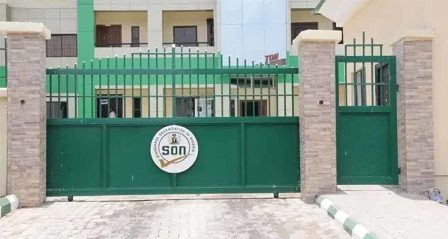
The Standards Organization of Nigeria (SON) has set up a five-member independent committee to overhaul its operations for optimum performance.
Director-General of SON, Mallam Farouk Salim, said in a statement that the committee would review its management practices to strengthen the organisation for improved service delivery.
The SON boss said that the move was aimed at building strong processes for the organisation that would outlive its various chief executives’ tenures.
He mandated the committee to help examine the Standards body structure, processes and practices with a view to providing a template to address operational, service delivery and staff welfare challenges.
Salim also charged the committee to entrench equity and fairness as well as provide greater opportunities for staff to better contribute to attainment of organisational goals.
He further enumerated the committee’s terms of reference to include control and coordination, communication and effectiveness, manpower dispositions and manning levels.
Others, the SON DG said, are recruitment, postings and transfers as well as public perception of the organisation and its services, among others.
Salim stated that the committee members were carefully selected, given their rich pedigrees and experiences in the public sector and the management’s belief in their competence and ability to contribute to the growth of SON.
He said SON would give the committee departmental presentations containing activities, achievements, challenges and suggestions obtained from interactions with directors, heads of departments and relevant portions of the handover notes by the last management.
Salim enjoined the committee to invite additional inputs, presentations, clarifications or opinions from members of the SON management and the staff unions as it might deem necessary.
“Arrangements have been made for the committee to visit the organisation’s major operational offices in Lagos, Enugu, Port Harcourt and Kano to feel the pulse of the staff and have a broader view of the organisation,” he said.
Salim stressed that the committee had four weeks from the date of inauguration to submit its interim report and was expected to submit its final report before the end of the year.
nomic development.
He said that the new appointment was a novel approach by the SON’s Director General towards realising his vision for the standards body.
“We will hit the ground running and members of this committee will devote their time and passion to the assignment with a view to delivering on the terms of reference within the time frame given,” he pledged.



Business
Jonathan, Diri, Others Laud Firm’s Milestone in Bayelsa …Says Project Will Drive Industrialisation, Create Jobs



-

 News2 days ago
RSG Targets Nine Million Residents in Mosquito Net Distribution Campaign
-

 Oil & Energy2 days ago
Aiyedatiwa Signs New Electricity Bill
-

 Maritime2 days ago
Marine Minister Commends President Tinubu On NPERA Bill Assent
-

 Oil & Energy2 days ago
NLNG Commissions Research And Innovation Centre In RSU
-

 News2 days ago
KenPoly Holds Eight Convocations, August 29
-

 News2 days ago
RSG Begins Another Phase of Projects Commissioning Today
-

 News2 days ago
RMAFC Completes Revenue Sharing Review, Proposes New Pay
-

 Maritime2 days ago
NAGAFF Petitions IGP Over Alleged Maritime Police Harassment