
Featured
Insecurity, Prevailing In Nigeria, Buhari, Lawan Admit … Boko Haram’s Continued Existence, Surprising, Says Buhari …As Senate Vows To Give Effect To Community Policing

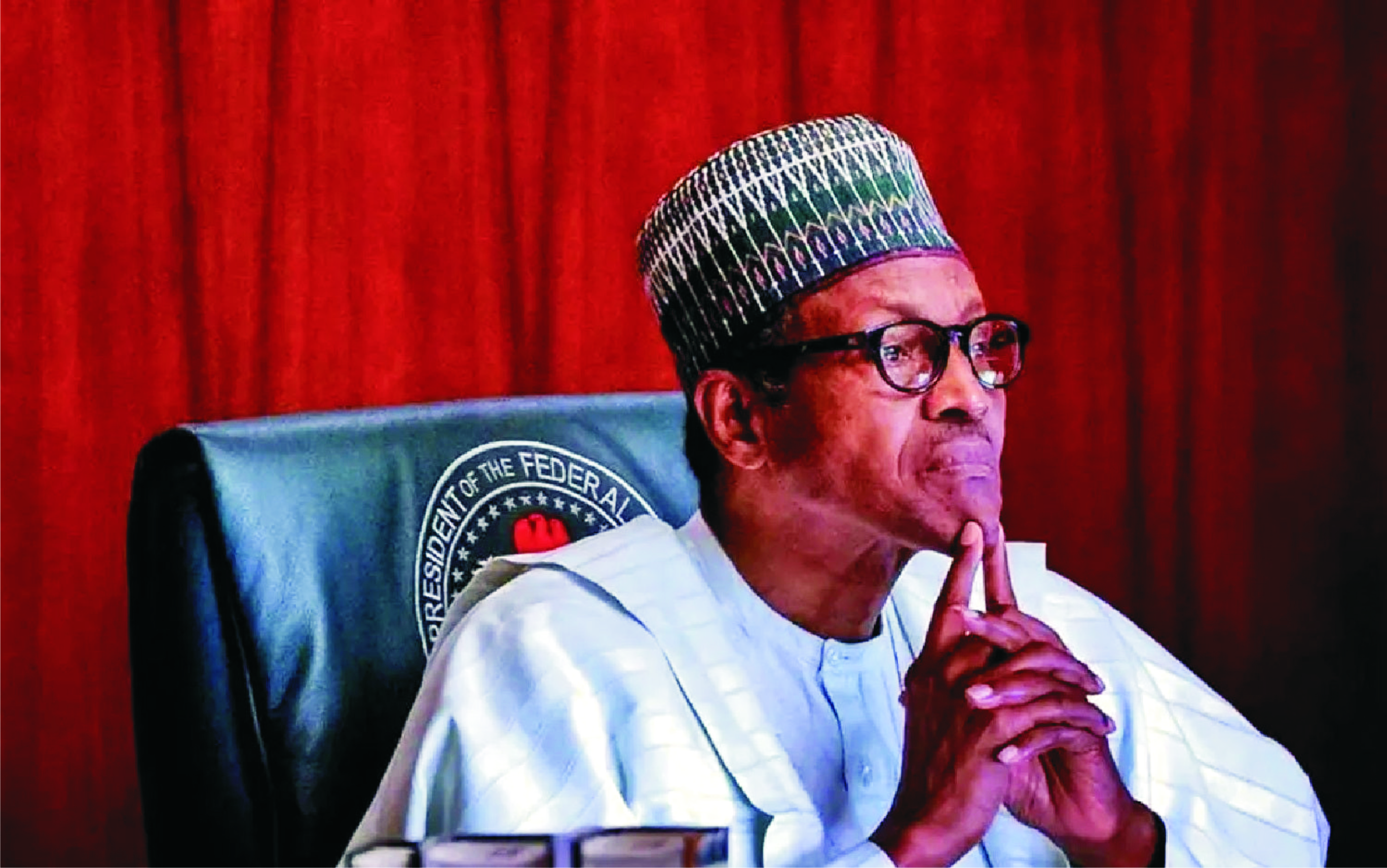
President Muhammadu Buhari says “harder times’’ await bandits whose disruptive activities have brought sorrow to Nigerians, kept many away from their means of livelihood, and heightened insecurity in parts of the country.
The President stated this when he received a delegation of Eminent and Respected Citizens of Niger State led by Governor Abubakar Sani Bello in State House, Abuja, yesterday.
Buhari maintained that the activities of the bandits had forced many to abandon their farms and homes, adding: “we will now be harder on them.
“I was taken aback by what is happening in the North-West and other parts of the country. During our campaigns, we knew about the Boko Haram. What is coming now is surprising.
“It is not ethnicity or religion; rather it is one evil plan against the country.
“We have to be harder on them. One of the responsibilities of government is to provide security. If we don’t secure the country, we will not be able to manage the economy properly.’’
He said the onslaught of the bandits had also affected agricultural output in some parts of the country, in spite of the favourable weather for farming, because many farmers were attacked, and others had to stay away for safety.
The President said the poverty level in the country would be significantly controlled by diversifying into agriculture, instead of the heavy reliance on oil, urging more Nigerians to take up agriculture.
Buhari said discovery of oil and gas reserves in Chad Basin, Benue trough and Bida, and some parts of Bauchi and Gombe, would further bolster current efforts to strengthen the Nigerian economy.
He advised leaders in the Niger Delta to “counsel those who blow up pipelines, resulting in spillages that affect farming and farmlands’’, noting that the loss had always been collective, sometimes, and turning hard working farmers to victims.
The eminent and respected persons said they needed to show appreciation to the President for his many interventions on infrastructure, security and appointment of indigenes of the state into key positions of government.
Speaking for the group, the former governor of Niger State, Aliyu Babangida, said activities of bandits had rendered many homeless, while others could no longer go the farms, thanking the President for taking a more decisive action by directing aerial protection by the military.
Babangida called on the President to intervene in completion of some federal roads, like the Mokwa-Birnin Gwari-Kaduna road and Kotongora road.
He also asked for more attention on the Minna airport, which should complement access to the FCT.
In his remarks, the Etsu Nupe, Alhaji Yahaya Abubakar, assured the President of continuous support, praying: “May God give you strength and wisdom to handle the affairs of our great country, Nigeria.’’
Meanwhile, the Senate President, Dr Ahmad Lawan, stated this in his speech to welcome senators from the Christmas and New Year recess.
He reiterated that the security situation in the country required serious attention and due consideration by the Senate, and indeed, the National Assembly.
He said that the Senate would engage the executive arm of government to discuss the implementation of the recently launched National Security Strategy (NSS) 2019.
He added that for a long time major stakeholders in the security of the country and police authorities appeared to achieve consensus on the necessity of introduction of Community Policing in the country.
Lawan said: “Recently, the security in the country had deteriorated and the attendant loss of lives is not acceptable.
“We need to secure the lives and property of our citizens, as enshrined in our Constitution.
“We all are witnesses to how our economy is also affected by the inclement security situation. Therefore, we need to speedily seek for solutions to fix the security problem bedevilling our dear country.
“There is urgent need for paradigm shift and reform of the architecture and structure of our security systems.
“Equally important is the citizen participation, and collaboration in providing security. In this regard, the Senate will engage the Executive arm of government to discuss the implementation of the recently launched National Security Strategy (NSS) 2019.
“For a long time, major stakeholders in the security of our nation and police authorities appear to achieve consensus on the necessity of introduction of Community Policing in the country.
“The Senate is going to pursue the implementation of community policing vigorously.
“To this end, the police authorities will be invited to brief and update the Senate on the progress made so far.”
Lawan stated that pursuant to the Legislative Agenda of the Ninth Senate, the next six months, like the first six months, will be a busy and engaging period to address the challenges facing the oil and gas sector as well as the nation’s electoral system.
He added that the National Assembly needed to start work on the Petroleum Industry Bill (PIB) immediately.
“The previous attempts in the sixth, seventh and eighth assembly sessions to pass the bills failed.
“This Senate should learn from the mistakes that militated against the successful passage of the bills.
“We need to break the jinx. We must avoid the pitfalls that worked against the passage of the previous bills,” Lawan said.
According to him, the Petroleum Industry Bill when passed will encourage investments into the oil and gas sector.
He said: “The International Oil Companies (IOCs) have deferred investments in the industry largely due to two decades of fiscal uncertainties occasioned by various failed attempts to deliver on the petroleum industry legislations that practically subsisted since 1967 and disputes associated with fiscal clarity of the 1993 Production Sharing Contracts.
“It is, therefore, imperative to speedily deliver on the reforms in the oil and gas sector to spur economic growth and prosperity for our people.
“It is my belief that when the petroleum industry governance and fiscal laws are delivered, economic uncertainties will be eliminated and conducive environment for exploration and production of oil and gas will be emplaced.”
He said that it is imperative that the National Assembly starts work to effect amendments in those areas of the nation’s electoral processes and procedures that posed some real challenges to free, fair and credible elections in previous elections, and insisted that for elections to express the will of the electorate, “they must be free and fair.”
Lawan said: “The Senate will consult widely with stakeholders to ensure that any legislative intervention reflects the necessary step to reforming the electoral environment.”
He recalled that before the Senate went on recess, it held roundtable discussions on the power, agriculture and solid minerals sectors with the view to identifying the challenges militating against the optimum performance by those sectors.
The Senate president said: “The reports of the discussions are ready and will be presented to the Senate by the appropriate committees.
“The reports will be debated in plenary and necessary resolutions will be taken.
“Ultimately, there will be shared responsibilities between the Legislature and the Executive on the way forward to address the various bottlenecks.”
He stated that it is an incontrovertible fact that the power sector cannot function optimally and thrive under the current circumstances.
He lamented that the anticipated outcome of improvement in effectiveness and efficiency of the privatization process has not been achieved, and doesn’t look feasible.
“Therefore, we have to take all necessary steps to salvage this indispensable sector.
“The ensuing debate on the report of the Roundtable Discussions will no doubt reveal the actions that the Federal Government will need to take,” Lawan said.
He also lamented that the solid minerals sector was neglected after the discovery of oil.
Lawan noted that though there have been attempts to revamp the sector, “it is yet to make any meaningful contribution to our economy.”
He added: “Today, the solid minerals sector accounts for only about 0.3% of our Gross Domestic Product.
“It is obvious that we need to take a holistic look into the challenges in the sector. It has also been reported that, presently, about 80% of mining operators fall into the category of artisanal and small-scale miners.
“This deserves our attention, to ensure inclusion, effective and efficient operations by those involved.”
The Senate President also reminded his colleagues that agriculture played an important and leading role in the nation’s economy before the discovery of oil.
He said: “Prior to the discovery of oil in Nigeria, agriculture was the mainstay of our economy.
“Agriculture was then the highest earner of foreign exchange for the country and Nigeria was also largely self-sufficient in food production.
“However, with the discovery of oil, the lure of petro-dollars turned the focus of the country from agriculture.
“Despite the present efforts of the Federal Government to enhance the performance of the agricultural sector, there is still much to be done to make the sector perform optimally.
“No doubt, the agricultural sector is critical for the diversification of the economy of Nigeria, as we can create jobs, create wealth, earn foreign exchange and ensure food security.
“We therefore, should ensure the restoration of the viability of this sector in order to utilize the abundant potentials and opportunities it offers.
“The challenges and work before us are enormous and indeed urgent.
“But, we have demonstrated patriotism, commitment, capacity and willingness in our previous handling of similar challenges.
“We can, therefore, equally tackle these issues with the same dispatch and commitment.”
However, the immediate past deputy president of the Senate, Chief Ike Ekweremadu, will soon reintroduce a bill for the creation of state police.
The Media Adviser to the Senator, Mr. Uche Anichukwu, stated this on Political Platform, a RayPower Radio programme, monitored in Abuja, yesterday morning.
Anichukwu said although the Bill, which Ekweremadu sponsored along with about 74 other members of the Senate Committee on Constitution Review in the 8th National Assembly could not progress beyond the first reading, there have been calls for the Bill to be reintroduced in the 9th Assembly.
Anichukwu said, “The senator has been receiving calls from across the country on the need to reintroduce the State Police Bill.
“I think the security realities in the country now are very clear and even among his colleagues, the popular opinion is that the bill should be reintroduced immediately.
“As a matter of fact, I just spoke with the Distinguished Senator this morning and he said plans were underway to reintroduce the bill along with his colleagues. It is an idea which time has come,” he said.
On how the bill would address the concerns over funding, possible abuse, among others, Anichukwu explained the bill would likely place funding for each State Police Service on the first line charge.
He also said that the funds could be channelled directly to them through the National Police Service Commission so as to make them financially independent of the state governors.
He said, “Regarding the worry that some states may not have the resources to pay state police personnel, it is important to note that it shall not be compulsory on any state to establish a state police.
“Just as the case of state universities, those who have the resources can start, while others who cannot will continue to rely on federal universities, in this case, federal police.
“First, the idea is to model the issue of policing after what we have in the National Judicial Council.
“The federal police will be responsible for the maintenance of public security, preservation of public order and security of persons and property throughout the federation.
“The governor may give lawful directive to the commissioner of police with respect to the maintenance and securing of public safety and public order as he may consider necessary.
“The commissioner is also empowered by the bill to request that matter be referred to the State Police Service Commission for review if he feels that the directive is unlawful or contradicts general policing standards or practice.
“In such circumstances, the decision of the State Police Service Commission shall be final and shall not be inquired into by any court.
“Again, a governor cannot just wake and sack a commissioner of police of his or her state.
“The commissioner shall only be removed by the governor upon the recommendation of the National Police Service Commission praying that he be so removed on grounds of misconduct in the performance of his official duties, serious breach of policing standards, among others.”
Meanwhile, against the backdrop of the planned implementation of the Federal Government’s community policing vision, the Police management team, led by the Inspector General of Police, Mohammed Adamu and the DIGs, yesterday, met with the chairman and commissioners of the Police Service Commission for several hours.
The meeting which held at the headquarters of the PSC at Federal Secretariat, brainstormed on the modalities for the employment of a total of 40, 000 personnel drawn from the 774 local government areas and the communities therein.
It was gathered that the meeting followed an unconfirmed communication which some states were brandishing as authorization to commence the recruitment of Police Constables for State Police Commands.
A senior source said that while he cannot discountenance that such communication exists, he is aware that many state police commands are not aware of such a directive including the Police Service Commission.
In driving the community policing vision, Adamu had during a meeting with the police hierarchy at Force Headquarters recently emphasized that tackling the mounting insecurity in the country, grassroots policing is the way to go.
He said, “In order to give full effect to our Community Policing Vision as a pathway towards bridging security gaps, we shall soon commence the implementation of the strategy across all the zones of the country.
“Hopefully, the breakdown of the Community Policing deployment plan will cover the recruitment of a total of forty thousand (40,000) Community Police Officers (CPOs) across the country.
“The CPOs will be recruited from within the communities where the prospective applicants reside and an average of 50 CPOs are to be engaged in each of the 774 local government areas.
“In addition, 1,300 CPOs will be drawn from professional bodies like the academics, road transport unions, artisans, traders associations, religious bodies, women unions, and youth organisations, among others, in order to ensure diverse representation.
Continuing he said, “In relation to the South-West, the CPOs shall be deployed to complement the police in law enforcement functions within their localities by performing low-risk and non-sensitive policing functions.
“They will also act as liaisons between the police and their communities.
“This policing architecture will free up conventional police personnel that hitherto perform such functions and enhance our manpower profile in relation to deployment to frontline operational duties in the South-West and across the country.
“When fully implemented, the Community Policing Strategy will bridge the gap between the police and the citizens in a manner that will enhance optimal, cost-effective, and sustainable law enforcement service delivery by the police.
He explained that the Community Policing concept involves engagement of citizens in identifying and prioritizing prevalent communal security threats as the effect their localities and working together with the police towards developing and implementing solutions.
“In giving effect to this, we are drawing on the Provisions of the Police Act in relation to the recruitment and utilisation of Special Constables who in this instance, will be engaged as Community Policing Officers (CPOs) under the coordination of the Nigeria Police towards evolving a community-focused policing architecture,” he said.
It was learnt that a clear picture on how the 40, 000 Community Policing Officers will be issued after the meetings between the Police High Command and the Police Service Commission arrive at workable modalities.















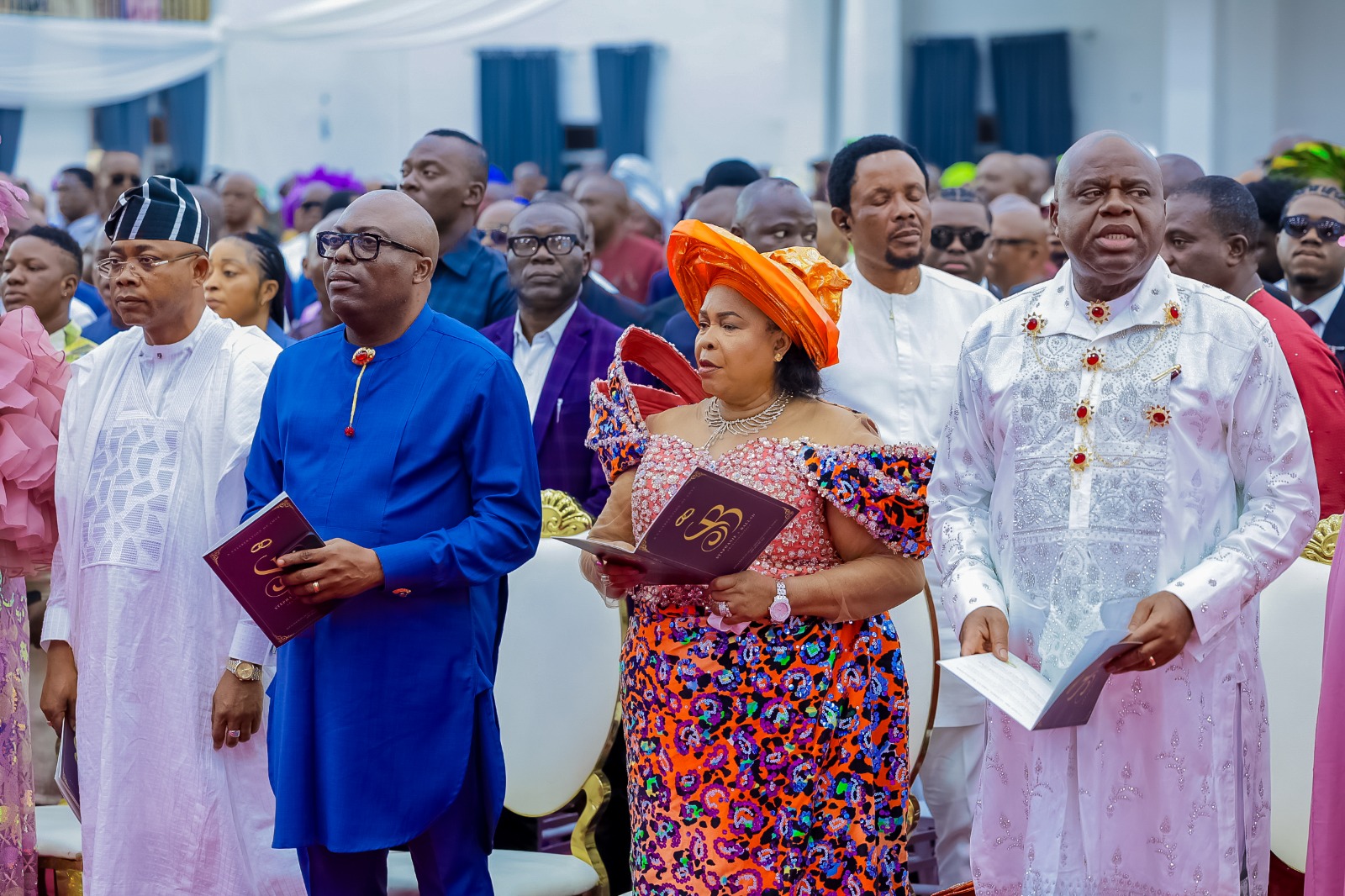
Rivers State, Sir Siminalayi Fubara, has assured members of the National Youth Service Corps (NYSC) of his administration’s commitment to supporting and strengthening the scheme in the State.
Fubara gave the assurance last Friday at the NYSC permanent orientation camp, Nonwa-Gbam, Tai Local Government Area in the State, during the swearing-in ceremony of 2026 Batch B Stream II orientation course.
Represented by the Permanent Secretary, Cabinet Bureau, Office of the Secretary to the State Government, Dr. Promise Oguzie, the governor said the State Government would remain intentional in providing the necessary support to improve the NYSC scheme and enhance the experiences of corps members deployed to the state.
He charged the corps members to be role models and quality nation-builders in their service to the good people of Rivers State in particular, and Nigeria at large.
“I charge you to be exemplary, dedicated and committed in all you do. Take full advantage of all the camp programmes and activities to enrich yourselves”, he said.
In his welcome address, the State Coordinator of NYSC in Rivers State, Mr. Moses Oleghe, urged corps members to see their deployment to Rivers State as a “veritable opportunity to make meaningful contribution to the growth of the State in particular and Nigeria at large.”
He further charged them to serve with all sense of “integrity, discipline, and the fear of God, especially when they will be engaged as INEC ad-hoc staff that will conduct the 2027 general elections.”
A total of 3,584 corps members composed of 1,421 males and 2,163 females were sworn in by the Chief Judge of Rivers State, who was represented by Justice Godspower Aguma.

Governor of Rivers State, Sir Siminalayi Fubara, says Nigeria needs God-fearing leaders for the nation to move in the right direction and make meaningful progress.
The Governor stated this yesterday when he received in audience, the World President of the Seventh Day Adventist Church, Pastor Erton Kohler; his wife, Andriene Marques Kohler; daughter Mariana Marques Kohler and a retinue of ministers of the church at Government House, Port Harcourt.
Fubara who hailed the Seventh Day Adventist Church for its contributions to education and the grooming of future leaders in Nigeria, expressed delight that the Church had over the years, been investing in education at various levels and currently runs two universities in the country.
He commended the church for not only using its institutions to spread the gospel of Christianity but to groom future leaders for the country.
According to him, religion should not be just about defending one’s faith, but also making meaningful impact on the lives of the people.
He said that by floating these educational institutions, the church has demonstrated capacity to support Nigeria in the task of producing not only educated people but a breed of God-fearing leaders.
“Our country is where it is today because we lack the fear of God. If you have the fear of God, there should be a limit to what you can do because you understand the supremacy of God. But when God is not in your equation, you’ll go beyond the line and that is what has brought us to where we are today.
“So, I feel very happy that you are contributing to the development of our future leaders in this country. We need the right people being in the right place; prepared properly with good minds; that is what we need, not just in Nigeria but round the whole world.,” he said.
Governor Fubara further observed that the absence of God-fearing people in high places to take the right decisions that could impact positively on the society, has also given rise to other problems such as social inequality, poverty, corruption and criminality. According to him, Nigeria needs a system where the average parent could afford quality education for their children and a guarantee that upon graduation, the average child will have the capacity to compete favourably with anybody, anywhere in the world.
“If we have a situation where the little money that you’re being paid as wage can also afford you quality healthcare and after working at least for 15-20 years, you have a roof over your head, tell me why you should be involved in any kind of crime? At that point, you’ll feel secured and this attitude of insecurity about the future that leads to all the social vices we have today won’t be there,” he said.
Governor Fubara expressed appreciation to the delegation for the visit and for their prayers for Rivers State, assuring them of his continued support for their programmes in the state.
Leader of the delegation and World President of the Seventh Day Adventist Church, Pastor Erton Kohler said he was in Nigeria for a special conference of the church during which thousands of the church’s ministers will be undergoing an empowerment programme to further equip them for the task of herding their flocks and serving the society.
He expressed gratitude to the Governor for the warm reception accorded his entourage, saying the memory of the visit will linger in his mind for a lifetime.
Kohler disclosed that the Church has over twenty -four million (24,000,000) members and more than 182,000 places of worship, spread across 212 countries of the world.

The Rivers State House of Assembly has approved the 2026–2028 Medium Term Expenditure Framework (MTEF) submitted by Governor Siminalayi Fubara.
This reaffirms the lawmakers’ commitment to enacting laws and taking legislative actions geared towards the overall development of the State.
The Assembly gave the approval during its Second Legislative Sitting of the Fourth Session held last Friday.
Speaking on the MTEF document during plenary, the House Speaker, Rt. Hon. Martin Amaewhule, noted that by the provision of Section 10(1)(b) of the Rivers State Fiscal Responsibility Law No. 8 of 2010, the MTEF ought to have been laid before the House in September 2025.
Amaewhule explained that traditionally, the document is expected to be presented four months before the commencement of the next financial year and immediately after the expiration of every three-year fiscal cycle.
He, however, stated that in the interest of the State and its people, the House considered it necessary to deliberate on the document, describing it as a precursor to the 2026 Budget Estimates.
The Speaker expressed concern that the year had already progressed significantly before the presentation of the framework.
During deliberations on the document, members examined the assumptions and projections contained in the MTEF and observed that strict adherence to the outlined fiscal parameters would ultimately serve the interest of Rivers people.
The lawmakers maintained that effective implementation of the framework would promote prudent financial management and enhance developmental planning across the State.
Following the debate and positive consideration by members, the Speaker put the question to the House and members voted overwhelmingly in support of the approval of the MTEF.
Meanwhile, during the same sitting last Friday, the House also received a petition from the Chairman of Obio/Akpor Local Government Council, Dr. Gift Worlu.
The petition was presented by the member representing Obio/Akpor Constituency II, Hon. Emilia Amadi.
According to the petition, concerns were raised over an imminent security breach, threats to lives, destruction of property and alleged forceful takeover of property by some lawless persons within parts of the Local Government Area.
Presenting the petition before the House, Hon. Amadi appealed to the lawmakers to revisit the matter and take necessary steps aimed at safeguarding lives and property in the affected communities.
The House is expected to further deliberate on the petition and consider measures to address the concerns raised in order to sustain peace and security in the area.
King Onunwor
-

 News2 days ago
RSG Targets Nine Million Residents in Mosquito Net Distribution Campaign
-

 Oil & Energy1 day ago
Aiyedatiwa Signs New Electricity Bill
-

 Oil & Energy1 day ago
NLNG Commissions Research And Innovation Centre In RSU
-

 Maritime1 day ago
Marine Minister Commends President Tinubu On NPERA Bill Assent
-

 News2 days ago
KenPoly Holds Eight Convocations, August 29
-

 News2 days ago
RSG Begins Another Phase of Projects Commissioning Today
-

 News2 days ago
RMAFC Completes Revenue Sharing Review, Proposes New Pay
-

 Maritime1 day ago
NAGAFF Petitions IGP Over Alleged Maritime Police Harassment