
Nation
THE STATES

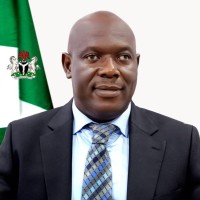
Mr Markus Gundiri, Action Congress of Nigeria (ACN) Governorship candidate for Adamawa, Mr. Markus Gundiri, has promised to resuscitate the ailing agro-allied industries in the state, if elected in April. Gundiri, who made the promise in an interview with newsmen in Abuja, said he planned to achieve the goal by collaborating with the private sector.
He said the major challenge of such industries had been the lack of sufficient electricity supply.
Gundiri said he would also concentrate on the exploration of the mineral deposits, to enable the state to earn foreign exchange.
He expressed the desire to contest the seat, to enable him to change the lot of the people by addressing poverty and underdevelopment in the state.
Poverty, he said, would assume an alarming proportion if left unaddressed.
Governor Sule Lamido of Jigawa has appealed to politicians in the country to shun sentiments in their campaigns for votes.
Lamido made the appeal at Yankwashi, Jigawa, while inaugurating a new road linking Yankwashi Local Government Area with other parts of the state.
“It is unfortunate that my fellow politicians use religion, tribalism and sectionalism to seek support from people.
“This time around we are no longer going to tolerate this; we are all Nigerians and we belong to one nation, one destiny and one family,’’ the governor said.
He appealed to the people to come out en-masse and vote for President Goodluck Jonathan and Vice-President Namadi Sambo.
According to the governor, the Goodluck/Sambo ticket on PDP platform is a good omen for the country.
The Commandant, Nigerian Defence Academy (NDA),Kaduna, Maj.-Gen. Chukwu Onwuamaegbu, has described social interaction with the civil society as necessary for the Nigerian Army to succeed.
Onwuamaegbu made the remark in Kaduna, during the West African Social Activities (WASA)/Physical Military Training, organised by the Nigerian Army depot. The event was held in honour of 65 Regular Recruit Intakes in Zaria, Kaduna State.
He said that social interactions remained vital in fostering unity between the army, their friends, families and the public.
According to him, it promotes peace, unity, understanding and affinity, thereby keeping soldiers’ minds alert.
The Kano State chapter of the Medical and Health Workers Union of Nigeria (MHWUN) has begun negotiations with the state government to find ways of improving its health care delivery.
The Chairman of the union, Malam Kabir Ado, who disclosed this to newsmen in Kano, said the decision followed the procurement of medical equipment and drugs for government hospitals in the state.
He said the forum was being attended by the representatives of the health workers in the state and officials of the state government, adding that the outcome of the meeting would determine the union’s next line of action.
On the implementation of the Consolidated Health Salary Structure (CONHESS) for the members of the union, Ado said the body had rejected the offer of 70 per cent implementation by the state government.
The Independent Electoral Commission (INEC) says it has charged five persons to a Magistrate’s Court in Jega, Kebbi State for allegedly violating the Electoral Act during the nationwide voter registration.
The state Resident Electoral Commissioner (REC), Alhaji Kabir Ahmed, told newsmen that two of the accused persons engaged in double registration in Gwandu and Birnin Kebbi Local Government Areas. He said the commission registered a total of 1,638,325 voters during the exercise. Ahmed said the exercise was successful, stressing that some of the challenges it encountered were addressed while registration officers were orderly.
The REC said apart from the initial protests by NYSC Assistant Registration Officers who objected to their non engagement for the exercise, no negative incident was recorded.
The Kogi State Government has commenced full implementation of the Consolidated Medical Salary Scale (CONMESS) for doctors in its health institutions. Dr Dorcas Onuminya, the state’s Commissioner for Health, who disclosed this to newsmen in Lokoja said payment of the new salary commenced in July last year.
The commissioner said that nurses and other health personnel in the Specialist Hospital, Lokoja, had also started enjoying the Consolidated Health Salary Scale (CONHESS).
She, however, confirmed that nurses and other health personnel in the state’s Health Management Board and the health ministry were yet to benefit from the new scale because of its high financial implications.
The National President of the Nigerian chapter of Junior Chamber International (JCI), Mr Julius Mmejim has called on the Federal Government to train more youths in information technology and agriculture.
He made the call in Ilorin recently at a news conference held to announce the group’s Area ‘A’ National Conference tagged “Garin-Alimi 2011″.
Mmejim said that such youth-training activities would go a long way to address the menace of unemployment and youth restiveness in the country.
He urged the government to empower the youth through various skill acquisition activities, saying that the menace of unemployment had forced many youths to go into crime.
The Economic and Financial Crimes Commission (EFCC) on Thursday took to court the former Director-General of the Nigerian Maritime Administration and Safety Agency (NIMASA), Mr Raymond Omatseye, over alleged illegal transfer of the agency’s funds.
In an 11-count charge brought before Justice Binta Nyako of the Federal High Court, Lagos, the EFCC said that the ex-NIMASA boss illegally transferred 300,000 pounds sterling from the agency’s account.
According to the EFCC, Omatseye allegedly used the money to fund the candidacy of one Mrs Mbanefo as the Secretary-General of International Maritime Organisation.
The EFCC also alleged that Omatseye used his position as the Director-General of NIMASA to award contracts to 10 companies without approval from the NIMASA board.
The companies included Wabil Nigeria Limited, Franxeel Limited, Layol Commercial Services Nigeria Limited, Harmach Integral Services Ltd and Njamu Nig. Ltd.
Former President, Olusegun Obasanjo has admonished Nigerians to remain united to ensure the country’s rapid development.
Obasanjo made the call in Minna recently at the launch of the re-election campaign of Governor Babangida Aliyu of Niger.
He expressed dismay that those fuelling disunity in the country were those who had benefitted immensely from Nigeria through sound education and good positions in government.
The former president said that it was regrettable that these Nigerians were now calling for the country’s disunity, using religious and ethnic sentiments.
He advised all the citizens to endeavour to promote Nigeria’s unity, noting that such concerted efforts would engender the country’s development in a pragmatic way.
Obasanjo said he believed that the mistakes of Nigeria’s past leaders could be corrected by the current generation of Nigerians if they supported their leaders in efforts to foster quality governance.
INEC in Ondo State says it registered about 1.55 million eligible voters during the recently-concluded voter registration.
The INEC administrative secretary in the state, Dr Samson Awujoola, told newsmen in Akure that the electoral body was able to overcome the initial hiccups.
He said Akure North local government had the highest number of voters with about 251,468 people registered.
He said Akoko South East local government recorded the lowest eligible voters with 26, 875 people.
Awujoola further said that the all the 18 Local Government Areas of the state supported the corps members and relevant security agencies to ensure success.
Education stakeholders have advised the Osun State Government to be cautious over its plan to return some public schools to their original owners.
The stakeholders gave the advice in a communiqué, issued at the end of the two-day Osun Education Summit, held in Osogbo from February 7 to Feb. 8.
Members of the Summit Committee, Mrs Modupe Ajayi-Gbagbo, Mrs Kemi Adesina and Mr Semiu Okanlawon signed the communiqué.
The conference said the return of schools to their original owners in Osun was a very sensitive issue that needed serious deliberation and consultation before action could be taken.
The 18-point communiqué also stated that education policies should be devoid of political considerations, while appointments, recruitment and execution of projects in the education sector should be based on merit.
It also urged the state government to give the deserved priority to education to rescue it from crisis.
Automobile spare parts dealers at the Delimi market in Jos have announced their relocation to Jos-North shopping complex in the wake of the reccurrent crisis in the state.
Mr Anselem Ebosie, Chairman, Jos-North Automobile Spare Parts Association (JASPA), told newsmen in Jos that the relocation was necessitated by incessant attacks at their former base.
He said: “The crisis at Delimi has led to the loss of so many lives. The market is on the street, and we were always victims of the riots. That made it difficult for us to operate.
“The recent killing of many of our members around the market was the last straw.”
Ebosie said the traders would not return to Delimi, but listed challenges facing them at the new market to include the absence of toilet facilities and the lack of adequate security.
He appealed to Jos North Local Government authorities and managers of the market to provide the facilities to ensure a more conducive atmosphere for business.
Former Chairman of Isa Local Government Area in Sokoto State, Alhaji Abdullahi Yusuf, has expressed optimism that the people will massively vote for Governor Aliyu Wamakko during the April polls.
“Sokoto people are not clamouring for any political change because we are comfortable with the manifesto of the PDP-led administration under Wamakko,” he said.
Yusuf told newsmen in Isa that the “people-oriented programmes” embarked upon by the administration had reformed the state for optimal goals.
He said the government’s creation of jobs for over 70,000 youths and women through the skill acquisition programmes had enhanced socio-economic and political development of the state.
“What we fail to achieve in eight years was made possible by Wamakko administration in less than four years.”
He called on the electorate to vote for all PDP candidates in the April polls, to ensure continuity.
“Any person that offers you money, collect it but make sure you cast your votes for Wamakko in April,” he said.



The Hydrocarbon Pollution Remediation Project (HYPREP) has commemorated the 15th anniversary of the release of the United Nations Environment Programme (UNEP) Environmental Assessment Report on Ogoniland, reaffirming its commitment to restoring the environment and improving the livelihoods of affected communities.
In a statement signed by the Project Coordinator, Prof Nenibarini Zabbey, to commemorate the anniversary, HYPREP described the anniversary as a significant milestone in Nigeria’s environmental restoration efforts, noting that the project has made remarkable progress in implementing the recommendations of the landmark UNEP report released on August 4, 2011.
The UNEP report had revealed extensive oil pollution across Ogoniland, severe environmental degradation, and serious public health risks resulting from decades of petroleum operations. It also recommended an initial $1 billion fund to commence the cleanup of the affected communities.
According to HYPREP, the Federal Government formally launched the Ogoni clean-up in 2016, while the Project Coordination Office was established in 2017 to drive the implementation of UNEP’s recommendations.
Zabbey said the current administration has continued to prioritise the project under the Renewed Hope Agenda.
Providing an update on the cleanup, the Project Coordinator disclosed that 30 of the 65 contaminated sites identified by UNEP have been fully remediated, while work is ongoing at several medium- and high-risk locations. It also stated that more than 1.5 million mangrove seedlings have been planted as part of what it described as the world’s largest restoration of oil-degraded mangroves, with over 1,000 hectares of shoreline already rehabilitated.
Zabbey further revealed that 49 Ogoni communities have been connected to potable water schemes through multiple water projects and booster stations aimed at providing safe drinking water across the region.
In the health sector, he said the 100-bed Ogoni Specialist Hospital in Kpite and the 43-bed Cottage Hospital in Buan are nearing completion, adding that several existing health facilities have been upgraded with modern medical equipment, while five ambulances have been donated to improve emergency healthcare services. The Project Coordinator also disclosed that a three-year human health biomonitoring study is being conducted in collaboration with the World Health Organization’s International Agency for Research on Cancer (IARC).
On economic empowerment, Zabbey stated that the Project has created more than 8,000 direct jobs and trained thousands of Ogoni youths and women in various vocational and technical skills, including software development, cybersecurity, aviation, commercial diving, seafaring, mechatronics, and creative arts. The project also reported awarding scholarships to more than 1,000 students, providing grants to small businesses, and supporting persons living with special needs through skills acquisition programmes.
The statement further highlighted ongoing legacy projects, including the Ogoni Power Project and the Centre of Excellence for Environmental Restoration, which it said is about 96 per cent complete. HYPREP also welcomed the recent designation of the Ogoni Wetland as a Ramsar Site of International Importance and pledged to continue promoting biodiversity conservation and sustainable management of the ecosystem.
Marking the anniversary, Zabbey said the progress achieved over the past 15 years demonstrates the collective commitment of government, development partners, stakeholders, and local communities to restoring Ogoniland. He called for renewed collaboration to sustain the cleanup effort, promote environmental sustainability, and support the long-term development of the region. 3
-

 News2 days ago
RSG Targets Nine Million Residents in Mosquito Net Distribution Campaign
-

 Oil & Energy2 days ago
Aiyedatiwa Signs New Electricity Bill
-

 Oil & Energy2 days ago
NLNG Commissions Research And Innovation Centre In RSU
-

 Maritime2 days ago
Marine Minister Commends President Tinubu On NPERA Bill Assent
-

 News2 days ago
KenPoly Holds Eight Convocations, August 29
-

 News2 days ago
RSG Begins Another Phase of Projects Commissioning Today
-

 News2 days ago
RMAFC Completes Revenue Sharing Review, Proposes New Pay
-

 Maritime2 days ago
NAGAFF Petitions IGP Over Alleged Maritime Police Harassment