
News
Video Showing Ganduje Receiving Bribe Authentic -Jaafar

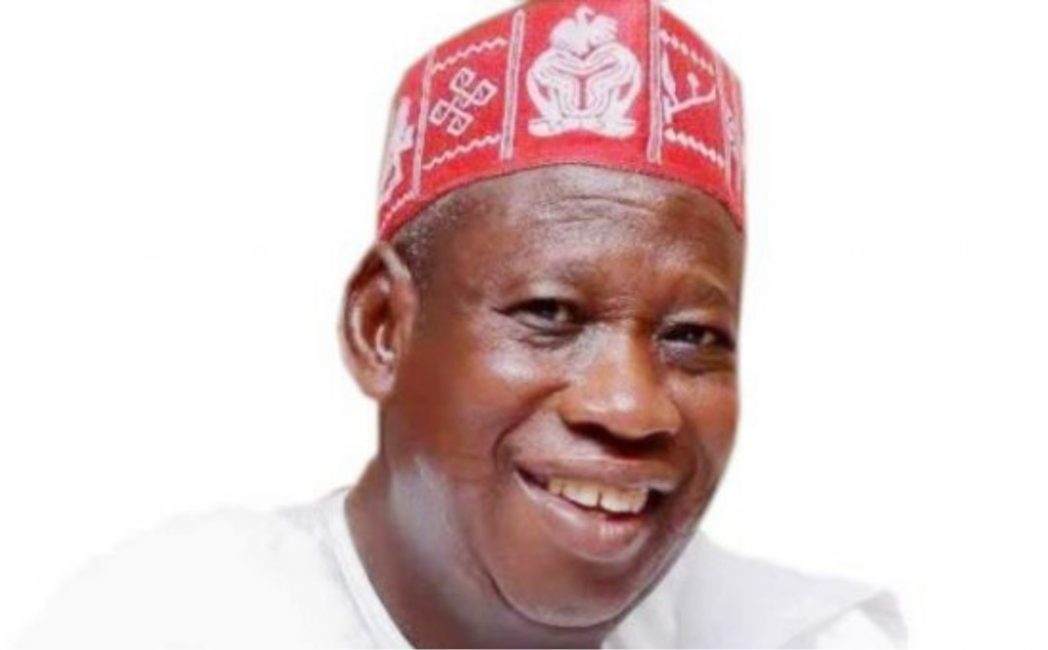
Publisher of the online newspaper, Daily Nigerian, Jaafar Jaafar, which published the video clips showing Kano State Governor, Abdullahi Ganduje, allegedly receiving $5 million bribe from contractors, yesterday appeared before the State House of Assembly committee investigating the matter.
Chairman of the committee set up by the House of Assembly, Bappa Babba Dan Agundi, gave Jaafar the floor to prove the validity of the video clips he published.
In the course of his appearance and during cross-examination, he vowed not to disclose the source of the video recording but said he was ready to swear by the Holy Qu’ran that the video was authentic.
Jaafar, who hung a copy of the Holy Qur’an on his shoulder, said he took the Holy book with him in anticipation of the fact that he would be asked to swear by the lawmakers.
He said: “I’m ready to swear by the Holy Qur’an if you want me to, because the report I published was nothing but the truth, and I should put it on record that I have nothing personal against Governor Ganduje, but doing what is right.
“More than two years ago, a contractor friend of mine complained to me that the governor had been receiving kickbacks, ranging from 15 to 25 percent, for every project executed in the state from contractors. “We then agreed to plant spy cameras on his Kaftan lapel so that he can capture the brazen act in hard evidence.
He captured at least 15 clips, nine of which fully showed the governor’s face, body and hands collecting bundles of dollars.
“Before Daily Nigerian published the stories, pictures or videos on its website, the editors subject them to rigors of verification to establish their authenticity or otherwise. In the case of the video clips in question, our in-house technical expert, the editor-in-chief and editorial adviser certified that the videos were original and not doctored contents.
“Experts from Amnesty International, Nigeria, BBC and Premium Times also watched the clips and certified their authenticity before we went to press.” He also talked about the timing of the recording, explaining that the first video was published on October 14, 2018, comprising two clips that occurred on two different dates as shown on the videos themselves.
According to him, the video showed the governor receiving bribe from a contractor in foreign currency, specifically United States Dollars.
“The video also showed His Excellency tucking these monies under his flowing gown and putting them inside an envelop,” Jaafar added.
He said his medium was willing to share the content of the video without any form of editing to assist the committee in its investigation.
He also promised to share the full clips of the videos already published to the committee in the course of the performance of their legislative function. Jaafar thanked the committee for deeming it appropriate to invite him to make presentations before it, in respect of this matter.
The Attorney General and Commissioner for Justice promised to be fair, irrespective of who was involved. “The office of the AG is for anybody and not for Governor Abdullahi Ganduje,” he stated.
Meanwhile, pictures of underaged Kano students carrying placards in support of Governor Umar Ganduje has stirred reactions online from Nigerians.
The students were seen carrying placards with inscriptions such as: ‘Jafar, your video will not stop us from voting Ganduje’, Jafar is a great liar’, ‘Ganduje is a great man’.
The students seem to be condemning the video which captured the Kano State Governor, Abdullahi Ganduje receiving bribe amounting to about $5million from contractors in the state released by Jaafar Jaafar, the Publisher of Daily Nigeria.
The images stirred different opinions from Nigerians on Twitter, condemning the use of children for politics.
Here are some comments gathered by The Tide from Twitter:
@Nasidiqura “These poor kids who were supposed to be in schools were forced to carry placards to “protect” a governor whose children attend best schools in Europe and the US. Nigeria keeps disappointing us!
@Antscroll “Today is a placard, tomorrow will be machetes, daggers, and guns. Turning underaged children into political thugs and taking advantage of their innocence to cover-up your mess. This is another form of Child Abuse.”
@Elbinawi “That shameless thief in Kano, Gov Ganduje used kids to protest against his corruption bribe-taking by Jaafar. This shameless crook is exploiting these kids who should be in School. Kano state has the highest out-of-school children in Nigeria.”
@Leke “Who approved the use of school pupils to protest in favor of Ganduje during school hours? This is child abuse.”
@UmarG “The sad thing is the students may not even be able to read what’s written on the cardboard.”
@Zinadabo1 “The outfit of this kids seem to like that of children sent to Islamiya only for their mallams to connive with Ganduje’s boys & bring peoples’ children to the street to support corruption by holding placards with inscriptions they can’t read.Why? Kano why?
@Aliyussufiy “This picture of Sallari Primary School pupils carrying cardboards that reads “We don’t agree, it is fake news against governor [@GovUmarGanduje]” is making me cry. Someone, possibly their teacher, who should help prepare them for our future, is using them to cover.”
@ZaydGaya “Those kids should be in their various classes not on the streets. What sort of dirty politics is this? Ganduje Please have the decency to use grown adults, not underage persons. No one said you’re guilty just prove your innocence that’s all we demand for.”
@Nafeezi “Their children are busy in classrooms, studying in a highly equipped and conducive environments in private schools in and outside Nigeria. They have forced the children of the poor out of dilapidated classrooms to the street to raise placards in their support.”
@AhmadWakili “ Ganduje is grooming Kano Primary School Children to be political thugs. This is dangerous for Nigeria’s Democracy, it’s indeed pathetic and worrisome. These minors suppose to be in school now!
@joshseal “No wonder he’s so corrupt, his stooges force children out of school to protest over his corruption hearing. They are not eligible to vote take note @inecnigeria. What transpired in 2015 will not be accepted come 2019 election.”
@Alabitosin “Shame to this country. Can you see what they are using these children for? children that they have stolen their future.”
@Mujahid_yh “No no no! This is totally unacceptable. They belong to the classrooms and not the streets.”


News
Fubara Hails Team Rivers For Winning Tinubu Inter-Schools Debate Championship …Describes Victory As Great Feat For Rivers

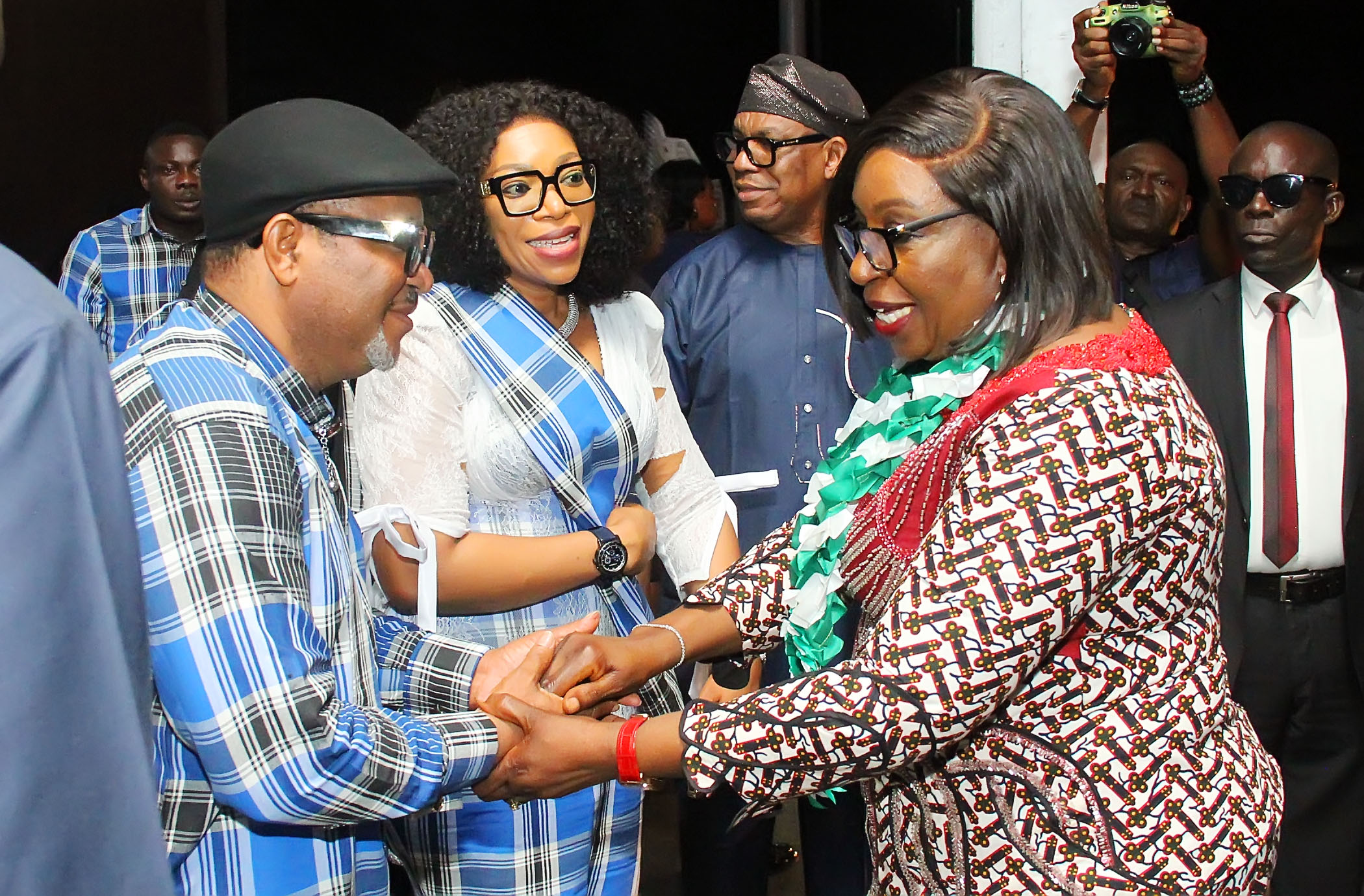
Rivers State Governor, Sir Siminalayi Fubara, has congratulated Team Rivers for emerging champions at the grand finale of the President Bola Ahmed Tinubu Inter-Senior Secondary Schools Debate Championship.
The governor, who was represented by his deputy, Prof. Ngozi Odu, described the students’ victory as “a great feat” and a clear demonstration of the intellectual capacity, brilliance, confidence, and preparedness of Rivers children to compete and excel at the national level.
The Tide reports that the finals of the Presidential Debate Championship held last Thursday at the Obi Wali International Conference Centre, Port Harcourt, Rivers State.
Fubara commended the students for their eloquence, critical thinking, and teamwork, while also appreciating their teachers, coaches, and the Rivers State Ministry of Education for the guidance and support that led to the outstanding performance.
“This victory is a source of immense pride to all Rivers people. It shows that our investment in education and human capital development is yielding results. Our children have once again proven that they are among the best in the country.
“We are proud of you and we will continue to support programmes that build the minds of our young people,” he stated.
The governor assured that his administration would continue to create an enabling environment and provide necessary support for academic and extra-curricular activities in schools across the State to help the youths to excel in future competitions.
He further urged other students across the State to draw inspiration from Team Rivers and strive for excellence in all their endeavors.
Fubara expressed profound appreciation to the Grand Patron of the championship and Nigeria’s First Lady, Senator Oluremi Tinubu, for her steadfast support and commitment to initiatives that promote education, youth development, and the empowerment of the Nigerian child.
?While congratulating Team Rivers for coming out on top, Fubara told the participants that they were all winners, irrespective of the outcome, stressing that their courage to stand before an audience and articulate their ideas demonstrated that the future of Nigeria remains intellectually vibrant and full of promise.
He also commended the organisers of the championship for creating a platform where young Nigerians could develop the confidence, discipline, critical thinking and communication skills required to participate meaningfully in national development.
?He reaffirmed the commitment of the State Government to supporting initiatives that advance academic excellence, innovation, discipline and opportunities for young people.
The governor dedicated an award presented to him to the people of Rivers State, the state’s education system, young Nigerians, and all those contributing to the development of the State.
?In his welcome address, the Chairman of the National Advisory Board, President’s Schools Debate, Hon. Usman Muhammed, said the championship was aimed at raising articulate, informed and responsible young Nigerians committed to democracy, good governance and nation-building.
?He commended the governor and the people of Rivers State for hosting the event, stressing that debate promotes critical thinking, tolerance and responsible citizenship.
?On his part, the State Commissioner for Education, Dr Peters Nwagor, explained that the essence of the championship was to train and develop youth, especially students, on how to get to leadership positions, saying it takes a sound mind to be able to come out to speak publicly and come to defend the opinion in a public setting.
?The Tide reports that while Team Rivers came first, Team Kwara emerged second, while Team Sokoto took the third position.
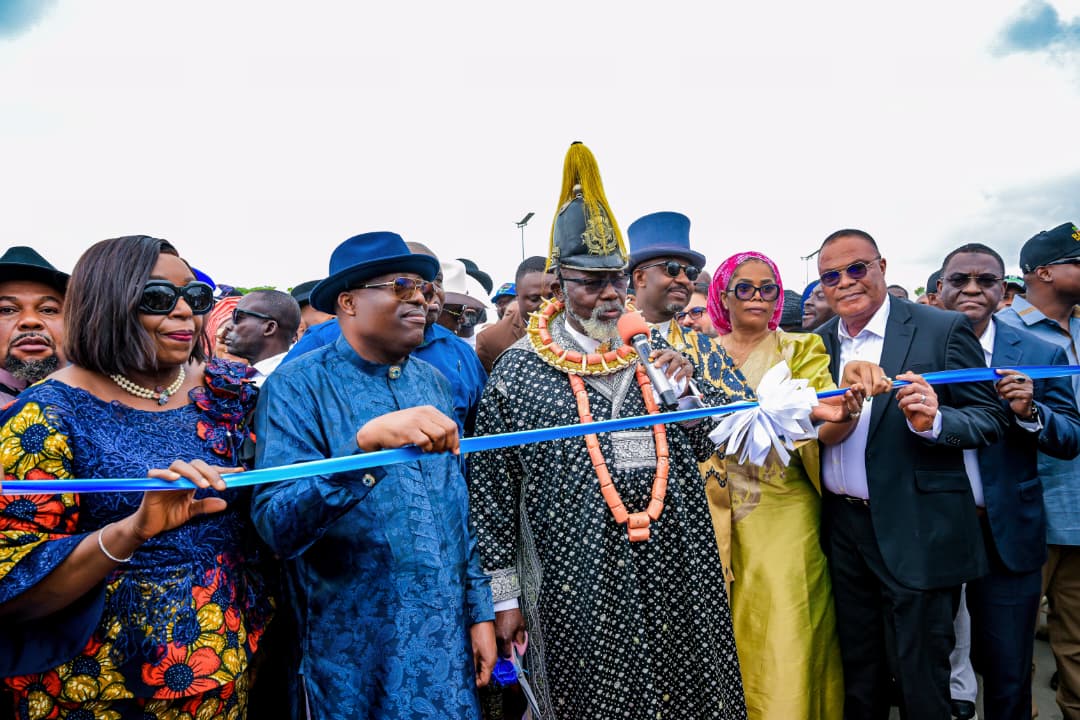
Rivers State Governor, Sir Siminalayi Fubara, has unveiled the reconstructed Buguma-Degema-Abonnema Road, a major transport corridor linking communities across the Asari-Toru, Degema, and Akuku-Toru Local Government Areas of the State.
The project, a 19.79 kilometre road was executed by Julius Berger Nigeria PLC, brings to an end the nightmares of man-hour losses and insecurity associated with the route.
The long stretch of the road was in a very deplorable condition before the Fubara administration awarded the contract for its rehabilitation in September 2024.
Fubara disclosed that the completion of the project in record time was a fulfillment of a personal commitment made after witnessing the severe degradation of the road during a previous visit to the area.
“It is a road that you must pass if you’re going to Abonnema. It is a road that because of its state, a lot of evil activities was taking place there. But to the glory of God today, I don’t think those negative acts can even be imagined or be carried out along that corridor again.
“I made a promise to myself that day that even if it is remaining one week, we must make sure that we fix this road. Today, to the glory of God, the road has been fixed.
“I am happy that today, we are all here gathered happily that this particular dream has come to reality,” he said.
The governor reiterated that his desire for the State is not just about embarking on projects but in doing those things that will touch the lives of the people positively.
He reaffirmed the commitment of his administration to complete the Trans-Kalabari Highway, another major road project linking several coastal communities in the State.
He expressed appreciation to the people for their love and cooperation especially for allowing the contractors to do their jobs without hitches.
“You have shown me so much love. Nobody can take that away. One particular project that cannot be denied is the Trans- Kalabari Road that we are doing. I want to beg you that if I cannot meet all you requests today, don’t worry, my successor will continue from where I will stop,” he said.
Special Guest of Honour, the Amanyanabo of Abonnema Kingdom, King Desrael Gbobo Bob-Manuel, who officially commissioned the project, commended the state government for its rapid infrastructure development, noted that the rehabilitation of the roa has drastically improved travel time, safety and the living conditions of the people.
“In the past, for you to leave any of our communities to Port Harcourt, you must, as a matter of fact, go into a one-day fasting and prayers the previous day. Otherwise, you are not sure you will get to your destination.
“Today, I can leave my palace in Abonnema by 10:00 AM, and I will be wherever I want to be in Port Harcourt before 11:00 AM,” the royal father said.
King Bob-Manuel stated that the reconstructed road would not only enable the local fishermen to transport their catch directly to urban markets in Port Harcourt for better profit margins, but will open the riverine communities to new investments.
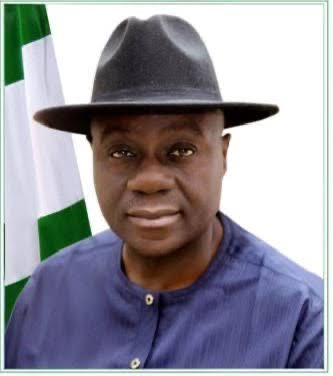
President Bola Tinubu has appointed Mr Abel Olumuyiwa Enitan as the Head of the Civil Service of the Federation, effective August 27, 2026.
Enitan succeeds Mrs Didi Esther Walson-Jack, who will retire soon from the Federal Civil Service upon attaining the statutory retirement age of 60.
Mr Enitan, from Osun State, is the most senior Permanent Secretary in the Federal Civil Service.
He has served as Permanent Secretary for seven years and seven months, working at the Ministry of Police Affairs, the Ministry of Humanitarian Affairs, and the Office of the Vice President. He is currently the Permanent Secretary in the Federal Ministry of Education.
Enitan, according to a statement by Special Adviser to the President on Information and Strategy, Bayo Onanuga, brings considerable institutional experience and a deep understanding of how the Federal Civil Service works to his new responsibility.
Tinubu expressed his profound appreciation to Mrs Walson-Jack for her distinguished service to the nation and for the reforms, impact and innovations witnessed in the Civil Service during her tenure.
“The President wishes her a fulfilling and successful life after service and conveys the nation’s gratitude for her years of dedicated and impactful public service,” the statement added.
Tinubu charged the incoming Head of the Civil Service of the Federation to consolidate on the reforms and innovations already underway, deepen professionalism and efficiency across the service, and build a more effective and responsive Civil Service capable of delivering on the administration’s Renewed Hope Agenda.
The President further urged Enitan to lead a Civil Service that is professional, merit-driven, accountable, innovative, and responsive to Nigerians’ needs and aspirations.
Enitan was born on December 12, 1966. He had his secondary education at Ajibode Grammar School, Ibadan and the College of Arts and Science, Ile-Ife. He later attended the University of Lagos and graduated in 1988 with a B.Sc. in Finance and Banking.
In 2015, Enitan obtained an M.Sc. in Public Policy Analysis from Nasarawa State University, Keffi.
-
 News1 day ago
Tinubu Appoints Enitan As New Head Of Federal Civil Service
-
Rivers1 day ago
Philanthropist Cautions Youths Against Ignoble Acts Donates Building To Musician
-
Politics1 day ago
Yari Emerges DG As Tinubu Unveils 2027 Presidential Campaign Council
-
Education1 day ago
Rivers Wins 2026 Presidential Inter-School Debate: Govt Pledges To Institutionalise Competition
-
Politics1 day ago
2027: ADC Candidate Tasks INEC On Integrity, Intensifies Consultations
-
 Politics1 day ago
2027: INEC To Conduct Nationwide Electoral Equipment Test Run In November
-
Sports1 day ago
NSC Celebrates Historic Beach Volleyball Olympic Qualification
-
Sports1 day ago
Arsenal Want Osimhen To Take Pay Cut