
News
2018 Census To Gulp N272bn


The proposed 2018 national population census will cost an estimated N272 billion, the Director-General of the National Population Commission (NPC), Dr Ghaji Bello, has said.
Bello told a correspondent of the News Agency of Nigeria (NAN) in New York that the Federal Government was expected to fund the exercise by only 51 per cent while the international donor community would fund the remaining 49 per cent.
“The submission we have made to the Federal Government is in the region of N272 billion. But the good thing is that that the N272 billion is not for one single year.
2018 census to cost N272billion
2018 national population census will cost an estimated N272 billion, the Director-General of the National Population Commission (NPC), Dr Ghaji Bello, has said.
The proposed 2018 national population census will cost an estimated N272 billion, the Director-General of the National Population Commission (NPC), Dr Ghaji Bello, has said.
Bello told newsmen in New York that the Federal Government was expected to fund the exercise by only 51 per cent while the international donor community would fund the remaining 49 per cent.
“The submission we have made to the Federal Government is in the region of N272 billion. But the good thing is that that the N272 billion is not for one single year.
“It is spread along a four-year tenure. There’s pre-census activities, that is the preparation; the actual census proper itself and the post-census enumeration activities.
“So maybe you are looking at an average of maybe N40 billion in the first year, another N100 billion during the actual census itself and then the balance during the last year.
“But the beauty again is that not all the resources are normally provided by the government of the federation.
“The international community does come in and supporters like EU, USAID ; from the previous record that we have, the ratio is 51 to 49 per cent. “The 51 per cent is provided by the Federal Government while the 49 per cent is provided by the international donor community.
“Therefore, it is something that once government makes a proclamation, then it means that the country is ready and the international community will come and support the government,” he said.
Bello also said there was the need for the government to leverage on the international community to help with the necessary assistance, adding that this would go a long way in defraying the cost.
“Normally, there is no country that does census on its own and more so, it is a very capital-intensive activity. Funding is important because we have to demarcate.
“There is an exercise that is called Enumeration Area Demarcation which is supposed to be the foundation or the building block of census. “And that is supposed to be carried out in every hamlet, every village, every local government, every household and then the entire nation.
“That is normally a costly exercise, very expensive. And of course, up till now we have only been able to do 74 local governments out of 774. “It means we have done only 10 per cent. So for us to be able to do the remaining 700 local governments, it means there is a lot of work to do.
“Essentially we are on track; we have the capacity in-house but again there are quite a number of things, unless you are funded, you won’t be able to move forward,’’ Bello said.
According to him, census will enable the government to have correct data about its citizens in order to aid proper planning.
“ That planning means you are going to optimise in terms of your allocation of resources to those sectors that really need that intervention. “Census has implication for trade, for manufacturing and for security because we will have the biometrics of every Nigerian.
“Then it means making life easy for security outfits like the police, EFCC, ICPC and the military because you can monitor even the scene of crime from the data that you have collected.
“So serious countries actually collect data and it is the data that they use in order to govern their society,” he said.



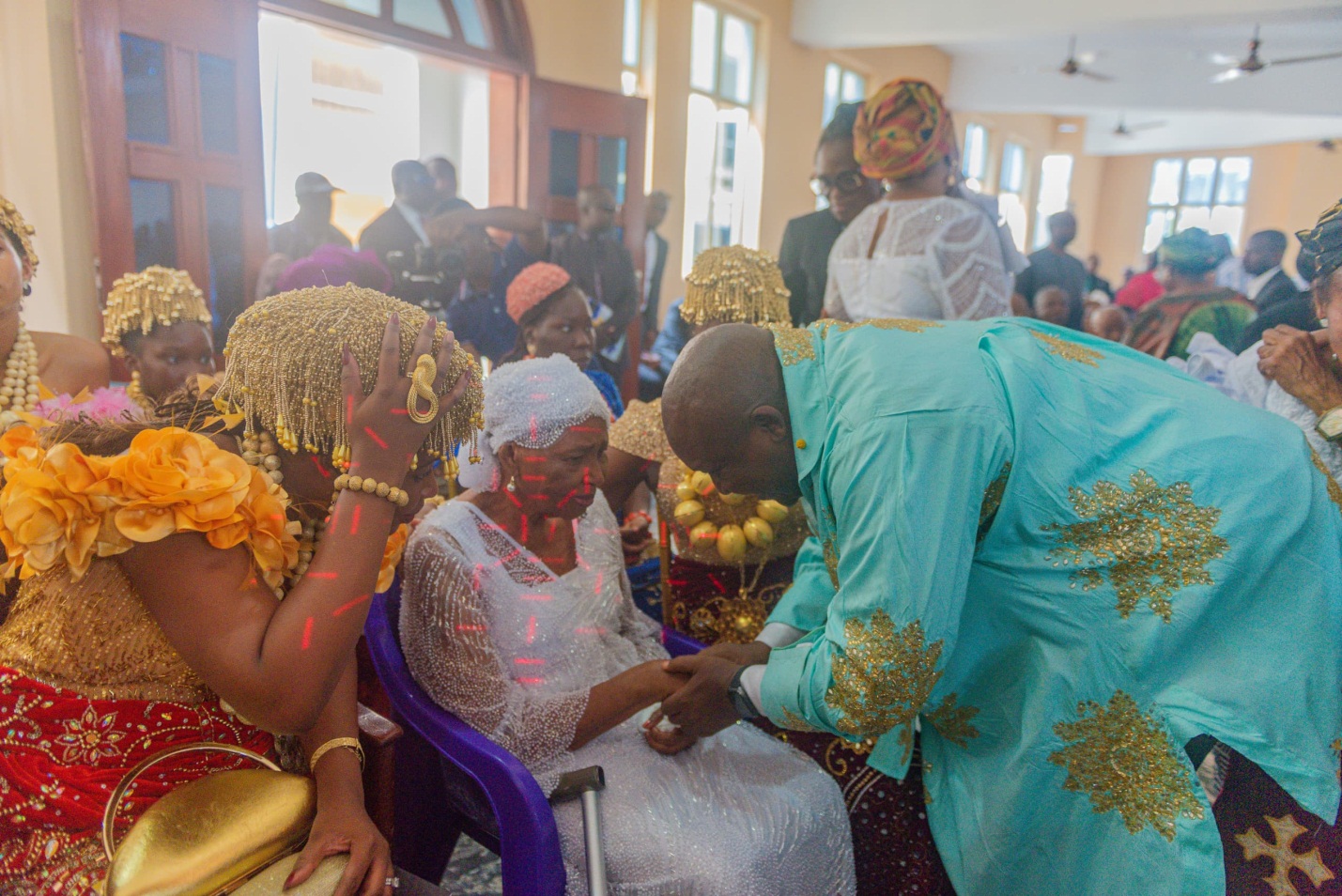
Rivers State Governor, Sir Siminalayi Fubara, has described the late Chief Albert Korubo Horsfall as a distinguished statesman whose contributions to national development brought honour and distinction to the Kalabari Kingdom and Rivers State.
Fubara said Horsfall’s life of service, patriotism, integrity and commitment to humanity had left an enduring legacy that would continue to inspire generations.
The governor spoke through the Secretary to the Rivers State Government, Dr Dagogo Wokoma, at the funeral service of the late elder statesman last Saturday in Buguma, Asari-Toru Local Government Area of the State.
He described Horsfall as a patriotic Nigerian whose leadership and dedication to the country’s development earned him a place in the nation’s history.
“Chief Horsfall was a distinguished statesman whose life was defined by service, patriotism, integrity and commitment to humanity.
“His contributions to our nation, particularly through his service as Director-General of the State Security Service, pioneer Director-General of the National Intelligence Agency and Chairman of OMPADEC, remain significant milestones in our national history,” Fubara said.
The governor noted that the late Horsfall’s contributions to national security, intelligence administration and the development of the Niger Delta would remain part of his enduring legacy.
“His legacy of leadership, national service and dedication to development will remain an enduring source of inspiration to generations yet unborn,” he added.
Fubara urged the bereaved family, the Kalabari people and other Nigerians to uphold the values of peace, unity and selfless service exemplified by the late elder statesman.
The funeral service attracted several dignitaries, including the Director-General of the Department of State Services (DSS), the Director-General of the National Intelligence Agency (NIA), a representative of the Bayelsa State Governor, the Managing Director of NDDC, Chairman of PENDEF and the Regent of the Kalabari Kingdom.
Also in attendance were the Rivers State Commissioner for Education, the Commissioner for Special Projects and other government officials, traditional rulers and stakeholders.
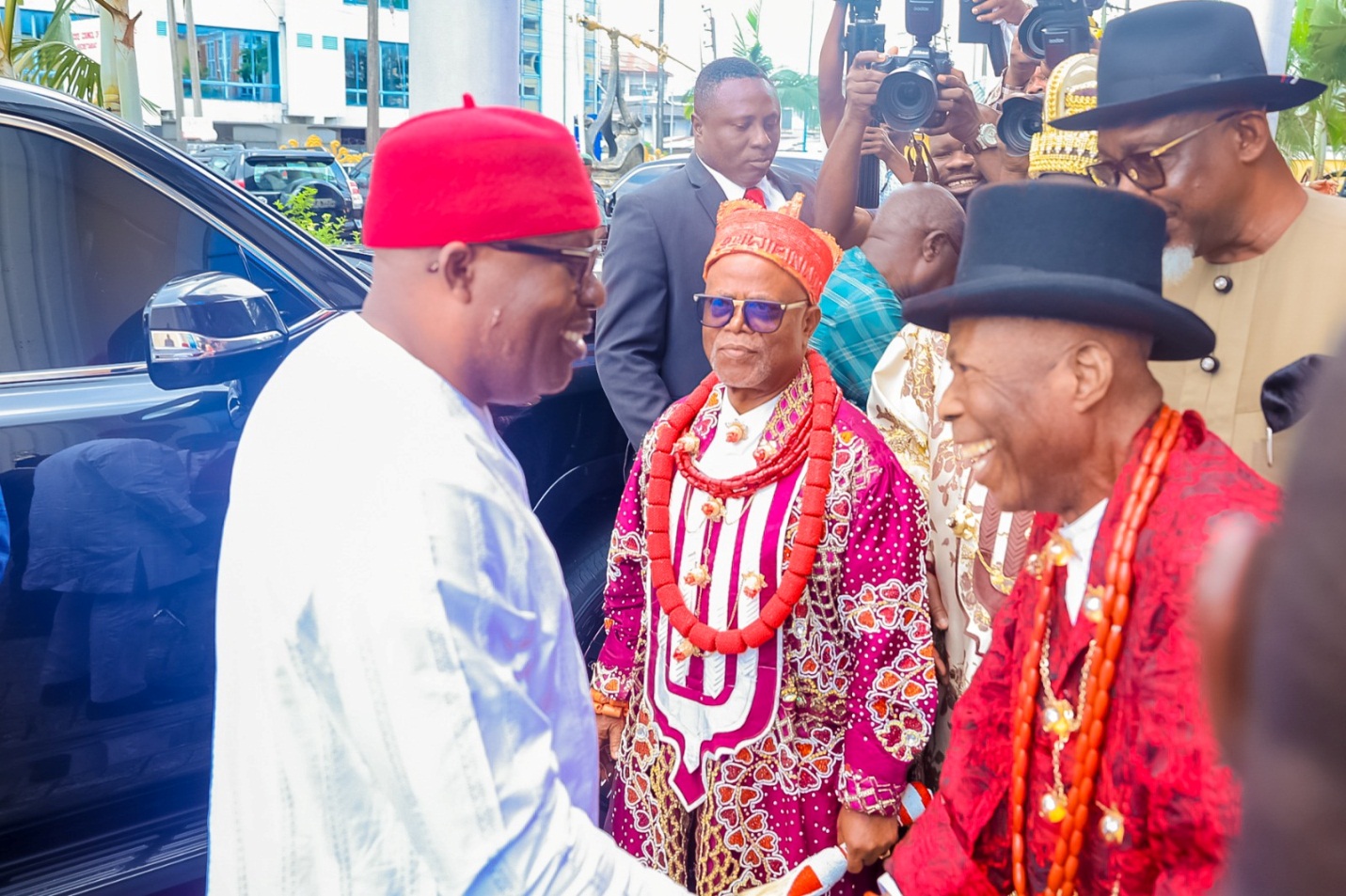
Rivers State Governor, Sir Siminalayi Fubara, has reaffirmed his administration’s commitment to partner with local government councils that prioritize the welfare and development of people at the grassroots.
Fubara stated this last Thursday in Nkoro Town during the commissioning of the newly built Sir Siminalayi Fubara Corps Members’ Lodge, executed by Hon. James A. James, the Chairman of Opobo/Nkoro Local Government Area.
Represented by his Chief of Staff, Mr Sunny Ewule, the governor said the project goes beyond a building to represent hope, hospitality and responsible leadership.
According to him, providing decent and safe accommodation for Nationl Youth Service Corps (NYSC) members who leave their comfort zones to serve in communities is the least government can do.
“Today we are not just commissioning a building, we are commissioning hope, hospitality and responsible leadership. The Chairman of Opobo/ Nkoro LGA, Hon. James A. James has understood a very simple truth that those who come to serve us must serve with dignity,.
“Our young graduates who serves under the NYSC scheme leave the comfort of their homes and travel far to contribute to our communities, they teach our children, they work in our health centres, and they become parts of our families.
“The least we can do is give them a decent, safe and befitting place to lay their heads. What Hon. James A. James has done today is in total alignment with the vision of this administration, an administration that believes in people, that prioritises welfare and that believes development must be felt in every local government and not just in Port Harcourt” he said.
Fubara further urged the beneficiaries of the corpers lodge to make good use of the facilities of the newly built edifice and be good ambassadors of Nigeria, respect the culture and traditions of the host community while continue to serve with dedication and patriotism.
“This Corpers lodge will enhance the security and welfare of serving corps members, boost their morale and make Opobo/Nkoro and even more attractive place for posting, it is a strategic investment in human capital and in peace building,” he said.
He commended the Opobo/Nkoro Council Chairman for aligning with his administration’s vision of ensuring development is felt in all 23 local government areas of the State, and not just in Port Harcourt, adding that the lodge is a strategic investment in human capital, security and peace building.
In his goodwill message, the Rivers State NYSC Coordinator, Mr. Moses Oleghe, said the accommodation was 85 percent of Corps members’ challenges.
Oleghe thanked Governor Fubara for the recent increase in the State allowances for Corps members to N35,000 for those in 21 rural areas and N20,000 for those in Obio/Akpor and Port Harcourt City LGAs, describing the gesture as a moral booster for the corps members.
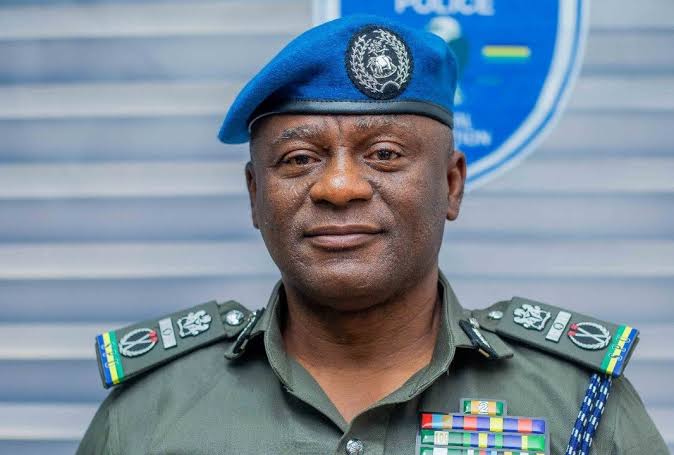
The Inspector-General of Police, IGP Olatunji Disu, has secured an offer of specialised training for up to 5,000 Nigerian police personnel under a proposed security cooperation involving Nigeria, the United States and Italy.
The Force Public Relations Officer, CSP Ani Iniedu, disclosed this in a statement issued at the Force Headquarters, Abuja, at the weekend.
The initiative is aimed at strengthening the operational capacity of the Nigeria Police Force to tackle insurgency, terrorism, kidnapping, arms trafficking and other emerging security threats across the country.
According to the statement, the proposed training programme will focus on counter-insurgency operations, intelligence-led patrols and tactical operations, particularly in difficult rural and forested environments.
Other areas of training include critical infrastructure protection, digital and scientific forensics, cybercrime investigations, explosives detection, financial investigations, asset tracing and anti-extortion operations.
The programme is expected to extend beyond the Police Mobile Force to other specialised units, including explosive ordnance disposal and forensic teams.
As part of the engagement, Disu met with the Commander-General of the Italian Carabinieri, Lieutenant-General Salvatore Luongo, to explore areas of technical assistance, professional training and institutional cooperation.
The police chief and his delegation also visited the Carabinieri Centre of Excellence for Stability Police Units in Vicenza, Italy, where they assessed training facilities and explored opportunities to adapt specialised policing programmes to Nigeria’s security needs.
Proposals discussed during the visit included command courses for 40 senior police officers, leadership training for 100 junior commanders and the deployment of a mobile assistance team to support Police Mobile Force training schools in Gwoza, Borno State, and Ila-Orangun, Osun State.
The discussions also covered the development of a national stability policing doctrine and standard operating procedures to improve professionalism, operational coordination and civilian protection, particularly in communities recovering from conflict.
Other areas of proposed cooperation include canine operations, forensic science and mounted policing, including horse breeding and local capacity development for effective public order management.
To formalise the proposed partnership, the IGP has initiated moves towards a Memorandum of Understanding covering specialised training, technology transfer and operational procedures.
He also invited an Italian Carabinieri assessment team to Abuja to identify priority needs and develop implementation arrangements.
Disu reaffirmed the commitment of the Nigeria Police Force to international partnerships that will strengthen operational readiness, improve investigative capacity and enhance the protection of lives and property.
The statement did not, however, indicate when the proposed training programme would commence or provide a definite implementation timetable.
-
Rivers3 days ago
Don Seeks Repositioning Of Tech Education For Dev
-

 Education3 days ago
PAMO MEDICAL UNIVERSITY -Nullifies Arrest warrant on VC
-
Niger Delta3 days ago
PANDEF Seeks 50% Oil Derivation Allocation Increase
-

 Education3 days ago
IAUE MOVES TO END GHOST WORKERS SYNDROME AS 400 NEW NON-TEACHING STAFF UNDERGO MANDATORY ETHICS TRAINING
-

 News3 days ago
Fresh Ebola Scare As NCDC Records Two Cases
-
News3 days ago
Customs Partners EFCC, NDLEA, Others To Tackle Money Laundering, Terrorism Financing
-

 Politics3 days ago
2027: RIVERS GUBER CANDIDATES SIGN CHARTER TO PRIORITIZE CITIZENS’ DEMANDS
-
 Politics3 days ago
2027: South-East Govs Insist On Tinubu’s Re-election