
Nation
THE STATES

Borno
The Nigeria Security and Civil Defence Corps (NSCDC) has arrested two persons with 4,000 sachets of Ready to Use Therapeutic Food (RTUF) meant for malnourished children in Internally Displaced Persons (IDPs) camps.
The NSCDC Corps Commandant in Borno, Mr Ibrahim Abdullahi, told journalists in Maiduguri on Tuesday that the two were arrested at Borno Express Motor Park.
He said “the two suspects will be prosecuted.”
However, one of the suspects, Hassan Sale, told newsmen that they normally bought the RUTF from nursing mothers in the IDPs camps.
He said “I bought this one from Zannari IDPs camp. We usually buy the product at the rate of N30 and sell to customers at N60 in Kano.
“This is the second time I came into Maiduguri; the first was two weeks ago.”
Ekiti
A 37-year-old, Ebube Marvins, who allegedly collected N809, 000 on the pretext of helping a man to transfer to Togo, was on Tuesday brought before an Ado Ekiti Chief Magistrates’ Court.
The accused, whose address is unknown, is facing a charge of fraud.
Police Prosecutor Bankole Olasunkanmi told the court that the accused with another man still at large committed the offence on December 9, 2016 in Ado-Ekiti.
Olasunkanmi said the accused obtained the sum of N809, 000 from the complainant, Mr Ishioku Monday, through electronic transfer and transfer same to an agent in Togo through Western Union Money Transfer.
“The accused, however, failed to do so after collecting the money.”
The prosecutor asked for an adjournment to enable him to study the case file and assemble his four witnesses.
FCT
A member of the House of Representatives, Mr Emmanuel Orker-Jev, has urged the Federal Government to compensate victims of herdsmen attacks in Benue.
Orker-Jev, who made the appeal in an interview with newsmen on Tuesday in Abuja, said victims were facing difficulties due to the disruption of their sources of livelihood.
He particularly noted that those recently attacked in Buruku were yet to receive any form of support or compensation.
“Unfortunately, nobody has been compensated.
Gombe
A non-governmental organisation in Lawanti village, Akko Local Government Area of Gombe State has spent N1.2 million to support 170 Orphan and Vulnerable Children (OVC) in the village.
The organisation’s Programme Manager, Malam Idris Maigari, made this known in an interview with newsmen in Gombe on Tuesday.
Maigari said that the organisation supported the orphan and vulnerable children with mattresses, food, school materials and psycho social support to their caregivers.
According to him, the support is continuous and the aim is to give the children a sense of belonging.
He told our correspondent that prior to the establishment of the organisation in 2003, the community had only a dispensary managed by a dispenser.
Jigawa
The Jigawa State chapter of the Nigerian Dental Therapists Association (NDTA), on Tuesday, offered free dental instructions to more than 400 pupils of Fagoji Primary School, Dutse.
The free dental instructions were part of activities by the association to celebrate this year’s World Oral Health Day in the state.
The NDTA Chairman, Mr Awwalu Muhammad, who led a group of dentists from Rasheed Shekoni Specialist Hospital, told newsmen that they were in the school to educate the pupils on how best to take care of their teeth.
Muhammad advised the pupils to wash their mouth twice a day before eating in the morning and when going to bed at night.
Kebbi
The Kebbi State Government has earmarked N476million for the installation of modern street lights on five major roads in Birnin Kebbi.
The Commissioner for Lands and Housing, Alhaji Abubakar Ladan, revealed this while inspecting the on-going project in Birnin Kebbi on Tuesday.
According to him, the streets to be provided street lights are Murtala Muhammad Road, Muhammad Bandi Road,Sultan Abubakar Road,Ahmadu Bello Way and Muhammadu Buhari Way.
“The five roads are in the first phase of the project,and other roads will be provided with street lights as soon as the on-going ones are completed,” he said.
Kano
The Police last Tuesday said they had arrested a fake cripple, who specialised in criminal activities in Kano metropolis.
The Police Public Relations Officer, Zone I, DSP Sambo Sokoto, disclosed this in an interview with newsmen in Kano.
He said the suspect, who posed as a cripple for two years, was apprehended on Monday near the headquarters of Kano Foundation following a tip-off.
Sokoto said the suspect had also been operating as a street beggar before some residents of the area reported the matter to the office of Asst. Inspector-General of Police (AIG), Zone one, Kano.
“We got the information about the suspect but when our men arrested him, he was found to be physically fit because he doesn’t have any deformity,” Sokoto said.
He said the police had commenced investigation into the matter after which the suspect would be charged to court.
Lagos
Health experts and a cleric have called on the Federal Government to take urgent steps to address the current economic challenges in the country, to check the rate of suicide among Nigerians.
They spoke with newsmen in Lagos on Tuesday while reacting to the increasing cases of suicide in the country.
The World Health Organisation reports that every 40 seconds, one person commits suicide somewhere in the world, which tallies to 800,000 suicides annually.
The experts noted that in the last few months in Nigeria, cases of suicide that came to public knowledge had increased and stressed the need for increased government attention in reducing the problem.
Dr Stephen Oluwaniyi, a Consultant Psychiatrist at the Federal Neuro-Psychiatric Hospital, Yaba, identified poverty, high debt, deprivations, unemployment, job stress and insecurity as related to the current economic challenges in Nigeria.
Nasarawa
The National Agency for Food and Drug Administration and Control (NAFDAC) on Tuesday said that its advocacy had drastically reduced the use of potassium bromate by bakers in Nasarawa State.
NAFDAC Coordinator in Nasarawa State, Mr Michael Attah, told our correspondent (NAN) in Lafia that NAFDAC officials paid repeated unscheduled inspection visits to bakeries in the state.
Attah said that the agency would not relax in its campaign against the use of the banned substances until eradication.
“For now, we have not heard of any case of bakers using potassium bromate, which affects the kidney, although I cannot say it has been totally eradicated,” he said.
Osun
34-year-old student of Osun State University, Osogbo, Akanbi David was on Tuesday remanded in Ilesa Prison by an Osogbo Chief Magistrates’ Court over alleged murder of his colleague, Amodu Kazeem.
The accused is facing a two count-charge of murder and conspiracy.
The Chief Magistrate, Mr Olusola Aluko, said he ordered the remand of the accused due to the magnitude of the offence against him.
The accused’s plea was not taken by the court.
The magistrate, however, adjourned the case until May 5 for mention.
Earlier, the Prosecutor, ASP Mireti Wilson, told the court that the accused committed the offense on January 16 at about 5.00p.m., at Oke-Baale, Osogbo.
Plateau
A Jos Chief Magistrate’s Court on Tuesday sentenced a 29-year-old security man, Samson Williams, to three months in prison, for stealing two necklaces and a face-cap valued at N6, 500.
Williams, who resides behind Police Field, Jos, was charged with theft.
The magistrate, Mrs. Oluwatoyin Mafuyai, sentenced the convict after he pleaded guilty to the crime and begged the court for leniency.
The convict, in his plea, blamed hunger and the “devil” for his actions.
“It was hunger that made me do it; I was very hungry and wanted something to eat.
Sokoto
Governor Aminu Tambuwal of Sokoto State has approved the recruitment of additional extension workers to increase manpower and expertise in wheat value chain in the state.
This is contained in a statement signed by the Special Adviser to the Governor on Media and Public Affairs, Imam Imam and issued to newsmen in Sokoto on Tuesday.
“Those to be employed are university graduates and holders of national diploma in agricultural science, agricultural economy, crop science and related disciplines.”



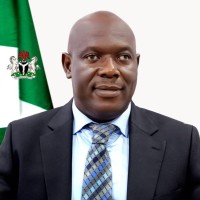
The Hydrocarbon Pollution Remediation Project (HYPREP) has commemorated the 15th anniversary of the release of the United Nations Environment Programme (UNEP) Environmental Assessment Report on Ogoniland, reaffirming its commitment to restoring the environment and improving the livelihoods of affected communities.
In a statement signed by the Project Coordinator, Prof Nenibarini Zabbey, to commemorate the anniversary, HYPREP described the anniversary as a significant milestone in Nigeria’s environmental restoration efforts, noting that the project has made remarkable progress in implementing the recommendations of the landmark UNEP report released on August 4, 2011.
The UNEP report had revealed extensive oil pollution across Ogoniland, severe environmental degradation, and serious public health risks resulting from decades of petroleum operations. It also recommended an initial $1 billion fund to commence the cleanup of the affected communities.
According to HYPREP, the Federal Government formally launched the Ogoni clean-up in 2016, while the Project Coordination Office was established in 2017 to drive the implementation of UNEP’s recommendations.
Zabbey said the current administration has continued to prioritise the project under the Renewed Hope Agenda.
Providing an update on the cleanup, the Project Coordinator disclosed that 30 of the 65 contaminated sites identified by UNEP have been fully remediated, while work is ongoing at several medium- and high-risk locations. It also stated that more than 1.5 million mangrove seedlings have been planted as part of what it described as the world’s largest restoration of oil-degraded mangroves, with over 1,000 hectares of shoreline already rehabilitated.
Zabbey further revealed that 49 Ogoni communities have been connected to potable water schemes through multiple water projects and booster stations aimed at providing safe drinking water across the region.
In the health sector, he said the 100-bed Ogoni Specialist Hospital in Kpite and the 43-bed Cottage Hospital in Buan are nearing completion, adding that several existing health facilities have been upgraded with modern medical equipment, while five ambulances have been donated to improve emergency healthcare services. The Project Coordinator also disclosed that a three-year human health biomonitoring study is being conducted in collaboration with the World Health Organization’s International Agency for Research on Cancer (IARC).
On economic empowerment, Zabbey stated that the Project has created more than 8,000 direct jobs and trained thousands of Ogoni youths and women in various vocational and technical skills, including software development, cybersecurity, aviation, commercial diving, seafaring, mechatronics, and creative arts. The project also reported awarding scholarships to more than 1,000 students, providing grants to small businesses, and supporting persons living with special needs through skills acquisition programmes.
The statement further highlighted ongoing legacy projects, including the Ogoni Power Project and the Centre of Excellence for Environmental Restoration, which it said is about 96 per cent complete. HYPREP also welcomed the recent designation of the Ogoni Wetland as a Ramsar Site of International Importance and pledged to continue promoting biodiversity conservation and sustainable management of the ecosystem.
Marking the anniversary, Zabbey said the progress achieved over the past 15 years demonstrates the collective commitment of government, development partners, stakeholders, and local communities to restoring Ogoniland. He called for renewed collaboration to sustain the cleanup effort, promote environmental sustainability, and support the long-term development of the region. 3
-

 News2 days ago
RSG Targets Nine Million Residents in Mosquito Net Distribution Campaign
-

 Oil & Energy1 day ago
Aiyedatiwa Signs New Electricity Bill
-

 Oil & Energy1 day ago
NLNG Commissions Research And Innovation Centre In RSU
-

 Maritime1 day ago
Marine Minister Commends President Tinubu On NPERA Bill Assent
-

 News2 days ago
KenPoly Holds Eight Convocations, August 29
-

 News2 days ago
RSG Begins Another Phase of Projects Commissioning Today
-

 News2 days ago
RMAFC Completes Revenue Sharing Review, Proposes New Pay
-

 Maritime1 day ago
NAGAFF Petitions IGP Over Alleged Maritime Police Harassment