
Nation
THE STATES

Adamawa
Sick persons in Mubi North Local Government of Adamawa now patronise private clinics due to the strike by medical and health workers.
The Nigeria Labour Congress (NLC) had on Monday embarked on an indefinite strike following disagreement with the state government over wages and improved working conditions.
A check by our correspondent at General Hospital, Mubi, showed that Out Patients Department (OPD), Emergency Unit and medical wards were shut, while some of the patients on admission had left.
The situation had forced residents to rely on the available private clinics for medical services.
One of the affected patients who gave his name as Doctor Makul, told newsmen that he had moved to a private clinic for treatment following the collapse of services at the General Hospital.
Bauchi
Participants at the end of a two-day workshop decried the failure by various levels of government to implement recommendations of various judicial commissions of inquiry on crises in the country.
The workshop organised by the Bauchi State Government had the theme “Fostering Peace in a Multi-Cultural and Multi-Religious Setting”.
The participants expressed the concern in a communiqué made available to newsmen in Bauchi last Friday.
They said that the non-implementation of such reports was partly responsible for the recurrence of such crises.
“Judicial Commissions of Inquiry should be balanced and fair to all sides and their reports should be fully implemented to serve as deterrence and to forestall future recurrence.
“States without such ongoing societal re-orientation programme should emulate the initiative of Bauchi State and establish a similar programme.
Benue
Participants at a two-day sensitisation workshop on sanitation and hygiene have expressed concern over the weak implementation of public health laws due to low political will and inadequate manpower.
In a communiqué issued at the end of the workshop on Friday in Markurdi, the participants also expressed concern over the poor coordination of sanitation and hygiene issues in the country.
The communiqué was jointly signed by Ifeoma Charles-Monwuba, National Coordinator of Water Supply and Sanitation Collaborative Council, an NGO, and Peter Cookey on behalf of other participant.
They noted that the challenge had undermined Nigeria’s efforts at achieving the MDGs target in the sector.
More than 100 women were screened for breast and cervical cancer on Saturday in Abuja.
The screening exercise was organised by “Stand up to Cancer Naija”, an Abuja-based NGO, as part of activities marking the 2010 Sister’s Convention of the Redeemed Christian Church of God (RCCG), Mega Parish, Abuja.
Some of the women told newmen that they were initially scared of the test because of the outcome of the result.
Mrs Zainab Mamman said she was initially scared of the screening but was, however, glad that she did the test.
Mrs Isimhanze Margaret said that she was not surprised to find that people were afraid to come for the test, explaining that lack of money to pay hospital bill prevented her from taking the test before now.
“The test is quite cheap here. I paid N1,000 to get the two tests done.
Kano
The Nigerian Railway Corporation (NRC) is to begin an Intra-city Train Service in Kano the Minister of Transport, Alhaji Yusuf Sulaiman has said.
Sulaiman disclosed this in Kano when he inspected facilities along the Kano-Challawa-Kano route of the proposed train service, recently.
He said the project was informed by government’s decision to ease transportation problems in the country by using the railway system.
According to him, the new train service will assist in decongesting traffic in Kano city for easy movement of people.
The minister, therefore, advised parents to allow their children to patronise the service.
Sulaiman disclosed that Intra-city Train Service would be introduced in six cities, Kano, Jos Maiduguri, Lagos, Enugu and Port Harcourt.
He said necessary work had been completed to commence the service in the six towns before the end of 2010.
Kebbi
To check deforestation in Kebbi State, the National Environmental Standards and Regulations Enforcement Agency (NESREA), has intensified its tree planting campaign.
The NESREA Coordinator in the state, Dr Ahmed Kasim, told newsmen on Friday in Abuja that the exercise was part of the campaign to safeguard the environment.
“The tree planting campaign is aimed at improving forest reserve, especially considering t hat trees will help to stem emission of carbon dioxide and other pollutants of the earth”, he said.
He said the campaign would be carried out in conjunction with the state government and the NYSC Club.
NESREA, he said, would take the campaign to secondary schools in the state to enable students imbibe the culture of planting trees.
He also stressed needs to carry out tree planting campaigns at local, state and federal levels to boost the boost the stock of trees in the country.
Kwara
The Kwara Government for Friday warned those involved in its FADAMA programme against fraudulent practices.
Governor Bukola Saraki gave the warning in Ilorin while flagging-off the FADAMA III programme.
He said those involved in the initiative should follow the procurement guidelines as well as ensure due process in their transactions.
He said his government had contributed its N40 million counterpart fund for the take off of the programme, adding that 10 councils benefited from FADAMA II.
In his remarks, Prof. Mohammed Yisa, the Commissioner for Agriculture and Natural Resources, said the ultimate objective of giving agriculture top priority was to ensure food security.
Yisa said agriculture would also help to create employment and attract investors in agribusiness and agro tourism.
He commended the World Bank for providing funds to alleviate poverty in the state.
Lagos
The scarcity and high cost of fresh tomatoes and pepper will linger till the end of the rainy season, Alhaji Haruna Muhammed, Chairman Mile 12 Market Management Committee, has said.
Muhammed told newsmen Friday in Lagos that the scarcity of the commodities was due to the rainy season.
He said that the current scarcity and high cost of food items in the country, was contrary to speculations by some people that it was as a result of the anticipated strike by traders in the north.
He said that the species of tomatoes and pepper currently in the market came from Jos, due to the cold weather in the city.
Muhammed said that other species of tomatoes and pepper were from Ibadan and Ghana, adding that these were the ones that consumers would be compelled to make use of till the end of the rainy season.
Oy Oyo
The Nigeria Union of Teachers (NUT), Lagos chapter, on Saturday warned of the implications of teachers in Oyo State going on strike over non-implementation of Teachers Salary Scale (TSS).
Our correspondent reports that teachers in Oyo State are on a warning strike to press home their demand for the implementation of the new enhanced salary agreement signed in August 2008.
The Secretary, NUT Lagos State, Mr. Jamiu Idris, told newsmen in an interview that the development in Oyo State was regrettable.
“I particularly feel bad about this development because Oyo State is the only state that is yet to implement the 27.5 per cent teachers’ enhancement salary scale (in the Southwest).
“It is unfortunate that the Oyo State Government has not been responsive enough when it comes to teachers’ welfare”, Idris said.
Ogun
The Police in Ijebu-Ode last Friday arraigned a 50-year-old woman, Comfort Okuneye, before an Ijebu-Ode Magistrate’s Court for allegedly failing to produce her son whom she stood surety for.
The Police Prosecutor, Insp. Temitope Babatunde, told the court that Okuneye had on March 23 at Obalende Police Station, Ijebu-Ode, volunteered to stand as a surety for her son, Bola Okuneye, who was alleged to have stolen N375,000.
Babatunde explained that Okuneye, who pledged to produce the suspect whenever he was needed, signed a bail bond of N400,000.
She explained that Okuneye’s failure to produce her son when he was needed led to her arrest and arraignment in court.
Okuneye, however, pleaded not guilty to the one-count charge.
The Defence Counsel, Mr. D.T. Fowodu, told the court to grant the accused person bail on liberal terms since the offence was bailable.
Plateau
The Plateau government has said that there is no going back on the ban on commercial motorcyclists, also known as okada.
A statement on Friday, in Jos, signed by the commissioner for Information and Communications, Mr Gregory Yenlong, said that anyone who defaulted would face appropriate sanctions.
The Plateau House of Assembly in May passed a bill prohibiting the use of motorcycles popularly called ‘okada’ for commercial purposes.
A Jos Federal high judgment on Thursday, dismissed a suit instituted by the Association of Commercial Motorcycle Riders of Nigeria (ACOMORAN) against the state government.
The court dismissed the suit on grounds that it would not stop the enforcement of the law which was enacted pursuant to the powers vested on the state government by the constitution.



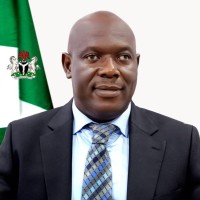
The Hydrocarbon Pollution Remediation Project (HYPREP) has commemorated the 15th anniversary of the release of the United Nations Environment Programme (UNEP) Environmental Assessment Report on Ogoniland, reaffirming its commitment to restoring the environment and improving the livelihoods of affected communities.
In a statement signed by the Project Coordinator, Prof Nenibarini Zabbey, to commemorate the anniversary, HYPREP described the anniversary as a significant milestone in Nigeria’s environmental restoration efforts, noting that the project has made remarkable progress in implementing the recommendations of the landmark UNEP report released on August 4, 2011.
The UNEP report had revealed extensive oil pollution across Ogoniland, severe environmental degradation, and serious public health risks resulting from decades of petroleum operations. It also recommended an initial $1 billion fund to commence the cleanup of the affected communities.
According to HYPREP, the Federal Government formally launched the Ogoni clean-up in 2016, while the Project Coordination Office was established in 2017 to drive the implementation of UNEP’s recommendations.
Zabbey said the current administration has continued to prioritise the project under the Renewed Hope Agenda.
Providing an update on the cleanup, the Project Coordinator disclosed that 30 of the 65 contaminated sites identified by UNEP have been fully remediated, while work is ongoing at several medium- and high-risk locations. It also stated that more than 1.5 million mangrove seedlings have been planted as part of what it described as the world’s largest restoration of oil-degraded mangroves, with over 1,000 hectares of shoreline already rehabilitated.
Zabbey further revealed that 49 Ogoni communities have been connected to potable water schemes through multiple water projects and booster stations aimed at providing safe drinking water across the region.
In the health sector, he said the 100-bed Ogoni Specialist Hospital in Kpite and the 43-bed Cottage Hospital in Buan are nearing completion, adding that several existing health facilities have been upgraded with modern medical equipment, while five ambulances have been donated to improve emergency healthcare services. The Project Coordinator also disclosed that a three-year human health biomonitoring study is being conducted in collaboration with the World Health Organization’s International Agency for Research on Cancer (IARC).
On economic empowerment, Zabbey stated that the Project has created more than 8,000 direct jobs and trained thousands of Ogoni youths and women in various vocational and technical skills, including software development, cybersecurity, aviation, commercial diving, seafaring, mechatronics, and creative arts. The project also reported awarding scholarships to more than 1,000 students, providing grants to small businesses, and supporting persons living with special needs through skills acquisition programmes.
The statement further highlighted ongoing legacy projects, including the Ogoni Power Project and the Centre of Excellence for Environmental Restoration, which it said is about 96 per cent complete. HYPREP also welcomed the recent designation of the Ogoni Wetland as a Ramsar Site of International Importance and pledged to continue promoting biodiversity conservation and sustainable management of the ecosystem.
Marking the anniversary, Zabbey said the progress achieved over the past 15 years demonstrates the collective commitment of government, development partners, stakeholders, and local communities to restoring Ogoniland. He called for renewed collaboration to sustain the cleanup effort, promote environmental sustainability, and support the long-term development of the region. 3
-

 News2 days ago
RSG Targets Nine Million Residents in Mosquito Net Distribution Campaign
-

 Oil & Energy2 days ago
Aiyedatiwa Signs New Electricity Bill
-

 Oil & Energy2 days ago
NLNG Commissions Research And Innovation Centre In RSU
-

 Maritime2 days ago
Marine Minister Commends President Tinubu On NPERA Bill Assent
-

 News2 days ago
KenPoly Holds Eight Convocations, August 29
-

 News2 days ago
RSG Begins Another Phase of Projects Commissioning Today
-

 News2 days ago
RMAFC Completes Revenue Sharing Review, Proposes New Pay
-

 Maritime2 days ago
NAGAFF Petitions IGP Over Alleged Maritime Police Harassment