
Nation
THE STATES


Adamawa
The Adamawa State Police Command has inaugurated
the state chapter of Eminent Persons Forum to assist the command in promoting peace and security.
The state’s Commissioner of Police, Mr Musa Kimo, at the inauguration in Yola, urged members of the forum to partner with the police in intelligence gathering, crime prevention and detection in their communities.
Kimo also urged members of the forum to facilitate interaction between the public and the police to boost confidence and develop local knowledge.
He said “you are also expected to harness logistic support to facilitate the operations of police in your domain.”
In his remarks, the Speaker, Adamawa House of Assembly, Alhaji Kabiru Mijinyawa, and other members of the forum declared their commitment to work for the success of the forum.
Benue
The police have mobilised in full force to tackle the orgy
of violence and deadly cult clashes in Benue State, a top police officer announced in Makurdi.
Assistant Inspector-General of Police in-charge of Zone 4 Headquarters, Makurdi, Agboola Oshodi-Glover, made the disclosure in an interview with newsmen.
He said that the police had risen to the challenge and would stamp out the persistent violence in Benue State in no time.
Speaking against the backdrop of recurring cult killings in the state, Agboola Oshodi-Glover, assured that the police had capacity to tackle the rising crime wave in the state.
Benue, where herdsmen have repeatedly killed hundreds of people in recent times, has also seen recurring deadly cult clashes among university students.
Borno
The United Nations Children’s Fund (UNICEF) has called
on the Federal Government to provide intensive support for the 21 released Chibok girls to safeguard their future.
The group made the call in a statement signed by its Country Representative, Mr Gianfranco Rotigliano and made available to newsmen in Maiduguri.
He also said that the more than 200 Chibok girls abducted by Boko Haram in April 2014 were among thousands of women and girls that UNICEF estimated had been held and subjected to violence by the group.
“UNICEF has supported hundreds of women and girls who have already been released or escaped from Boko Haram.
“The girls’ report that they have been subjected to rape – frequently in the form of forced marriages – beatings, intimidation and starvation during their captivity. Many returned pregnant or with babies as a result of rape”, he added.
Gombe
The All Farmers Association of Nigeria (AFAN), Gombe
State chapter, has commended the intervention of the Federal Government in tackling the menace of migratory Quelea birds on farms in the state.
The AFAN Secretary, Alhaji Gambo Sarkin-Noma, told newsmen in Gombe that the Federal Ministry of Agriculture had initiated aerial survey and control of the birds.
Sarkin-Noma said that the intervention had saved farmers affected by ravaging birds from colossal financial losses.
According to him, farmers in the state are now happy and anticipate recording bumper harvest this year despite the high cost of fertilizer.
Kaduna
The Deputy Governor of Kaduna State, Barnabas Bantex,
has said that the solution to the unending crisis at Godogodo in Jemaa Local Government is in the hands of the warring parties and stakeholders of the area.
Bantex said this when he took delivery of relief materials from the National Emergency Management Agency (NEMA) for persons displaced by the crisis.
He attributed the security challenge to poverty and idleness, and said the state government was doing everything possible to create job opportunities to absorb idling youths to stem the menace.
Katsina
The Katsina State Government in collaboration with
Nigerian Meteorological Agency (NiMET), has developed an android weather prediction software to guide farmers in the State.
The Managing Director, Katsina State Agricultural Development Programme, Mr Ibrahim Musawa, made this known in an interview with newsmen in Katsina.
He said the software was capable of accurately predicting when rain would begin, the volume of rain being expected and when the rain would stop in the 34 local government areas of the state.
Kogi
Bill and Melinda Gates Foundation (BMGF) in collabo
ration with relevant stakeholders is to translate the Federal Government’s agricultural policies into reality towards driving the agriculture as business initiative.
Senior Programme Officer and Regional Advisor, Seattle, United States (U.S) office of the Foundation, Dr Jacob Mignouna, disclosed this at a meeting with stakeholders and Kogi State Agriculture Vision Group (AVG) organised by Synergos Nigeria in Lokoja, the state capital.
Mignouna stressed the need to translate government policies on agriculture into reality and make them effective at state and local government levels for farmers, especially for rural communities to derive maximum benefits.
Kwara
Seventeen students loitering and wandering during
School hours have been arrested by the Kwara State Anti-Loitering Team.
Commissioner for Education and Human Capital Development, Alhaji Musa Yeketi, who paraded the students in Ilorin, warned that government would not tolerate indiscipline.
He called on principals and head teachers of various schools to take proper charge of their students and pupils.
Yeketi said that the state government, in fulfilling its campaign promises, would ensure education for all.
Some of the arrested students include students from Government Day Secondary School, Adeta and United Secondary School, Bani Secondary School, Government Girls Day Secondary School, Pakata, Mandate Secondary School, Okelele Secondary School and Sheikh Abdul Salam College.
Nasarawa
The Nasarawa State Government says the massive con
struction of bridges across the state would help in fighting poverty, boosting socio-economic activities and improving revenue generation.
State Commissioner for Works and Housing, Mr Godwin Danladi-Makeri, stated this while inspecting the ongoing construction of Bokoko Bridge in Kokona local government area of the state.
This is to help fight poverty, youths restiveness, unemployment as well as crimes and discourage rural-urban migration,” he said.
Niger
Catholic Bishop of Minna Diocese, Martins Uzoukwu,
has called on Nigerians to sacrifice one hour of their time for special prayers to God, to end Nigeria’s economic recession.
“We need God intervention to holistically confront militancy, cattle rustling, insurgency and kidnapping and in enhancing peace, progress and political stability,” he said in an interview with newsmen in Minna.
He said that prayers for divine intervention would pave way for massive economic growth in the country.
Uzoukwu explained that Nigerians irrespective of their religious, ethnic and political differences should support their leaders with prayers to ensure good governance.
Ogun
Ogun State Government has, says it has rehabilitated
no fewer than 126 destitute and reunited them with their families since the beginning of the year.
It also said that it rescued four vagrants on the streets and returned them to their states.
The Director, Social Welfare Service, Ministry of Women Affairs and Social Development, Mr Olumide Sotubo, made this known in an interview with newsmen in Abeokuta.
Sotubo said that the measures were part of the government’s efforts at ridding the state of destitute and other mentally unstable persons across the state.
Osun
A former Chairman of Ife East Local Government Area
of Osun State, Chief Gbenga Owolabi, has commended the Ooni of Ife, Oba Adeyeye Ogunwusi, for modernising the 2016 edition of the Olojo festival through technology.
Owolabi gave the commendation while speaking with newsmen on the sidelines of the grand finale of the Olojo festival in Ile-Ife.
He said this year’s festival was “unique and extraordinary’’ by the way the Ooni had modernised it.
“ This brings a new dawn and new beginning to the cradle of the Yoruba,’’ he said.
Owolabi also commended the monarch for prioritising Yoruba culture as well as promoting peace and unity among traditional rulers and the entire Yoruba race.
Oyo
Governor Abiola Ajimobi of Oyo State, has assented to
the bill creating 35 Local Council Development Areas (LCDAs) in the state.
The Commissioner for Information, Culture and Tourism, Mr Toye Arulogun, said this while briefing newsmen in Ibadan.
He said that the bill, which was enacted by the state House of Assembly, gave legal backing to the creation of LCDAs in the state.
Ajimobi, he said, assented to the bill on October 6. after extensive deliberations on the legislation by the state house of assembly.
He said that a committee would be set up to formulate the modalities for the smooth take off of the LCDAs.



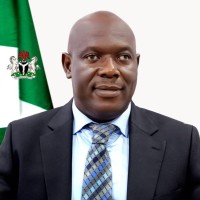
The Hydrocarbon Pollution Remediation Project (HYPREP) has commemorated the 15th anniversary of the release of the United Nations Environment Programme (UNEP) Environmental Assessment Report on Ogoniland, reaffirming its commitment to restoring the environment and improving the livelihoods of affected communities.
In a statement signed by the Project Coordinator, Prof Nenibarini Zabbey, to commemorate the anniversary, HYPREP described the anniversary as a significant milestone in Nigeria’s environmental restoration efforts, noting that the project has made remarkable progress in implementing the recommendations of the landmark UNEP report released on August 4, 2011.
The UNEP report had revealed extensive oil pollution across Ogoniland, severe environmental degradation, and serious public health risks resulting from decades of petroleum operations. It also recommended an initial $1 billion fund to commence the cleanup of the affected communities.
According to HYPREP, the Federal Government formally launched the Ogoni clean-up in 2016, while the Project Coordination Office was established in 2017 to drive the implementation of UNEP’s recommendations.
Zabbey said the current administration has continued to prioritise the project under the Renewed Hope Agenda.
Providing an update on the cleanup, the Project Coordinator disclosed that 30 of the 65 contaminated sites identified by UNEP have been fully remediated, while work is ongoing at several medium- and high-risk locations. It also stated that more than 1.5 million mangrove seedlings have been planted as part of what it described as the world’s largest restoration of oil-degraded mangroves, with over 1,000 hectares of shoreline already rehabilitated.
Zabbey further revealed that 49 Ogoni communities have been connected to potable water schemes through multiple water projects and booster stations aimed at providing safe drinking water across the region.
In the health sector, he said the 100-bed Ogoni Specialist Hospital in Kpite and the 43-bed Cottage Hospital in Buan are nearing completion, adding that several existing health facilities have been upgraded with modern medical equipment, while five ambulances have been donated to improve emergency healthcare services. The Project Coordinator also disclosed that a three-year human health biomonitoring study is being conducted in collaboration with the World Health Organization’s International Agency for Research on Cancer (IARC).
On economic empowerment, Zabbey stated that the Project has created more than 8,000 direct jobs and trained thousands of Ogoni youths and women in various vocational and technical skills, including software development, cybersecurity, aviation, commercial diving, seafaring, mechatronics, and creative arts. The project also reported awarding scholarships to more than 1,000 students, providing grants to small businesses, and supporting persons living with special needs through skills acquisition programmes.
The statement further highlighted ongoing legacy projects, including the Ogoni Power Project and the Centre of Excellence for Environmental Restoration, which it said is about 96 per cent complete. HYPREP also welcomed the recent designation of the Ogoni Wetland as a Ramsar Site of International Importance and pledged to continue promoting biodiversity conservation and sustainable management of the ecosystem.
Marking the anniversary, Zabbey said the progress achieved over the past 15 years demonstrates the collective commitment of government, development partners, stakeholders, and local communities to restoring Ogoniland. He called for renewed collaboration to sustain the cleanup effort, promote environmental sustainability, and support the long-term development of the region. 3
-

 News2 days ago
RSG Targets Nine Million Residents in Mosquito Net Distribution Campaign
-

 Oil & Energy2 days ago
Aiyedatiwa Signs New Electricity Bill
-

 Maritime2 days ago
Marine Minister Commends President Tinubu On NPERA Bill Assent
-

 Oil & Energy2 days ago
NLNG Commissions Research And Innovation Centre In RSU
-

 News2 days ago
KenPoly Holds Eight Convocations, August 29
-

 News2 days ago
RSG Begins Another Phase of Projects Commissioning Today
-

 News2 days ago
RMAFC Completes Revenue Sharing Review, Proposes New Pay
-

 Maritime2 days ago
NAGAFF Petitions IGP Over Alleged Maritime Police Harassment