Connect with us

Oil & Energy

PH Residents React To Petrol Price Preduction

Published

on

Since last week when
the Federal Government announced a reduction of N10 from the official price of the petrol pump price, in response to the fall in crude oil price at the global market, divergent views have continued to trail the action of the government.
Our correspondent who spoke with some of the residents reports that while some commend the reduction, others see it as a new campaign strategy of President Goodluck Jonathan to secure popularity and victory in next month’s general election, yet others feel reducing the pump price from N97 to N87 per litre was insignificant and not commensurate with the more than 50% fall of crude oil price in world market.
An economist and social analyst, Mr Jefat Edum, is of the view that the N10.00 reduction is quite insignificant compared to the big fall of crude oil price that is drastically devastating  economies of oil-producing nations in the world.
“You can see the cries and woes of most companies in the sector and huge negative impact on the economies of oil-producing nations. One had expected that any slash in the petrol price should be significant to at least the point that it would reduce the cost of transport fares paid by Nigerians,” he said.
Edum is worried that with over 50 per cent drop in crude oil price, at least N35.00 should be reduced, so that one litre can go for at most N52.00 and this would further enable transporters meaningfully reduce the fares charged Nigerians.
You can see the effect of the reduction is not felt at all because it has not reflected on the prices of fare as much as the crude oil price fall is impacting on oil-producing nations.
He urged the Federal Government to revisit the reduction and slash more so that a litre of petrol can sell for N55 or N62 for the interest of Nigerians.
Another respondent, Dr. Donald Alozie picked holes with the way and manner government arrived at the N10 reduction.
Alozie disagreed with the sidelining of other stakeholders in the reduction. “Imagine the Trade Union Congress and oil marketers opposing the reduction. That means that these two important stakeholders were not properly consulted and their inputs were not in such a crucial decision which impacts heavily on Nigerians.
He described the government’s decision and approach as undemocratic and should therefore be reviewed so that a more acceptable level of reduction is achieved.
“Government cannot just wake up one morning and make such decision without proper consultations with other stakeholders in the sector.”
He criticized the refusal of some petroleum marketers in Nigeria to revert to the new pump price.
But Tunde John, a Port Harcourt-based businessman said the reduction is in order. “It is a show of magnanimity of the government to announce price reduction of petrol pump price promptly without allowing a build up of sentiments that could have resulted in mass actions.”
John lauded the Federal Government’s action but cautioned that, “the N10 reduction should not be seen to be the last action. The trend should be studied and further actions which may require more readjustments be made.”
Also speaking in a similar tune, a taxi driver, Macleans Anderson said, “the reduction is a proof of government’s sensitivity to the plights of the people.
According to him, “all we have been hearing for the past decades is increase in petrol price but it is a thing of joy that the President Jonathan-led Federal Government broke the jinx by reducing the burden on Nigerian masses. I commend the government for doing that.”
Anderson views the refusal of petrol marketers in other parts of Nigeria as sabortage and urged the Directorate of Petroleum Resources (DPR) to take more drastic actions against defaulters.
“The marketers cannot be bigger than the Federal Government. Slash in petrol price was taken in the interest of Nigerian masses and any attempt by marketers to reject the order should be viewed as a move against the people and government and must be resisted,” he maintained.
But a political colouration was given to the order by Chief Mathias Njoku. “If you look at the timing, you will see that because the president is desperate now to return for a second term, he has decided to make the reduction few weeks to the election time.
“Yes, we know that oil price has fallen in the global market but this has been on since last year, why did it take the Federal Government this long to take such decision,” he querried.
Nkoku said the aim of Federal Government is to win the sympathy of some gullible Nigerians whose votes he desperately needs to return himself and his party to power.
However, to Etim Clement, a trader, “government has done well. Let the taxi and bus drivers also reduce their fares. Petrol now costs less, and what it means is that the transporters should equally reduce their charges otherwise the reduction is meaningless.”
Clement also wants reduction in other products such as kerosene, and gas since they are products of crude oil. “As the price of crude oil drops, not only petrol price should drop, let others as kerosene and gas also reduce.”
He particularly appealed to marketers in Aba, Calabar and other cities that have refused to readjust to be selling at the new pump price.
Clement advised the government to take steps that could improve the agricultural sector so that sector so that most Nigerians who lost their jobs in the oil companies as a result of the fall in crude oil price as well as other unemployed youths can be engaged in meaningful economic activities.
He regretted that Nigerian’s past leaders failed to plough back oil money to agriculture and other sectors for the economic development of the nation instead of concentrating on oil for national earnings.
“Inability to properly diversify our economy has remained our major problem in the country. Those involved in agriculture should be encouraged. Apart from providing employment and creating wealth, it would boost our foreign exchange base,” he noted.
The Petroleum Products Pricing Regulatory Agency (PPPRA), in defending the new pump price of petrol said it considered the fundamental trends in global crude oil market before arriving at the N10 reduction.
Executive Secretary of the agency, Mr Ahmed Farouk, who disclosed this in Abuja said even with the N87.00 per litre, the government was still subsidizing it with N2.50 per litre.
He explained that in determining the new price, government considered the economic implications on an average Nigerian.


Chris Oluoh
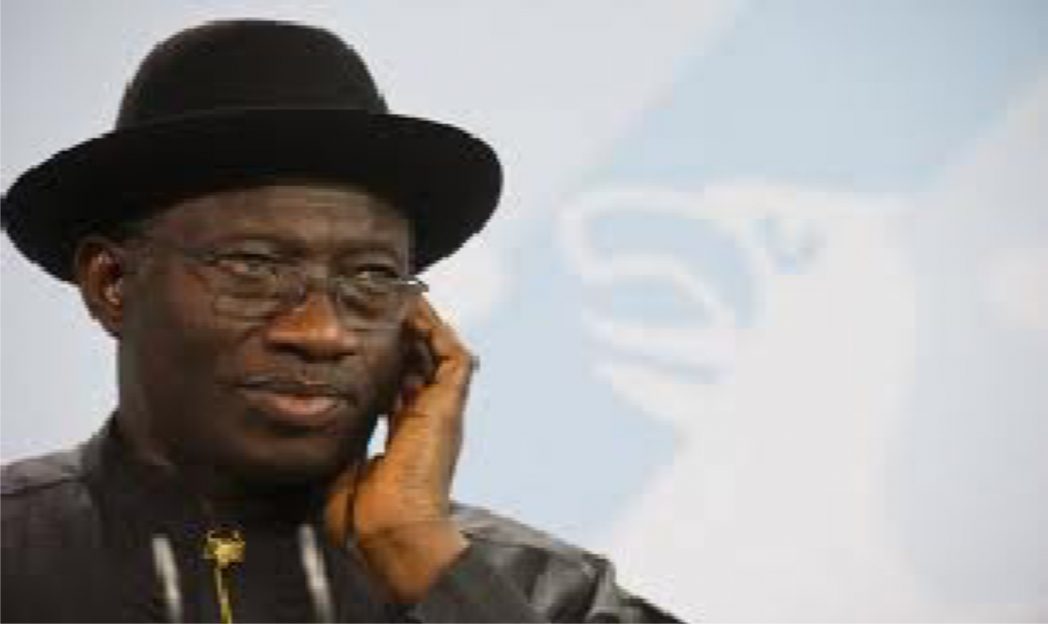
President Goodluck Jonathan

President Goodluck Jonathan

Continue Reading

Oil & Energy

Electricity Consumers Laud Aba Power for Exceeding 2025 Meter Rollout Target

Published

on

Nigeria’s newest Electricity Distribution Company (DisCo), Aba Power, has gained consumers’ commendation for the provision of more smart meters than the other 11 Discos in the country combined in 2025.
The Electricity Consumers Association of Nigeria (ECAN), Southeastern Zone, gave the commendation in a statement signed by it’s Chairman, Engr.Joe Ubani, and Secretary, Comrade Chris Okpara, and  issued at the end of its first 2026 Executive Committee meeting, held in Abakaliki, the Ebonyi State capital, at the weekend.
The statement revealed that all 12 DisCos in Nigeria provided 175,302 meters under the Meter Asset Provider (MAP) scheme and 44,104 prepaid meters under the vendor-financed framework as of the third quarter of 2025.
It said “Aba Power alone gave end-users over 100,000 smart meters by the end of last September.This means that Aba Power exceeded its 2025 target of giving its customers 100,000 smart meters by 2025, which many analysts thought was a stretch goal, meaning something that was initially thought to be impossible.
“More importantly, the data shows that Aba Power, despite being Nigeria’s youngest DisCo and the smallest in terms of population and geographical spread as it covers only nine of the 17 local government areas (LGAs) in Abia State, provided more prepaid meters than the other 11 DisCos combined”.
Citing figures sent monthly to NERC by the Head of the metering team at Aba Power, Engr. Alfred Atega, ECAN noted that the other 11 DisCos were carved out of the defunct Power Holding Company of Nigeria (PHCN) and got privatized in November 2013, stating though that the Nigerian government retains 40% shares in each.
The association disclosed that Aba Power was able to provide 122, 464 prepaid meters by the end of last year through vendor-finance arrangements with four Chinese and Nigerian metering firms adding that it supplied 116,883 single-phase meters and 5,581 three-phase meters.
Quoting the Aba Power senior brand and communication manager, Edise Ekong, ECAN explained that this utility metered all 122,464 customers from 27 feeders in and around Aba, Abia State’s economic nerve-centre.
According to the statement, Ekong said “We have actually since this year increased the number of metered customers to 133,000”, stated Ekong, also an engineer, according to ECAN.
“Work is progressing on three feeders, namely, the Omoba Feeder, the Geometric Feeder, and the Polymer Feeder as they have system issues.
“The customers on these feeders will be metered once repair and rehabilitation work on them is concluded”.
Continue Reading

Oil & Energy

NUPRC Unveils Three-pillar Transformative Vision, Pledges Efficiency, Partnership 

Published

on

The Nigerian Upstream Petroleum Regulatory Commission (NUPRC), has unveiled Its vision for the country’s upstream sector.
This transformative vision rests on three pillars of Production Optimization and Revenue Expansion; Regulatory Predictability and Speed; and Safe, Governed and Sustainable Operations.
The Chief Executive, NUPRC, Mrs Oritsemeyiwa Eyesan, who disclosed this at a stakeholders meeting with members of the Oil Producers Trade Section (OPTS), the Independent Petroleum Producers Group (IPPG), emerging players and other major stakeholders in the oil and gas industry, in Lagos, recently, said this aligns with President Bola Ahmed Tinubu’s renewed hope agenda and his plan to hit a production target of 2mbpd by 2027 and 3mbpd by 2030.
Eyesan plans on increasing production and revenue expansion through the recovery of shut-in volumes with economic value, arresting decline, reducing losses, and accelerating time-to-first oil—without increasing burdens or transaction cost.
This, she said, had already begun by recently “turning on the light” in a long shut-in asset.
Eyesan explained that regulatory predictability and speed can be achieved by running regulation like a service, enforcing rules transparently and making quick time-bound decisions.
The new NUPRC boss plans to strengthen governance, process safety, host community outcomes, and encourage decarbonisation through safe, governed and sustainable operations.
“Going forward, the Commission will be measured on the following key success metrics -Faster, predictable regulatory approvals, higher, more secure and sustainable production, credible licensing and disciplined acreage performance, world-class Health, Safety and Environment (HSE) and process safety outcomes, trusted measurement, transparency, governance and data integrity,” she said.
Eyesan promised that under her leadership, the NUPRC would enhance regulatory efficiency and predictability by publishing Service Level Agreements (SLAs) for all major approvals adding that the timeline to production would be reduced through proactive discussions regarding all necessary approvals, implementation of stage-gate processes, and mutual agreement on timelines with the commission.
She said “Stakeholders are encouraged to submit their projects for consideration. For matured opportunities, please submit your request latest end of Q1, 2026. This would provide a simplified and holistic framework that creates obligations for both operators and the Commission.
“The Commission will launch a digital workflow for permitting, reporting and data submissions. NUPRC will work with the industry to identify capacity gaps and develop tiered intervention in the most critical areas with immediate impact on regulatory efficiency while we harmonize our own internal processes to eliminate conflicting regulatory actions and reduce friction”.
She revealed that the NUPRC’s internal transformation programme through a project Management office is in flight saying “I will provide more details on this in the coming days”.
The NUPRC boss also convened a CCE–Operators Leadership Forum for monthly engagement with participants including all operators of NNPC, OPTS, IPPG, and emerging players adding that it would be focused on approval timelines, production restoration, infrastructure integrity, and gas monetisation and development.
“This is expected to enable the NUPRC to identify systemic bottlenecks and provide greater predictability”, she said .
Eyesan also stressed the need to improve hydrocarbon accounting and measurement by tracking every barrel produced and promptly addressing discrepancies or losses.
On host community, the NUPRC boss encouraged all operators to liaise with the commission “as we plan first engagement with host community leaders to reaffirm commitment to HCDT (Host Community Development Trust) implementation”.
She also said one of her key goals is to ensure 100% to the Petroleum Industry Act within 12 months. This, she said, will be monitored with a dedicated team situated in her office.
“The commission going forward will issue quarterly progress reports. Let therefore bring all high impact shut in fields for approval. “On the Commission’s part, a 90-day program to fast track approvals for near-ready FDPs, well interventions, rig mobilisation and other quick-win opportunities have commenced,” the CCE stated.
Continue Reading

Oil & Energy

Collective National Prosperity Is Our Driving Force – NNPCL

Published

on

The Group Chief Executive Officer, Nigerian National Petroleum Company  Limited, Engr. Bashir Bayo Ojulari, has reaffirmed the company’s national mission, saying collective national prosperity shall be the driving force of the energy firm.
In his New Year message to staff, tagged ‘We Achieved. We Drive The Future’, Ojulari set the tone for 2026 priorities reflecting on strong delivery despite global energy volatility.
According to him, in 2025, the country recorded significant landmarks in oil exploration and production.
In his words, “Exploration and production achieved a record 355 thousand barrels of oil per day — the highest level since 1989,”
“We advanced production through Madu First Oil, Soku Pipeline optimisation, and the Akpo West Start-up, while commissioning Gbaran Nodal Compression Train.
“We reached major infrastructure milestones with the commissioning of the ANOH-OB3 pipeline and the successful AKK River Niger crossing.
“NNPC Retail expanded its footprint into the West African sub-region with our lubricant brand, Oleum.
“We successfully hosted the first-ever NNPC Group Earnings Call, announcing our audited 2024 financial results.
“We strengthened employee well-being through a much-improved compensation package. We welcomed 1,000 Tigers into our organisation to intentionally build the next generation of NNPC leaders.”
Explaining the success method of the company, the GCEO listed board and staff members as the major forces.
He said “Our Board showed visible support for execution excellence by approving the new Delegation of Authority and Delegation of Financial Authority frameworks to improve efficiency and empower leadership across the business.
“Behind each of these milestones are our people—your expertise, your judgement, and your belief in the potential of our organisation. These accomplishments belong to all of us collectively, and each of us should proudly identify with these great strides. Across every directorate, asset, and office, your collaboration, ownership, and commitment remain the true foundation of our success,” he said.
Disclosing the corporation’s future plans, Ojulari noted that although the previous initiative, the “’Fit-For-Future’ transformation imperatives established in the second half of 2025, had ensured a stronger foundation and a clearer focus for its operations in 2026, the new year would be anchored on four strategic attributes—Execution Excellence, Profitable Growth, Partner of Choice, and Enterprise-First Mindset.
On execution excellence, Ojulari promised to “deliver results with discipline and speed by applying a more effective cadence — setting clear rhythms for planning, execution, and review. By prioritising critical tasks and systematically driving execution, we will identify risks early, enable data-backed decisions, ensure clear accountability for outcomes, and achieve consistent operational excellence.”
Ojulari assured profitable growth by embracing robust partnerships adding that NNPC Limited is committed to “pursuing intentional and value-driven growth. By focusing on the right projects and investments, strengthening efficiency and applying commercial rigour, we will grow profitably and responsibly, delivering sustainable returns for NNPC Limited and long-term value for our ultimate stakeholders — Nigerians”.
“We seek to earn trust as a dependable, transparent, and performance-driven partner. By keeping our word, working transparently, and acting with integrity, we will deepen relationships with joint venture partners, investors, contractors, and host communities, unlocking greater value and accelerating delivery. Our partnerships will reflect who we are and what we stand for.”
On the new strategy of developing an enterprise-first mindset among staff and partners, Ojulari said NNPC Limited must remain focused on its goals.
“We must continue to think and function as one enterprise — deepening professionalism, functional excellence, and talent development. We must entrench collaboration above silos, promote shared success over individual wins, and embrace a mindset that prioritises long-term impact over short-term gains.
“This way, we ensure that we move faster, execute better, and achieve more together.
“As we embrace 2026, let us do so with a renewed sense of purpose, confidence in our collective capability, and pride in the difference we are making. I am excited and believe you equally are about the journey and opportunities ahead of us”, he stated.
By: Lady Godknows Ogbulu
Continue Reading

Trending