
Health
Benefits of Sleep to Health



The Federal Government has begun a scheme to battle malnutrition in children.
Tagged, “Nutrition 774 Initiative”, the programme was unveiled by Vice President Kashim Shettima as it falls within a framework for the Federal Government’s comprehensive vision for a nationwide nutrition programme to address malnutrition and food insecurity in Nigeria.
The proposed programme, “Nutrition 774 Initiative,” aims to improve nutritional outcomes across all 774 local government areas (LGAs) in the country.
Speaking yesterday during a roundtable with development partners at the Presidential Villa, Abuja, VP Shettima said the initiative aligns with President Bola Ahmed Tinubu’s broader focus on food security and availability across Nigeria.”The priority with which His Excellency, President Bola Ahmed Tinubu, has pursued food availability has gone hand-in-hand with our commitment to eradicating malnutrition.
“Our aspiration as a nation goes beyond the mere abundance of food in our barns and warehouses. We cannot claim victory unless there is certainty that each household across Nigeria has access to the preferred and prescribed diets essential for a healthy life,” the vice president stated.
It would be recalled that the 144th meeting of the National Economic Council (NEC) had in September endorsed the Nutrition 774 programme as a primary platform for combating malnutrition within Nigerian communities.
The council encouraged development partners to provide financial and technical assistance to support this initiative.
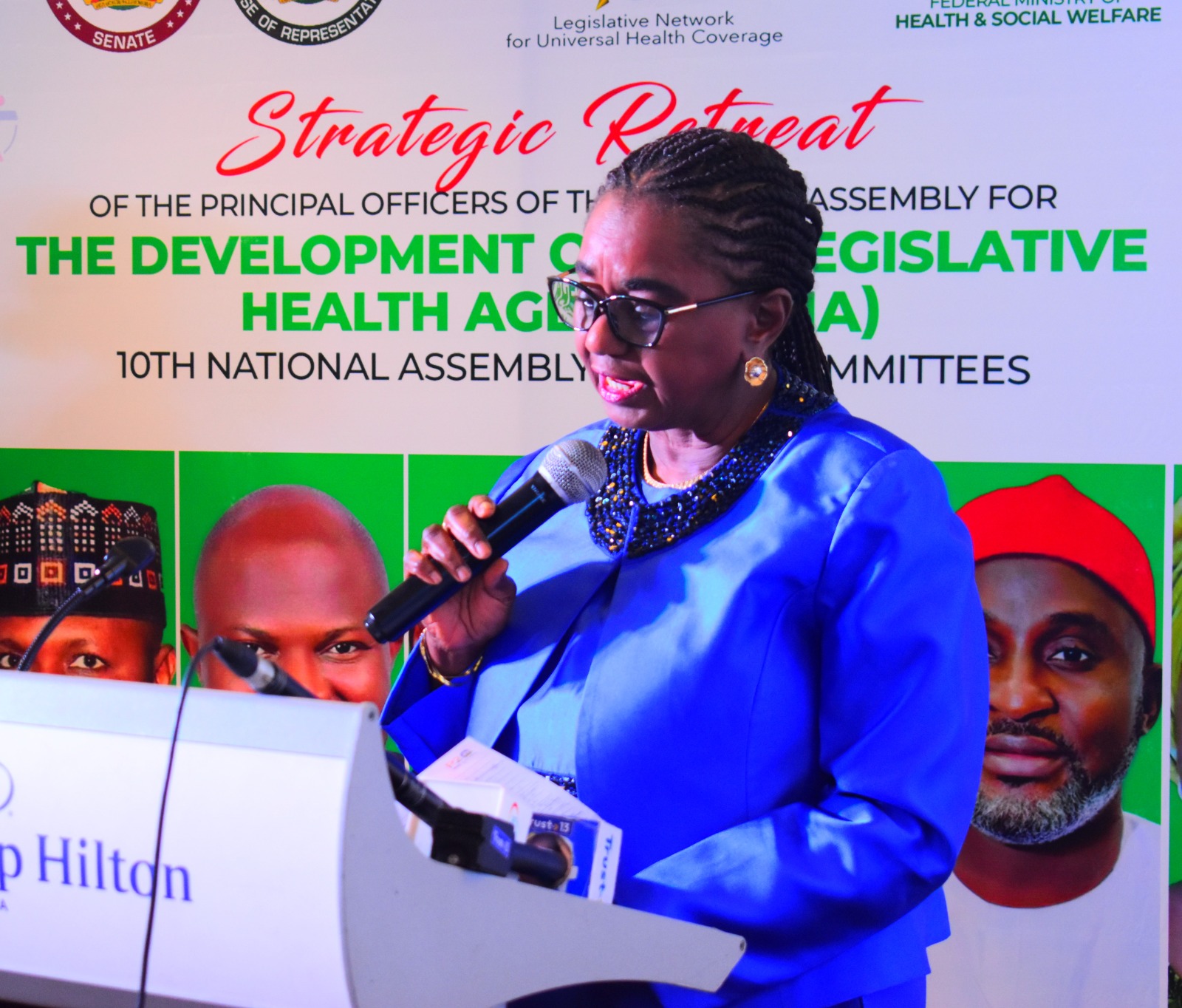
The importance of e-Health devices and digital health solutions in improving Nigeria’s healthcare system has been emphasised by Senator Ipalibo Harry Banigo, Chairman of the Senate Committee on Health, Secondary and Tertiary.
She also stressed that health is a multilayered activity and a multisectoral collaboration that requires legislators to work together to provide legislation, implement policies, and track funds effectively.
Banigo, who represents Rivers West Senatorial District in the National Assembly, made these remarks at the 5th Annual Legislative Summit on Health in Abuja, themed “Improving Legislative Stewardship and Accountability for Universal Health Coverage.”
She highlighted the potential of eHealth devices, especially given Nigeria’s large population and limited healthcare professionals.
“We can develop platforms that can be accessed through simple phones, even in remote villages, to provide health education and interventions,” she said.
“We are not talking about highfalutin things; we are talking about what will impact communities at the grassroots level, particularly pro-poor initiatives that will benefit vulnerable populations.”
Banigo also emphasized the importance of accountability and effective care, encouraging legislators to share knowledge, engage in peer reviews, and exchange information to achieve better health outcomes.
She recalled the cholera outbreak, where basic health education and interventions could have been delivered via mobile phones, preventing preventable deaths.
The 5th Annual Legislative Summit on Health brought together federal and state legislators, the Coordinating Minister of Health and Social Welfare, Prof. Muhammad Pate, the World Health Organisation’s representative in Nigeria, Dr. Walter Mulombo, and other dignitaries.
The World Health Organisation (WHO) says it is targeting 1 billion more people to enjoy better health and well-being will by 2025.
The plan it said is driven primarily by improvements in air quality and access to water, sanitation and hygiene measures.
Meanwhile, the body has listed it achievements in a Report of 2023, the most comprehensive to date.
The report showcases achievements of key public health milestones by the world health apex agency even amid greater global humanitarian health needs driven by conflict, climate change and disease outbreaks.
The report is expected to be released ahead of the 2024 Seventy-seventh World Health Assembly, which runs from 27 May, 1st June, 2024.
WHO revised Programme Budget for 2022–2023 was US$ 6726.1 million, incorporating lessons learned from the pandemic response and addressing emerging health priorities.
With 96percent of WHO country offices providing 174 country reports on achievements, the report shows some progress towards 46 targets and highlights some challenges.
“The world is off track to reach most of the triple billion targets and the health-related Sustainable Development Goals,” said Dr. Tedros Adhanom Ghebreyesus, WHO Director-General. “However, with concrete and concerted action to accelerate progress, we could still achieve a substantial subset of them. Our goal is to invest even more resources where they matter most at the country level while ensuring sustainable and flexible financing to support our mission.”
The report shows advancement in several key areas, including healthier populations, Universal Health Coverage (UHC), and health emergencies protection.
Related to healthier populations, the current trajectory indicates the target of 1 billion more people enjoying better health and well-being will likely be met by 2025, driven primarily by improvements in air quality and access to water, sanitation and hygiene measures.
In terms of UHC, 30percent of countries are moving ahead in coverage of essential health services and providing financial protection. This is largely due to increased HIV service coverage.
Regarding emergencies protection, though the coverage of vaccinations for high-priority pathogens shows improvement relative to the COVID-19 pandemic-related disruptions in 2020–2021, it has not yet returned to pre-pandemic levels.
The Pandemic Fund’s first disbursements totaled US$ 338 million in 2023, supporting 37 countries to fund the initial response to acute events and scale up life-saving health operations in protracted crises. WHO continues to work with countries and partners to enhance genomic sequencing capabilities and strengthen laboratory and surveillance systems worldwide with capacity increased by 62percent for SARS-CoV-2 between February 2021 and December 2023.
It said one of the achievements is the world’s first malaria vaccine, RTS,S/AS01 administered to more than two million children in Ghana, Kenya, and Malawi during the biennium, reducing mortality by 13% among children eligible for vaccination. WHO’s prequalification of a second vaccine, R21/Matrix-M, is expected to further boost malaria control efforts.
The first-ever all-oral treatment regimens for multi-drug-resistant tuberculosis were made available in 2022, allowing the highest number of people with tuberculosis to get treatment since monitoring began almost 30 years ago.
-

 News7 hours ago
Court Sentences Seven To Death Over Murder Of Cleric In Rivers
-

 Politics4 hours ago
APC PRIMARIES: FUBARA’S WITHDRAWAL, HISTORIC SACRIFICE FOR NATIONAL STABILITY ……. GROUP
-

 News16 hours ago
Group Hails Tinubu, Chinda Emergence
-

 Comment8 hours ago
Rivers @59: Progress Through Tough Times
-

 Politics4 hours ago
IPAC Flays INEC Over Election Guidelines Judgement
-

 Sports4 hours ago
NPFL: Rivers United Finishes Second, Secures Continental Ticket
-

 Politics4 hours ago
NDC To Adopt Electronic Voting For Future Primaries
-

 News8 hours ago
Fubara Assures Completion Of Ongoing Projects In Rivers …As Airport Road Bypass Hits 65% Completion