
Maritime
Committee Gived Utimatum on Shipping Documents


An Ad-hoc Committee of the House of Representatives investigating the performance and benefits accrued to the Federal Government from concessionaires operating air and sea port terminals and related shipping activities from 2006 to 2025 has given a seven-day ultimatum to them all, to submit all requested documents.
Chairman of the Committee, Hon. Kolawole Davidson Akinlayo, issued the directive during a public hearing in Abuja attended by key stakeholders including the Nigeria Customs Service (NCS), Nigerian Ports Authority (NPA), Infrastructure Concession Regulatory Commission (ICRC), Nigerian Shippers’ Council (NSC), Nigerian Upstream Petroleum Regulatory Commission (NUPRC), and the Nigerian Maritime Administration and Safety Agency (NIMASA).
Also present at the hearing were major concessionaires and operators such as Dangote Group, Julius Berger, Joseph Dam, West Africa Container Terminal, Tincan (Tinker) Terminal, ECM Terminal, Ibeto Terminal, Apm Terminals, Intervention facilities operators and other industry players.
The committee had initially proposed a 72-hour deadline for submission of documents but, following appeals during the interactive session, resolved to grant agencies and concessionaires from Monday to Friday next week to comply.
Akinlayo stressed that the extension was granted in good faith and must be treated with urgency.
He explained that the committee already possesses extensive records and data from relevant government agencies covering the period under review, but requires corresponding submissions from concessionaires and stakeholders for verification and comparison.
“We have data from 2006 to 2025. What we need now is your own submission to compare with what has already been submitted to us by the agencies.
We cannot rely on one-sided information. You must also present your records,” he stated.
The chairman warned that failure to submit the requested documents by the close of work on Friday next week would attract consequences, including possible referral to relevant investigative and prosecutorial bodies.
It also directed that the heads and chief executive officers of the affected agencies and organisations must appear before the panel at the expiration of the ultimatum to account for their records and address any discrepancies.
“Any organisation that fails to comply within the stipulated period will leave us with no option. Once we adopt the information before us and you have not made your submission, we may refer the matter to the appropriate authorities for further action,” he cautioned.
Akinlayo reiterated that the investigation is not a witch-hunt but a constitutional oversight function aimed at improving transparency, accountability and efficiency in Nigeria’s maritime and aviation sectors.
“This is not a witch-hunt. We are here to work for the benefit of Nigeria. Asking for these submissions is even in your interest because it gives you the opportunity to clarify your position,” he added.
He noted that a standard template had been attached to the committee’s correspondence to guide submissions and urged all concerned to strictly adhere to it.
In his remarks, the Deputy Chairman of the committee, Hon. Harrison Anozie, stressed that the investigation would be strictly fact-based and guided by the concession agreements signed by the parties.
“When you speak, you must speak to documents.
We will rely on facts as contained in the agreements and your submissions. If you claim any agency stopped you from carrying out your obligations, show us the written evidence,” Anozie said.
He reminded concessionaires that the partnerships were voluntarily entered into and that due diligence should have been conducted before signing the contracts.
“No one forced you into these agreements. You signed them and committed to specific improvements in the facilities assigned to you.
Those obligations are clearly stated. Where you have done well in line with your agreement, you will be commended.
Where you have not, the facts will speak for themselves,” he stated.
Anozie added that the real hearing would commence after all submissions are received, analysed and benchmarked against industry data already in the committee’s possession.
The committee maintained that the probe is designed to ensure that concession agreements over the past 19 years have delivered value to the Federal Government and improved operations at the nation’s ports, airports and terminals.
[2/15, 7:11 PM] John Enyie: Urges Freight Forwarding Associations to Unite Amid Rejection of JACOFF
The Africa Association of Professional Freight Forwarders and Logistics of Nigeria (APFFLON) has made an urgent call for unity among freight forwarding associations in Nigeria’s maritime sector, warning that escalating conflicts and fragmentation are undermining the maritime sector’s credibility and its ability to contribute to national economic growth.
Otunba Frank Ogunojemite, National President of APFFLON in a press release on Sunday 15th February, 2026 said leadership rivalries and confrontations are weakening the freight forwarding industry at a critical time for Nigeria’s trade competitiveness.
Otunba Ogunojemite’s appeal comes amid growing tensions within the sector, following recent developments that saw the Association of Nigerian Licensed Customs Agents (ANLCA) and the National Association of Government Approved Freight Forwarders (NAGAFF) distancing themselves from a group known as; Joint Action Committee of Freight Forwarders (JACOFF)
“Division, rivalry, and unnecessary confrontations among industry players only weaken our relevance and credibility. Leadership in this industry must be guided by maturity, vision, and responsibility, not actions capable of creating confusion or anarchy within the system.”
The APFFLON president warned that internal fragmentation threatens the sector’s ability to participate meaningfully in transformation opportunities under the current administration’s Renewed Hope Agenda, including port reforms, trade facilitation initiatives, and digitalization efforts.
“Posterity will judge each of us if we fail to come together and position our sector as a constructive partner in national development,” he said.
APFFLON outlined four key benefits of unity: strengthened negotiating power, enhanced policy influence, increased investor confidence, and sustainable growth through collective engagement.
The association emphasized that the maritime industry is too strategically important to Nigeria’s economy to be weakened by association rivalries.
“The freight forwarding profession thrives on coordination, structured engagement, and collective advocacy. When leaders fail to promote harmony, the entire industry suffers the consequences,” Ogunojemite stated.
He urged stakeholders to rise above personal interests and prioritize dialogue over division, noting that meaningful contribution to national development requires a united front.
“In unity, our voice is stronger. In unity, our industry is respected. In unity, we secure the future of freight forwarding in Nigeria,” Ogunojemite concluded.
[2/15, 7:20 PM] John Enyie: Ahmed takes command at NNS Victory, pledges continuity
COMMODORE Shuaib Ahmed on Saturday assumed duty as Commander of Nigerian Navy Ship (NNS) Victory in Calabar, pledging to sustain his predecessor’s gains.
The Tide reports that Ahmed sought the same cooperation given to Commodore Ajumobi Oride to advance the base’s mandate.
He said securing marine channels and enhancing personnel welfare would be his immediate priorities.
“Securing our maritime environment and improving staff welfare will remain paramount under my watch,” Ahmed said.
Following the formal handover, a farewell parade was held in honour of the outgoing commander, Oride.
In his remarks, Oride thanked God for the successful completion of his tour of duty.
He reflected on achievements recorded during his tenure and praised officers and ratings for their dedication and professionalism.
“I am proud of what we accomplished together in strengthening maritime security,” Oride said.
Deputy Governor of Cross River, Dr Peter Odey, representing Gov. Bassey Otu, reaffirmed the state government’s commitment to supporting the base’s operations.
He commended Oride for his steadfast efforts in securing Cross River’s maritime domain.
The event drew senior government officials, retired military officers, heads of agencies, service commanders and industry leaders.
[2/15, 7:30 PM] John Enyie: 18 ships discharge petroleum products, others in Lagos ports
Forty-six other ships laden with petroleum products, food items and other goods are expected to arrive in Lagos ports between Saturday and 22 February.
byAgency Report February 15, 2026 Reading Time: 1 min read
A total of 18 ships are discharging petroleum products and other commodities at Apapa Lekki and Tin-Can Island ports in Lagos, the Nigerian Ports Authority (NPA) said on Saturday.
NPA explained that the ships were discharging buck fertiliser, general cargo, bulk sugar, gasoline, bulk urea and condensate, bulk gypsum and containers.
FIRST BANK AD Do you live in Ogijo
The Tide reports that 46 other ships laden with petroleum products, food items and other goods are expected to arrive in Lagos ports between Saturday and 22 February.
NPA said that the expected ships would bring general cargoes, bulk urea, bulk wheat, empty containers, crude oil, bulk gypsum, trucks, bulk gas, bulk pallets, containers of different goods, bulk salt and petrol.
It said seven ships had arrived at the ports and were waiting to berth with bulk urea, crude oil, diesel, aviation fuel, general cargo and petrol.


Continue Reading

The 100% Compliance Team of the National Association of Government Approved Freight Forwarders (NAGAFF) has petitioned the Inspector-General of Police (IGP) Tunji Disu over alleged unlawful conduct, extortion, intimidation, harassment and obstruction of trade by officers of the Maritime Police Command operating around Nigerian seaports.
The petition, dated August 14, 2026 and addressed to the Inspector-General of Police at Force Headquarters, Abuja, specifically identified the Lagos Port Complex, Apapa; Tincan Island Port; and other designated port locations, including bonded terminals, as areas where the alleged misconduct is taking place.
The petition was signed by Alhaji Ibrahim Tanko, National Coordinator, 100% Compliance Team, NAGAFF.
NAGAFF described the situation as a growing impediment to trade facilitation and a factor contributing to the rising cost of doing business in Nigeria.
According to the association, freight forwarding practitioners have, over a sustained period, reported and independently observed what it described as a pattern of misconduct involving Maritime Police personnel around the nation’s seaports.
The petition alleged that officers issue container blockage letters to shipping lines and terminals through the Nigeria Shippers’ Council, allegedly demanding payments before release orders are subsequently issued.
It further listed alleged practices including extortion, described as demanding and receiving money or other documents from freight forwarders, drivers and agents as a condition for the release or unhindered passage of cargo.
The association also alleged intimidation and harassment, including verbal abuse, threats, unlawful arrest and detention, seizure of documents and, in some instances, physical assault.
NAGAFF said such activities could obstruct trade facilitation by causing avoidable delays, port congestion and disruption of supply chains, contrary to the Federal Government’s Ease of Doing Business reforms.
It also argued that the alleged unofficial payments and additional charges ultimately increase the cost of doing business, with the burden transferred to importers, exporters and consumers.
In its petition, NAGAFF cited several laws and regulatory instruments which it said underscore the need for clearly defined roles and lawful conduct within the port environment.
The association referenced Sections 4 and 5 of the Nigeria Police Act 2020, the Corrupt Practices and Other Related Offences Act 2000, the Nigerian Ports Authority Act and the Customs Service Act 2023.
It also cited the Federal Government’s Ease of Doing Business Executive Orders and National Action Plan on Business Environment Reforms, as well as constitutional provisions relating to dignity, personal liberty and freedom from discrimination and unlawful obstruction in the conduct of lawful business.
NAGAFF warned that the alleged activities could undermine Nigeria’s trade competitiveness, discourage investment in the maritime and logistics sectors and weaken public confidence in law enforcement institutions.
The association further argued that the alleged conduct was inconsistent with Nigeria’s commitments under the World Trade Organization (WTO) Trade Facilitation Agreement.
The freight forwarders’ body requested the Inspector-General of Police to order an immediate investigation into the allegations and direct the cessation of what it described as unlawful container blockage, extortion, intimidation and harassment by Maritime Police officers at the affected ports.
It also called for the constitution of a joint task force comprising the Nigeria Police Force, Nigerian Ports Authority (NPA), Nigeria Customs Service (NCS) and NAGAFF to monitor and enforce compliance with lawful conduct at the ports.
The association further requested that any officers found culpable after investigation be subjected to appropriate disciplinary action and, where warranted, criminal proceedings in accordance with applicable Police Force regulations and the laws of the Federation.
NAGAFF also asked the police authorities to issue clear guidelines on the lawful scope of Maritime Police engagement at seaports and grant the petitioners an opportunity to be heard with further evidence in support of the petition.
Additionally, it called for a clear distinction between the functions and jurisdictional boundaries of the Maritime Police and the Commissioner of Police, Ports.
The association stressed that it was not opposed to legitimate police operations at the nation’s ports, but insisted that such operations must remain within the law and should not turn legitimate cargo clearance processes into avenues for unlawful financial gains.
“We are not opposed to legitimate police operations at the ports. We only demand that such operations be conducted strictly within the purview of our extant laws, without turning legitimate cargo clearance into an avenue for unlawful financial gains,” the association stated in the petition.
NAGAFF said it remained willing to provide further particulars, documentary evidence and witness accounts to assist any investigation arising from the petition.
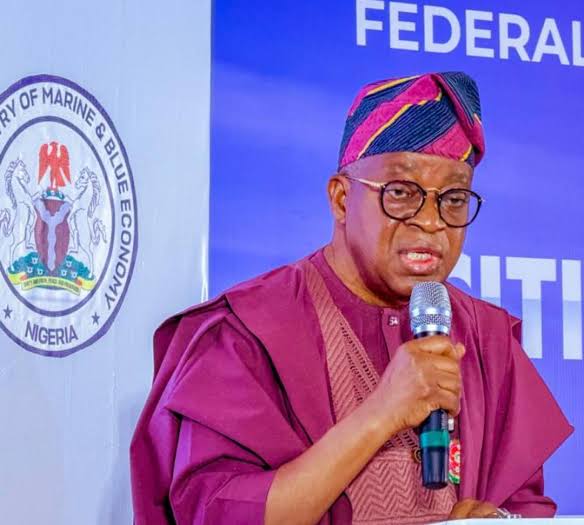
The Minister of Marine and Blue Economy Adegboyega Oyetola, has commended President Bola Ahmed Tinubu for assenting to the Nigerian Ports Economic Regulatory Agency (NPERA) Bill, 2026, describing the development as a major milestone in the ongoing reform of Nigeria’s maritime sector.
Oyetola said the presidential assent to the legislation would pave the way for the establishment of a dedicated, robust and independent economic regulator for the nation’s ports, capable of promoting transparency, efficiency and competitiveness.
In a statement posted on his official X account, the Minister expressed appreciation to President Tinubu for what he described as visionary leadership and unwavering commitment to transforming the maritime industry and unlocking the immense potential of the Blue Economy.
According to Oyetola, the presidential assent is a significant step towards building a globally competitive maritime economy and unlocking the full potential of Nigeria’s Blue Economy.
“I thank His Excellency, President Bola Ahmed Tinubu, GCFR, for assenting to the Nigerian Ports Economic Regulatory Agency (NPERA) Bill, 2026, paving the way for a dedicated, robust and independent economic regulator for our ports,” Oyetola stated.
He explained that the legislation would provide a stronger legal basis for the regulation of tariffs, charges, competition, licensing and the resolution of commercial disputes within the port industry.
The Minister noted that the establishment of an independent economic regulator would bring greater certainty, transparency and efficiency to port operations, thereby enhancing investor confidence and improving the ease of doing business in Nigeria’s maritime sector.
“This landmark legislation will strengthen the regulation of tariffs, charges, competition, licensing and commercial disputes, bringing greater certainty, transparency and efficiency to Nigeria’s port sector,” he said.
Industry stakeholders have long advocated for an independent port economic regulator to address concerns over arbitrary charges, promote fair competition among operators and ensure a more transparent and predictable business environment.
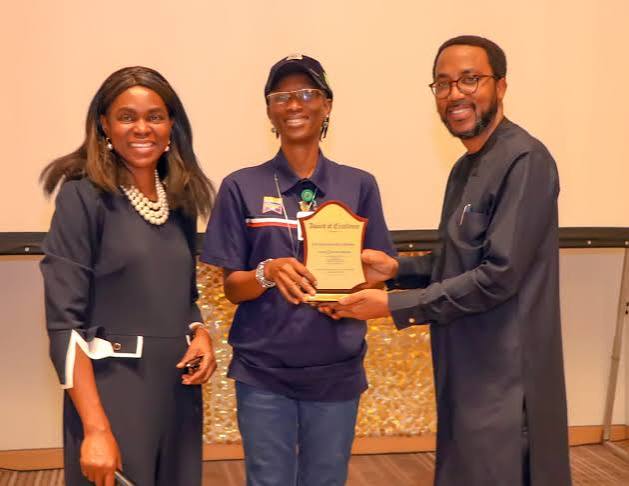
The Nigerian Ports Authority (NPA), Lagos Ports Complex Manager, Mr. Debo Lawal, has urged participants at the 6th annual Maritime Writes Project (MWP) Creative Writing Bootcamp to use their voices to promote Nigeria’s maritime and port sector as an industry that embraces inclusion.
Lawal, who was Special Guest of Honour at the Opening of the 2026 bootcamp at the Multi-Purpose Hall, Apapa Port, Lagos, encouraged participants to maximise the opportunity to highlight the growing participation of women in traditionally male-dominated maritime roles.
He noted that there are more than 10 female crane operators in Lagos port, alongside female tugboat pilots and numerous other women working across in the port.
According to him, the growing presence of women in operational and technical positions demonstrates that the maritime sector offers opportunities for women and should be portrayed as an inclusive industry.
Lawal formally opened the bootcamp, which brings together young writers, maritime stakeholders, academics and mentors under the theme, “Voyages Through Chokepoints: Power, Passage and Life at Sea.”
The Head of Faculty for the 2026 edition and Dean, Faculty of Arts, Adeleke University, Prof. Adegbite Tobalase, urged participants to use the bootcamp to develop their individual voices and understand the discipline required to produce original works.
“We welcome you not merely to a training programme, but to a mission: to grow literary talent through maritime storytelling, and to deepen Nigeria’s maritime consciousness through the power of the written word,” he said.
In his goodwill message, the Director, International Ocean Institute-Nigeria Centre (IOI-Nigeria), Mr. Akanbi Williams, commended MWP for combining creative writing with practical exposure to the maritime sector.
The Institute, which has partnered with MWP for five years, urged participants to “observe, listen, question, learn and write,” stressing the importance of looking beyond ships, ports and waterways to the people, communities and livelihoods connected to the maritime environment.
It said storytelling could help communicate maritime knowledge to wider audiences, particularly young Nigerians, while encouraging greater understanding of the sector and the blue economy.
Earlier, the Project Coordinator, Maritime Writes Project, Ezinne Azunna, said the initiative was designed to bridge creative writing and maritime awareness by exposing young writers to the realities of the sector.
She said participants would engage with maritime professionals, facilities and communities, enabling them to develop stories grounded in authentic industry experiences.
The 2026 theme draws attention to the significance of maritime chokepoints to global trade, diplomacy, economics and human activities. Mentorship sessions and facility tours are designed to help participants develop stories based on real maritime experiences.
For returning participants, the impact of MWP extends beyond creative writing.
One of the project’s alumni, Uche Ohiaeri, who returned for the 2026 edition, said her participation in the programme in 2022 transformed her confidence and broadened her interests from creative writing to environmental conservation and community development.
Ohiaeri recalled that she initially joined because she simply enjoyed writing, but the experience challenged her to ask deeper questions about the ocean, the environment and communities connected to them.
She subsequently became involved in conservation activities at her school, where she taught younger students, and eventually wrote her first book.
According to her, the programme gave her the confidence to explore opportunities she had not previously considered and showed her that creative writing could serve as an entry point into wider environmental and civic engagement.
The Maritime Writes Project has previously held sessions in Lagos, Osun an
d Rivers states and has produced three published anthologies featuring 17 stories by past participants.
The organisers noted that African writers remain significantly under-represented in maritime fiction and that MWP is encouraging a new generation of Nigerian writers to explore stories around the ocean, shipping, coastal communities and the blue economy.
by Nkpemenyie Mcdominic, Lagos
-

 News1 day ago
RSG Targets Nine Million Residents in Mosquito Net Distribution Campaign
-

 Oil & Energy1 day ago
Aiyedatiwa Signs New Electricity Bill
-

 Maritime1 day ago
Marine Minister Commends President Tinubu On NPERA Bill Assent
-

 Oil & Energy1 day ago
NLNG Commissions Research And Innovation Centre In RSU
-

 News1 day ago
KenPoly Holds Eight Convocations, August 29
-

 News1 day ago
RSG Begins Another Phase of Projects Commissioning Today
-

 News1 day ago
RMAFC Completes Revenue Sharing Review, Proposes New Pay
-

 Maritime1 day ago
NAGAFF Petitions IGP Over Alleged Maritime Police Harassment