
Business
SEC Cautions Nigerians Against Ponzi Schemes

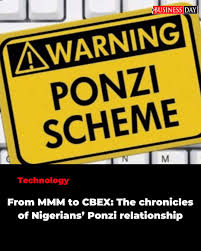
The Securities and Ex-change Commission (SEC) has cautioned Nigerians on the dangers of Ponzi schemes, highlighting their devastating impact on investor confidence, financial stability, and the Nigerian capital market, specifically.
SEC in a release through the Head of its Enforcement Department, Dr. Sa’ad Abdulsalam, after an Enlightenment Programme on Capital Market, noted that the pitfalls and illegality of Ponzi Schemes ought to be avoided.
Abdulsalam stated that the proliferation of fraudulent investment schemes continue to erode public trust in formal investment platforms by offering unrealistic returns and operating outside the regulatory framework, destabilized investor sentiment and undermined participation in legitimate capital market activities.
“The erosion of market confidence caused by Ponzi schemes leads to significant volatility and reduced investor engagement.
”The fallout not only damages individual finances, but also tarnishes the reputation of regulatory institutions tasked with protecting investor interests”, he noted.
Beyond the capital market, Abdulsalam emphasized that the social and economic consequences of Ponzi schemes are far-reaching, noting that household financial losses, often involving life savings or borrowed funds, intensify socio-economic stress and threaten community cohesion.
“These losses are not just figures on a balance sheet. They represent broken trust, devastated livelihoods, and increased poverty in affected communities.
“Nigeria has a long and troubling history with Ponzi operations”, he explained.
He further noted that from the infamous Umanah Umanah scheme in the 1990s to Nospecto in the early 2000s and the widespread MMM craze of the 2010s, fraudulent fund managers have repeatedly exploited regulatory gaps and economic vulnerabilities.
According to him, over 400 unlicensed fund managers were uncovered in 2010 alone, underscoring the scale of the threat.
He attributed the rise of Ponzi schemes to several factors, including limited financial literacy, the lure of quick returns during periods of economic hardship, and the rapid spread of misinformation through social media.
Abdulsalam, however, noted that the proliferation of fraudulent investment schemes continues to erode public trust in formal investment platforms by offering unrealistic returns and operating outside the regulatory framework, destabilized investor sentiment and undermined participation in legitimate capital market activities.
By: Corlins Walter



-

 News3 days ago
Nigeria Recorded Two World’s Deadliest Terror Attacks In 2025 –Report
-

 Politics3 days ago
Eid-el-fitr: INEC Urges Staff Discipline Ahead Ekiti, Osun Guber Polls
-

 Editorial3 days ago
Thumbs Up For Sit-At-Home Reversal
-

 News3 days ago
Perm. Sec Pats Rivers NUJ On The Back
-

 News3 days ago
Explosions Rock Lagos, C’River, Kill One, Injure 40
-

 News3 days ago
Fubara Hails Umah Ukpai’s Contributions To Global Christian Evangelism
-

 Education3 days ago
Opobo Kingdom moves to incorporate Ibani Language Into School Curriculum, Takes Off April
-
News3 days ago
Etche Monarch Alleges Death Threats, Assault