
Business
Electricity: Bands BCDE Suffer No Power

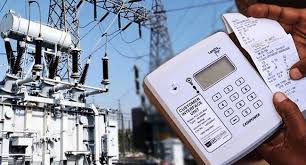
As DisCos struggle to meet the required 20 hours power supply to “Band A” customers following shortage of gas which has hindered power generation since January, customers on Bands B, C, D, and E are left with no light, according to The Tide’s source.
The source learnt that the distribution companies were concentrating more on the Band A customers to keep their Band A feeders from being downgraded.
Band A customers enjoy a minimum of 20 hours of electricity daily.
On April 3, the Nigerian Electricity Regulatory Commission announced that subsidies would no longer be paid for the electricity consumed by Band A customers.
The electricity tariff for Band A customers was revised upward from N68 per kilowatt-hour to N255/KWh.
1 kWh is the amount of energy that could be used if a 1,000-watt appliance is kept running for an hour. For example, a 100-watt light bulb operating for 10 hours would use 1 kWh.
After the power subsidy was removed, the NERC directed the 11 DisCos to release their lists of Band A customers, who must get at least a 20-hour supply daily.
The regulator and the Minister of Power, Adebayo Adelabu, emphasised that there would be sanctions should the distribution companies fail to supply Band A customers with 20 hours of electricity.
The DisCos were also mandated to inform customers whenever they failed to meet the required minimum service level.
NERC said where a DisCo failed to deliver on the committed level of service on a Band A feeder for two consecutive days, the DisCo should, by 10 am the next day, publish on its website an explanation of the reasons for the failure and update the affected customers on the timeline for restoration of service to the committed level.
It stated that if a customer’s service level improves to at least 20 hours, they should be upgraded from lower service bands to Band A, adding that if the DisCo fails to meet the committed service level to a Band A feeder for seven consecutive days, the feeder will be downgraded to the recorded level of supply by the applicable framework.
In their efforts to meet up with the service level, the source gathered that some of the DisCos were gradually resorting to diverting the little allocation they get to the Band A customers.
This is in spite of the fact that the gas constraints that have hindered power generation since the beginning of the year have yet to be addressed.
Many communities said they could not boast 30 hours of power supply since January, a development the government blamed on the refusal of gas companies to supply gas to power-generating companies due to heavy debt.
Recall that recently, the IBEDC spokesperson, Busolami Tunwase, explained that, “One of the primary factors is the low supply of gas to generating companies, which has led to a gradual decrease in available generation on the grid.


Nkpemenyie Mcdominic
Reports say that the training is designed to equip youths with practical technical skills for employment in the oil and gas and construction sectors, with emphasis on employability, safety, competence and self reliance.
In attendance at the flag-off ceremony this week, at the Petroleum Training Institute (PTI) Conference Hall, Effurun, were stakeholders, dignitaries, and political representatives, among others.
Dafinone, represented by his Chief of Staff, Adelabu Bodjor, said the initiative reflects a deliberate political investment in human capital development across Delta Central.
He explained that the training focuses on rigging and scaffolding, noting that “both are essential technical competencies required in industrial operations, construction projects, and oil and gas installations”.
Bodjor added, “The programme is intended to reduce dependency among youths by providing job-ready skills capable of supporting long-term economic opportunities and self-sufficiency. The initiative aligns with Senator Dafinone’s broader development agenda, which prioritises practical skill acquisition as a pathway to sustainable empowerment.”
Also addressing the participants, the NCDMB, Felix Omatsola Ogbe, represented by Mr. Teddy Bai, commended Dafinone for sponsoring the programme, describing it as “a timely response to critical manpower gaps in the industry”.
Bai explained that rigging and scaffolding remain safety-sensitive skills required across fabrication yards, offshore platforms, and construction sites, stressing that the programme bridges the gap between certification and practical competence.
He also charged the training consultant, OROH Contractors Limited, to maintain strict standards of professionalism, safety, and discipline, while urging participants to remain committed, focused, and disciplined throughout the exercise.
The Senate Liaison Officer for Sapele Local Government Area, Chief Patrick Akamuvba, , described the programme as a major step in strengthening human capital development in Delta Central.
Akamuvba said scaffolding and rigging skills are in high demand across residential, commercial, and industrial construction projects, noting that the training offers real employment opportunities for beneficiaries
He urged participants to prioritise knowledge and certification over short-term material expectations, stressing that discipline and seriousness would determine their long-term success.
He also cautioned youths against social vices and distractions, advising them to remain focused to maximise the opportunities provided by the programme.

