
Environment
World Water Day And Provision Of Clean Water

The declaration by the United Nations Conference on Environment and Development in Rio de Janeiro, Brazil in far back 1992 could be said to have set the stage for the annual World Water Day celebrations across the globe.
However, the first World Water Day was celebrated in1993
It would be recalled that the United Nations had set aside 22nd of every year as World Water Day
Information available to The Tide has it that the concept of World Water Day was suggested in Agenda 21 during the 3rd _14th 1992 United Nations Conference on Environment and Development in Rio de Janeiro, Brazil
It was also learnt that later in December that year, the United Nations General Assembly passed a resolution,A/RES/47/193 designating March 22 as World Water Day.
It went on to say that the event was to highlight the importance of fresh water and advocate for the sustainable management of this important natural resources
For this year’s, the theme was “Water For Peace”
And as a part of the global community, the Rivers State Government also joined its counterparts across the world to mark the day.
It would be noted that the Rivers State Government through the Rivers State Ministry of Water Resources and Rural Development had lined up a number of activities to commemorate the day.
Some of the activities include an inspection tour of the ongoing Port Harcourt Mega project with various stakeholders including school children and a symposium.
At the symposium held at the Hotel Presidential, Port Harcourt, various speakers highlighted the importance of clean water for the good health and wellbeing of the citizenry.
According to various speakers, waterborne diseases were a major contributor to the deaths of many citizens in the country
The conference also acknowledged the effort of the present administration in the State in ensuring clean and quality drinking water for the citizens
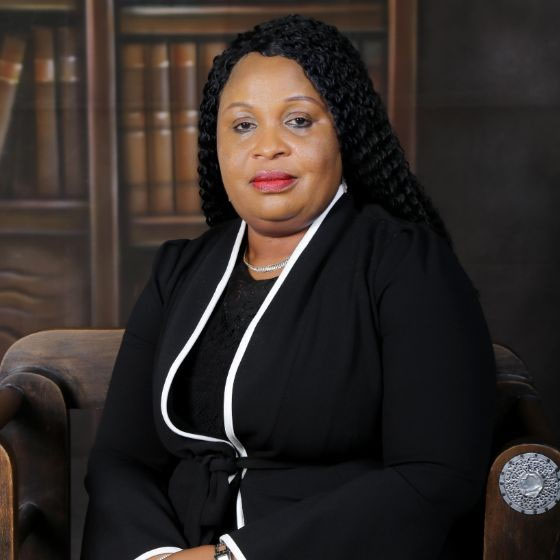
While declaring the event open,the Permanent Secretary, Rivers State Ministry of Water Resources and Rural Development, Barrister Mrs Patience K Omereji said the celebration should provide the opportunity for stakeholders to reflect on the importance of clean water for the peace and stability of the society.
According to the Permanent Secretary, it behooves on the people to reflect on the critical role that water plays in fostering peace and stability across the globe
‘With this year’s theme, Water For Peace,”we are reminded of the undeniable connection between access to clean water and the promotion of peaceful coexistence among nations and communities, particularly those sharing borders”
Omereji said that the theme should serve as a wake up call to emphasise the importance of water as a catalyst for peace building effort
“This suggests that ensuring access to clean water and managing water resources sustainably can contribute to conflict prevention and resolution where water rights are prevalent,”she said.
She said the Rivers State Government is not only working hard to ensure citizens get access to clean water but is determined to end open defecation by 2030.
‘Here in Rivers State, under the able leadership of Governor Siminalayi Fubara,we understand that water and sanitation are entwined drivers of public health and as a result have joined the world in ending open defecation by the year 2030 “It is of note that the type of access, quantum of water supply and quality of sanitation facilities available determine to a great extent the quality of life of the people and the potential for poverty alleviation.
“Sustainable service delivery of water supply, sanitation and hygiene as well as environmental sanitation are recognised as important elements for achieving improved health and a sustainable economy for the people of Rivers State.
“This was aptyly recognised in His Excellency Sir Siminalayi Fubara’s campaign manifestoes,”she said.
The Permanent Secretary also told the forum that the administration of Governor Siminalayi Fubara is SDG 6 compliant, adding that the government through the Ministry of Water Resources and Rural Development is making concerted efforts in implementing policies and strategies that ensure equitable access to clean water resources while promoting cooperation among stakeholders
“Worthy of note is the ongoing robust works called the Port Harcourt Water supply and sanitation projects that are at various stages of completion
She said the scheme when completed will deliver safe water to homes both within Port Harcourt and Obio/Akpor Local Government Areas.
On his part, the former Permanent Secretary, Ministry of Water Resources and Rural Development, Elder Samuel Ijeoma decried the incessant vandalisation of water facilities by unscrupulous elements in the State.
Ijeoma who said he was happy that the Eleme Water project is functioning, said clean water is very important as water borne diseases kill faster than COVID-19 and other dieseases.
He also decried the proliferation of water satchet factories, adding that many people drink poison in the name of pure water.
The former Permanent Secretary, however, said people must be prepared to pay for clean water as is being done in the developed countries.
He said clean water is not free , noting that even in America, people pay for water consumption.
Ijeoma also said lack of regulation has led to unhygienic practices by some satchet water producers, as some boreholes are sited close to suckaways.
The former Permanent Secretary, who is the Director General of the Rivers State Pensions Board decried the incessant vandalisation of reticulation facilities.
He urged the Ministry to use the annual World Water Day celebration to come up with programmes that will make the citizenry to have access to clean water, stressing that World Water Day had become mere celebrations without concrete results. Ijeoma, who was chairman of the occasion also urged the Ministry to reach out to the Governor on the issue.
In his presentation, the Project Coordinator of the Hydrocarbon Pollution and Remediation Project (HYPREP), Prof. Nenni- barini Zabbey said HYPREP is on the same page with the Rivers State Government as for as the provision of clean water is concerned.
He said the agency is presently undertaking water project in more than 18 communities across the four Ogoni local government areas .
Zabbey said apart from water projects, the agency is also intervening in the areas of shoreline protection and mangrove resuscitation in Ogoni
According to him, HYPREP will continue to collaborate with the state government in designing and execution of water projects.
General Manager of the Port Harcourt Water Corporation, Chief Ibibia Walter decried the politicisation of water.
He said the water sector has suffered neglect over the years as successive governments do not see it as a necessary campaign tool.
Walter said the proliferation of water agencies has not even helped in the supply of clean water to the people, adding that in some countries even the MinistrIes of Water Resources was non existent.
He however warned the government to be careful as the scrambled for water may breed future conflicts not only in the state but across the country.
Speaking with newsmen, the Chairman of the Association of Table Water Producers (ATWAP) Oke Okafor denied that satchet water is poisonous.
He said the association has a department that ensures quality control as well as regulate entries into the industry .
Others who spoke pointed out the importance of clean water to the health and wellbeing of the people.
They said time has come for government to ensure that people have access to quality and clean water.
The event also featured a drama sketch by the Rivers State Art Council and a lecture.
Just as it is always said, “water, water every where but no water to drink.”
Indeed, there is “water everywhere but no water to drink.” This lack of clean water had sometimes resulted to severe cases of waterborne diseases such as Cholera and others.
Just as it was observed at the event, the water day celebration has become an annual ritual but has it translated to provision of quality water for the citizenry? This is a question that stakeholders in the water sector should provide answer to.
By: John Bibor



-

 Niger Delta4 days ago
Warri Airport Manager Disputes Air Peace Bird Strike Claim
-

 News4 days ago
Nigeria Won’t Surrender Any Territory To Criminals -Tinubu
-

 News4 days ago
FG Begins Trial Of Over 600 Terrorism Suspects
-

 Politics4 days ago
Parties’ Deregistration: How Justice Lifu Overruled Appeal Court Justices
-

 Rivers4 days ago
79th IAUE Inaugural Lecture: Prof Anero Advoctes Tuition-Free Education For Children
-

 Politics4 days ago
ADC: Okonkwo Rejects Amaechi As Presidential Running Mate, Withdraws Support
-

 Politics4 days ago
2027: Tinubu’s Projects Give APC Edge In South East – Yilwatda
-
News4 days ago
Forum Expresses Confidence In APC Candidates’ Performance In Rivers