Rivers
We Must Support HYPREP’s Mangrove Restoration Project To Succeed -Minister
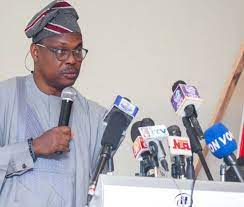
The Minister of State for Environment, Dr Iziaq Adekunle Salako, has promised that the Federal Government would support the ongoing mangrove restoration project of the Hydrocarbon Pollution Remediation Project (HYPREP) to succeed.
Salako, who gave the assurance during a visit to some remediation sites in Ogoniland in Rivers State recently, said President Bola Ahmed Tinubu prioritises the issue of environment as could be seen in the Renewed Hope agenda and the eight priority areas of his administration.
He also noted that when it comes to the issue of climate change mitigation, Nigeria plays an important role, adding that one important resource that Nigeria and, indeed, Africa have to offer is nature- based solutions to climate change.
“When it comes to the issue of climate change, one important resource that Nigeria and indeed Africa have to offer is nature-based solutions. When we are talking about nature-based solutions, our mangrove forest is a very very important element of that. Nigeria has the largest mangrove forest in Africa and about the third in the entire world, which means that our mangrove forest is very important to the fight against climate change. So we must support HYPREP to ensure that the mangrove restoration project is done,” he said.
He further indicated that Nigeria actively participated in key events at the recently held Conference of Parties(COP28) in Dubai and also took part in the Alliance for Climate Change anchored by countries that are dedicated to the restoration of the mangrove.
Salako, who also visited the construction site of the ongoing Centre of Excellence for Environmental Restoration, where he was taken round by HYPREP’s Project Coordinator, Prof Nenibarini Zabbey, expressed delight over the project, describing it as the largest project the Federal Ministry of Environment is carrying out anywhere in the world and the second biggest of the Federal Government in the South South region after the East-West Road.
When completed in September, 2025, he said the project which is significant and very important is going to be a very impactful project at the heart of the Niger Delta.
“I have been taken round the project and I can see the vision of those who conceived it. I hope on completion, the people of the Niger Delta and, indeed, the entire global community would come around and celebrate this magnificent edifice,” he said.
The Minister, who equally visited the legendary Birabi Memorial Grammar School in Bori, used the opportunity to plant 10 trees, which he said are symbolic and significant to him personally.
According to him, the planting of the trees was part of his new year green resolutions to plant at least 50 trees this year in each of the geopolitical zones of the country.
He hinted that the 10 trees planted in the school are for the South South geopolitical zone, and urged students, teachers and the Principal of the school to help in nurturing the trees.
Salako equally inaugurated the Green Frontiers Club of the school as part of the clean environment campaign of the Federal Government.
The President of the club, who is the Senior Prefect of the school, Master Nathaniel Koalebari, alongside the other members of the club presented beautiful environmental renditions to the Minister and his entourage to the admiration of those present.
Both the Chairman of HYPREP’s Board of Trustees, Dr Michael Nweilaghi and the Project Coordinator, Prof Nenibarini Zabbey also planted trees in the school.
Meanwhile, the Minister also visited one of the remediation sites in Eleme Local Government Area, where he gained more insight into the enormous work HYPREP is doing in Ogoniland.
Said Salako, “I have been taken round one of the remediation sites in Eleme, and I have seen the very important work that is being done here. It is my hope that from here, Nigeria is learning a lot in terms of how to tackle the challenges of oil pollution, which is very common in the Niger Delta as a result of exploration and exploitation activities.What we are doing here is also to appreciate and recognise the very impactful contributions of the Niger Delta, the oil producing States and the oil producing communities of Nigeria to the economy. The government of Nigeria, therefore, has taken it as an important responsibility to ensure that those areas that have contributed so well to the growth of the economy are also supported to ensure that they have good livelihoods, better standard of living; the health of the people is protected and the environment is conserved.”
He further indicated that the environment has become a very important issue in global discourse these days because of the realisation that except the environment is used and treated in a sustainable manner, human beings would not have a place to live in as time goes on.
For this reason, Salako said the Federal Government is taking environmental issues seriously, as President Tinubu has prioritised the issue of environment.
Donatus Ebi

Rivers
University Don Calls for Abolition of Open Water Laterine
A professor of Parasitology and Public Health in the Department of Medical Microbiology/Parasitology and Entomology, Faculty of Medical Laboratory Science at the Rivers State University (RSU), Port Harcourt, Prof. Gloria Ngozika Wokem, has advocated for the abolition of open water body latrine systems in rural riverine areas and open forest latrines in upland communities to eradicate water and food-borne diseases, popularly known as Neglected Tropical Diseases (NTDs), prevalent in Nigeria.
Prof. Wokem made this call while delivering her inaugural lecture at the 122nd inaugural lecture series of the university on the topic “Neglected Tropical Diseases and WASH Nexus: Breaking the Cycle for Human Sustainability” held in Port Harcourt, wednesday.
She described NTDs as a group of diseases prevalent among impoverished remote populations, particularly in tropical and subtropical areas of the world, with limited access to safe water, sanitation, hygiene, and other healthcare essentials.
According to her, there are about 20 known disease groups shortlisted by the World Health Organisation (WHO), such as Guinea worm disease, Endemic Treponema pallidum infection (Yaws), Human African Trypanosomiasis (HAT) (sleeping sickness), leprosy (Hansen’s Disease), and onchocerciasis (River blindness), among others, adding that they are listed by WHO as control targets for the 2030 NTDs goals.
Prof. Wokem stated that for over thirty years, she has been working in the field of Neglected Tropical Diseases, or in other words, water and food-borne diseases. “These diseases come to humans through what we eat, what we do, and are so prevalent around us that not much information is known about them, which is why they are called neglected.”
She noted that NTDs affect not only Nigeria but 57.3% of the world’s population, including Africa, Asia, South and Central America, adding that wherever sanitation, hygiene, and safe drinking water are in limited supply, these neglected tropical diseases will flourish.
The professor called for all stakeholders to join hands to fight against the eradication of the dreaded tropical diseases ravaging the society, saying, “There is a role government will play and there are parts individuals will do.”
She however recommended among other things the employment of graduate parasitology and public Health Scientists groomed by the university for the continuity of the medical laboratory science profession which is in high demand
Earlier in his remarks,the Vice-Chancellor of the university, Prof. Isaac Zeb-Obi, lauded the lecturer and described the lecture as a testament to her professional prowess and a justification of her professorial appointment by the university.
The vice chancellor who was represented by the provost of the post graduate school of the university,prof T S K.Abam ,the VC aligned with the position of the lecturer that living a clean environment and washing our hands regularly will help to eradicate the NTDs in the society.
Rivers
RSG, TAF Africa Launch Joint Initiative For Inclusive Governance
The Rivers State Government has said that it is committed to strengthening its collaboration with TAF Africa to enhance inclusive governance across all strata, especially for Persons Living With Disabilities (PWDs).
The Head of Service, Dr Inyingi Brown, disclosed this at the opening of a two-day capacity building workshop for 31 Disabilities and Gender Desk Officers, organised by TAF Africa in Port Harcourt.
Brown, represented by the Director of Administration, Office of the Head of Service, Mr Chimenum Mpi, said that the State Government had nominated Disability and Gender Desk Officers across 31 Ministries, Departments, and Agencies (MDAs) in the state.
She emphasised the importance of collaboration between TAF Africa and the State Government on inclusive governance.
She commended TAP Africa for its continued partnership and unwavering commitment to building a society where no one would be left behind.
Brown described the training as a significant step in building a public service that reflects fairness, access, and dignity for all.
“Your work strengthens institutions, shapes policies and, more importantly, gives voice and visibility to PWDs across our nation,” Brown said.
She urged the beneficiaries to translate their experiences to better the State Government and society.
She further advised them to return to their various offices determined to drive real, practical change.
She said that the Office of the Head of Service remained committed to strengthening institutional frameworks that support inclusion.
“We will continue to partner with credible organisations, like TAF Africa, to ensure that public service meets global standards in disability inclusive governance,” she said.
Earlier, the Chief Executive Officer and Founder of TAF Africa, Mr Jake Epelle, said the collaboration between the Rivers Government and TAF Africa would strengthen accountability, promote inclusive policy implementation, and enhance service delivery for citizens with disabilities in the state.
Epelle commended the State Government for the establishment and nomination of the desk officers and approval of the training, which he described as a major milestone in the advancement of disability- inclusive governance in the state.
He said that the training was part of the Disability Inclusive Governance Project in Rivers, funded by the Disability Rights Fund.
He said that the training aimed at equipping the officers with practical knowledge, tools, and strategies to effectively champion disability inclusion within their respective MDAs.
According to him, the swift and affirmative response of the State Government demonstrates a renewed commitment to upholding the rights, dignity, and meaningful participation of PWDs in public life, as well as mainstreaming disability inclusion in government systems, policies, and service delivery.
Epelle said with the establishment of the desks and capacity-building programme, Rivers was charting a transformative path towards a government system that truly reflects disability inclusive.
He affirmed the oganisation’s commitment to supporting the State Government and Rivers people in achieving full compliance with national and international disability rights standards.
The Keynote Speaker, Dr Krakrafaa Bestman, emphasised the importance of inclusivity and diversity in governance.
Bestman underscored the need to include PWDs in decision-making, policy design, service delivery, and accountability.
He also highlighted the need for leaders to move beyond compliance towards excellence in practice, translating policy into measurable impact.
The event was attended by government officials, partners, and members of the Rivers public service with the aim of exploring ways to move from policy to practice in disability inclusion.
By: Grace Nglass
Rivers
UNIPORT Moves To Tackle Insecurity … Inducts Security Experts
The University of Port Harcourt, has taken a significant step towards addressing the issue of insecurity in Nigeria by producing security experts through its Institute of Niger Delta Studies (INDS), with the institute inducting its first graduating students into the Nigerian Institute For Industrial Security (NIIS), with the General Officer Commanding (GOC) of the 6 Division of the Nigerian Army, Major General E E Emekah, delivering a quality lecture on the topic, “Promoting Blue Economy In The Niger Delta: The Place Of Security”.
In his lecture, Major General Emekah emphasised the importance of security in promoting the blue economy in the Niger Delta region.
He noted that the activities of the Joint Tasks Force (JTF) are geared towards maintaining peace on Nigerian waterways and promoting productivity, and also stressed the need for a non-kinetic approach to security operations, winning the hearts and minds of the communities, and collaborating with security personnel to fight insecurity.
The GOC charged the inductees to ensure that their study/training provides practical solutions to the pressing security challenges facing the Niger Delta and Nigeria as a whole.
He emphasised the significance of their studies in UNIPORT, given the prevailing security threat to lives and property, especially on Nigerian waterways.
The Acting Director of INDS, Dr. Chukwu-Okeah, expressed satisfaction that the occasion marks a new milestone in the history of the institute, noting that the Niger Delta has been besieged with environmental and security challenges, and it is time to rise up and build the region through the blue economy ideology.
The blue economy, he explained, emphasises the sustainable use of ocean resources for economic growth, improved livelihoods, and job creation while preserving the health of the ocean ecosystem.
He described the blue economy as the new oil well, with the potential to drive economic diversification, job creation, food security, and climate resilience in the region.
One of the inductees, Ayuba Tanimu noted that security is dynamic, and continuous learning and research have equipped them to serve their communities and Nigeria well.
He described the Nigerian Institute For Industrial Security (NIIS) as a body of security professionals that meets annually to craft security policies for the country.
The programme, which attracted prominent individuals from the academia, security, and other sectors had the 7th Vice Chancellor of the University of Port Harcourt, Prof Joseph Ajienka, as its chairman.
-
Featured3 days agoOil & Gas: Rivers Remains The Best Investment Destination – Fubara
-
Nation3 days agoOgoni Power Project: HYPREP Moves To Boost Capacity Of Personnel
-
Nation3 days ago
Hausa Community Lauds Council Boss Over Free Medical Outreach
-
Nation3 days ago
Association Hails Rivers LG Chairmen, Urges Expansion Of Dev Projects
-
Nation3 days ago
MOSIEND Calls For RSG, NDDC, Stakeholders’ Intervention In Obolo Nation
-
Nation3 days ago
Film Festival: Don, Others Urge Govt To Partner RIFF
-
News3 days agoNDLEA Arrests Two, Intercepts Illicit Drugs Packaged As Christmas Cookies
-
Rivers3 days ago
UNIPORT Moves To Tackle Insecurity … Inducts Security Experts