
Editorial
Tinubu’s Broadcast: The Missing Link

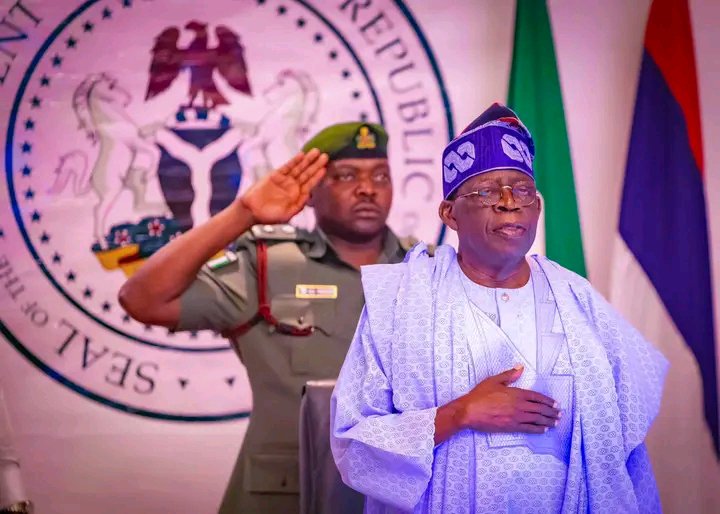
President Bola Ahmed Tinubu’s nationwide speech on July 31, 2023, recognised the inauspicious impact of his fiscal and monetary policies on Nigerians. The Tide appreciates his efforts in engaging with citizens’ concerns and comprehending their predicament. We encourage him to sustain a firm commitment to interactive engagement as an inherent feature of his government.
In his nationwide broadcast, the President addressed Nigerians’ concerns regarding the challenging economic situation directly resulting from his government’s recent policies. He empathised with the citizens and justified the necessity of the tough decisions made for the benefit of the country.
However, the speech concentrated on populist grandiosity but disregarded pragmatic measures to forestall subsidy removal and exchange rate flop. Interventions embodied N75billion for 75 enterprises, N125billion for MSMEs, the freeing of 200,000 metric tons of grains, N200 billion for cultivation, and N100billion for gas-powered buses. But Nigerians require more concrete measures to effectively palliate the impact.
For many Nigerians, the broadcast is uninspiring as it failed to tackle essential issues dissembling their standard of living and businesses. For instance, the President failed to cite primal solutions such as local refining of petroleum products, concrete plans for mass transit systems, lifting the employment embargo, or affording a well-defined timeline for raising remunerations and salaries, among others.
Undoubtedly, Tinubu’s policies have caused inflation, particularly impacting small-scale businesses and industries dependent on petrol. This has a disconfirming impact on commercial-grade motorcyclists and local barbers. Major enterprises reliant on the dollar face high exchange rates, ensuing in significantly increased prices for crucial goods, and placing a strain on the average Nigerian’s finances.
The President accused some people of embezzling subsidy funds, but surprisingly no action has been taken to recover the stolen money or penalise the corrupt. The Nigeria Customs Service, the Economic and Financial Crimes Commission, and the Nigeria Security and Civil Defence Corps were established to combat petroleum smuggling and protect the subsidy scheme, but their inactivity has contributed to its collapse. Accountability for officials and those accepting funds without fulfilling obligations is needed.
The palliative measures announced by Mr. President are unrealistic and cannot furnish temporary relief or a lasting solution to Nigeria’s rising living expenses. The authorities must re-evaluate the monetary and fiscal policies, which have caused the disorderly economic environment. A sustainable approach to reforms must be enforced by the Tinubu administration to harness the economic issues.
Despite the President’s promise that the Port Harcourt refinery would operate in December in a meeting with the NLC and TUC leadership to forfend the last protest against subsidy removal, we insist that the refinery solely cannot satisfy the fuel demands of Nigerians. Moreover, Tinubu failed to mention when the other refineries would be operative.
The operational date of the Port Harcourt refinery has been uncertain consequent upon multiple timelines presented in the past. Former Minister of State for Petroleum, Timipre Sylva, pledged that it would be running by December last year, but another date of September 2022 was afterwards given. It is mandatory for all the refineries to be operable by the end of the year.
Also in the broadcast, the President mentioned billions of naira budgeted for dissimilar palliatives, loans for students, and gratuitous buses, and how they had preserved over N1 trillion from subsidy removal within a month. We opine that Tinubu and his team should invest the proceeds in the refurbishment of all the refineries in the country to deal with the subsidy question.
Regrettably, little interest has been demonstrated by the Federal Government in revamping the nation’s refineries. The President’s proposed solutions to the country’s economic challenges are ill-conceived. His address lacks the necessary panacea for Nigeria’s current economic conditions. Hence, the problems, inflictions, and adversities will persevere until the refineries are operational.
Even with the removal of subsidy on petroleum products, we reiterate that with a dexterous, transparent and innovative management of resources, economic potentials, national comparative advantage, and expanded value chain in refining capacity, petrol should not sell for more than N150 per litre in the country.
We also observe the absence of provisions in the speech regarding riverine and coastal transportation, as well as haulage, which embody important components driving Nigeria’s trade, commerce, agriculture, and industrial sectors. In the light of these novel challenges presented by the speech, Nigerians should refrain from despair and uphold composure, supporting one another during this precarious period.
Efforts should focus on reducing governance costs and re-allocating savings towards infrastructure provision. If petroleum products cannot be subsidised, other sectors like health, transportation, and education should be considered. Tinubu’s administration must address the insufficient palliatives announced on May 29, 2023, as they cannot inhibit the sufferings of Nigerians.



Nigeria stands at a critical juncture as the world marked World Press Freedom Day (WPFD) on May 3. This annual observance is a reminder that a free press is central to democratic life, good governance, and public accountability. For Nigeria, it is also a moment for sober reflection on how far the country has come and how far it still has to go in safeguarding the independence of its media.
World Press Freedom Day exists to highlight the fundamental importance of freedom of expression and to honour journalists who risk their lives in pursuit of truth. It underscores the idea that without a free press, societies cannot function transparently, nor can citizens make informed decisions. In countries like Nigeria, where democracy continues to evolve, the observance carries particular urgency.
This year’s theme, “Shaping a Future at Peace: Promoting Press Freedom for Human Rights, Development and Security”, places journalism at the heart of global stability. It emphasises that a peaceful society cannot be built on silence, fear, or manipulated information. Rather, it depends on the free flow of accurate, timely, and independent reporting.
At its core, the theme highlights the role of journalism in fostering accountability, dialogue, and trust. These are not abstract ideals. In Nigeria, where public confidence in institutions is often fragile, the media remains one of the few platforms through which citizens can question authority and demand transparency. When press freedom declines, so too does public trust.
Journalism serves as a foundation for peace, security, and economic recovery. Countries with robust media systems tend to attract greater investment, maintain stronger institutions, and resolve conflicts more effectively. Nigeria’s economic challenges, ranging from inflation to unemployment, require open scrutiny and informed debate, both of which depend on a free press.
However, the issue of information integrity has become increasingly complex in the digital age. Artificial Intelligence (AI) and online platforms have amplified the spread of misinformation and disinformation. In Nigeria, where internet penetration has grown rapidly, false narratives can travel faster than verified facts. This makes the role of credible journalism more vital than ever.
The challenge is not only technological but also ethical. AI-driven manipulation of information threatens to distort public discourse, influence elections, and deepen social divisions. In such an environment, professional journalism must act as a stabilising force, ensuring that truth prevails over sensationalism and propaganda.
Equally troubling is the safety of journalists. Across Nigeria, reporters face growing levels of online harassment, judicial intimidation, and physical threats. Self-censorship is becoming more common, as media practitioners weigh the risks of reporting sensitive issues. This trend undermines the very essence of journalism.
A particularly alarming incident involved a serving minister in the present administration, who openly threatened to shoot a journalist during a televised exchange. Such conduct, broadcast to the public, sends a dangerous signal that hostility towards the press is acceptable. It erodes the norms of democratic engagement and places journalists in harm’s way.
This year’s theme aligns closely with the United Nations Sustainable Development Goal (SDG)16, which promotes peace, justice, and strong institutions. Freedom of expression is a cornerstone of this goal. Without it, institutions weaken, corruption thrives, and justice becomes elusive. Nigeria’s commitment to SDG 16 must therefore include genuine protection for the media.
Historically, the Nigerian press has been a formidable force. From resisting colonial rule to challenging military dictatorships, our journalists have played a central role in shaping the nation’s political landscape. Today, however, that legacy appears to be under strain, as the media operates under what can best be described as a veneer of freedom.
Beneath this facade lies a troubling reality. Journalists are routinely harassed, detained, and prosecuted for performing their constitutional duties. Reports from media watchdogs indicate that dozens of Nigerian journalists face legal threats or arrest each year, often for exposing corruption or criticising those in power.
The Cybercrimes (Prohibition, Prevention, etc.) Act of 2015 has become a focal point of concern. Originally intended to combat cyber threats, it has increasingly been used to silence dissent. Sections 24 and 27(1)(b), in particular, have been invoked to target journalists, bloggers, and social commentators.
Although amendments introduced in February 2024 were meant to safeguard journalists, concerns persist. The law continues to be wielded in ways that stifle investigative reporting and restrict freedom of expression. Legal reforms must go beyond cosmetic changes to address the root causes of misuse.
To safeguard the future of journalism in Nigeria, decisive action is required. The Cybercrimes Act must be revisited to ensure it cannot be weaponised against the press. Law enforcement agencies must operate free from political influence, upholding the rule of law and protecting journalists’ rights. Civil society and international partners must also strengthen independent media through funding, training, and platforms for wider reach.
In this rapidly evolving world shaped by artificial intelligence and digital innovation, Nigeria faces a clear choice. It can either allow press freedom to erode under pressure, or it can champion a truly independent media landscape. The path it chooses will determine not only the future of journalism, but also the strength of its democracy and the peace it seeks to build.

-

 Featured1 day ago
WASSCE: RSG Distributes Science Materials To Secondary Schools
-
News2 days ago
Xenophobic Attacks: Nigerian Lives More Important Than Foreign Investment – Oshiomhole
-
Rivers2 days ago
MBA Forex Trial Adjourn To June 3, Amid Bereavement … As Court Declines Cost Application
-
News2 days ago
ActionAid Demands Probe Of Govs Using Public Funds For Campaign
-
Aviation2 days ago
Passengers Stranded As Delta Airline From Atlanta Route Back Eight Hours After
-
Business2 days ago
Customs Impound N2.35bn Cocaine, 15 Trailers of Rice
-
Politics2 days ago
2027: Bayelsa Senator Gets Critical Endorsement For Second Term
-

 Politics2 days ago
INEC Sets Rivers South-East Senatorial By-Election For June 20