
News
NLC, TUC Call Off Strike, Resume Negotiation With FG June 19

The organised labour made up of the Nigeria Labour Congress (NLC) and the Trade Union Congress of Nigeria, (TUC), yesterday agreed to suspend its planned strike scheduled to begin tomorrow to enable further negotiations with the Federal Government.
This was part of the resolutions reached at the end of the meeting late Monday evening.Monday’s meeting and resolution were attended and signed by Chief of Staff to the President, Mr Femi Gbajabiamila; President, TUC, Festus Osifo; Secretary General, TUC, Nuhu Torò; President, NLC, Joseph Ajaero; General Secretary, NLC, Emmanuel Ugboaja mni; and Permanent Secretary, Federal Ministry of Labour and Employment, Ms Kachollom S. Daju.Other resolutions arrived at the meeting include: “Continued engagements by the TUC and the NLC with the Federal Government and secure closure on the resolutions above.
The organised labour and the Federal Government are to meet on June 19, 2023, to agree on an implementation framework.
According to the Negotiating Committee, the Federal Government, the TUC and the NLC are to establish a joint committee to review the proposal for any wage increase or award and establish a framework and timeline for implementation.
Other resolutions are that, the Federal Government, the TUC and the NLC to review the World Bank Financed Cash transfer scheme and propose the inclusion of low-income earners in the program.
•The Federal Government, the TUC and the NLC to revive the CNG conversion programme earlier agreed with Labour centres in 2021 and work out detailed implementation and timing.
•The Labour centres and the Federal Government to review issues hindering effective delivery in the education sector and propose solutions for implementation.
•The Labour centres and the Federal Government to review and establish the framework for the completion of the rehabilitation of the nation’s refineries.
•The Federal Government to provide a framework for the maintenance of roads and expansion of rail networks across the country.
•All other demands submitted by the TUC to the Federal Government will be assessed by the Joint Committee
In a related event, the National Industrial Court, sitting in Abuja, on Monday, restrained the NLC and TUC from embarking on their planned strike to protest the unilateral removal of fuel subsidy by the Federal Government.
The order came on a day the NLC returned to the negotiation table, having earlier refused to attend the meeting called on Sunday by the Federal Government, insisting that government return the price of petrol to the status quo.
This is even as the TUC made public its demands and presentation to the government among which were N200,000 minimum wage and subsidy on food items.
Recall that the TUC had in a meeting with government representatives at the Presidential Villa, Abuja, on Sunday, demanded payment of a new minimum wage to mitigate the effects of the subsidy removal but was silent on the figure.
The court, in a ruling delivered by Justice O. Y. Anuwe, barred the two unions from proceeding with the strike, pending the determination of a suit brought before it by the Federal Government.
The court held that the interim order, as well as the substantive suit, should be immediately served on both the NLC and the TUC, which were cited as defendants/respondents in the suit marked: NICN/ABJ/158/2023, even it fixed the matter for hearing on June 19.
The court order followed an ex-parte application the Federal Government filed through the Federal Ministry of Justice.
The government’s lawyer, Mrs Maimuna Lami Shiru, who moved the application, maintained that the proposed strike was capable of disrupting economic activities, the health and education sectors.
The Federal Government further tendered Exhibits FGN 1, 2 and 3, which were notices from the NLC, TUC and the Nigerian Union of Journalists (NUJ), to their members, asking them to withdraw their services with effect from tomorrow, June 7.
The court, in its ruling, held that it was empowered by section 7(b) of the NIC Act, 2006, with the exclusive jurisdiction in matters relating to the grant of any order to restrain any person or body from taking part in any strike, lockout or industrial action.
It held that sections 16 and 19(a) of the NIC Act 2006, also empowered it to grant urgent interim reliefs.
The court held that the affidavit of urgency as well as the submission of FG’s lawyer revealed “a scenario that may gravely affect the larger society and the well-being of the nation at large.’’
Justice Anuwe held: “Counsel has pointed out that students of secondary schools nationwide, especially those writing WAEC exams, will be affected; the tertiary institutions who have only just resumed after a long ASUU strike will also be affected, not leaving the health sector, among other sectors; and above all, the economy of the nation.
“In my view, this is a situation of extreme urgency that will require the intervention of this court.”
According to the judge, “having, therefore, considered the totality of this application, I make the following orders: ‘’The defendants/respondents are hereby restrained from embarking on the planned industrial action/or strike of any nature, pending the hearing and determination of the motion on notice dated 5th June 2023.
“It is ordered that the defendant/ respondents be immediately served with the originating processes in this suit, the motion on notice and the order of this court hereby made.
“The motion on notice is hereby fixed for hearing on 19th June 2023. Hearing notices to that effect shall be served on the defendants/respondents along with the other processes.”


News
Fubara Reaffirms Commitment To Blue Economy, Private Sector Growth …Calls For Protection Of Marine Resources


The Rivers State Government has reaffirmed its commitment towards fostering private sector-driven economic growth and harnessing the vast opportunities within the blue economy to drive national development.
Rivers State Governor, Sir Siminalayi Fubara, made this known during the opening ceremony of the 2026 Annual General Meeting and Conference of the Nigerian Association of Chambers of Commerce, Industry, Mines and Agriculture (NACCIMA), held in Port Harcourt, last Thursday.
Represented by his deputy, Prof. Ngozi Odu, Governor Fubara described the conference theme, “The Gulf of Guinea and Blue Economy: Pathways to Trade, Investment and Security Towards a $1 Trillion Economy,” as both timely and strategic.
?
?The governor welcomed the leadership of NACCIMA, delegates from the 115 Chambers of Commerce across Nigeria, members of the diplomatic corps, captains of industry, investors, and other distinguished guests to Rivers State.
?
?He commended the National President of NACCIMA, Engr. Jani Ibrahim, for choosing Rivers State as the host of the 2026 conference, noting that the decision had drawn national attention to the immense economic opportunities embedded in the blue economy.
?
?Fubara stated that the blue economy possesses the capacity to generate revenue that could surpass earnings from the oil and gas sector if properly developed and managed.
?
?He stressed the need for Nigeria and other countries along the Gulf of Guinea to take deliberate steps toward maximizing the benefits of their maritime resources while guarding against the continued exploitation of coastal assets by foreign operators.
?
?Expressing concern over the activities of foreign fishing trawlers operating in Nigerian waters, the governor noted that many harvest seafood resources without making meaningful economic contributions to the country.
?
?He emphasized the need for stronger monitoring mechanisms and enhanced protection of Nigeria’s marine resources.
?
?”We must wake up and hit the ground running. If we do not capitalize on and utilize our blue economy, other nations will utilize it for us,” he stated.
?
?The governor thanked NACCIMA for what he described as a timely wake-up call on the importance of the blue economy and maritime security, adding that the successful hosting of the conference in Rivers State demonstrates the state’s safety, hospitality, and readiness for business and investment.
?
?Earlier in his remarks, the President of NACCIMA, Engr. Jani Ibrahim, expressed appreciation to the Rivers State Government for hosting the 66th Annual General Conference of the Association and for the warm reception accorded delegates.
?
?He noted that the state’s commitment to hosting the conference reflects its readiness for business and has helped restore investors’ confidence in its economic potential.
?
?According to him, NACCIMA highly values the cordial relationship between the Rivers State Government and the organized private sector, emphasizing that the association remains the foremost voice of the Nigerian business community.
?
?In her welcome address, the President of the Port Harcourt Chamber of Commerce, Industry, Mines and Agriculture (PHCCIMA), Dr. Chinyere Nwoga, described the conference as a historic milestone, noting that it was the first time in the Chamber’s 66-year history that it was hosting the national body of NACCIMA.
Nwoga commended the national leadership for entrusting PHCCIMA with the hosting rights and pledged the Chamber’s continued commitment to advancing the objectives of the association and promoting sustainable economic growth through private sector engagement.

Rivers State Governor, Sir Siminalayi Fubara, has ordered a complete seal-off of the site of a five-storey building which collapsed last Wednesday, killing one person and injuring several others in Port Harcourt.
Fubara gave the order during his visit to the site of the collapsed building last Thursday to assess the situation.
He said the site will remain “completely sealed off” until the government gets to the “root cause” of the incident.
He described the incident as unfortunate but observed that preliminary investigation had shown that the developer had earlier refused to subject his site to inspection by the state authorities and comply with the necessary building regulations.
The governor, who inspected the site alongside the Commissioner for Physical Planning and Urban Development, Sir Amairigha Edward Hart, and the Permanent Secretary of the Ministry of Special Duties, Dabite Sokari George, explained that he couldn’t visit the site the previous day because he was awaiting formal briefing from the relevant agency of government on the situation.
“We’re here to see for ourselves the very unfortunate incident that took place here. I didn’t come yesterday because I wanted to get the report first, and the Commissioner did brief me that the incident site, first, is not as claimed by the developer, that it’s not under the jurisdiction of the state; that it’s under the jurisdiction of the Federal Housing Authority.
“He also informed me that when the project was ongoing, they came here severally to inspect what was happening and also to see the level of compliance. But unfortunately, that the developer kept claiming that we don’t have any right to interfere,” he said.
Fubara said that the issue was no longer about interference but about the life lost to the building collapse and the collateral damage brought upon the family of the deceased.
He extended condolences to the families of the victims, insisting that the incident could have been avoided if the developer had complied with the rules guiding the engineering design and construction of such a structure in the 21st century.
“We feel very sorry and very regretful that such an incident should be happening in this 21st century because technology has advanced, engineering has developed. I wonder what kind of engineer would even allow this kind of project to go on when everything about it from inception has been faulty.
“I think that at this point, nothing is going to happen on this site any more. We are going to make sure that this place is completely sealed off until we get to the root cause of this incident,” the governor said.
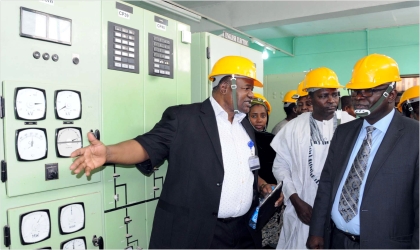
The Transmission Commission of Nigeria has announced electricity disruption in parts of Kano, Katsina, Jigawa, Bauchi, and Yobe States, as well as Gazaoua in the Niger Republic.
The spokesperson of TCN, Ndidi Mbah, disclosed this in a statement yesterday
The outage is due to planned maintenance at Kumbotos’ 330 kilovolt transmission substation on Sunday.
Consequently, electricity customers served by Kano Electricity Distribution Company, Kaduna Electricity Distribution Company, and Yola Electricity Distribution Company will experience power disruption.
“The scheduled maintenance is to enable the TCN contractor to continue the ongoing upgrade of 330kV bus II jumpers and replace the existing 350mm² conductors with 800mm² conductors in order to strengthen the transmission network and improve power reliability.
“As a result, Kano Electricity Distribution Company (KEDCO) and some part of Jos Electricity Distribution Company (JEDC) and Yola Electricity Distribution Company (YEDC) will be unable to off-take power for distribution to their customers in Kano, Katsina, and Jigawa States, as well as Azare in Bauchi State, Nguru in Yobe State, and also Gazaoua in the Niger Republic,” TCN stated.
-
Rivers4 hours ago
Rivers Police Uncovers Firearm Concealed In Loaf Of Bread
-
Business4 hours ago
Navy Nabs 13 Black Sand Miners In Bayelsa –Impound Two Boats
-
Business4 hours ago
Navy Hands Over Five Suspected Stowaways to NIS
-
Niger Delta3 hours ago
Diri Fetes Bank’s MD, Ex-D’Gov At Diamond Anniversaries … Hails Duo Over Services To Bayelsa
-
Business3 hours ago
Gas Economy: Decade of Gas, Pi-CNG/ EV Deepen Media Engagement
-
Business4 hours ago
FG to Roll Out 10,000 Electric Tricycles By August –Sheittima
-
Business4 hours ago
NIWA Concessions Waterways Clean-Up to Indigenous Coy
-
Sports3 hours ago
Six Nigerians To Play For NBA Teams