
Editorial
Census Put-Off: Thumbs Up For FG

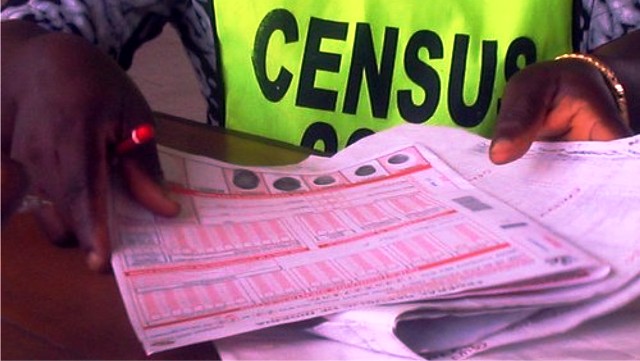
The Population and Housing Census, which was initially scheduled for May 3–7, 2023, has been post-
poned indefinitely by President Muhammadu Buhari, following deliberations with select Ministers and Nasir Isa-Kwarra, Chairman of the National Population Commission (NPC). The resolve to delay the headcount was taken to stem prevailing circumstances that indicated an impending national crisis. This decision has transferred the responsibility to the President’s successor, hence, averting a potentially disastrous situation.
Despite the unwavering commitment of the NPC to execute the national project, it became apparent that both the agency and the relevant government bodies, as well as the citizens, were ill-prepared. It is a clear sign of astuteness for President Buhari to have thought it wise to avoid the risk of escalating this already precarious situation.
A new census for development planning was declared by Buhari, who asserted that the nation needed an updated one, given that the previous one took place 17 years ago in 2006. Nonetheless, the President did not specifically reference any potential hurdles that may be encountered in this undertaking. It is anticipated that the NPC will assume responsibility for this task.
In the editorial of this newspaper dated July 20, 2022, it was observed that the scheduled census for April 2023 was poorly timed owing to its proximity to the general election and the prevailing security challenges in the country. The census result could be negatively affected by various situations. Even the NPC’s pre-census tests were hindered in certain areas as a result of safety concerns in some states.
We had stated that if the current administration failed to conduct the census exercise at least a year before the end of their tenure, there would be no justification for rushing to conduct it just two months before their exit. As predicted, the postponement of the census and the reasons given have proven our argument to be correct.
Similarly, many stakeholders criticised the scheduled May date and urged for its delay because of poor timing. The decision to hold both nationwide elections and the census in an election year, with the challenges posed by their conduct and outcomes in the country, was deemed as notably imprudent. The Buhari’s administration has been berated for its apparent preoccupation with carrying out certain tasks instead of delegating them to the succeeding government.
The proposal has failed to garner inspiration among the Nigerian populace, given the plethora of intricate issues that surround it. The post-general election aftermath has thrown the country into a state of disarray, with stakeholders raising grave concerns about the conduct and outcome of the presidential, governorship, National Assembly and State Assembly elections.
Nigerians are still ruing their losses from the cash crunch that prevented them from accessing their money, causing widespread suffering. The police are struggling to contain the resulting unrest, and all law enforcement agencies are overwhelmed in their efforts to combat criminal activity, including insurgency, terrorism, banditry, kidnapping, armed robbery, cultism, and other crimes.
Many Nigerians across the country face daily attacks, eventuating in deaths, injuries, and kidnappings. These crimes are often motivated by purely criminal motives, leaving victims entirely on their own. The police are overburdened and often choose to ignore these incidents, only intervening when a high-profile individual is involved. This leaves some Nigerians at the mercy of their criminal abductors, relying solely on their relatives to assuage the situation.
Therefore, the NPC’s initial insistence on conducting a census during this period was over-ambitious and laid the foundation for another controversial headcount. Shoddy preparation typically leads to shoddy outcomes, as Nigerians have seen in past national assignments. It was clear that the commission was planning to fail.
For a successful national census, adequate preparation is crucial to ensure desired results and minimal hitches. The politicisation of the headcount has made it one of the thorniest issues in the country. However, if properly executed, the exercise can correct previous mistakes and provide a reliable population figure. A convivial environment must be created to achieve this.
Conducting a credible census requires total buy-in from all segments of the country. It should be a collaborative national assignment with the federal, the 36 states, and the 774 local government areas. Massive publicity and awareness campaigns from the grassroots upwards are required to ensure the success of the census. The NPC should return to the drawing board to guarantee that all obligatory steps are taken to achieve a credible headcount.
The task at hand poses seminal challenges. The expanse of the country’s road network is vast, with only a third of it being paved. The unpaved roads are prone to flooding, deterioration, and drought, making it arduous for census officials to reach all regions of the country promptly. Meticulous planning is necessary to overcome the major obstacles of funding and logistics.
The funding for the initiative needs to be properly addressed since the government’s proposal to establish a collective fund under the auspices of the United Nations Population Fund has encountered setbacks. Out of the N869 billion budgeted, only N291.5 billion has been disbursed, while another N327.2 billion approved has not yet been transferred to the NPC.
Buhari’s decision to postpone the headcount was judicious. It is incumbent upon the President-elect, Bola Ahmed Tinubu, to schedule a new date and implement measures to improve the process. The forthcoming count should be technology-driven, accurate, and reliable to gain the support of Nigerians.





Nigeria stands at a critical juncture as the world marked World Press Freedom Day (WPFD) on May 3. This annual observance is a reminder that a free press is central to democratic life, good governance, and public accountability. For Nigeria, it is also a moment for sober reflection on how far the country has come and how far it still has to go in safeguarding the independence of its media.
World Press Freedom Day exists to highlight the fundamental importance of freedom of expression and to honour journalists who risk their lives in pursuit of truth. It underscores the idea that without a free press, societies cannot function transparently, nor can citizens make informed decisions. In countries like Nigeria, where democracy continues to evolve, the observance carries particular urgency.
This year’s theme, “Shaping a Future at Peace: Promoting Press Freedom for Human Rights, Development and Security”, places journalism at the heart of global stability. It emphasises that a peaceful society cannot be built on silence, fear, or manipulated information. Rather, it depends on the free flow of accurate, timely, and independent reporting.
At its core, the theme highlights the role of journalism in fostering accountability, dialogue, and trust. These are not abstract ideals. In Nigeria, where public confidence in institutions is often fragile, the media remains one of the few platforms through which citizens can question authority and demand transparency. When press freedom declines, so too does public trust.
Journalism serves as a foundation for peace, security, and economic recovery. Countries with robust media systems tend to attract greater investment, maintain stronger institutions, and resolve conflicts more effectively. Nigeria’s economic challenges, ranging from inflation to unemployment, require open scrutiny and informed debate, both of which depend on a free press.
However, the issue of information integrity has become increasingly complex in the digital age. Artificial Intelligence (AI) and online platforms have amplified the spread of misinformation and disinformation. In Nigeria, where internet penetration has grown rapidly, false narratives can travel faster than verified facts. This makes the role of credible journalism more vital than ever.
The challenge is not only technological but also ethical. AI-driven manipulation of information threatens to distort public discourse, influence elections, and deepen social divisions. In such an environment, professional journalism must act as a stabilising force, ensuring that truth prevails over sensationalism and propaganda.
Equally troubling is the safety of journalists. Across Nigeria, reporters face growing levels of online harassment, judicial intimidation, and physical threats. Self-censorship is becoming more common, as media practitioners weigh the risks of reporting sensitive issues. This trend undermines the very essence of journalism.
A particularly alarming incident involved a serving minister in the present administration, who openly threatened to shoot a journalist during a televised exchange. Such conduct, broadcast to the public, sends a dangerous signal that hostility towards the press is acceptable. It erodes the norms of democratic engagement and places journalists in harm’s way.
This year’s theme aligns closely with the United Nations Sustainable Development Goal (SDG)16, which promotes peace, justice, and strong institutions. Freedom of expression is a cornerstone of this goal. Without it, institutions weaken, corruption thrives, and justice becomes elusive. Nigeria’s commitment to SDG 16 must therefore include genuine protection for the media.
Historically, the Nigerian press has been a formidable force. From resisting colonial rule to challenging military dictatorships, our journalists have played a central role in shaping the nation’s political landscape. Today, however, that legacy appears to be under strain, as the media operates under what can best be described as a veneer of freedom.
Beneath this facade lies a troubling reality. Journalists are routinely harassed, detained, and prosecuted for performing their constitutional duties. Reports from media watchdogs indicate that dozens of Nigerian journalists face legal threats or arrest each year, often for exposing corruption or criticising those in power.
The Cybercrimes (Prohibition, Prevention, etc.) Act of 2015 has become a focal point of concern. Originally intended to combat cyber threats, it has increasingly been used to silence dissent. Sections 24 and 27(1)(b), in particular, have been invoked to target journalists, bloggers, and social commentators.
Although amendments introduced in February 2024 were meant to safeguard journalists, concerns persist. The law continues to be wielded in ways that stifle investigative reporting and restrict freedom of expression. Legal reforms must go beyond cosmetic changes to address the root causes of misuse.
To safeguard the future of journalism in Nigeria, decisive action is required. The Cybercrimes Act must be revisited to ensure it cannot be weaponised against the press. Law enforcement agencies must operate free from political influence, upholding the rule of law and protecting journalists’ rights. Civil society and international partners must also strengthen independent media through funding, training, and platforms for wider reach.
In this rapidly evolving world shaped by artificial intelligence and digital innovation, Nigeria faces a clear choice. It can either allow press freedom to erode under pressure, or it can champion a truly independent media landscape. The path it chooses will determine not only the future of journalism, but also the strength of its democracy and the peace it seeks to build.
-

 News22 hours ago
Court Sentences Seven To Death Over Murder Of Cleric In Rivers
-

 Politics19 hours ago
APC PRIMARIES: FUBARA’S WITHDRAWAL, HISTORIC SACRIFICE FOR NATIONAL STABILITY ……. GROUP
-

 Sports19 hours ago
PH Arsenal Community Set For Streets Procession, Saturday
-

 News1 day ago
Group Hails Tinubu, Chinda Emergence
-

 Politics19 hours ago
IPAC Flays INEC Over Election Guidelines Judgement
-

 Sports20 hours ago
NPFL: Rivers United Finishes Second, Secures Continental Ticket
-

 Sports20 hours ago
Stakeholders Laud GTI On NPFL Partnership
-

 Politics19 hours ago
NDC To Adopt Electronic Voting For Future Primaries