Connect with us

Editorial

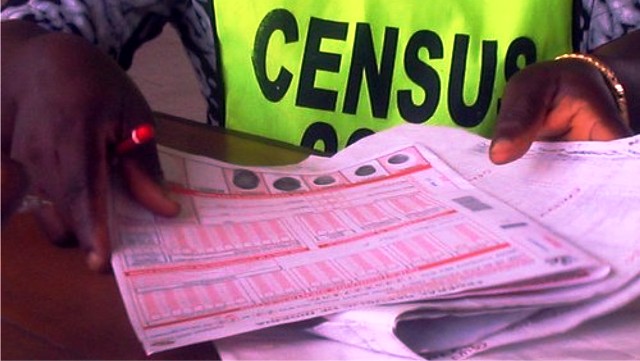
Census Put-Off: Thumbs Up For FG

Published

on

The Population and Housing Census, which was initially scheduled for May 3–7, 2023, has been post-
poned indefinitely by President Muhammadu Buhari, following deliberations with select Ministers and Nasir Isa-Kwarra, Chairman of the National Population Commission (NPC). The resolve to delay the headcount was taken to stem prevailing circumstances that indicated an impending national crisis. This decision has transferred the responsibility to the President’s successor, hence, averting a potentially disastrous situation.
Despite the unwavering commitment of the NPC to execute the national project, it became apparent that both the agency and the relevant government bodies, as well as the citizens, were ill-prepared. It is a clear sign of astuteness for President Buhari to have thought it wise to avoid the risk of escalating this already precarious situation.
A new census for development planning was declared by Buhari, who asserted that the nation needed an updated one, given that the previous one took place 17 years ago in 2006. Nonetheless, the President did not specifically reference any potential hurdles that may be encountered in this undertaking. It is anticipated that the NPC will assume responsibility for this task.
In the editorial of this newspaper dated July 20, 2022, it was observed that the scheduled census for April 2023 was poorly timed owing to its proximity to the general election and the prevailing security challenges in the country. The census result could be negatively affected by various situations. Even the NPC’s pre-census tests were hindered in certain areas as a result of safety concerns in some states.
We had stated that if the current administration failed to conduct the census exercise at least a year before the end of their tenure, there would be no justification for rushing to conduct it just two months before their exit. As predicted, the postponement of the census and the reasons given have proven our argument to be correct.
Similarly, many stakeholders criticised the scheduled May date and urged for its delay because of poor timing. The decision to hold both nationwide elections and the census in an election year, with the challenges posed by their conduct and outcomes in the country, was deemed as notably imprudent. The Buhari’s administration has been berated for its apparent preoccupation with carrying out certain tasks instead of delegating them to the succeeding government.
The proposal has failed to garner inspiration among the Nigerian populace, given the plethora of intricate issues that surround it. The post-general election aftermath has thrown the country into a state of disarray, with stakeholders raising grave concerns about the conduct and outcome of the presidential, governorship, National Assembly and State Assembly elections.
Nigerians are still ruing their losses from the cash crunch that prevented them from accessing their money, causing widespread suffering. The police are struggling to contain the resulting unrest, and all law enforcement agencies are overwhelmed in their efforts to combat criminal activity, including insurgency, terrorism, banditry, kidnapping, armed robbery, cultism, and other crimes.
Many Nigerians across the country face daily attacks, eventuating in deaths, injuries, and kidnappings. These crimes are often motivated by purely criminal motives, leaving victims entirely on their own. The police are overburdened and often choose to ignore these incidents, only intervening when a high-profile individual is involved. This leaves some Nigerians at the mercy of their criminal abductors, relying solely on their relatives to assuage the situation.
Therefore, the NPC’s initial insistence on conducting a census during this period was over-ambitious and laid the foundation for another controversial headcount. Shoddy preparation typically leads to shoddy outcomes, as Nigerians have seen in past national assignments. It was clear that the commission was planning to fail.
For a successful national census, adequate preparation is crucial to ensure desired results and minimal hitches. The politicisation of the headcount has made it one of the thorniest issues in the country. However, if properly executed, the exercise can correct previous mistakes and provide a reliable population figure. A convivial environment must be created to achieve this.
Conducting a credible census requires total buy-in from all segments of the country. It should be a collaborative national assignment with the federal, the 36 states, and the 774 local government areas. Massive publicity and awareness campaigns from the grassroots upwards are required to ensure the success of the census. The NPC should return to the drawing board to guarantee that all obligatory steps are taken to achieve a credible headcount.
The task at hand poses seminal challenges. The expanse of the country’s road network is vast, with only a third of it being paved. The unpaved roads are prone to flooding, deterioration, and drought, making it arduous for census officials to reach all regions of the country promptly. Meticulous planning is necessary to overcome the major obstacles of funding and logistics.
The funding for the initiative needs to be properly addressed since the government’s proposal to establish a collective fund under the auspices of the United Nations Population Fund has encountered setbacks. Out of the N869 billion budgeted, only N291.5 billion has been disbursed, while another N327.2 billion approved has not yet been transferred to the NPC.
Buhari’s decision to postpone the headcount was judicious. It is incumbent upon the President-elect, Bola Ahmed Tinubu, to schedule a new date and implement measures to improve the process. The forthcoming count should be technology-driven, accurate, and reliable to gain the support of Nigerians.

Continue Reading

Editorial

Beginning A New Dawn At RSNC 

Published

on

The premises of the Rivers State Newspaper Corporation (RSNC), publishers of The Tide Newspaper, are wearing a refreshing new look as work begins on the re-erection of a perimeter fence. This development is more than a physical upgrade. It is a strong statement that the safety and dignity of a historic public institution are once again being taken seriously.
For many years, the corporation operated without a proper perimeter fence. The old fence was demolished about a decade ago during an urban renewal drive under the administration of Chibuike Rotimi Amaechi. The intention at the time was to relocate and properly situate the fence away from pedestrian walk, but the long-term consequences were not fully anticipated.
The absence of a fence exposed the premises to serious risks. Workers reported frequent cases of trespass, theft of office items, and unrestricted movement by unauthorised persons. In an environment where sensitive editorial and production work is carried out, such openness became a major concern rather than an advantage.
Statistics from internal records suggest that incidents of petty theft and vandalism rose sharply during this period, accounting for an estimated 30 per cent increase in maintenance costs over the years. Staff morale also suffered, as many employees felt unsafe working late hours, especially during night production schedules.
The return of the perimeter fence will bring immediate relief. It will provide controlled access to the premises, protect valuable equipment, and ensure that staff can work with peace of mind. Businesses and members of the public who visit the corporation for adverts, publications, and official transactions will also enjoy a more orderly and secure environment.
A secured workplace is known to improve productivity. Studies in public institutions show that improved security can raise staff efficiency by up to 20 per cent. For a newspaper organisation that works against tight deadlines, this improvement is both necessary and timely.
The Rivers State Government deserves commendation for funding this fencing project. The Tide is one of the oldest state-owned newspapers in Nigeria and has, over the decades, projected and promoted government policies, programmes, and public enlightenment campaigns. Such an institution deserves to be properly funded and equipped to perform at its best.
As the fencing work progresses, the government should look beyond this single intervention. There is a strong case for the total renovation of the corporation’s ageing buildings. This effort can build on the visible successes recorded in the ongoing renovation of the state Secretariat Complex, which will improve the working conditions of many civil servants.
Equally urgent is the replacement of obsolete equipment at the newspaper publishing firm. Most of the machines in use today were provided at the inception of the corporation several decades ago. Technology has moved on, but the tools of the trade have largely remained the same.
All the major printing machines and computers are old and can no longer function efficiently. Frequent breakdowns slow production and increase costs. A total replacement is required to return the organisation to the path of progress and competitiveness in a fast-changing media industry.
Attention should also be given to the rotary printing machine purchased during the Amaechi administration. Sadly, the machine never worked for a single day due to the absence of a vital component. Replacing this missing part would put the machine on stream, making it useful not only to the newspaper but also to the wider information needs of the government.
There is also a clear need for operational vehicles, power generating plant, and additional staff. Over the years, the corporation has lost more than 60 per cent of its workforce to retirement, death, and the prolonged freeze on civil service recruitment during the last administration of Chief Nyesom Wike. Without urgent replacement, service delivery will continue to suffer.
The Publication Department, which formerly produced calendars, diaries, and exercise books for schoolchildren, should be revived. In the past, the department generated substantial funds that helped sustain the establishment before it became defunct.
Much credit must go to the Acting General Manager, Stella Gbaraba, for demonstrating capacity and discipline in managing the outfit. A staff member of the state Ministry of Information, she has shown herself to be a quintessential administrator whose leadership has stabilised the corporation. She deserves to be celebrated.
Her performance once again confirms the long-held view that leaders appointed from within the civil service often understand public institutions better and perform more effectively than those brought in from outside. With sustained government support, competent leadership, and the right investments, The Tide can reclaim its pride of place as a strong voice in Rivers State and beyond.
Continue Reading

Editorial

Sustaining OBALGA’s Ban On Street Trading 

Published

on

The total ban on all forms of street, roadside trading, and hawking activities in and around the Okoro-Nu-Odo Flyover, along the Rumuodomaya Road leading to the Obio/Akpor Council Secretariat, and within the affected corridors, is yielding desired results. This decisive action has brought about a transformation that many residents had long given up hope of ever witnessing. The change is not merely cosmetic but represents a fundamental shift in how public spaces are being managed in this crucial part of the city.
The prohibition has not only curbed the mess created by the traders, it has restored the beauty of the area. The Chairman of Obio/Akpor Local Government Area, Hon. Dr Gift O. Worlu, deserves commendation for the feat. It takes considerable courage to make unpopular decisions in the interest of the greater good, and this is precisely what the chairman has demonstrated. His willingness to tackle this longstanding problem head-on sets a positive example for other local government leaders across the state.
It is common knowledge that the affected area is one of the gateways into Port Harcourt. On a typical day, to get in or get out of the city posed a terrible situation that left motorists and commuters utterly frustrated. First impressions matter greatly, and this passageway should reflect the status of Port Harcourt as a major city. Instead, what greeted visitors and residents alike was a chaotic scene that did little to inspire confidence in the city’s governance or planning.
How the place got to that level over the years is left for everyone’s imagination. But the local government which is just a stone’s throw from there allowed it to degenerate so badly. We cannot help but wonder what those in authority were thinking as the situation spiralled out of control. The proximity of the council secretariat to the problem area makes the previous neglect all the more baffling and inexcusable.
An outsider coming into Port Harcourt may be wondering what has gone wrong with the place. Sometimes it took several hours to navigate the area whereas ordinarily it should take a shorter time. This is not the image any city should project to visitors, investors or even its own residents. The economic cost of such traffic congestion, not to mention the sheer waste of people’s time and energy, must have been substantial over the years.
It was really an eyesore. So when the council chairman came up with the directive that trading activities should cease while the traders must vacate the place permanently, we think it was a decision taken for the good of all. While some may argue that the traders have a right to earn their living, this right cannot supersede the collective rights of thousands of road users who endured needless suffering daily. The common good must sometimes take precedence over individual interests.
All we ask from the chairman is to ensure that his actions are sustainable. Lack of sustainability and political will are usually the bane of many good policies of government. If this is sustained it will be the first of its kind. History is littered with well-intentioned initiatives that started with fanfare only to fizzle out when the initial enthusiasm waned or when those responsible moved on to other priorities.
As a way to sustain the measures taken so far, those who have been displaced should be relocated so they do not find their way back to the same location. It may not be enough to take them out without providing alternative places for them. A truly comprehensive solution must address both the symptom and the root cause. Simply scattering traders without offering them viable alternatives is a recipe for their eventual return, and the whole exercise would have been in vain.
Arrests and prosecutions that are being effected should continue to serve as deterrent to others. The actions of Obio/Akpor chairman show that the council means business. When people see that there are real consequences for flouting regulations, they are far more likely to comply. This is not about being heavy-handed but about establishing clear boundaries and enforcing them consistently and fairly.
Thankfully, the chairman had reportedly included the Oil Mill Market and the Eleme Junction areas as well. On the whole, the action of the council chairman in sanitising the mentioned areas is simply laudable. Other places of focus where street trading and related issues go on are Rumuola, Rumuolumeni, Choba, Rumuodara, Rumuokwuta, Ozuoba, Rumuosi/Rumuekini, Rumukwurushi, and Artillery/Woji. There should be consistent application of order and safety standards at the above-mentioned areas.
Another place to be sanitised is the Mbiama Market. This is also one area that is terrible particularly on Tuesdays when trading occurs there. It is hard for motorists and commuters to navigate the place. How to get out of that location is usually a problem that turns what should be a straightforward journey into an ordeal. The situation at Mbiama represents another glaring example of how uncontrolled commercial activity can bring an entire area to its knees.
Sadly, the local governments are complicit because they are the ones that would give people the spaces to trade in exchange for money. The Ahoada West Local Government Area chairman where Mbiama is situated should borrow a leaf from his Obio/Akpor counterpart by taking drastic measures to end the trading there or ensure that movements are guaranteed when trading activities go on in the locality. It is hypocritical for councils to profit from these arrangements while turning a blind eye to the chaos they create. Revenue generation should never come at the expense of public order and safety.
There needs to be sanity on these concourses. This will bring a lot of relief to travellers on these roads. It does not speak well of us as it portrays the state as a no-man’s land or unorganised or even a people that lack decency. We are better than this, and our public spaces should reflect our aspirations rather than our failings.
In the long run, a well-coordinated approach involving local governments, security agencies, and urban planners will be required to maintain these gains. Public enlightenment should go hand in hand with enforcement so that residents understand that these measures are not punitive but protective. When order becomes a habit rather than an exception, Port Harcourt and its surrounding communities will be better places to live, work and travel through.
Unwavering commitment from all stakeholders are required. The traders themselves must recognise that operating in designated markets is not a punishment but a more dignified and organised way of conducting business. Residents and road users must support enforcement efforts rather than sympathising with violations out of misplaced sentimentality. The local governments must remain vigilant and resist any temptation to relax standards or make exceptions that could unravel the progress made.
Continue Reading

Editorial

AFCON ’25: Bravo, Super Eagles, But…

Published

on

The 2025 Africa Cup of Nations staged in Morocco witnessed the Super Eagles soar to an altitude few Nigerians anticipated, confounding pessimism with exuberance and resilience. Before the opening whistle, public confidence was anaemic, yet the team produced a performance laced with audacity and organisation. In a tournament featuring 24 nations and over 52 matches, Nigeria emerged with renewed credibility, reminding the continent of its enduring pedigree through conviction and renaissance.
Only weeks earlier, national morale had been battered by the abysmal failure to qualify for the FIFA World Cup, a disappointment that generated widespread cynicism and recrimination. Many analysts dismissed the Eagles as tactically incoherent and psychologically fragile. Yet, in Morocco, a transformation occurred, marked by revitalisation and determination. Statistical evidence shows Nigeria conceded fewer than one goal per match on average, an emphatic rebuttal to earlier derision and fatalism.
Against popular expectations, the 2025 AFCON became one of Nigeria’s most impressive outings in recent times, judged by fluency and consistency. The Super Eagles completed the group stage with over 55 per cent average ball possession and an 82 per cent pass completion rate, numbers that signify discipline and intelligence. There was a newfound spirit and camaraderie that suggested maturity and self-belief, hallmarks of evolution and professionalism.
Many pundits predicted that the Eric Chelle tutored side would struggle to escape the group stage, citing tactical naivety and limited preparation. Instead, Nigeria navigated the entire competition without losing a single match within regulation time, an extraordinary demonstration of fortitude and concentration. In football logic and jurisprudence, a match not lost in 90 minutes is not truly lost. Penalty shootouts remain a lottery governed by chance and psychology.
The Super Eagles’ representation was laudable and provides a formidable platform for regeneration and continuity. It underscores that Chelle is not as inept as some critics asserted after the World Cup failure. On the contrary, he demonstrated pedagogical acumen and strategic awareness, improving individual performances while enhancing collective harmony. His methods yielded measurable progress in cohesion and adaptability.
Chelle’s capacity to knit a coherent unit with tactical symmetry and individual expression shows unmistakably that he has substance to offer. Therefore, we urge the Nigeria Football Federation (NFF), the National Sports Commission, and the Federal Government to provide institutional backing and contractual stability. Continuity breeds excellence, and excellence requires foresight and investment, not impulsive judgement and expediency.
Judging by the Morocco showing, it is logical to deduce that the Super Eagles possess latent potential yet to be fully exploited. Motivation and encouragement could unlock greater heights of achievement and dominance. Preparation for the next major tournament must commence immediately, with meticulous planning and incremental improvement. Success in Morocco was not accidental but the product of diligence and perseverance, a tempo that must be sustained.
However, commendation should not degenerate into complacency. Given Nigeria’s vast talent pool and storied global exploits, the bronze medal remains inadequate. Nigeria has now finished third at AFCON nine times, a statistic that should provoke introspection rather than celebration. After emerging as the fifth best footballing nation globally following the iconic USA 1994 World Cup, only the gold medal should be acceptable, nothing less than supremacy and preeminence.
The nation must reconnect with the golden era of Okocha, Kanu, Oliseh and Amokachi, among others, when Nigerian football evoked admiration and trepidation worldwide. Between 1994 and 1998, Nigeria won Olympic gold, reached two World Cup second rounds and dominated Africa with flair and authority. That epoch was defined by creativity and confidence, a synthesis of artistry and aggression that captivated the global audience.
Now is the moment for the NFF and the coaching crew to intensify their labour and vision. Ascending to the summit is arduous, but remaining there is exponentially more difficult. Strategic recruitment of eligible players at home and abroad must be pursued with rigour and transparency. Data driven scouting and long term planning should replace sentimentality and improvisation.
It is equally imperative to rejuvenate the squad by replacing tiring legs with youthful exuberance and athleticism. Football in Nigeria is not merely a sport but a social adhesive and cultural obsession. With such abundance of talent, Nigeria should never play second fiddle to any nation. The task is to harness these resources with intentionality and coherence.
Having secured bronze for the ninth time, that position has lost desirability and prestige. The Super Eagles must henceforth be charged with the singular ambition of winning gold. Nigeria has lifted the Nations Cup only three times, compared to Egypt’s seven and Cameroon’s five. Challenging these records demands ambition and accountability, underpinned by discipline and aspiration.
It is deeply shameful that players reportedly boycotted training over unpaid match bonuses, an incident that embarrassed the nation. Authorities must investigate thoroughly and sanction culpable officials to restore integrity and trust. Nations like Morocco invest strategically in their players, infrastructure and welfare, semi- final finish at the 2022 World Cup is empirical evidence of foresight and commitment.
With appropriate motivation, transparent administration and prompt remuneration, the ceiling for the Super Eagles is limitless. Proper welfare enhances morale, while professional management engenders loyalty and sacrifice. If Nigeria aligns talent with structure and vision, continental dominance and global relevance will follow inevitably, crowned by excellence and distinction.
Ultimately, this AFCON outing should serve as a catalytic moment rather than a ceremonial footnote in Nigeria’s football narrative. Countries that dominate consistently do so through long term frameworks, not episodic brilliance, and statistics affirm this truth, as over 70 per cent of AFCON winners since 2000 retained at least 60 per cent of their squads across successive tournaments.
Nigeria must therefore institutionalise progress through robust youth development, sports science and administrative probity. If lessons from Morocco are properly internalised, the Super Eagles can transition from episodic resurgence to sustained excellence, reclaiming continental authority with purpose and conviction.
Continue Reading

Trending