
Business
Minimum Wage: Ngige Wants Review By Tinubu

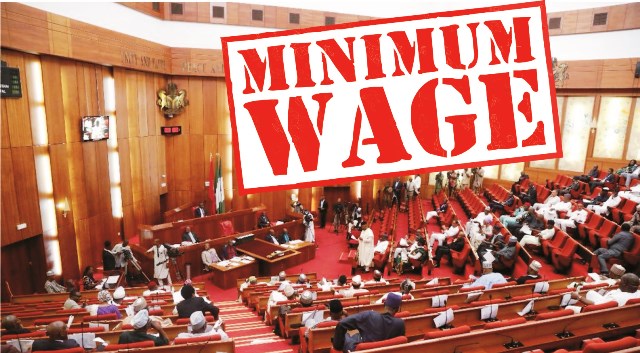
Minister of Labour and Employment, Chris Ngige, has said the incoming administration of the President-elect, Bola Tinubu, should review the current minimum wage of N30,000 in Nigeria.
The minister, who was a member of the committee that negotiated the present minimum wage in 2019 from N18,000 to N30,000, noted that the country’s minimum wage should be reviewed every five years to fit current standard of living.
Ngige, who spoke on Channels Television’s ‘Politics Today’, midweek, stated that he would include in his handover notes that the discussion surrounding minimum wage should start immediately the new government is sworn-in in May 2023, ahead of its implementation, which he said should be in May 2024.
He said the discussions would involve the public sector, private sector and state governments, and according to the last bill passed should start a year before it officially takes effect.
“It is a tripartite negotiation involving public sector, private sector and state governments. We entrenched in that bill or law that minimum wage will now have an automaticity of review every five years.
“So, from 2019 when it came into effect to 2024 will be five years but we also made a recommendation in our document which we submitted that the discussion, the negotiation should start one year from May 2024 when it supposed to kick-start.
“So, I’m envisaging that as from May 2023, the government will empanel the new minimum wage review committee for the nation.
“In my handover note which I am going to hand over to the transition committee and the next government, I am recommending that the discussions start anytime from May 2023”, he said.
He also noted that the Federal Government has approved a pay rise for civil servants which would take effect from January 1, 2023, adding that the provision is already included in the 2023 budget.
The Minister continued that the salary increment became important in view of the current economic reality of the country, however adding that the President, Major General Muhammadu Buhari (retd.), is yet to approve the percentage used for the increment.
According to him, “In the Presidential Committee on Salaries, we have done something for the civil servants for those who are on Consolidated Public Service Salary Structure and some corporations, MDAs that are on that CONPSS. CONPSS is the salary scale for civil servants.
“We put a percentage for the President to approve, we have approved it at our own committee level. We said it should take effect from January 1, 2023”.
While noting that the economic reality of the country had led to the decision of salary increment for civil servants, Ngige however, lauded the naira redesign policy of the Central Bank of Nigeria, which he said had achieved some “sound benefits”.
Although, he categorically stated that the policy was not “smooth in its implementation,” he said it had greatly reduced insecurity as bandits and kidnappers are currently on “holiday” as a result of the cash crunch, adding that the policy helped in curbing vote-buying during the just-concluded elections across the country.


