
News
Emefiele Fears Reps’ Arrest Threat, Appears Before House ….Says Banks ‘ll Accept Old Notes After Deadline

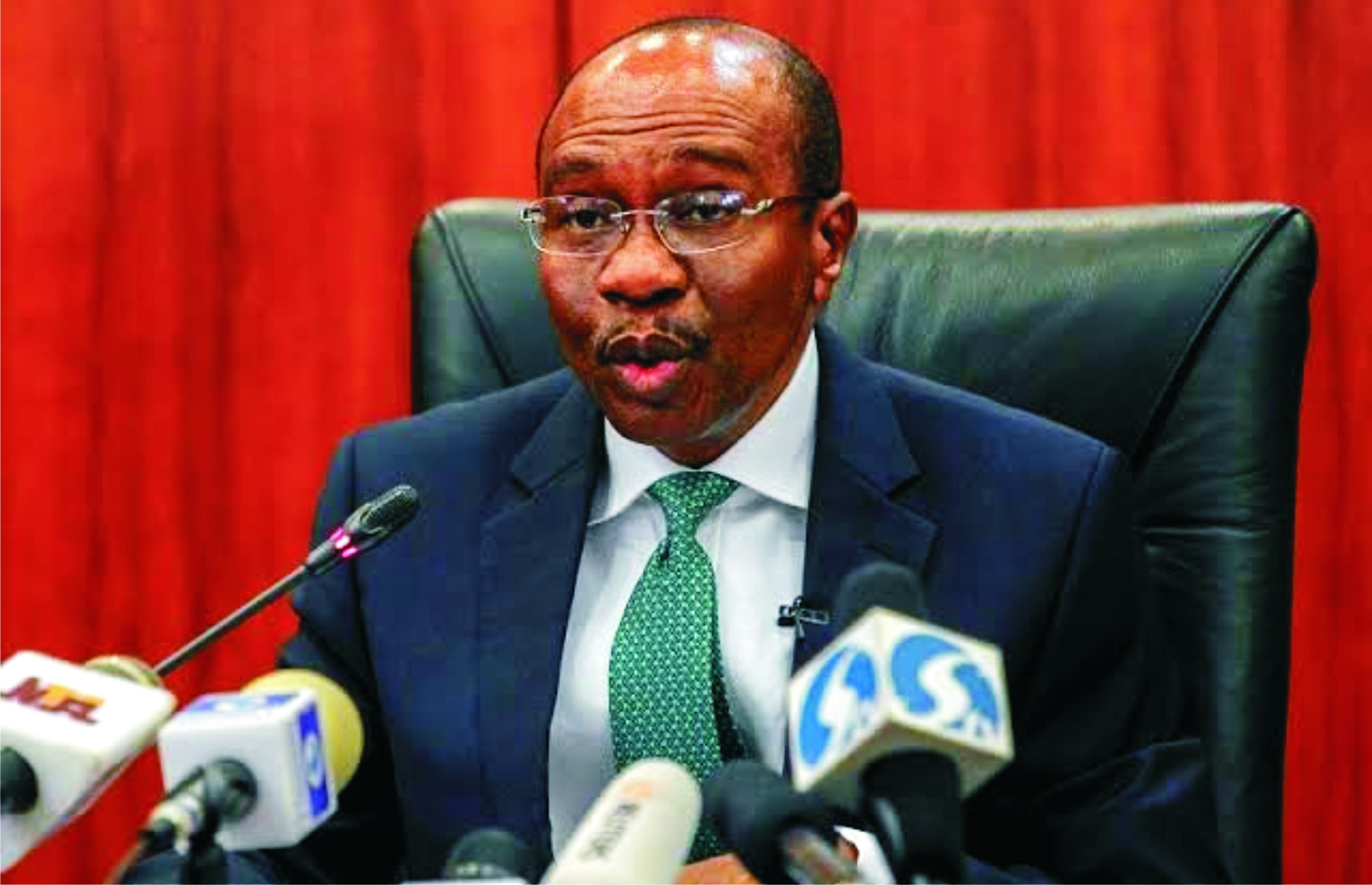
The Governor of the Central Bank of Nigeria (CBN), Godwin Emefiele, has finally appeared before the House of Representatives which summoned him over the crisis caused by the redesign of some naira notes and the exchange of old naira notes with new ones.
Emefiele yesterday appeared before the ad hoc committee set up by the House to investigate the crisis, which is chaired by Majority Leader, Alhassan Ado-Doguwa.
He told the House of Representatives that commercial banks in the country would still accept old naira notes from customers after the February 10 deadline.
He did not, however, state how long the expired notes would be admitted by the banks.
The Speaker of the House, Femi Gbajabiamila, had accused the CBN governor of breaching Section 20 of the CBN Act which, according to him, mandates commercial banks to accept old notes even after the deadline.
Emefiele, while addressing the ad hoc committee, said he agreed with the lawmakers on Section 20 of the CBN Act.
“Section 20 says even after the old currency has lost its legal tender status that we are mandated to collect that money. And I stand with the House of Reps on this,” he stated.
The CBN governor added that, “if you have your money that you have not been able to send to the bank, we will certainly give you the opportunity to bring them back into the CBN to redeem it. Either you pay it to your bank account or you want to do an exchange — we give you. You will not lose your money. This is the assurance I give to Nigerians”.
Emefiele apologised to the lawmakers for failing to answer the previous summons, which the chairman said was accepted.
He stated that the policy should have been introduced several years ago and that the CBN had only used the opportunity to make the economy more cashless. According to him, Nigerians would soon realise the benefits of the policy.
The chairman of the ad hoc committee, Alhassan Ado-Doguwa, after the hearing that lasted over one hour, called for an executive (closed-door) session with members of the committee.
The Majority Leader and members later proceeded to the chamber where plenary was ongoing.
The report of the committee was laid, considered and adopted by the House.
Recall that the Speaker of the House, Femi Gbajabiamila, was to issue a warrant for Emefiele’s arrest over his repeated failures to answer at least four summons from the House.
The House had shelved its plan to go on break for the presidential and National Assembly elections, which was to commence on Thursday, over the CBN governor’s failure to answer the last summons issued to him by the committee.
Gbajabiamila had threatened to mandate the Inspector-General of Police, Usman Baba, to arrest and force Emefiele’s appearance before the panel, insisting that the deadline breached the provision of Section 20(3) of the CBN Act.
The Speaker partly said, “I have no choice now. On Tuesday (yesterday) when we resume, we will invoke the provisions of Section 89 of the Constitution…The President has been very clear. The President gave the approval based on what he knows and what he has been told.
“We also know the President to be a man of the people. He gave his approval based on what he had been told. But we are saying – what the motion is saying – is that after the President gave his approval, how does the money get to the people? The money is not getting to the people. That is what we sought to clarify and that is exactly what we are going to do.
“So, on Tuesday, this House will follow its procedure – the normal procedure – and invoke the provisions of Section 89 to compel the governor of the CBN and the directors.”
The Deputy Speaker, Ahmed Wase, had also urged the House to allow the leadership to meet with President Muhammadu Buhari and explain the controversial implementation of the policy to him, which the Speaker agreed to.
Though the CBN, on Sunday, extended the deadline on the expiration of the old N1,000, N500 and N200 notes by 10 days – from January 31 to February 10, with the Deposit Money Banks (commercial banks) allowed to accept the notes by seven days more, the House had insisted on Emefiele’s appearance.
Ado-Doguwa, in a statement titled ‘Old Naira Notes: House C’ttee Rejects CBN Extension, Says Position of Law Sacrosanct, Must Be Respected,’ insisted that the apex bank must comply with Sections 20(3), (4) and (5) of the CBN Act.
“Nigeria, as a developing economy and a nascent democracy, must respect the principles of the rule of law. And the House would go ahead to sign the arrest warrant to compel the CBN governor to appear before the ad hoc committee,” the Majority Leader stated.
Emefiele, however, led the leadership of the CBN to appear before the lawmakers yesterday.
Cumulatively, Emefiele has failed to answer summons from the House at least four times within two months.
The House had on December 22, 2022, grilled the Deputy Governor, Financial System Stability, Central Bank of Nigeria, Aisha Ahmad, over the latest policy by the apex bank which, among others, sets limits to cash withdrawals at the Deposit Money Banks and other financial institutions.
The House had summoned Emefiele but he failed to appear in the two previous appointments with the lawmakers. The CBN had informed the House that Emefiele would not appear before the House in person, rather Ahmad would lead the Committee of Governors before the lawmakers.
Emefiele had also failed to answer two summons from the House’ ad hoc committee to investigate the scarcity of the new naira at the Deposit Money Banks, also known as commercial banks, leading to tension over the January 31 deadline set by the CBN for the exchange of the old notes with the newly designed ones.



The Rivers State House of Assembly has approved the 2026–2028 Medium Term Expenditure Framework (MTEF) submitted by Governor Siminalayi Fubara.
This reaffirms the lawmakers’ commitment to enacting laws and taking legislative actions geared towards the overall development of the State.
The Assembly gave the approval during its Second Legislative Sitting of the Fourth Session held last Friday.
Speaking on the MTEF document during plenary, the House Speaker, Rt. Hon. Martin Amaewhule, noted that by the provision of Section 10(1)(b) of the Rivers State Fiscal Responsibility Law No. 8 of 2010, the MTEF ought to have been laid before the House in September 2025.
Amaewhule explained that traditionally, the document is expected to be presented four months before the commencement of the next financial year and immediately after the expiration of every three-year fiscal cycle.
He, however, stated that in the interest of the State and its people, the House considered it necessary to deliberate on the document, describing it as a precursor to the 2026 Budget Estimates.
The Speaker expressed concern that the year had already progressed significantly before the presentation of the framework.
During deliberations on the document, members examined the assumptions and projections contained in the MTEF and observed that strict adherence to the outlined fiscal parameters would ultimately serve the interest of Rivers people.
The lawmakers maintained that effective implementation of the framework would promote prudent financial management and enhance developmental planning across the State.
Following the debate and positive consideration by members, the Speaker put the question to the House and members voted overwhelmingly in support of the approval of the MTEF.
Meanwhile, during the same sitting last Friday, the House also received a petition from the Chairman of Obio/Akpor Local Government Council, Dr. Gift Worlu.
The petition was presented by the member representing Obio/Akpor Constituency II, Hon. Emilia Amadi.
According to the petition, concerns were raised over an imminent security breach, threats to lives, destruction of property and alleged forceful takeover of property by some lawless persons within parts of the Local Government Area.
Presenting the petition before the House, Hon. Amadi appealed to the lawmakers to revisit the matter and take necessary steps aimed at safeguarding lives and property in the affected communities.
The House is expected to further deliberate on the petition and consider measures to address the concerns raised in order to sustain peace and security in the area.
King Onunwor
News
Fubara Reaffirms Commitment To Blue Economy, Private Sector Growth …Calls For Protection Of Marine Resources


The Rivers State Government has reaffirmed its commitment towards fostering private sector-driven economic growth and harnessing the vast opportunities within the blue economy to drive national development.
Rivers State Governor, Sir Siminalayi Fubara, made this known during the opening ceremony of the 2026 Annual General Meeting and Conference of the Nigerian Association of Chambers of Commerce, Industry, Mines and Agriculture (NACCIMA), held in Port Harcourt, last Thursday.
Represented by his deputy, Prof. Ngozi Odu, Governor Fubara described the conference theme, “The Gulf of Guinea and Blue Economy: Pathways to Trade, Investment and Security Towards a $1 Trillion Economy,” as both timely and strategic.
?
?The governor welcomed the leadership of NACCIMA, delegates from the 115 Chambers of Commerce across Nigeria, members of the diplomatic corps, captains of industry, investors, and other distinguished guests to Rivers State.
?
?He commended the National President of NACCIMA, Engr. Jani Ibrahim, for choosing Rivers State as the host of the 2026 conference, noting that the decision had drawn national attention to the immense economic opportunities embedded in the blue economy.
?
?Fubara stated that the blue economy possesses the capacity to generate revenue that could surpass earnings from the oil and gas sector if properly developed and managed.
?
?He stressed the need for Nigeria and other countries along the Gulf of Guinea to take deliberate steps toward maximizing the benefits of their maritime resources while guarding against the continued exploitation of coastal assets by foreign operators.
?
?Expressing concern over the activities of foreign fishing trawlers operating in Nigerian waters, the governor noted that many harvest seafood resources without making meaningful economic contributions to the country.
?
?He emphasized the need for stronger monitoring mechanisms and enhanced protection of Nigeria’s marine resources.
?
?”We must wake up and hit the ground running. If we do not capitalize on and utilize our blue economy, other nations will utilize it for us,” he stated.
?
?The governor thanked NACCIMA for what he described as a timely wake-up call on the importance of the blue economy and maritime security, adding that the successful hosting of the conference in Rivers State demonstrates the state’s safety, hospitality, and readiness for business and investment.
?
?Earlier in his remarks, the President of NACCIMA, Engr. Jani Ibrahim, expressed appreciation to the Rivers State Government for hosting the 66th Annual General Conference of the Association and for the warm reception accorded delegates.
?
?He noted that the state’s commitment to hosting the conference reflects its readiness for business and has helped restore investors’ confidence in its economic potential.
?
?According to him, NACCIMA highly values the cordial relationship between the Rivers State Government and the organized private sector, emphasizing that the association remains the foremost voice of the Nigerian business community.
?
?In her welcome address, the President of the Port Harcourt Chamber of Commerce, Industry, Mines and Agriculture (PHCCIMA), Dr. Chinyere Nwoga, described the conference as a historic milestone, noting that it was the first time in the Chamber’s 66-year history that it was hosting the national body of NACCIMA.
Nwoga commended the national leadership for entrusting PHCCIMA with the hosting rights and pledged the Chamber’s continued commitment to advancing the objectives of the association and promoting sustainable economic growth through private sector engagement.

Rivers State Governor, Sir Siminalayi Fubara, has ordered a complete seal-off of the site of a five-storey building which collapsed last Wednesday, killing one person and injuring several others in Port Harcourt.
Fubara gave the order during his visit to the site of the collapsed building last Thursday to assess the situation.
He said the site will remain “completely sealed off” until the government gets to the “root cause” of the incident.
He described the incident as unfortunate but observed that preliminary investigation had shown that the developer had earlier refused to subject his site to inspection by the state authorities and comply with the necessary building regulations.
The governor, who inspected the site alongside the Commissioner for Physical Planning and Urban Development, Sir Amairigha Edward Hart, and the Permanent Secretary of the Ministry of Special Duties, Dabite Sokari George, explained that he couldn’t visit the site the previous day because he was awaiting formal briefing from the relevant agency of government on the situation.
“We’re here to see for ourselves the very unfortunate incident that took place here. I didn’t come yesterday because I wanted to get the report first, and the Commissioner did brief me that the incident site, first, is not as claimed by the developer, that it’s not under the jurisdiction of the state; that it’s under the jurisdiction of the Federal Housing Authority.
“He also informed me that when the project was ongoing, they came here severally to inspect what was happening and also to see the level of compliance. But unfortunately, that the developer kept claiming that we don’t have any right to interfere,” he said.
Fubara said that the issue was no longer about interference but about the life lost to the building collapse and the collateral damage brought upon the family of the deceased.
He extended condolences to the families of the victims, insisting that the incident could have been avoided if the developer had complied with the rules guiding the engineering design and construction of such a structure in the 21st century.
“We feel very sorry and very regretful that such an incident should be happening in this 21st century because technology has advanced, engineering has developed. I wonder what kind of engineer would even allow this kind of project to go on when everything about it from inception has been faulty.
“I think that at this point, nothing is going to happen on this site any more. We are going to make sure that this place is completely sealed off until we get to the root cause of this incident,” the governor said.
-
Rivers1 day ago
Rivers Police Uncovers Firearm Concealed In Loaf Of Bread
-

 Niger Delta1 day ago
Pro-Chancellor Hands Over Okey Onuchuku Peace, Conflict Institute Building
-

 News1 day ago
Fubara Reaffirms Commitment To Blue Economy, Private Sector Growth …Calls For Protection Of Marine Resources
-
Sports1 day ago
Six Nigerians To Play For NBA Teams
-
Business1 day ago
Gas Economy: Decade of Gas, Pi-CNG/ EV Deepen Media Engagement
-
Business1 day ago
Navy Nabs 13 Black Sand Miners In Bayelsa –Impound Two Boats
-

 Business1 day ago
IPMAN Raises Concern Over Delay In Chinese Refinery Deal …Predicts Lower Fuel Prices Through Competition
-

 Politics1 day ago
Senate Defends Passage Of State Police Bill