
Politics
2023 : Choose Credible Candidates, Group Urges Electorate

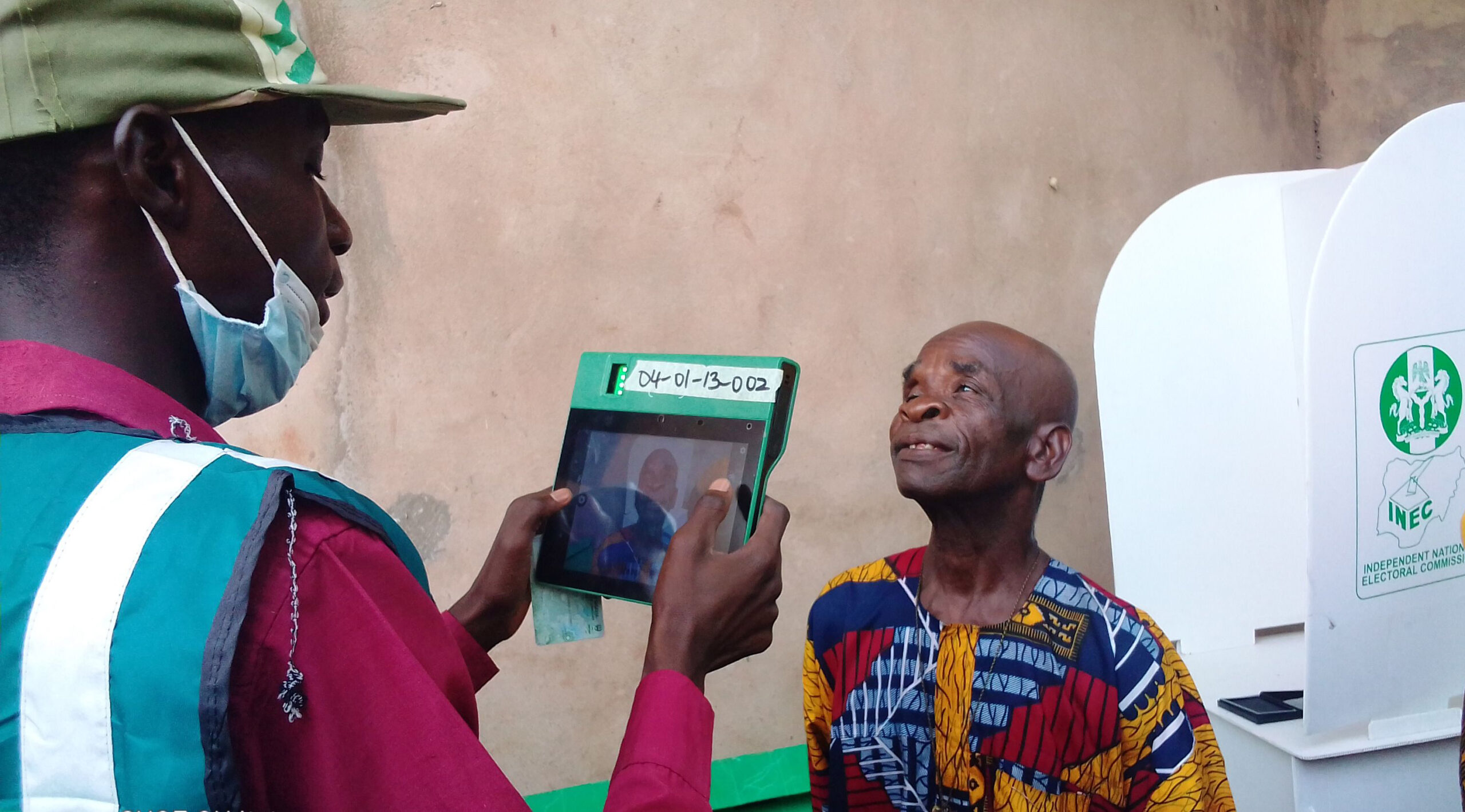
A non-governmental organisation, Willz Trust Foundation, has urged the Nigerian electorate to choose credible candidates in next year’s general elections in the country.
The Executive Director of the Foundation, Ide Aaron Anyanwu, who gave the charge at a press briefing in Port Harcourt, particularly urged the Rivers electorate to ensure that only credible candidates that will fulfill their campaign promises are voted into office.
According to him, the aim of his organisation is to entrench civil and democratic values in Nigeria by encouraging increased participation of citizens in the electoral process across the geopolitical regions through advocacy, public sensitisation and enlightenment programmes.
“We are making progress in our commitment especially in voter education, sensitisation and mobilisation, capacity building, voters conferences, media advocacy and election observation exercises”, he said, adding that his group had worked in the South- South and South- East since 2019 with focus on increasing the scope of operations in the future.
“Whillztrust foundation has, independently and through strategic partnership with the Independent National Electoral Commission (INEC) initiated programmes that promote voter education, provide critical voter informations to local communities in our bid to encourage citizens participation at all levels,” he added.
While recalling that the foundation played active role during the just concluded Continuous Voter registration (CVR) exercise and was able to assist over 20,000 new registrants to acquire their new Permanent Voter’s Cards (PVCs), the organisation, in partnership with INEC, would soon commence door to door voter education exercise for which its representatives have been formally trained by the United Nations Development Programme (UNDP) in conjunction with INEC.
“A critical look at Nigeria shows indicators that all is not well at the moment. Unfortunately, we are compounded by continued decadence, corruption and lack of transparency in government and public sectors, at every election cycle incoming government will make promises to rectify the difficulties we face as a nation. However, they have always failed.
“This experience has created huge vacuum of hopelessness and loss of confidence in business of government and governance. Our experience in the field as voter education providers shows that greater percentage of Nigerians are hardly interested in voting and Election”, he lamented.
Anyanwu charged citizens never to be discouraged, but be rather determined to hold those in positions of power accountable, adding that their power to change the negative narrative is through voting in credible leaders.
“How can we hold our government accountable for promises they made on their campaign if we do not participate in elections ? Participation in election is the constitutional right and civic responsibility of every Nigerian, provided you have met the electoral requirements.
“It was because of these challenges that the existence of Whillztrust foundation became a necessity to help redefine advocacy in social sector and encourage public interest. We focus on grassroots to reach the hard to reach in society”, he said.
He disclosed that a South- South voters’ conference is slated to hold in Port Harcourt from 1st to 3rd December, 2022, adding that the event is aimed at achieving improved voter population growth, providing voter information and education that will equip the Nigerian voters to the extent that they are able to make informed decisions and quality choices of who their preferred parties and candidates are.
Earlier, a former Commissioner for Information in Rivers State, Prof. Bene Abbey, in her opening remarks stated that voters’ education was key to having a developed country.
Abbey noted that the rapid growth of Singapore was as a result of education, remarking that there is a great difference between the literates and the illiterates as well as developed and developing countries.
She reiterated the commitment and the work the foundation was doing to ensure peaceful elections, while enjoining INEC, security agencies, the press as well as other relevant stakeholders to play by the rule to ensure credible, free, fair elections come 2023.
By: Susan Serekara-Nwikhana



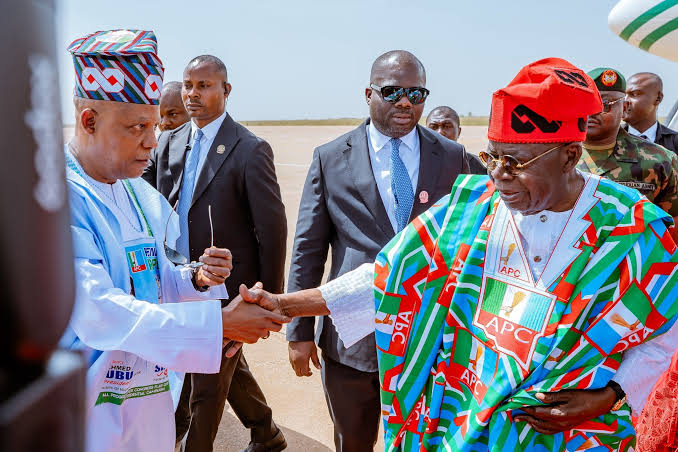
The campaign rally, held at the Kaduna Township Stadium, attracted Vice-President Kashim Shettima, APC governors, party leaders, federal and state lawmakers, political stakeholders and supporters from across the country.
The flag-off marks the beginning of the APC’s drive to secure a second presidential term for President Tinubu, with the party expected to promote its achievements, defend its economic reforms and outline its policy priorities under the proposed Renewed Hope 2.0 agenda.
Kaduna’s selection for the campaign launch underscores the strategic importance of the North-West, a region with a substantial voting population and considerable influence on presidential election outcomes.
The APC faces a significant challenge in Kaduna, where the Peoples Democratic Party’s presidential candidate, Alhaji Atiku Abubakar, defeated President Tinubu in the 2023 election. The rally therefore provides the ruling party an opportunity to strengthen its grassroots structures and regain electoral support in the state.
Addressing supporters, Vice-President Shettima appealed to Northern voters, highlighting President Tinubu’s political relationships with prominent Northern leaders, including Alhaji Abubakar, Mallam Nuhu Ribadu and the late President Muhammadu Buhari.
The Vice-President’s appeal reflects the APC’s determination to consolidate its support in the North as the party intensifies preparations for the presidential contest.
The Renewed Hope 2.0 agenda is expected to feature prominently in the campaign, providing a platform for President Tinubu to explain his administration’s economic policies and outline plans for another term.
However, the President’s record on economic reforms, rising living costs, petrol prices, employment, infrastructure and insecurity is expected to attract considerable scrutiny during the electioneering period.
-

 Education1 day ago
FCE Yola Graduates 3,555 Teachers , Seeks Upgrade to University
-

 Sports1 day ago
Nigerian Trio Target Titles At PFL Africa Finals
-

 Niger Delta1 day ago
Diri Restates Stance On Lagos-Calabar Coastal Highway
-

 Niger Delta1 day ago
C’River, NUJ Pay Tribute To Late Guardian Editor
-

 News1 day ago
NDLEA Recovers Tons Of Illicit Drug Consignments In Nine States
-

 Opinion1 day ago
Checking Voter Apathy In Nigeria’s Electoral Process
-

 Politics1 day ago
2027: DICKSON’S EX-ALLY VOWS TO WORK AGAINST NDC INTEREST IN BAYELSA
-

 Politics1 day ago
2027: GROUP PLEDGES 40,000 SUPPORTERS FOR COALITION CANDIDATES IN RIVERS