
Business
eNaira Records 700,000 Transactions At N8bn

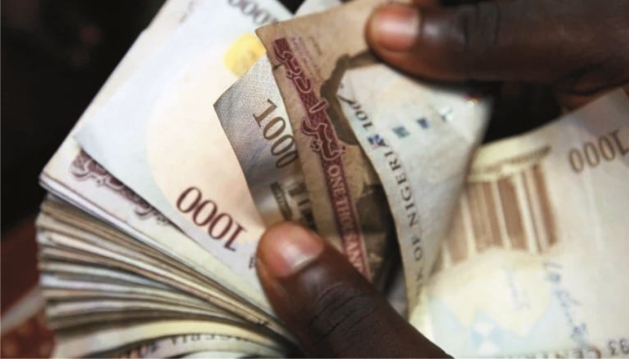
Governor of the Central Bank of Nigeria (CBN), Godwin Emefiele, says the eNaira has recorded 700,000 transactions valued at N8 billion since its inauguration on October 25, 2021.
He made this disclosure, midweek, in Abuja, at the 28th edition of the apex bank’s annual In-house Executive Seminar with the theme, ‘Digitalisation of Money and Monetary Policy in Nigeria’.
Emefiele, who was represented by the Deputy Governor, Financial System Stability, CBN, Aisha Ahmad, said the eNaira was developed to broaden the payment possibilities of Nigerians, foster digital financial inclusion, with potential for fast-tracking intergovernmental and social transfers, capital flow and remittances.
Noting that the eNaira had been globally acclaimed as a success story, he said, “Since its launch, a total of N8 billion, consisting of over 700,000 transactions has passed through the eNaira platform.
“As part of the CBN’s effort to further integrate and broaden the usage of the eNaira, it was assigned an Unstructured Supplementary Service Data (USSD) code, enabling payments by simply dialling *997# on a mobile phone.
“I am proud to announce to you today that the eNaira has been attracting accolades across the globe as a monumental success.
“It topped the charts on retail CBDCs projects globally, as at April (PwC, 2022) and several central banks across the globe have been requesting our success template on the eNaira,” he said.
He added that, as part of the digitisation drive, the apex bank had taken transformational steps in entrenching a culture of “big data” and data analytics, as tools for effective policy making.
“To this end, the CBN Data Architecture Project (CeDAP), code-named ‘Project OXYGEN’, was commissioned, with the objectives of providing a repository of a variety of data from different sources,” he said.
The CBN Governor said considerable gains had been achieved on boosting financial inclusion in Nigeria, adding that at 64.0 per cent, the inclusion rate slowed down the digital transformation wheel, as all citizens must be carried along to optimise the gains of a digital economy.
“While cash-based transactions have declined significantly in the last decade, it is still the dominant means of payment, amidst a large informal sector.
“Nigeria boasts of one of the fastest growing FinTech ecosystems in Africa, with the industry projected to grow by 12 per cent annually.
“But the technological space is still maturing, with limited market size, funding and venture capitalists, access to baseline technologies, and skills, as common features, “ he said.
Also speaking, the Deputy Governor, Economic Policy, CBN, Dr Kingsley Obiora, said the seminar was an annual platform to brainstorm on topical economic issues.
Obiora said that the intention was to proffer policy options for the consideration of management of the CBN.
“Through the past years, the seminar has lived up to its expectations by providing significant inputs towards improving management’s decisions.
“Our gathering here today should be seen as an important avenue to critically search for fresh solutions to emerging monetary and financial challenges confronting us today,” he said.
According to him, the digitisation of money enhances the powers of the CBN to impact its monetary policy.


-

 Featured2 days ago
WASSCE: RSG Distributes Science Materials To Secondary Schools
-
News3 days ago
Xenophobic Attacks: Nigerian Lives More Important Than Foreign Investment – Oshiomhole
-
Rivers3 days ago
MBA Forex Trial Adjourn To June 3, Amid Bereavement … As Court Declines Cost Application
-
News3 days ago
ActionAid Demands Probe Of Govs Using Public Funds For Campaign
-
Aviation3 days ago
Passengers Stranded As Delta Airline From Atlanta Route Back Eight Hours After
-
Business3 days ago
Customs Impound N2.35bn Cocaine, 15 Trailers of Rice
-
Politics3 days ago
2027: Bayelsa Senator Gets Critical Endorsement For Second Term
-

 Politics3 days ago
INEC Sets Rivers South-East Senatorial By-Election For June 20