
Business
Firms Want Solar Integration In Renewable Energy

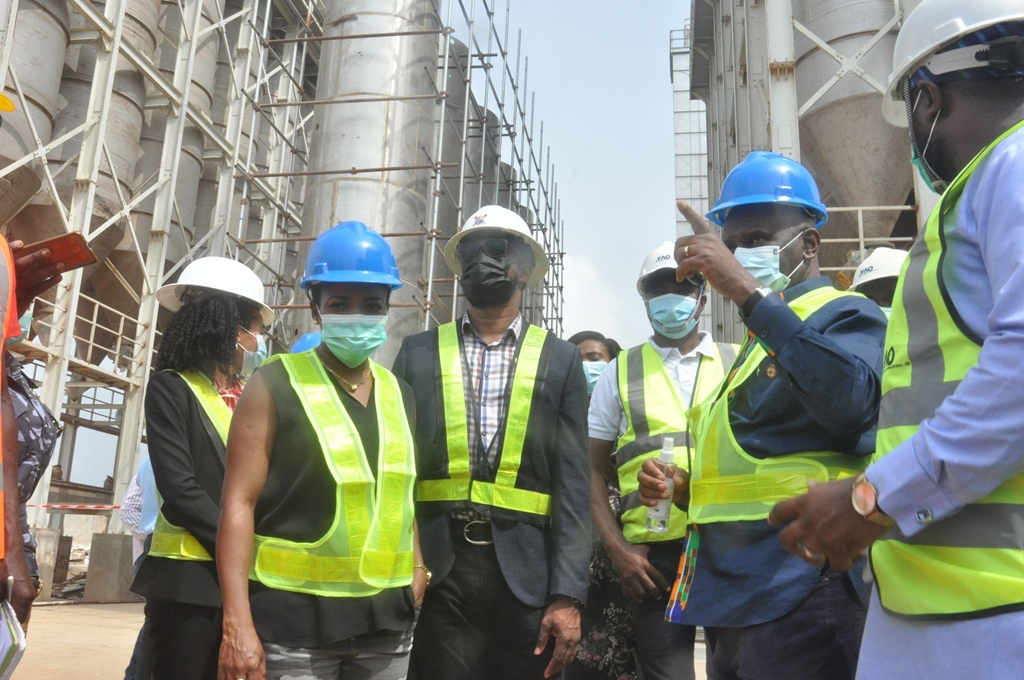
Non-renewable energy firms, such as Chint Global, have proposed solar integration to solve energy challenges in Nigeria.
In an interview with The Tide’s source at the “Power & Water Nigeria Exhibition and Conference, 2022” in Lagos, the Country Manager of Chint Global for Nigeria, Michael Chen, said Nigeria had been a major target for solar power distribution.
“Egypt has about 100 million people, but Nigeria has 200 million people. However, the power generation capacity of Egypt is about 60 gigawatts while Nigeria has 13 gb watts.
“So, the capacity of power generation in Egypt is about five times that of Nigeria. Nigeria has a 200 million population, and one of the biggest GDPs in Africa.
“This will make Nigeria a bigger market for electrical equipment. This is a good opportunity for marketing and a means to contribute to Nigeria with our professional equipment and services to make this country a better place,” he said.
Chen noted that Chint Global, which is into the four industry chains of power generation, storage, transmission, distribution, and utilisation, had contributed solar power to crucial parts of the country.
“As a priority in Nigeria, our 132 kV transformer is working in TC and grid power systems. From Lagos to Ibadan, all the people are using the Chint distribution”, he said.
In his part, the Director of Solar Centric Technologies and Vice President, Renewable Energy Association of Nigeria, Adetunji Iromini, stressed the urgency of solar power integration in Nigeria, stated that at “although we have pushed for some intervention programmes to fast track integration, the government is yet to come to the table.”
He also talked on the escalating costs of products like diesel, saying the government now knew that it needed to onboard distributed renewable energy into solving Nigeria’s energy problem.
“So RIAN as a body is at the forefront of engaging with the government on strategies to solve the power problems in the country,” he said.
Meanwhile, the Chief Com



-

 Niger Delta5 hours ago
Diri Restates Stance On Lagos-Calabar Coastal Highway
-

 Niger Delta5 hours ago
C’River, NUJ Pay Tribute To Late Guardian Editor
-

 News6 hours ago
NDLEA Recovers Tons Of Illicit Drug Consignments In Nine States
-

 Opinion4 hours ago
Checking Voter Apathy In Nigeria’s Electoral Process
-
 Oil & Energy5 hours ago
S&P Global Warns Hormuz Energy Shock Could Become A Global Food Crisis
-

 Oil & Energy5 hours ago
Gas Reserves Hit 215 Trillion Cubic Feet
-

 Rivers5 hours ago
Education Ministry Condemns Female Virginity Testing In CHS, Taabaa
-

 Maritime3 hours ago
Association Debunks Alleged Extortion Report Against Lagos Commissioners, Others