Connect with us

Environment

Climate Change Act Implementation: Varsity, NGO Urge Govts, Stakeholders On Effective Commitment

Published

on

The University of Abuja and Global Initiative for Food Security, Ecosystem Preservation (GIFSEP), have called on all tiers of government and relevant stakeholders to intensify more effort to implement Climate Change Act.
The Executive Director of GIFSEP, a Non-Governmental Organisation (NGO), Mr David Michael, made the call at a Consultative Workshop on the Climate Change Act, on Thursday in Abuja.
The News Agency of Nigeria (NAN) reports that President Muhammadu Buhari signed the climate change bill into law in November 2021.
The Act paves the way for environmental and economic accounting and a push for a net zero emission deadline plan in the country.
Michael said that the government at all levels and other relevant stakeholders should collaborate to galvanise support for effective monitoring and implementation of the Act.
He said that the aim of the workshop is to discuss among the environmental stakeholders, analyse and interpret the clauses of the Act.
He said that National Council on Climate Change was established to make policies and decisions on all matters concerning climate change in the country.
He added that the council had state and zonal offices across the country, adding that the effort was for the effective implementation of the Act.
According to him, “today we are gathered to look into the Act as passed by our President in November. We want to know where we are at the moment.
“As an individual, as a country, climate change affects all of us and if we have an Act that is aim at getting climate impact, the implementation of that Act should be effective.
“We are here to look at the Act, break it down, simplify it and understand it further so that we can know how best to engage the government.
“The implementation of the Act should intensify because 2023 election is around the corner, so no one knows what will happen after the election.
“The energy the government has with the signing of Paris Agreement, attending all COPs and committed in the passage of the bill into law, should also continue in the implementation of the Act,” he said.
Michael said that the government at all levels as well as the relevant stakeholders should put more effort through engaging on programmes that would provide strategies for strong implementation of the Act.
He said that climate change adaptation and litigation required huge resources and technology.
The executive director, however, urged Nigerians and other international organisations to support the Federal Government in the implementation of the Act, for a healthy and cleaner environment.
Prof. Hassan Shuaibu, Director, Center for Environmental Studies, University of Abuja, said that the effective implementation of the Act would help solve environmental problems to a very large extent.
“We are calling on all relevant stakeholders to join hands and support for a strong implementation of the Act.
“The major objective of this Act, if effectively implemented, is numerous and Nigerians will benefit a lot. It will help reduce heat to a bearable medium in our environment.
“The implementation will help to restore the degenerated environment and farm lands into a friendly one,” he said.
The director called on stakeholders to engage in tree planting and desist from any activity that would damage the environment.


Continue Reading

Environment

Group Urges Youth-Led Climate Action, Accountability

Published

on

ActionAid Nigeria has urged young people to take leading roles in driving climate action, strengthening accountability and ensuring the implementation of Nigeria’s climate commitments.Support Charities
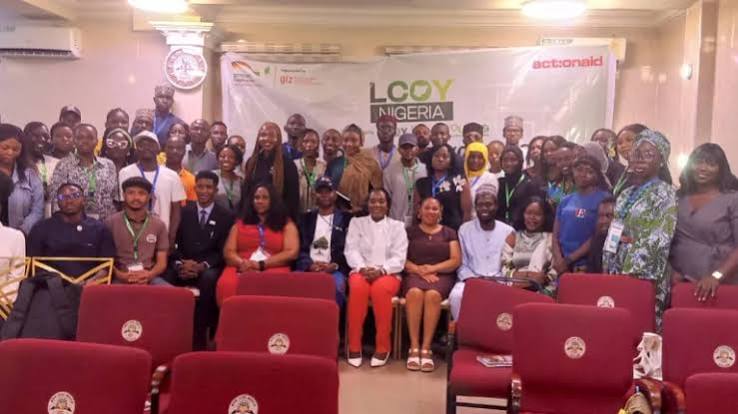
Blessing Ifemenam, Programme Adviser, Strategic Partnership Agreement (SPA II) Project, ActionAid Nigeria, made the call at the National Conference of Youth on Climate Change (LCOY-Youth COP 2026) on Thursday in Abuja.
The conference, organised by ActionAid Nigeria (AAN) was themed: “Advancing Nationally Determined Contributions (NDC 3.0) Implementation: Youth-Led AI and Climate Finance Capacity Building for a Resilient Nigeria”.
TheTide source reports that the conference is being organised as a key initiative under the SPA II project and the Food and Agriculture unit.
It was to engage a wider cross-section of young people across Nigeria through capacity building, youth engagement among others to identify and address the barriers to youth participation in climate change initiatives
The conference is aimed at empowering young people to showcase ideas, insights and innovations while engaging with policymakers and stakeholders to drive meaningful climate action.
Ifemenam said the conference came at a critical time as Nigeria worked towards implementing its third Nationally Determined Contributions (NDC 3.0).
She said young people should be recognised as leaders, advocates, innovators and decision-makers rather than mere participants in climate discussions.
According to her, climate action must be anchored on justice, human rights, equality and accountability, given the disproportionate effects of climate change on vulnerable communities.
“The climate crisis disproportionately affects communities that have contributed least to global emissions, particularly young people, women, girls and other marginalised populations.Track Weather
“Government, civil society organisations, development partners and the private sector must ensure that young people have access to the information, resources and platforms required to influence climate policies,” she said.
Ifemenam said ActionAid was committed to strengthening youth movements, promoting climate-accountable governance and supporting community-led resilience.
She added that the organisation would continue to advocate a just transition that protects livelihoods while creating inclusive opportunities.
On the use of Artificial Intelligence (AI) in climate action, she said technology could support innovation, evidence generation and advocacy.
She, however, stressed that its application must be inclusive, accessible and responsive to community needs.
“Innovation should not deepen existing inequalities; it should help us address them,” she said.
Ifemenam expressed concern that climate finance and public investments were not adequately reaching communities and young people who needed them most.
She also called for stronger collaboration among government, civil society, development partners and the private sector to ensure accountability for climate commitments.
The programme adviser urged stakeholders to strengthen links between youth-led solutions and policy processes to ensure that young people’s contributions translated into tangible policy influence.
“This conference should go beyond statements of commitment to identify practical actions young people can lead, influence and monitor.
“Let us move from consultation to influence, from commitments to accountability, and from youth participation to youth-led transformation,” she said.
Continue Reading

Environment

Stakeholders Call For Establishment Of Ministry Of Waste Resources 

Published

on

Stakeholders in Lagos’ waste management sector have called for the establishment of a standalone Ministry of Waste Resources to drive reforms, attract investment and strengthen environmental governance.
A summary of the meeting’s proceedings and recommendations was made available to the Tide source on Friday by Mr Philips Obuesi, President and Chief Executive Officer of SWEEP Foundation NG and convener of the Lagos Waste Forum.
According to the summary, the stakeholders made the call at a Lagos Waste Governance Reform meeting on Thursday, proposing the ministry as part of policy recommendations for the incoming state administration in 2027.
The recommendations also covered professional leadership, household waste separation, integration of informal waste workers and improved accountability across Lagos’ waste management system.
The summary indicated that the Lagos Waste Forum was tasked with consolidating citizens’ and industry stakeholders’ recommendations into a policy brief for presentation to the incoming governor.
The proposed document is expected to reflect the concerns of residents, waste generators, recycling businesses, waste pickers and other operators across the waste value chain.
On institutional reform, the stakeholders proposed a dedicated ministry headed by a cabinet level commissioner to coordinate policies that would transform discarded materials into  economic resources.
They also advocated appointing experienced waste management professionals to lead the Lagos State Waste Management Authority (LAWMA), with technical competence guiding appointments.
The recommendations further called for separating LAWMA’s regulatory responsibilities from waste collection operations to strengthen oversight and improve service delivery.
The stakeholders also identified the prevailing collection-and-dumping approach as inadequate, advocating a shift towards source separation, recycling, processing and local resource recovery.
They proposed household incentives for waste separation and modular processing plants across local governments to encourage local value addition.
On stakeholder inclusion, the recommendations called for integrating informal waste pickers into formal waste management arrangements, recognising their contributions to recycling and livelihoods.
They also advocated stronger partnerships between private sector participation (PSP) operators and informal collectors, alongside improved occupational protection and community-based waste education.
The summary identified outdated waste collection data as a major obstacle to effective planning, monitoring and enforcement.
To address this, stakeholders recommended street-level data collection, local government performance comparisons and stronger accountability in public spending across the waste value chain.
They also identified registration and evacuation-access challenges as infrastructure gaps requiring attention to improve compliance and enforcement.
The Lagos Waste Forum was further tasked with ensuring women’s perspectives were adequately represented in the proposed policy brief.
Other recommendations included financial incentives for household waste separation, stronger PSP monitoring and community education in local languages.
The proposals build on discussions at the sixth Lagos Waste Forum in 2025, which advocated establishing a standalone Ministry of Waste Resources.
The forum promotes policies that position waste as an economic resource through collaboration among government, industry operators and environmental stakeholders.
The proposed reforms seek to reposition Lagos’ waste sector from conventional refuse collection and disposal towards an inclusive circular economy driven by investment, innovation and resource recovery.
Continue Reading

Environment

FG Moves To Phase Out Lead-Based Paints By 2030

Published

on

The Federal  Government says it is intensifying efforts to eliminate lead exposure and phase out lead-based paints in Nigeria by 2030.
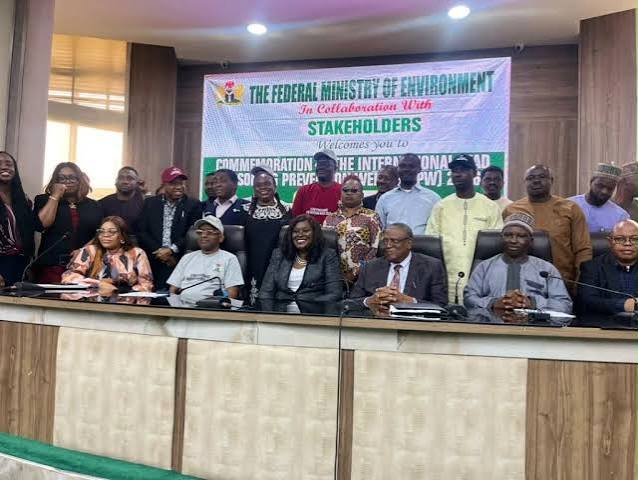
The Permanent Secretary in the Federal Ministry of Environment, Dr Salihu Usman said this at the 2026 International Lead Poisoning Prevention Week in Abuja .
Usman who was represented by the Director, Department of Pollution Control and Environmental Health in the ministry Mrs Omotunde Adeola said lead poisoning was a preventable environmental and public-health problem, with no known safe exposure.
Usman warned that children, pregnant women and occupationally exposed workers faced significant risks.
He emphasised the need for coordinated action among  government agencies, industries, health professionals and civil society organisations to strengthen environmental monitoring, enforce product standards, promote safer alternatives and improve public awareness.
He also highlighted the National Inter-Agency Working Group on Lead Poisoning Elimination and the proposed five-year strategic plan.
Usman urged stakeholders to measure progress through reduced exposure, removal of unsafe products and responsible management of contaminated sites, rather than meetings and policies alone.
He reaffirmed the ministry’s commitment to stronger environmental regulation and called for sustained collaboration to protect Nigerians from preventable lead poisoning.
Dr Leslie Adogame, Executive Director, Sustainable Research and Action for Environment Development (SRADeV) cited studies on lead paint and used lead-acid battery recycling, and urged the need for stronger laboratory testing, environmental monitoring, enforcement of standards and safer alternatives.
The director commended stakeholders for supporting efforts to eliminate lead exposure and said that they commemorated the event annually since 2013, collaborating with government institutions, industry players and schools.
He further urged stakeholders to prioritise prevention, environmental remediation and community protection, particularly for children and workers vulnerable to lead poisoning.
Mrs Omotunde Adeola, the Director of Pollution Control and Environmental Health, in the ministry called for measures to prevent lead poisoning, stating that there was need to translate detection into effective action.
Adeola, who was represented by Mr Idris Abdullahi, Director, National Ozone Office, in the ministry, reaffirmed the ministry’s commitment to supporting Nigeria’s target of phasing out lead-based paints by 2030, stressing that success must be measured by reduced exposure and lives protected.
She highlighted key developments, including a November 2025 capacity-building workshop on portable X-ray fluorescence analysers, which equipped 35 participants with skills for screening lead in paints and consumer products.
She said that the ministry, with support from Resolve to Save Lives and other stakeholders, had validated a training toolkit for Environmental Health Officers to improve lead-poisoning prevention, detection and response.
Adeola urged manufacturers, importers, retailers, regulators and communities to comply with product standards, improve surveillance and promote safer waste-management practices.
She also cited the ministry’s April 2026 pilot programme for environmentally sound management of small-sized waste batteries in the Federal Capital Territory.
The Tide source reports that awards were presented to institutions, associations, paint manufacturers and raw material suppliers, acknowledging their contributions to Nigeria’s transition towards the production and use of lead-free paints.
The awardees are Balarabe Lawal, the Minister of Environment, Mrs Omotunde Adeola
Director of Pollution Control and Environmental Development and the Standards Organisation of Nigeria.
Others are the Paint Manufacturers Association; Paints and Coating Manufacturing Nigeria, Chemicals and Allied Products (CAP) Plc; Prestige Paint Nigeria Ltd.; and Parco Enterprise Nigeria Ltd.
Continue Reading

Trending