
Featured
Domestic Airlines Shut Down Operations, Today


Nigerian airline operators have issued a notice that with effect from today, they would shut down their operations due to the high cost of aviation fuel which has hit N700 per litre.
A statement by the President of the group, Allen Onyema, made available to The Tide in Port Harcourt, stated that operators have carried on deploying and subsidising their services to passengers in the last four months despite the steady and astronomical hike in the price of JetA1 and other operating costs.
According to him, overtime, aviation fuel price (JetA1) has risen from N190 per litre to N700 currently.
He maintained that no airline in the world can absorb this kind of sudden shock from such an astronomical rise over a short period.
The airlines – Azman Air, Max Air, United Nigeria Airways, Ibom Air, Arik Air, Air Peace, Dana Air and Overland Airways – made this known in a letter addressed to the Minister of Aviation, Senator Hadi Sirika while copying the Director General of the Nigerian Civil Aviation Authority, Captain Musa Nuhu.
While aviation fuel worldwide is said to cost about 40percent of an airline’s operating cost globally, the present hike has shut up Nigeria’s operating cost to about 95percent.
In the face of this, airlines have engaged the Federal Government, the National Assembly, NNPC and oil marketers with the view to bringing the cost of JetA1 down which has currently made the unit cost per seat for a one hour flight in Nigeria today to an average of N120,000.
The latter cannot be fully passed to passengers who are already experiencing a lot of difficulties.
A statement advised the travelling public who intend to fly to make alternative arrangements to avoid being stranded at the country’s airports.
The statement read: “It is with a great sense of responsibility and patriotism that the Airline Operators of Nigeria (AON) have carried on deploying and subsidising their services to our highly esteemed Nigerian flying public in the last four months despite the steady and astronomical hike in the price of JetA1 and other operating costs.
“Overtime, aviation fuel price (JetA1) has risen from N190 per litre to N700 currently. No airline in the world can absorb this kind of sudden shock from such an astronomical rise over a short period. While aviation fuel worldwide is said to cost about 40percent of an airline’s operating cost globally, the present hike has shut up Nigeria’s operating cost to about 95percent.
“In the face of this, airlines have engaged the Federal Government, the National Assembly, NNPC and oil marketers with the view to bringing the cost of JetA1 down which has currently made the unit cost per seat for a one hour flight in Nigeria, today, to an average of N120,000. The latter cannot be fully passed to passengers who are already experiencing a lot of difficulties.
“While AON appreciates the efforts of the current government under the leadership of President Muhammadu Buhari to ensure air transport in Nigeria grows, unfortunately, the cost of aviation fuel has continued to rise unabated thereby creating huge pressure on the sustainability of operations and financial viability of the airlines. This is unsustainable and the airlines can no longer absorb the pressure.
“To this end therefore, the Airline Operators of Nigeria (AON) hereby wishes to regrettably inform the general public that member airlines will discontinue operations nationwide with effect from Monday, May 9, 2022 until further notice.
“AON uses this medium to humbly state that we regret any inconveniences this very difficult decision might cause and appeal to travellers to kindly reconsider their travel itinerary and make alternative arrangements”, President, AON, Alhaji Abdulmunaf Yunusa Sarina, advised.
However, Ibom Air has said that it is not part of the decision of Airline Operators of Nigeria (AON) to suspend flight operations from tomorrow over increase in aviation fuel price to N700.
The airline said even though it acknowledged the existential threat that fuel price increases pose for the air transport industry in Nigeria, it could not afford to stop operating given its obligations to suppliers, financiers and staff, which depend on uninterrupted flow of revenue to service.
It said every airline has its unique business model and pressures and that despite the escalating fuel prices, airlines volunteering to stop operations would rather exacerbate an already bad situation.
“Ibom Air acknowledges the existential threat that these runaway fuel price increases pose for the air transport industry in Nigeria. We agree that this out-of-control situation is simply unsustainable.
“However, every airline has its unique business model and pressures. We believe that in spite of the escalating fuel prices, airlines volunteering to stop operations would rather exacerbate an already bad situation.
“Ibom Air has financial obligations to suppliers, financiers and staff, which depend on uninterrupted flow of revenue to service. More importantly is the fact that having been paid by customers in advance for flight bookings we are bound by contract to deliver the services already paid for, to avoid exposing the airline to the risk of avoidable litigation.
“Apart from the above factors, Ibom Air is currently the only airline serving Akwa Ibom State directly and as such, any voluntary stoppage of operations would completely cut off access by air into and out of the state. Such action would be directly in conflict with and detrimental to the interest of our shareholder.
“In view of the foregoing facts, Ibom Air had respectfully disagreed with the decision of AON to suspend flight operations on Monday, May 9, 2022. Ibom Air cannot in the circumstance volunteer to stop operating and will continue normal operations on Monday, May 9, 2022, and beyond.
“Ibom Air’s inclusion as ‘signatory’ to the statement released by AON must have derived from its active and committed membership of the AON.
“The above notwithstanding, we identify very strongly with our AON colleagues and will participate in every effort to resolve this frightening situation as soon as possible in the interest of our business, our customers, our stakeholders and our country,” the airline said.
Meanwhile, the Minister of Aviation, Senator Hadi Sirika, yesterday, said the planned shutdown of airline operations by Airline Operators of Nigeria (AON) wasn’t in any way a strike against the Federal Government.
The ministry reacted to inquiries by some media houses to clarify if the notice to the Federal Government and passengers by the Airline Operators of Nigeria to shut down airline operations from Monday, 9th was a strike over the rising cost of Jet-A1.
In a statement by the Special Assistant to the Minister of Aviation, Dr James Odaudu, he said operations of airlines were purely their private business and not connected to being a strike.
His statement read: “Since members of the Airline Operators of Nigeria (AON) issued a notice of withdrawal of flight services as a result of the rising cost of Jet A1 (Aviation fuel), and in spite of the initial statement by the ministry, enquiries have continued to flood in with some under the erroneous impression that the withdrawal was a kind of strike against the government.
“We wish to state that the decision of the association is purely a business one as they are private businesses reacting to market forces but appealing for interventions to enable them to carry on with their operations.
“The ministry has always made conscious efforts to assist members of the Airline Operators of Nigeria (AON), some of which includes facilitating a meeting between the Association and Mr President, during which the Association got several concessions, including duty-free importation of aircraft, engines, spare parts and components.
“The Honourable Minister at various times personally took members of the association to engage with Central Bank of Nigeria (CBN) to sort out issues of access to Foreign Exchange (FOREX) for their operations, and also the NNPC to exploit ways of ensuring the availability of Aviation fuel (JET A1) through importation or from the major marketers.
“It should also be recalled that members of the association were also considered for, and given Bail-out funds to the tune of N4billion during the COVID-19 pandemic to ensure that they remained afloat. This was without prejudice to the fact that most of them were heavily indebted to aviation agencies (as they still are).
“We believe that members of the association are patriots who have continued to bear the brunt of an unfavourable oil market for which we salute their doggedness.
“It is gratifying that members of the association have started reviewing the decision to withdraw flight services, with Ibom Air Green Africa Airlines, Arik Air, Dana and others confirming that they will carry on with their normal flight schedules. We hope that other members will consider the expected impact on businesses and individuals and review their decision.
“We also wish to assure foreign airlines operating in the country that all logistics and services for their operations remain in place as usual and that no disruptions whatsoever should be envisaged.
“As a government, we reiterate our commitment to the continued growth of the aviation industry where airlines and other service providers operate in a profitable and competitive environment.”
In the same token, the Federal Competition and Consumer Protection Commission (FCCPC) has warned airlines against selling tickets if they won’t operate.
The caution followed the information by Airline Operators of Nigeria (AON) on the shutdown of flight operations from today.
The carriers particularly blamed the high and increasing cost of jet fuel for their decision.
Though Ibom Air has announced that it would continue operations, others seem resolved to carry out the threat.
In a statement, FCCPC chief Babatunde Irukera, appealed to them to consider the effect of the proposed action on passengers.
The agency said it does not trivialise the challenge the current price of fuel poses to domestic aviation, coupled with other rising costs of operations and foreign exchange.
Irukera said talks were ongoing with the leadership of major fuel marketers to understand the global supply challenges and possible steps for resolution.
The commission advocated engagement among stakeholders to mitigate constraints and develop an interim arrangement to address problems associated with global supply on account of the war, sanctions and post-pandemic recovery.
The FCCPC, however, raised concern about rising consumer feedback that airlines have continued to sell tickets beyond the date announced for the proposed service shutdown.
“It will be egregious exploitation of consumers and a violation of law to purport to sell a service that the service provider knows, it will not, or does not intend to provide or deliver.
“It is misleading and deceptive under S.123 of the FCCPA to represent a service will be delivered on a certain date when the provider knows the same is false or improbable,” it said.
The statement expressed hope that airline operators will not deliberately sell tickets for flights they do not intend to operate.
Irukera said the agency would continue to monitor the evolving situation and remain committed to supporting engagements to provide solutions and stability.
By: Ike Wigodo















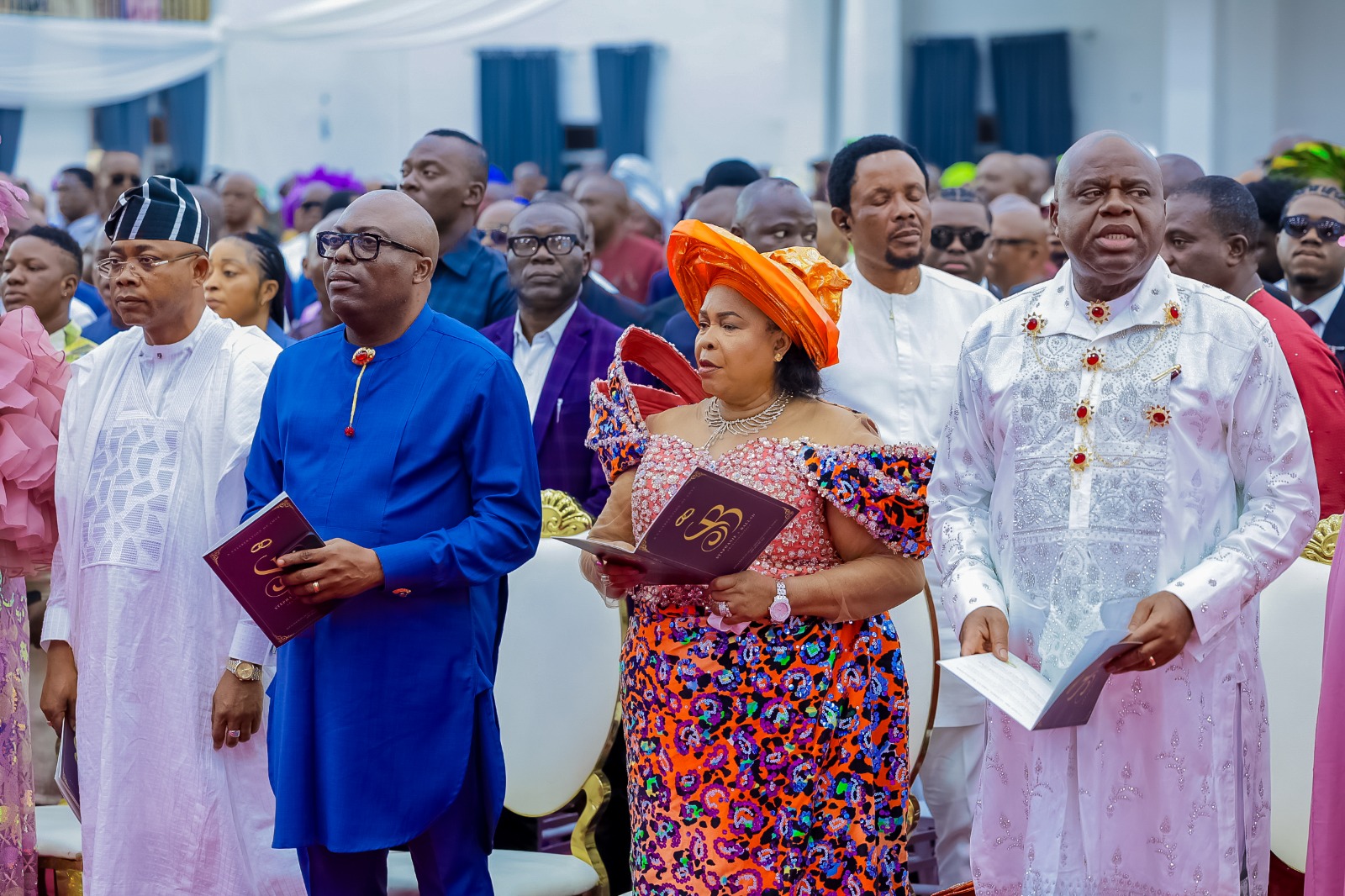
Rivers State, Sir Siminalayi Fubara, has assured members of the National Youth Service Corps (NYSC) of his administration’s commitment to supporting and strengthening the scheme in the State.
Fubara gave the assurance last Friday at the NYSC permanent orientation camp, Nonwa-Gbam, Tai Local Government Area in the State, during the swearing-in ceremony of 2026 Batch B Stream II orientation course.
Represented by the Permanent Secretary, Cabinet Bureau, Office of the Secretary to the State Government, Dr. Promise Oguzie, the governor said the State Government would remain intentional in providing the necessary support to improve the NYSC scheme and enhance the experiences of corps members deployed to the state.
He charged the corps members to be role models and quality nation-builders in their service to the good people of Rivers State in particular, and Nigeria at large.
“I charge you to be exemplary, dedicated and committed in all you do. Take full advantage of all the camp programmes and activities to enrich yourselves”, he said.
In his welcome address, the State Coordinator of NYSC in Rivers State, Mr. Moses Oleghe, urged corps members to see their deployment to Rivers State as a “veritable opportunity to make meaningful contribution to the growth of the State in particular and Nigeria at large.”
He further charged them to serve with all sense of “integrity, discipline, and the fear of God, especially when they will be engaged as INEC ad-hoc staff that will conduct the 2027 general elections.”
A total of 3,584 corps members composed of 1,421 males and 2,163 females were sworn in by the Chief Judge of Rivers State, who was represented by Justice Godspower Aguma.

Governor of Rivers State, Sir Siminalayi Fubara, says Nigeria needs God-fearing leaders for the nation to move in the right direction and make meaningful progress.
The Governor stated this yesterday when he received in audience, the World President of the Seventh Day Adventist Church, Pastor Erton Kohler; his wife, Andriene Marques Kohler; daughter Mariana Marques Kohler and a retinue of ministers of the church at Government House, Port Harcourt.
Fubara who hailed the Seventh Day Adventist Church for its contributions to education and the grooming of future leaders in Nigeria, expressed delight that the Church had over the years, been investing in education at various levels and currently runs two universities in the country.
He commended the church for not only using its institutions to spread the gospel of Christianity but to groom future leaders for the country.
According to him, religion should not be just about defending one’s faith, but also making meaningful impact on the lives of the people.
He said that by floating these educational institutions, the church has demonstrated capacity to support Nigeria in the task of producing not only educated people but a breed of God-fearing leaders.
“Our country is where it is today because we lack the fear of God. If you have the fear of God, there should be a limit to what you can do because you understand the supremacy of God. But when God is not in your equation, you’ll go beyond the line and that is what has brought us to where we are today.
“So, I feel very happy that you are contributing to the development of our future leaders in this country. We need the right people being in the right place; prepared properly with good minds; that is what we need, not just in Nigeria but round the whole world.,” he said.
Governor Fubara further observed that the absence of God-fearing people in high places to take the right decisions that could impact positively on the society, has also given rise to other problems such as social inequality, poverty, corruption and criminality. According to him, Nigeria needs a system where the average parent could afford quality education for their children and a guarantee that upon graduation, the average child will have the capacity to compete favourably with anybody, anywhere in the world.
“If we have a situation where the little money that you’re being paid as wage can also afford you quality healthcare and after working at least for 15-20 years, you have a roof over your head, tell me why you should be involved in any kind of crime? At that point, you’ll feel secured and this attitude of insecurity about the future that leads to all the social vices we have today won’t be there,” he said.
Governor Fubara expressed appreciation to the delegation for the visit and for their prayers for Rivers State, assuring them of his continued support for their programmes in the state.
Leader of the delegation and World President of the Seventh Day Adventist Church, Pastor Erton Kohler said he was in Nigeria for a special conference of the church during which thousands of the church’s ministers will be undergoing an empowerment programme to further equip them for the task of herding their flocks and serving the society.
He expressed gratitude to the Governor for the warm reception accorded his entourage, saying the memory of the visit will linger in his mind for a lifetime.
Kohler disclosed that the Church has over twenty -four million (24,000,000) members and more than 182,000 places of worship, spread across 212 countries of the world.

The Rivers State House of Assembly has approved the 2026–2028 Medium Term Expenditure Framework (MTEF) submitted by Governor Siminalayi Fubara.
This reaffirms the lawmakers’ commitment to enacting laws and taking legislative actions geared towards the overall development of the State.
The Assembly gave the approval during its Second Legislative Sitting of the Fourth Session held last Friday.
Speaking on the MTEF document during plenary, the House Speaker, Rt. Hon. Martin Amaewhule, noted that by the provision of Section 10(1)(b) of the Rivers State Fiscal Responsibility Law No. 8 of 2010, the MTEF ought to have been laid before the House in September 2025.
Amaewhule explained that traditionally, the document is expected to be presented four months before the commencement of the next financial year and immediately after the expiration of every three-year fiscal cycle.
He, however, stated that in the interest of the State and its people, the House considered it necessary to deliberate on the document, describing it as a precursor to the 2026 Budget Estimates.
The Speaker expressed concern that the year had already progressed significantly before the presentation of the framework.
During deliberations on the document, members examined the assumptions and projections contained in the MTEF and observed that strict adherence to the outlined fiscal parameters would ultimately serve the interest of Rivers people.
The lawmakers maintained that effective implementation of the framework would promote prudent financial management and enhance developmental planning across the State.
Following the debate and positive consideration by members, the Speaker put the question to the House and members voted overwhelmingly in support of the approval of the MTEF.
Meanwhile, during the same sitting last Friday, the House also received a petition from the Chairman of Obio/Akpor Local Government Council, Dr. Gift Worlu.
The petition was presented by the member representing Obio/Akpor Constituency II, Hon. Emilia Amadi.
According to the petition, concerns were raised over an imminent security breach, threats to lives, destruction of property and alleged forceful takeover of property by some lawless persons within parts of the Local Government Area.
Presenting the petition before the House, Hon. Amadi appealed to the lawmakers to revisit the matter and take necessary steps aimed at safeguarding lives and property in the affected communities.
The House is expected to further deliberate on the petition and consider measures to address the concerns raised in order to sustain peace and security in the area.
King Onunwor
-

 News1 day ago
RSG Targets Nine Million Residents in Mosquito Net Distribution Campaign
-

 Oil & Energy1 day ago
Aiyedatiwa Signs New Electricity Bill
-

 Maritime1 day ago
Marine Minister Commends President Tinubu On NPERA Bill Assent
-

 Oil & Energy1 day ago
NLNG Commissions Research And Innovation Centre In RSU
-

 News1 day ago
KenPoly Holds Eight Convocations, August 29
-

 News1 day ago
RSG Begins Another Phase of Projects Commissioning Today
-

 News1 day ago
RMAFC Completes Revenue Sharing Review, Proposes New Pay
-

 Maritime1 day ago
NAGAFF Petitions IGP Over Alleged Maritime Police Harassment