
Nation
Women Call On Leaders To Address Insecurity

A group, Community Initiatives to Promote Peace (CIPP), has called on leaders to address the current state of insecurity in the North-West.
The call is contained in a statement issued by the CIPP Women Peace Council North West, yesterday in Kaduna.
The statement was issued to mark the International Peace Day.
The women expressed concern over the recurring cases of kidnapping that have forced displacement and loss of innocent lives, including women and children in the region.
“While we sincerely acknowledge and appreciate the efforts of government at all levels to address insecurity in the region, all hands must be on deck to increase investment in human security and prioritize non violent solutions over militarized action.”
They also called for inclusive planning and implementation of programs targeted at supporting vulnerable populations and communities most hit by the security challenges, including COVID-19 pandemic.
The council further raised concern on the premeditated violent attacks directed at men, women, and children, which it attributed to lack of respect for rule of law and proliferation of small arms, among others.
The women, therefore, called for effective strategies to end gender motivated killings, sexual violence against women and children as well as other practices that violated human rights.
“While advocating for the perpetrators to face justice and the wrath of the law, we call on relevant government institutions to ensure accountability by enacting and enforcing laws that will guarantee the protection of survivors of Gender Based Violence (GBV) and forestall future occurrences.
“We also appeal to government at all levels to use its resources and powers to protect the dignity of the citizenry and promote respect for fundamental rights of all residents in the states, regardless of their gender, age, ethnic background, and religious affiliations.”
The women also called for collective effort of the executive, legislative and Judiciary to create an enabling environment for the implementation of conflict and gender friendly policies and laws
which would serve as tools for improving lives of vulnerable populations.
It further called for the localisation of the United Nations Security Council Resolution 1325 on ‘Women, Peace and Security’ National Action Plan and ‘Violence Against Persons (Prohibition) Act, 2015 in states that are yet to do so.
“We further call on all parties to respect the Rule of Law and stop indiscriminate killings of innocent civilians and attacks on sources of livelihood.
“Peace building actors need to work together to develop and implement innovative ways to constructively engage religious and traditional institutions, ethnic leaders, youth groups, women groups, people with disabilities, political leaders, and civil society in identifying local solutions to the current crises.
“Representation of local perspectives and their voices remains critical to improving outcomes of conflict management effort and finding common grounds in addressing the root causes of conflict at all levels.
“While reiterating on the importance of public enlightenment and education, as well as widening access to economic opportunities as vaccines for building resilience of the populace to engagement in criminal activities, and other social vices.
They pledged to support efforts of women peace builders and all parties to conflicts who chose to honour the call to end violence at all levels.
“Considering the significance of women’s engagement in building peace, we call on duty bearers to ensure the inclusion of women in both formal and informal peace processes in line with the principle of ‘leaving no one behind’ and Sustainable Development Goal 5.”
NAN reports that CIPP Women Peace Council is a platform that brings together a diverse group of influential grassroots women leaders.
The members are drawn from the Federation of Muslim Women Association in Nigeria (FOMWAN), Women Wing of the Christian Association of Nigeria (WOWICAN), and National Association of Women Journalists (NAWOJ) and other women-led organizations.
Their target is to promote inclusive peace process and development at the grassroots for sustainable peace.
“We enjoin you all to embrace nonviolent means to demand for concrete actions to be taken to address the root causes of violence and promote meaningful participation of all groups at risk of exclusion in decision making.”
“These efforts are necessary to bringing diverse perspectives to addressing inequalities, gender specific vulnerabilities and achieving durable and sustainable peace at the local, state, and national levels.”



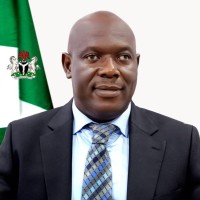
In a statement signed by the Project Coordinator, Prof Nenibarini Zabbey, to commemorate the anniversary, HYPREP described the anniversary as a significant milestone in Nigeria’s environmental restoration efforts, noting that the project has made remarkable progress in implementing the recommendations of the landmark UNEP report released on August 4, 2011.
The UNEP report had revealed extensive oil pollution across Ogoniland, severe environmental degradation, and serious public health risks resulting from decades of petroleum operations. It also recommended an initial $1 billion fund to commence the cleanup of the affected communities.
According to HYPREP, the Federal Government formally launched the Ogoni clean-up in 2016, while the Project Coordination Office was established in 2017 to drive the implementation of UNEP’s recommendations.
Zabbey said the current administration has continued to prioritise the project under the Renewed Hope Agenda.
Providing an update on the cleanup, the Project Coordinator disclosed that 30 of the 65 contaminated sites identified by UNEP have been fully remediated, while work is ongoing at several medium- and high-risk locations. It also stated that more than 1.5 million mangrove seedlings have been planted as part of what it described as the world’s largest restoration of oil-degraded mangroves, with over 1,000 hectares of shoreline already rehabilitated.
Zabbey further revealed that 49 Ogoni communities have been connected to potable water schemes through multiple water projects and booster stations aimed at providing safe drinking water across the region.
In the health sector, he said the 100-bed Ogoni Specialist Hospital in Kpite and the 43-bed Cottage Hospital in Buan are nearing completion, adding that several existing health facilities have been upgraded with modern medical equipment, while five ambulances have been donated to improve emergency healthcare services. The Project Coordinator also disclosed that a three-year human health biomonitoring study is being conducted in collaboration with the World Health Organization’s International Agency for Research on Cancer (IARC).
On economic empowerment, Zabbey stated that the Project has created more than 8,000 direct jobs and trained thousands of Ogoni youths and women in various vocational and technical skills, including software development, cybersecurity, aviation, commercial diving, seafaring, mechatronics, and creative arts. The project also reported awarding scholarships to more than 1,000 students, providing grants to small businesses, and supporting persons living with special needs through skills acquisition programmes.
The statement further highlighted ongoing legacy projects, including the Ogoni Power Project and the Centre of Excellence for Environmental Restoration, which it said is about 96 per cent complete. HYPREP also welcomed the recent designation of the Ogoni Wetland as a Ramsar Site of International Importance and pledged to continue promoting biodiversity conservation and sustainable management of the ecosystem.
Marking the anniversary, Zabbey said the progress achieved over the past 15 years demonstrates the collective commitment of government, development partners, stakeholders, and local communities to restoring Ogoniland. He called for renewed collaboration to sustain the cleanup effort, promote environmental sustainability, and support the long-term development of the region. 3
-

 News2 days ago
RSG Targets Nine Million Residents in Mosquito Net Distribution Campaign
-

 Oil & Energy2 days ago
Aiyedatiwa Signs New Electricity Bill
-

 Oil & Energy2 days ago
NLNG Commissions Research And Innovation Centre In RSU
-

 Maritime2 days ago
Marine Minister Commends President Tinubu On NPERA Bill Assent
-

 News2 days ago
KenPoly Holds Eight Convocations, August 29
-

 News2 days ago
RSG Begins Another Phase of Projects Commissioning Today
-

 News2 days ago
RMAFC Completes Revenue Sharing Review, Proposes New Pay
-

 Maritime2 days ago
NAGAFF Petitions IGP Over Alleged Maritime Police Harassment